

Animal rankingsAnimal intelligenceCognition
What Is the Smartest Animal? The 10 Smartest Animals
Chimpanzees and dolphins are the smartest animals after humans, with orcas, octopuses and crows close behind. The evidence, the rankings and the myths.
Quick answer: the smartest animal
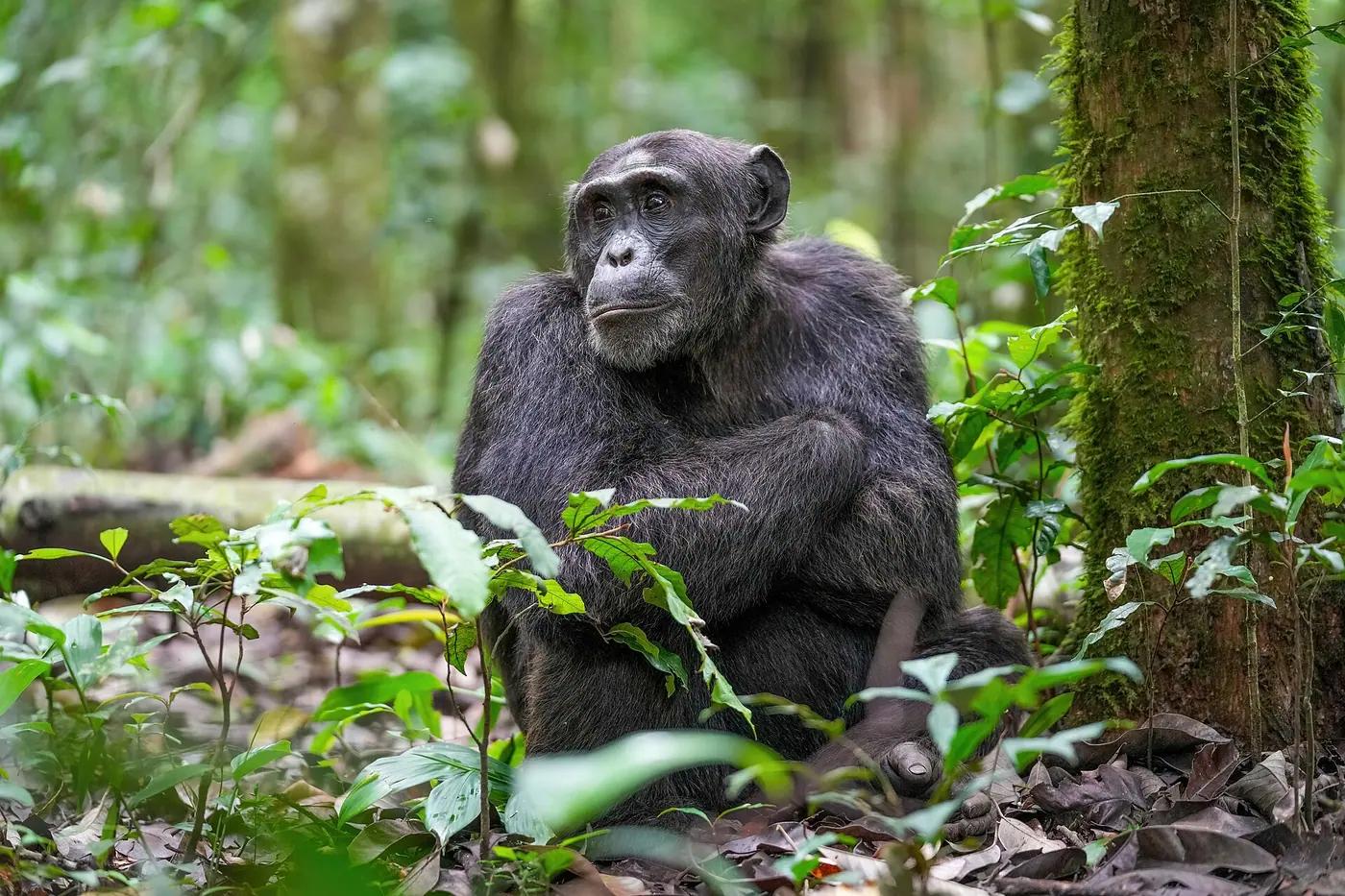
Chimpanzees and bottlenose dolphins are the smartest animals after humans, and the evidence for each is strong enough that scientists rarely try to separate them. Chimpanzees make and use tools, pass local traditions between generations and outperform people on some short-term memory tests. Dolphins recognise themselves in mirrors, use signature whistles that work like names, and learn hunting techniques from their mothers.
Orcas, octopuses, ravens, crows and elephants complete the top tier. The editorial ranking on the AnimalDex smartest animals tier list puts the Dolphin, Chimpanzee and Orca first, ordered by kind of intelligence rather than a single score.
There is no IQ test that works across species. A crow, an octopus and a chimpanzee solve different problems with very different brains, so the most useful answer names the leader for each kind of intelligence: social reasoning, tool use, memory, communication and solitary problem solving.
Smartest animals tier list (top 100)What makes crows so intelligentHow octopus intelligence worksChimpanzee species page
The 10 smartest animals by kind of intelligence
This is the editorial top ten from the AnimalDex smartest animals tier list, in the same order. It mixes mammals, birds and molluscs because intelligence evolved several times independently: in primates, in whales and dolphins, in corvids and parrots, and in octopuses and cuttlefish, whose last common ancestor with us was a simple worm-like animal more than 500 million years ago.
| Rank | Animal | Kind of intelligence | Why it ranks |
|---|---|---|---|
| #1 | Dolphin | Elite social cognition | Dolphins combine communication, play, memory, and social learning at a very high level. |
| #2 | Chimpanzee | Tool and social problem solving | Chimpanzees stay near the top because they pair hard-edged manipulation with sophisticated group behavior. |
| #3 | Orca | Pod-scale strategic learning | Orcas convert shared memory and coordinated hunting into one of the ocean's strongest intelligence profiles. |
| #4 | Octopus | Solitary puzzle intelligence | Octopus is one of the best solitary problem-solving animals in the world. |
| #5 | Raven | High-level corvid problem solving | Ravens repeatedly appear in advanced puzzle and planning discussions for a reason. |
| #6 | Crow | Urban and tool-linked intelligence | Crows are elite real-world adapters, especially in human-modified environments. |
| #7 | Elephant | Memory and social awareness | Elephants keep a place near the top because memory, sociality, and environmental reading all run deep in the species. |
| #8 | Gorilla | Calm strategic social intelligence | Gorilla intelligence is less flashy than some species above it, but still substantial and socially rich. |
| #9 | Cuttlefish | Rapid adaptive signaling | Cuttlefish turns perception and body-display control into one of the most impressive adaptive systems in the sea. |
| #10 | Wolf | Pack coordination intelligence | Wolf belongs because social hunting and pressure management still count as serious cognition. |
See the full smartest animals tier list
DolphinChimpanzeeOrcaOctopusRavenCrowElephantGorillaCuttlefishWolf
The evidence behind the top picks
Each top-tier animal has a body of published research behind its place, not just a viral video.
Dolphin: self-recognition and names
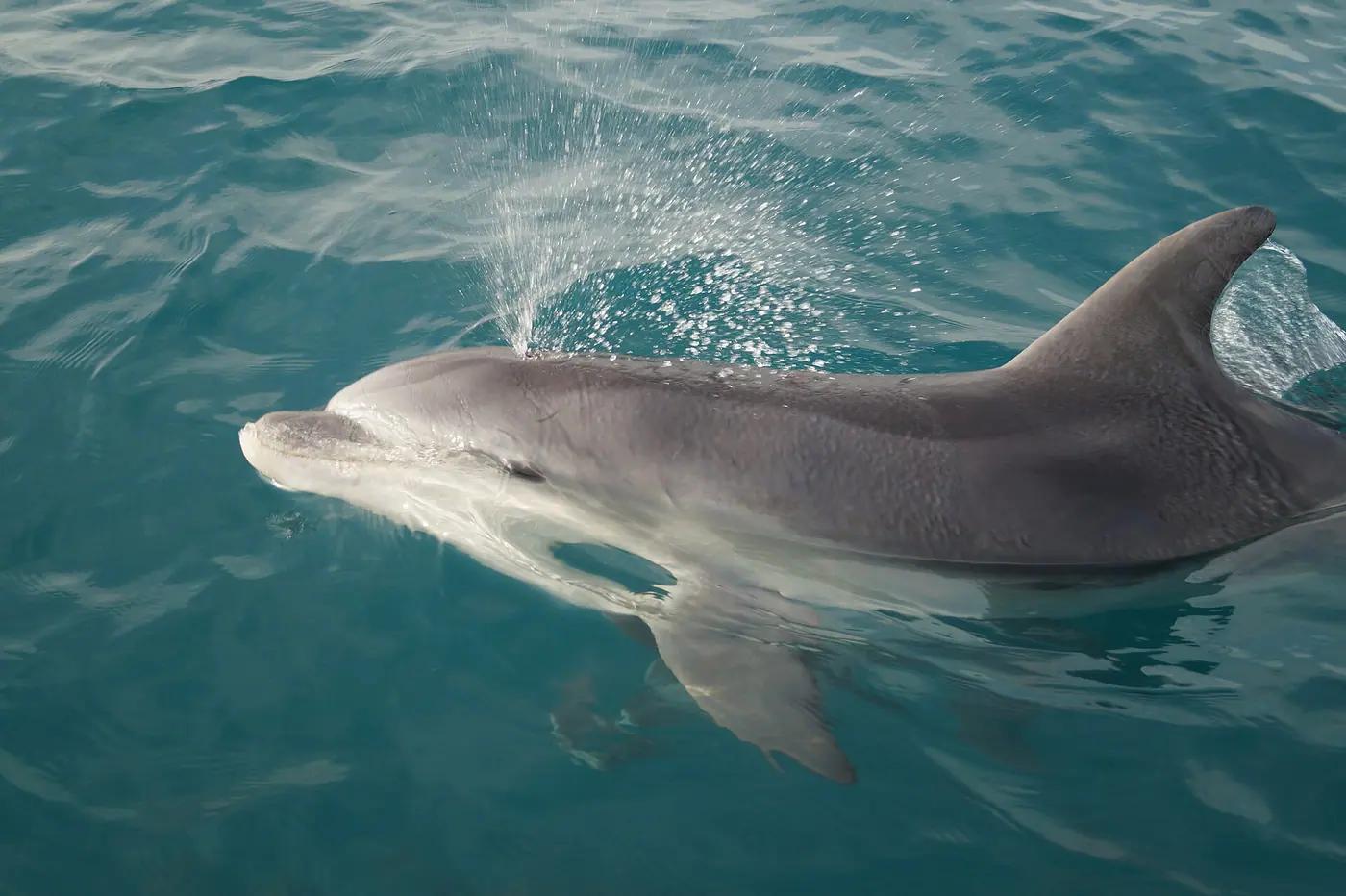
In 2001 Diana Reiss and Lori Marino showed in PNAS that bottlenose dolphins use a mirror to inspect marks placed on their bodies, passing the mirror self-recognition test once thought to be limited to great apes. Each dolphin develops a signature whistle early in life, and other dolphins copy it to call that individual. In Shark Bay, Western Australia, some bottlenose dolphins carry marine sponges on their beaks to protect them while they forage on the seabed, a technique passed mostly from mother to daughter.
Chimpanzee: tools and culture
Jane Goodall's 1960 observation of chimpanzees at Gombe fishing for termites with stripped twigs changed the definition of tool use. Chimpanzees in West Africa crack nuts with stone hammers on wooden or stone anvils, and young chimpanzees take years to learn it. A 1999 Nature paper by Andrew Whiten and colleagues compared long-term field sites and identified 39 behaviours, from tool use to grooming styles, that differ between communities in ways best explained by culture. In memory tests in Kyoto, a young chimpanzee named Ayumu recalled the positions of briefly flashed numbers faster and more accurately than the university students tested.
Orca and octopus: two opposite kinds of smart
Orcas live in stable family pods with their own call dialects and hunting traditions: some pods in Antarctica make waves to wash seals off ice floes, and some in Patagonia deliberately strand themselves to grab sea lion pups from the beach. Octopuses show what a solitary, short-lived animal can do. They open jars, escape tanks, and veined octopuses in Indonesia carry coconut shell halves across the seabed to use later as a shelter, which a 2009 Current Biology study described as tool use.
Ravens and crows: primate-level reasoning in a small brain
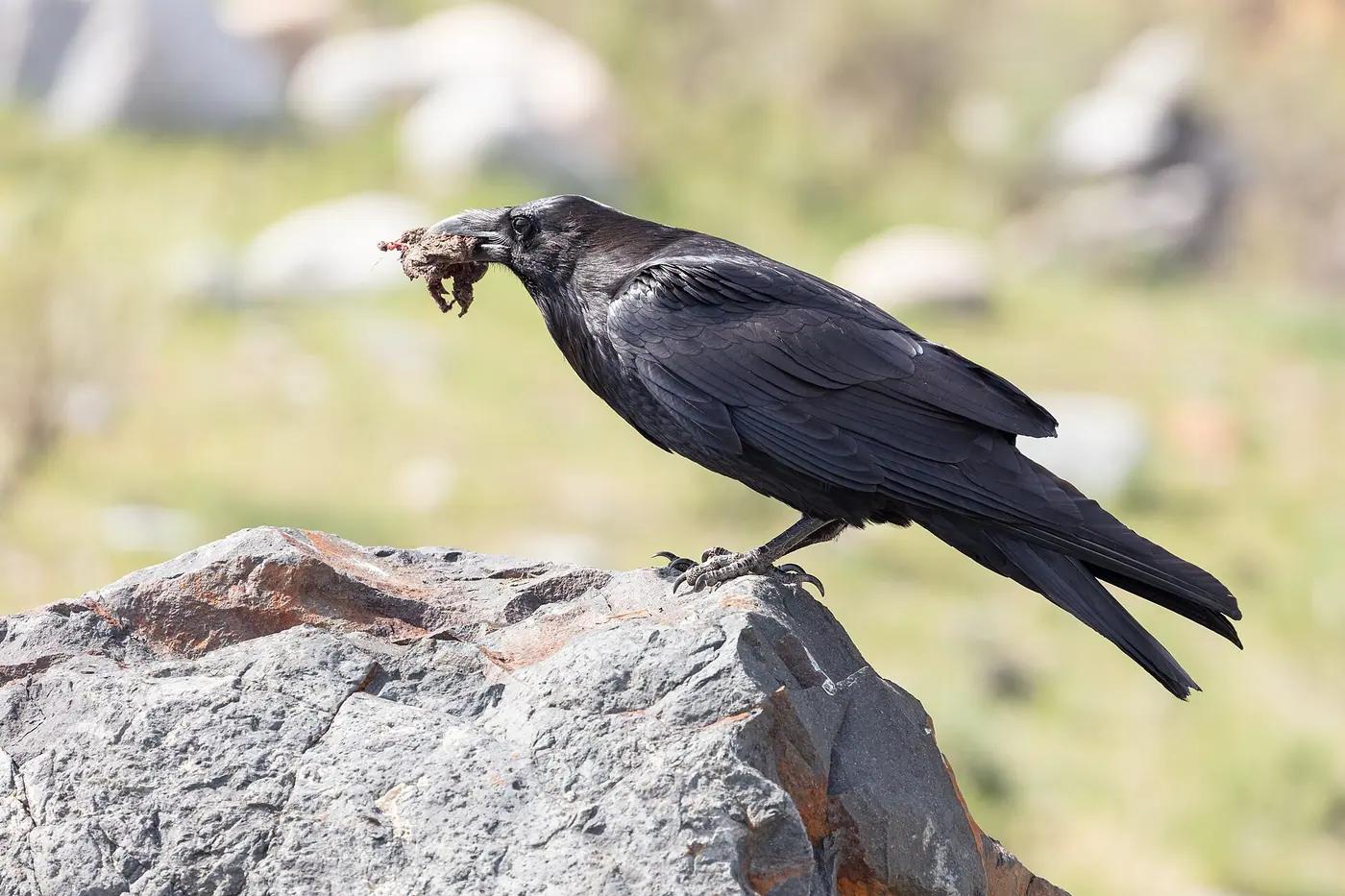
New Caledonian crows make hooked tools from twigs and cut stepped tools from leaves, reported in Nature in 1996. Ravens in a 2017 Science study chose a tool or a token they would need the next day over an immediate small reward, a level of planning previously shown only in great apes. Bird brains are small, but a 2016 PNAS study found that corvids and parrots pack about twice as many neurons into their forebrains as primates with brains of the same mass.
Elephant: memory and social knowledge
Elephants have the largest brain of any land animal, around 5 kg. An Asian elephant named Happy passed the mirror self-recognition test at the Bronx Zoo (Plotnik and colleagues, PNAS, 2006). In the wild, older matriarchs remember distant water sources and recognise the calls of dozens of other families, and their groups survive droughts better.
Beyond the top ten: the next smartest animals
The tier list opens with the editorial top ten above. Below them, the table continues by the AnimalDex intelligence stat, a catalog profile score used across every species in the app. It is not a published IQ test. Because that score weighs social group life, problem solving and grasping hands heavily, primates dominate the next rows: the White-faced Capuchin, Woolly Monkey and Red-shanked Douc come right after the top ten.
Monkeys such as capuchins really are strong problem solvers, and some capuchin populations crack nuts and shellfish with stones in the wild. Read the lower rows as the catalog's intelligence stat, and the editorial top ten as the answer to the everyday question of which animal is smartest.
| Rank | Animal | Intelligence stat | Why it ranks |
|---|---|---|---|
| #11 | White-faced Capuchin | 87/100 intelligence stat | 87/100 intelligence profile. White-faced Capuchin is a primate known for clever grasping hands, strong social teamwork, and forest problem-solving behavior, which places it in C tier for this list. |
| #12 | Woolly Monkey | 86/100 intelligence stat | 86/100 intelligence profile. Woolly Monkey is a primate known for prehensile tail like an extra hand, soft thick fur, and large social canopy groups, which places it in C tier for this list. |
| #13 | Red-shanked Douc | 83/100 intelligence stat | 83/100 intelligence profile. Red-shanked Douc is a primate known for bright multi-colored fur, leaf-eating monkey diet, and high-canopy social life, which places it in C tier for this list. |
| #14 | Ring-tailed Lemur | 83/100 intelligence stat | 83/100 intelligence profile. Ring-tailed lemurs are ground-using Malagasy primates recognized for striped tails, social groups, and heavy reliance on scent and sunning behavior, which places it in C tier for this list. |
| #15 | Mandrill | 83/100 intelligence stat | 83/100 intelligence profile. Mandrill is a primate known for bright blue-and-red face, powerful forest-ground body, and complex troop social life, which places it in C tier for this list. |
| #16 | Bonobo | 80/100 intelligence stat | 80/100 intelligence profile. Bonobo is a primate known for slender ape body, high social intelligence, and peace-making group behavior, which places it in C tier for this list. |
| #17 | Proboscis Monkey | 80/100 intelligence stat | 80/100 intelligence profile. Proboscis monkeys are riverine Bornean primates famous for large noses, strong swimming ability, and social groups tied to mangroves and lowland forest edges, which places it in C tier for this list. |
| #18 | Western Lowland Gorilla | 79/100 intelligence stat | 79/100 intelligence profile. The western lowland gorilla is a large forest ape recognized by its great strength, dark fur, and social family groups, which places it in C tier for this list. |
| #19 | Japanese Macaque | 79/100 intelligence stat | 79/100 intelligence profile. Japanese Macaque is a primate known for thick seasonal coat, troop social reading, and cold-island adaptability, which places it in C tier for this list. |
| #20 | Naked Mole-rat | 69/100 intelligence stat | 69/100 intelligence profile. Naked Mole-rat is a mammal known for hairless wrinkled body, protruding digging incisors, and eusocial tunnel-colony life, which places it in C tier for this list. |
Smartest animals tier listHow orangutans think and survive in the canopy
White-faced CapuchinWoolly MonkeyRed-shanked DoucRing-tailed LemurMandrillBonoboProboscis MonkeyWestern Lowland GorillaJapanese MacaqueNaked Mole-rat
Smartest animals by category
When people ask for the smartest animal they usually mean within a group they know. These are the best-supported answers.
| Category | Smartest | Best evidence |
|---|---|---|
| Primate (after humans) | Chimpanzee | Tool making, cultural traditions, strong short-term memory |
| Marine animal | Bottlenose dolphin | Mirror self-recognition, signature whistles, socially learned tool use |
| Bird, tool use | New Caledonian crow | Makes hooked and stepped tools in the wild |
| Bird, planning | Common raven | Saves tools and tokens for future use |
| Bird, vocal labels | African grey parrot | Alex learned names for dozens of objects, colours and shapes |
| Invertebrate | Octopus | Opens containers, escapes enclosures, carries shelters |
| Land mammal (non-primate) | Elephant | Mirror self-recognition, long social memory |
| Insect | Honey bee | The waggle dance tells nestmates the direction and distance of food |
| Farm animal | Pig | Learns to use a mirror to find hidden food |
New Caledonian crowAfrican grey parrotHoney beePigHow dolphin intelligence works in the wild
African Grey ParrotHoney BeePigCommon Raven
How animal intelligence is measured, and the common myths
Researchers test pieces of intelligence rather than the whole. The mirror test, introduced by Gordon Gallup in 1970, checks whether an animal uses a mirror to investigate a mark on its own body; great apes, bottlenose dolphins, Asian elephants and Eurasian magpies have passed versions of it. Other tests look at tool use, causal reasoning (such as dropping stones into a tube to raise the water level), planning, delayed gratification, numbers, and social learning.
Brain measures help but do not decide the question. The encephalisation quotient compares brain size with what would be expected for an animal's body size; neuron counts, especially in the forebrain, turn out to predict ability better than brain weight alone.
Myth: the biggest brain is the smartest
The sperm whale has the largest brain of any animal, about 8 kg, but body size, brain structure and neuron density matter more than raw weight. A raven's brain weighs around 15 grams.
Myth: dogs are the smartest animals
Dogs are specialists at reading human gestures, better than chimpanzees at following a pointing finger, but they do not lead on tool use, planning or self-recognition.
Myth: goldfish have a three-second memory
Goldfish can be trained to respond to cues and remember them for months.
Myth: one ranking can settle it
Different tests favour different animals. That is why the tier list gives a top tier and explains which kind of intelligence each animal shows.
Pertanyaan singkat
Jawaban ringkas untuk pertanyaan yang paling sering muncul pada topik ini.
- What is the smartest animal in the world?
- After humans, chimpanzees and bottlenose dolphins are the smartest animals. Chimpanzees make tools and keep cultural traditions; dolphins recognise themselves in mirrors and use whistles like names. Orcas, octopuses, ravens, crows and elephants complete the top tier, each excelling at a different kind of intelligence.
- What is the second smartest animal?
- If humans count as first, the chimpanzee is usually named second smartest, with the bottlenose dolphin a close rival. Chimpanzees share about 98 to 99 percent of their DNA with us and show tool making, culture and planning; dolphins match them on self-recognition and social learning. Orangutans and bonobos are close behind among apes.
- What is the smartest bird?
- Corvids and parrots are the smartest birds. The New Caledonian crow makes hooked tools in the wild, the common raven plans for future tool use, and the African grey parrot learned to name objects, colours and shapes. Their forebrains hold about twice as many neurons as primate brains of the same mass.
- Are dolphins smarter than chimpanzees?
- Neither is clearly smarter; they lead in different areas. Chimpanzees are stronger at tool use and manipulating objects, which their hands allow. Dolphins match them on mirror self-recognition and social learning and have complex vocal communication. The AnimalDex editorial ranking places the dolphin first and the chimpanzee second.
- Is an octopus smarter than a dog?
- They are smart in different ways. Octopuses are better solitary problem solvers: they open jars, escape tanks and use coconut shells as shelters. Dogs are better at social cognition with people, reading gestures and cues that octopuses never encounter. On the AnimalDex editorial ranking the octopus is in the top tier.
- What is the smartest pet?
- Among common pets, parrots such as the African grey are the strongest problem solvers and vocal learners, and dogs are the best at understanding people. Pigs, often kept on farms rather than as pets, perform well on mirror and memory tasks. Rats are also quick learners that solve mazes and remember routes.
Hewan yang disebut
Lompat dari artikel ini ke halaman spesies di balik contoh, catatan systems, dan referensi field guide.
DolphinChimpanzeeOrcaOctopusRavenCrowElephantGorillaCuttlefishWolfWhite-faced CapuchinWoolly MonkeyRed-shanked DoucRing-tailed LemurMandrillBonoboProboscis MonkeyWestern Lowland GorillaJapanese MacaqueNaked Mole-ratAfrican Grey ParrotHoney BeePigCommon Raven
Sources and further reading
- Reiss and Marino, Mirror self-recognition in the bottlenose dolphin, PNAS (2001)
- Whiten et al., Cultures in chimpanzees, Nature (1999)
- Kabadayi and Osvath, Ravens parallel great apes in flexible planning for tool-use and bartering, Science (2017)
- Olkowicz et al., Birds have primate-like numbers of neurons in the forebrain, PNAS (2016)
- Plotnik, de Waal and Reiss, Self-recognition in an Asian elephant, PNAS (2006)
- Hunt, Manufacture and use of hook-tools by New Caledonian crows, Nature (1996)
Panduan jawaban terkait topik ini
Kalau kamu ingin perbandingan langsung dan rekomendasi yang jelas, lanjutkan ke halaman jawaban berikut.
Best Animal Identification Apps
Compare the best animal identification apps by features like photo/video identification, species coverage, collection capabilities, offline use, and more.
What Is Animal Collecting
Learn what animal collecting means in modern apps and how AnimalDex turns real-world sightings into cards, sets, rarity, and species learning.
Pokemon-Like Animal App
Looking for a Pokemon-like animal app with real species? AnimalDex combines creature-collection energy with AI scanning and wildlife learning.
Comparisons terkait
Lanjutkan ke halaman comparison animal-vs-animal terstruktur yang terhubung dengan spesies di panduan ini.
Bonobo vs Chimpanzee: Differences and Which Is Smarter
Chimpanzee often gets the edge in tool-use intensity and aggressive problem solving, while bonobo is stronger in social regulation, tolerance, and cooperation. The real answer depends on what kind of intelligence the task rewards.
Cuttlefish vs Octopus: Which Is Smarter?
Octopus gets the edge in direct manipulation and puzzle-style problem solving. Cuttlefish gets the edge in visual signaling, camouflage control, and rapid display-based adaptation. The smartest answer depends on the task format.
Dolphin vs Octopus: Which Is Smarter?
Dolphin gets the edge in social intelligence, communication, and group learning. Octopus gets the edge in solitary problem solving, manipulation, and flexible immediate adaptation. The smartest answer still depends on the task.
Gorilla vs Chimpanzee: Which Is Stronger?
Gorilla is the stronger overall answer by a wide margin. Chimpanzee stays dangerous through speed, social aggression, and unpredictability, but it does not match gorilla scale.
Panduan terkait
Animal rankings
What Is the Most Adaptable Animal? 10 Most Adaptable Animals
The red fox is the most adaptable wild animal, from Arctic tundra to city streets. The 10 most adaptable animals, why they thrive and how it's measured.
9 menit baca
What Is the Most Agile Animal? 10 Most Agile Animals
The octopus is the most agile animal; peregrine falcons, dragonflies and cheetahs lead in the air and on land. The 10 most agile animals, explained.
11 menit baca
What Is the Most Resilient Animal? 10 Toughest Survivors
The tardigrade is the most resilient animal known, surviving space, radiation and near absolute zero. The 10 toughest animals, and resilience vs strength.
10 menit baca