
Why Jellyfish Thrive in Changing Oceans
A practical guide to jellyfish behavior, simple but effective survival strategy, ecosystem role, and why jellyfish can flourish when ocean systems shift.
Listen to this story
Hear the full article read aloud.
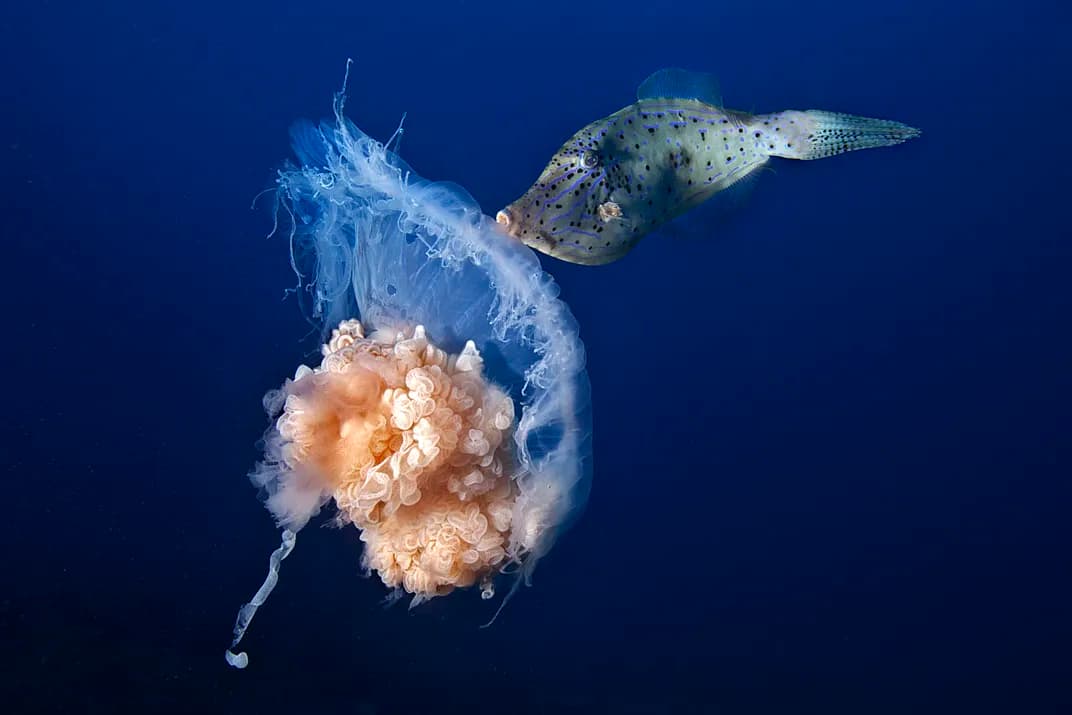
Why jellyfish matter more than most people assume
Jellyfish are often treated as background marine oddities, but that misses the point. They are low-cost biological systems that can convert shifting ocean conditions into real competitive advantage.
That is why jellyfish matter in ecology discussions. When they bloom, they often reveal something about the surrounding system.
What makes a jellyfish unique?
A jellyfish does not rely on a heavy skeleton, large brain, or muscular chase strategy. It uses nematocysts, pulsed movement, and a gelatinous body plan that keeps structural costs low.
That makes it a different kind of survival hardware. It is not trying to overpower the ocean. It is trying to exploit the flow efficiently enough to stay in the game.
How jellyfish survive
Jellyfish survive by pairing simple capture hardware with environmental drift. They let currents do part of the transportation work while keeping prey capture mechanisms ready.
In animal behavior terms, this is a lightweight strategy. The jellyfish does not need to dominate every interaction if the surrounding water keeps delivering opportunities.
Do jellyfish feel pain?
Jellyfish respond to touch, injury, and environmental change, but that does not automatically mean they feel pain in the way vertebrates are thought to. They do not have a brain or a centralized nervous system that would strongly suggest pain processing like mammals, birds, or many other animals.
The safer interpretation is that jellyfish detect and react to harmful stimuli without good evidence for conscious pain as humans usually mean it. They have nerve nets, not a centralized mind, so the better phrase is stimulus response rather than emotional suffering.
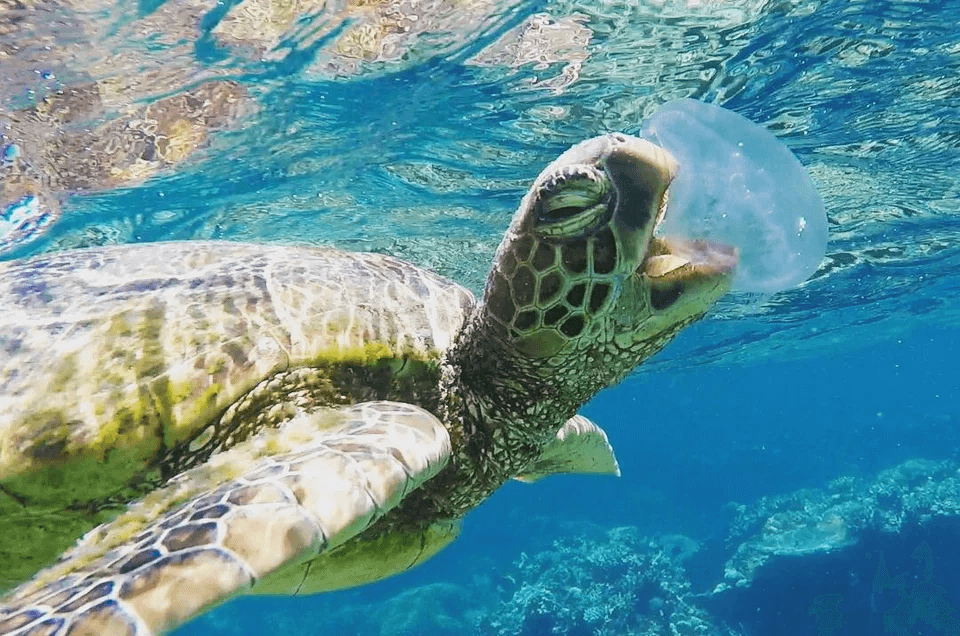
That difference matters when people ask how predators interact with them. A sea turtle eating a jellyfish is still part of a real ecological relationship, but it is not well described by projecting mammal-style pain assumptions onto a very different kind of body plan.
The ecosystem role of jellyfish
Jellyfish feed on plankton and small organisms while also serving as food for other marine animals. Their ecosystem role is part transfer system and part warning light.
When jellyfish populations surge, it can indicate marine imbalance, altered predation, or nutrient conditions that favor opportunistic, low-overhead biology.
What humans can learn from jellyfish
Jellyfish are a lesson in structural economy. A system does not need to be elaborate to be effective if it is built for the real conditions it expects to face.
That is the useful insight: sometimes the winning move is to lower the operating cost enough that the environment starts carrying more of the burden.
Systems Intelligence & Hidden Purpose
Lihat hewan-hewan ini sebagai sistem biologis yang dirancang dengan presisi: apa fungsinya, bagaimana ia bekerja di lingkungan, dan apa yang bisa kita pelajari dari desainnya.
Specialized Hardware
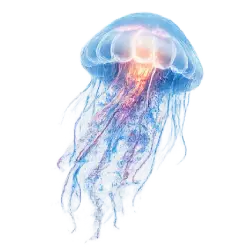
Nematocysts, a gelatinous low-cost body plan, pulsed propulsion, and a simple nerve net allow jellyfish to capture prey with minimal structural expense.
Systems Script
Jellyfish convert plankton-rich water into higher trophic energy and can rapidly exploit imbalanced marine conditions. Their blooms often reveal that the surrounding system has become easier to game.
Strategic Insight
Lightweight systems can become dominant when the environment does most of the transport for them. Reduce overhead before you add muscle.
Hewan yang disebut
Lompat dari artikel ini ke halaman spesies di balik contoh, catatan systems, dan referensi field guide.
Panduan jawaban terkait topik ini
Kalau kamu ingin perbandingan langsung dan rekomendasi yang jelas, lanjutkan ke halaman jawaban berikut.
Best Animal Identification App
Compare AnimalDex, iNaturalist, Seek, Merlin Bird ID, Google Lens and PictureThis by wildlife coverage, offline use, AI identification, learning and collection features.
Baca answer guideWhat Is Animal Collecting
Learn what animal collecting means in modern apps and how AnimalDex turns real-world sightings into cards, sets, rarity, and species learning.
Baca answer guidePokemon-Like Animal App
Looking for a Pokemon-like animal app with real species? AnimalDex combines creature-collection energy with AI scanning and wildlife learning.
Baca answer guideUbah apa yang kamu pelajari jadi koleksi hewan nyata
Lanjutkan di AnimalDex dengan spesies di balik panduan ini, konteks spotting dunia nyata, dan koleksi yang terus tumbuh setelah artikel selesai dibaca.
Panduan terkait
What Makes Crows So Intelligent? Systems, Behavior, and Survival Strategy
Learn what makes crows so intelligent, from memory and tool use to adaptive behavior, survival strategy, and their ecosystem role in changing environments.
Baca artikelHow Octopus Intelligence Works: Nature’s Most Advanced Problem Solver
Explore octopus intelligence through animal behavior, flexible nervous systems, camouflage, survival strategy, and the octopus ecosystem role.
Baca artikelHow Honey Bees Keep Ecosystems Running: Pollination, Behavior, and Survival Strategy
Understand honey bee behavior, pollination logistics, colony intelligence, ecosystem role, and how honey bees survive as one of nature’s most important networks.
Baca artikel