

Animals in Namibia: What You Can Spot, Learn, and Collect
Namibia wildlife guide: Etosha's waterhole lions and black rhinos, Damaraland desert elephants, Cape Cross fur seals, Sossusvlei oryx and wild cheetahs.
Jawaban cepat
Mulai dari jawaban langsung, lalu gunakan bagian di bawah untuk melihat kenapa lokasi ini penting dan hewan mana yang benar-benar realistis untuk di-spot di sana.
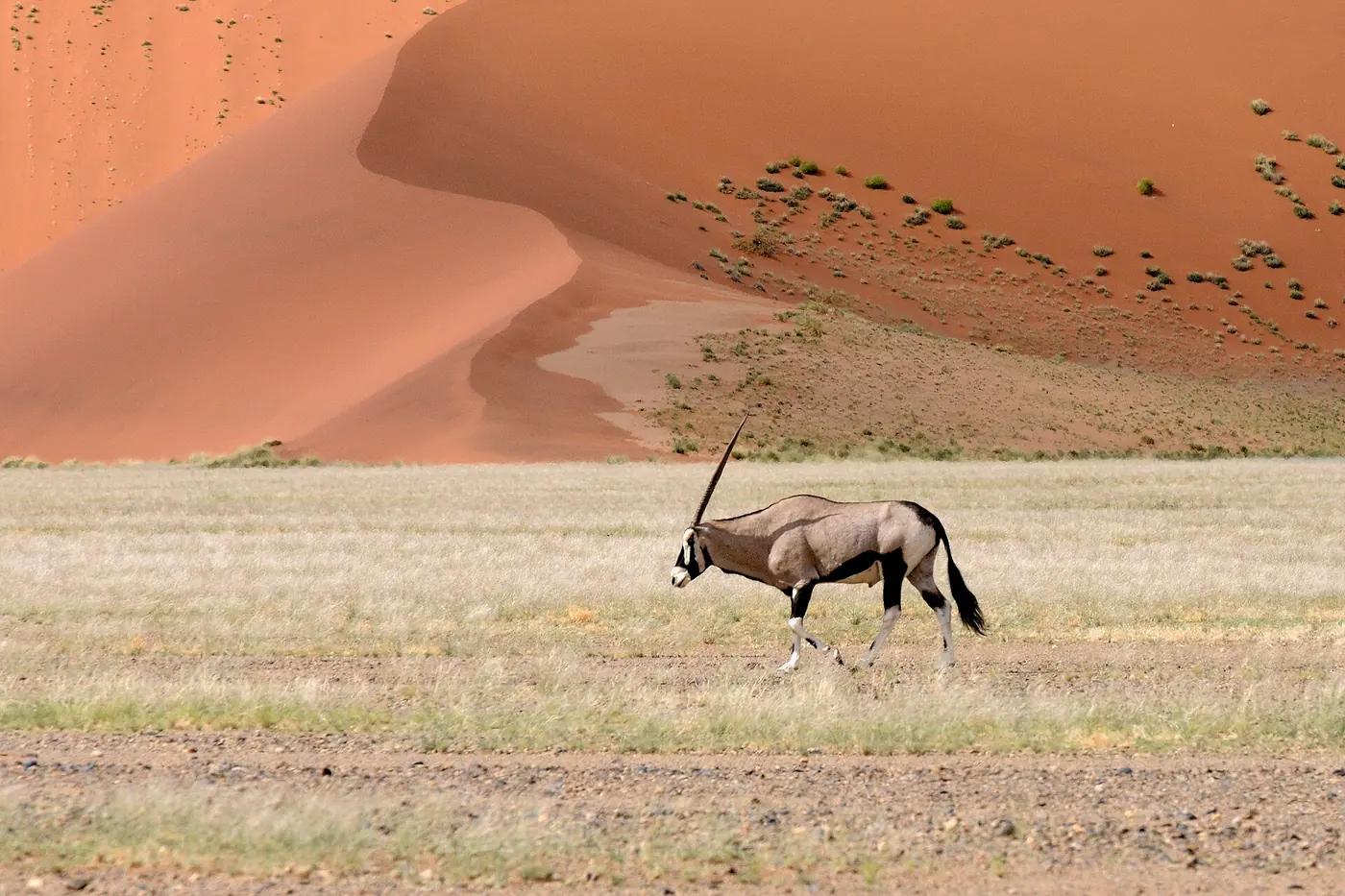
Namibia is waterhole country. Etosha's floodlit waterholes at Okaukuejo and Halali deliver lions, black rhinos, elephants and giraffes with almost no effort; Damaraland has desert-adapted elephants and rhinos tracked on foot; Cape Cross holds over 100,000 Cape fur seals; and the Sossusvlei dunes have oryx, springbok and ostrich walking across red sand. Namibia also has more wild cheetahs than any other country.
Namibia's wildlife is spread thin across a huge, dry country, but it concentrates hard around water. That is why Etosha works so well: a 22,000 square kilometre park where the animals come to the few permanent waterholes and the visitor simply waits. Sitting at Okaukuejo at night, with black rhinos drinking under floodlights, is one of Africa's great low-effort experiences.
Outside the park the story is desert adaptation. Elephants dig for water in the Hoanib and Huab riverbeds, oryx walk the Sossusvlei dunes at midday, fog-basking beetles stand on their heads in the Namib, and the Skeleton Coast seal colonies feed on the cold Benguela current a few metres from the sand.
Kenapa lokasi ini penting
Halaman lokasi yang baik menjelaskan kenapa tempat ini layak dikunjungi, bukan hanya nama-nama yang cocok dimasukkan ke checklist destinasi.
Namibia holds the largest free-roaming black rhino population in the world and most of the planet's remaining wild cheetahs, largely on communal conservancies and farmland rather than in fenced parks. That model, with local communities earning from wildlife, is why its numbers have grown while others fell.
The Namib also shows how life manages on almost nothing: beetles that drink fog, lizards that swim in sand, elephants that go days between drinks. It is the best place in Africa to see adaptation rather than abundance.
Tempat mencari
Peta satwa liar Namibia
Panduan ini mencakup wilayah di bawah ini. Perbesar peta untuk mengenali areanya sebelum merencanakan perjalanan.
Posisi diambil dari OpenStreetMap. Akses habitat dan jam buka bisa berubah — periksa dulu sebelum berangkat.
Hewan untuk di-spot
Pilihan spesies di sini sengaja dibuat praktis, menyeimbangkan aksesibilitas, excitement, dan apa yang realistis untuk diperhatikan traveler di lokasi tersebut.
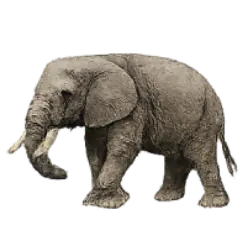
African Bush ElephantS
Big Etosha herds crowd the waterholes in the dry season, and the famous desert-adapted elephants of Damaraland walk the dry Huab, Ugab and Hoanib riverbeds eating ana tree pods.
Catatan spotting: Near-certain at Etosha waterholes June to October; the desert herds need a guided drive.
Baca panduan spesies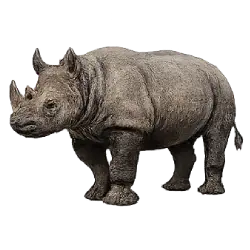
Black RhinocerosA
Etosha has one of the largest populations anywhere and the Okaukuejo waterhole is the most reliable spot in Africa to watch them drink at night. Damaraland's free-roaming rhinos are tracked on foot with Save the Rhino Trust guides.
Catatan spotting: Reliable at Okaukuejo after dark in the dry season.
Baca panduan spesies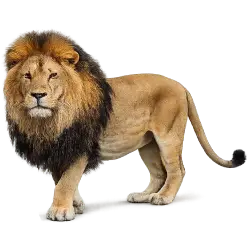
LionB
Etosha prides lie up near the waterholes around Okaukuejo and Namutoni, and a small desert population hunts seals and oryx along the Skeleton Coast.
Catatan spotting: Common in Etosha; the desert lions are rare and need a specialist guide.
Baca panduan spesies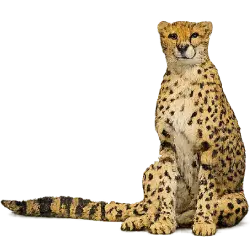
CheetahA
Namibia's farmland and conservancies hold the world's largest wild cheetah population, and the Cheetah Conservation Fund near Otjiwarongo and the Okonjima reserve let you see rehabilitated and wild ones.
Catatan spotting: Wild sightings are luck; near-certain at Okonjima and CCF (managed reserves).
Baca panduan spesies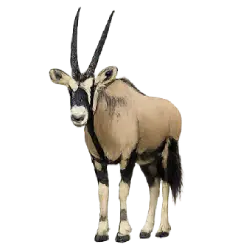
GemsbokB
Namibia's national animal, the oryx, walks the red dunes of Sossusvlei at midday and stands in the white clay of Deadvlei for the classic photograph.
Catatan spotting: Common throughout the Namib and Etosha.
Baca panduan spesies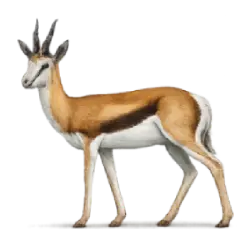
SpringbokC
Herds pronk across the Etosha pan edge and graze the gravel plains around Sesriem and Solitaire.
Catatan spotting: Abundant in Etosha and the Namib.
Baca panduan spesies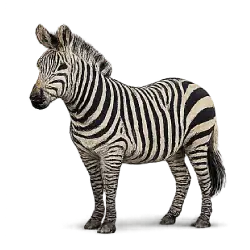
Mountain ZebraB
Hartmann's mountain zebra climbs the escarpment between the Namib and the highlands, best seen in the NamibRand reserve, Naukluft and western Etosha around Dolomite camp.
Catatan spotting: Regular in the Naukluft mountains and western Etosha.
Baca panduan spesies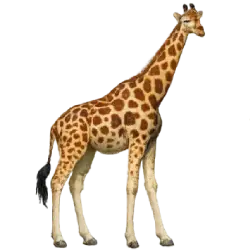
GiraffeB
Splay-legged giraffes drinking at Etosha waterholes are a park signature, and desert giraffes browse the ephemeral rivers of Damaraland and Kaokoland.
Catatan spotting: Common in Etosha and the north-west.
Baca panduan spesies
SealB
Cape Cross on the Skeleton Coast holds one of the largest Cape fur seal colonies on earth, over 100,000 animals on the rocks, and smaller colonies haul out at Pelican Point near Walvis Bay.
Catatan spotting: Guaranteed at Cape Cross; the smell arrives before the view.
Baca panduan spesies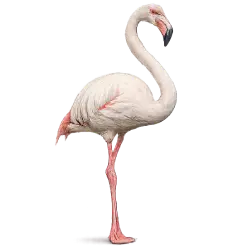
Greater FlamingoC
Thousands feed in the Walvis Bay lagoon and the salt works at Swakopmund, pink against the dunes.
Catatan spotting: Common year-round at Walvis Bay; peak numbers in summer.
Baca panduan spesies
Sociable WeaverD
Builds haystack-sized communal nests in camelthorn trees and on telegraph poles across the Kalahari and southern Namibia.
Catatan spotting: The nests are unmissable along the C- and D-roads; the birds swarm at them at dawn.
Baca panduan spesies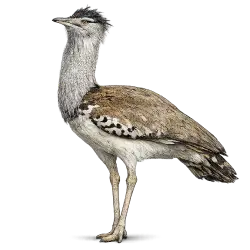
Kori BustardC
The world's heaviest flying bird strides across the Etosha grasslands and the plains around Sesriem, often alongside springbok.
Catatan spotting: Regular in Etosha and the Namib plains.
Baca panduan spesies
Namib Desert BeetleE
Fog-basking beetles climb the Namib dune crests at dawn and tilt into the sea mist so droplets run down to their mouths. The Living Desert tours out of Swakopmund find them with other dune specialists.
Catatan spotting: Reliable on a guided dune walk on a foggy morning.
Baca panduan spesies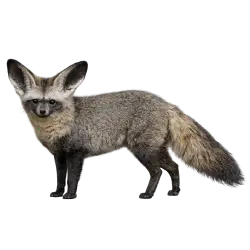
Bat-eared FoxC
Family groups trot across the short grass of Etosha and the Kalahari at dusk, swivelling their huge ears to listen for termites underground.
Catatan spotting: Regular at dusk and dawn in Etosha and around Sesriem.
Baca panduan spesiesPaling cocok untuk
Gunakan bagian ini untuk menilai apakah lokasi tersebut cocok dengan gaya perjalanan, level pengalaman, dan target AnimalDex kamu.
- Self-drivers who want a safari without a guide; Etosha's roads and waterholes are made for it.
- Photographers chasing oryx on red dunes and rhinos under floodlights.
- Travellers interested in community conservation and the cheetah and rhino recovery story.
- Anyone who wants desert adaptations: fog beetles, sand-swimming lizards and desert elephants.
Tips spotting
Tips ini dibuat agar halaman ini benar-benar berguna di lapangan, bukan hanya enak dibaca di layar.
- 01In Etosha, park at a waterhole and wait rather than driving; the dry-season (June to October) brings everything to Okaukuejo, Nebrownii and Chudop in turn.
- 02Book the Okaukuejo or Halali waterhole-side rooms, or at least stay in camp after dark, for black rhino.
- 03Visit Cape Cross in November and December when the pups are born, but expect noise, smell and jackals working the colony edge.
- 04Take a Living Desert tour at Swakopmund before 9am; the small dune animals retreat as soon as the sand heats up.
Wildlife Guides virtual
Panduan satwa liar ke Namibia
AnimalDex membuat panduan virtual dari penampakan satwa liar milik para penjelajah sendiri: satwa apa yang mereka temukan, seberapa langka, dan kapan. Panduan adalah saran dari orang yang pernah ke sana, bukan tur. Membelinya membuka catatan penulis untuk setiap satwa, obrolan dengan penulis, dan perkenalan dengan warga lokal yang mereka temui. Penampakan satwa tidak pernah dijamin.
Memeriksa panduan virtual ke Namibia...
Cara memilih pemandu satwa liar lokal di Namibia
- Tanyakan apa yang biasanya mereka temukan pada musim kunjunganmu. Pemandu yang baik memberi jawaban jujur, bukan janji pasti melihat satwa tertentu.
- Perhatikan cara mereka memperlakukan satwa: tanpa umpan, tanpa memanggil satwa, tanpa memegang, dan tanpa flash dari jarak dekat demi foto.
- Pastikan titik temu, durasi, ukuran grup, total harga, dan cara pembayaran sebelum hari kegiatan, termasuk izin atau biaya taman yang diperlukan.
Lacak hewan yang kamu temukan di Namibia
Bangun koleksimu sambil menjelajahi Namibia, dari spesies yang mudah ditemukan sampai target yang layak direncanakan khusus.
Tier list terkait
Tier list ini memberi konteks yang lebih luas untuk spesies yang membuat lokasi ini menarik.
100 Fastest Animals in the World
Ranked list of the fastest animals in the world, with land, flying, and marine speed kept separate so a diving falcon is not treated as the same kind of fast as a cheetah.
Baca tier list100 Most Resilient Animals
Most resilient animals ranked by recovery, climate toughness, and staying functional under stress — not a copy of the strongest or most dangerous lists.
Baca tier listLokasi terkait
Lanjutkan eksplorasi dengan destinasi yang mirip atau berdekatan dan mendukung gaya discovery AnimalDex yang sama.
Animals in Botswana: What You Can Spot, Learn, and Collect
Botswana wildlife guide: Okavango Delta mokoro trips with hippos and lechwe, Chobe's river elephants, wild dogs in Moremi, Makgadikgadi meerkats and the zebra migration.
Baca panduan lokasiAnimals in South Africa: What You Can Spot, Learn, and Collect
A practical South Africa wildlife guide built around safari-scale visibility, strong mammal encounters, and the supporting species that keep trips rich even between predator moments.
Baca panduan lokasiAfrican Safari Animals: What You Can Spot and Why It Matters
A structured African safari guide built around practical safari species, real spotting expectations, and the animals that make open-country wildlife travel so iconic.
Baca panduan lokasiFAQ lokasi
Jawaban singkat dan langsung untuk pertanyaan yang biasanya ditanyakan traveler sebelum memilih destinasi satwa liar atau hari kebun binatang.
What wildlife is there in Namibia?
Lions, elephants, black and white rhinos, giraffes, cheetahs, leopards and large herds of oryx, springbok and zebra in Etosha and the conservancies; desert-adapted elephants and rhinos in Damaraland; Cape fur seals and flamingos on the coast; and a specialised Namib fauna of fog beetles, geckos and sidewinding adders.
What animals can be found in Namibia?
About 200 mammal species including the largest wild cheetah population on earth and the biggest free-roaming black rhino population, over 650 bird species, and desert specialists found nowhere else such as the Namib dune gecko and the fog-basking beetle.
When is the best time to see animals in Namibia?
The dry season from June to October, when the waterholes in Etosha are the only water for miles and the animals queue up. November to April is greener, hotter and better for birds and newborn antelope, but the game spreads out.
Can you see the Big Five in Namibia?
Four of them easily: lion, elephant, rhino and leopard are all in Etosha and the private reserves. Buffalo only occur in the wetter far north-east, in Bwabwata and the Zambezi region, so the classic Big Five needs a trip to the Caprivi strip.
Bagaimana cara menemukan panduan satwa liar ke Namibia?
Lihat bagian Wildlife Guides di halaman ini atau jelajahi Wildlife Guides di AnimalDex. Setiap panduan adalah panduan virtual yang dibuat dari penampakan satwa liar milik seorang penjelajah di sekitar Namibia: satwa yang mereka temukan, seberapa langka, dan kapan. Ini saran dari orang yang pernah ke sana, bukan tur. Jika kamu ingin ditemani seseorang di lokasi, bandingkan pemandu lokal dari pengetahuan satwanya, cara mereka memperlakukan satwa, dan kejelasan harganya sebelum berangkat.