#0441 · Generation IV
What Animal Is Chatot Based On?
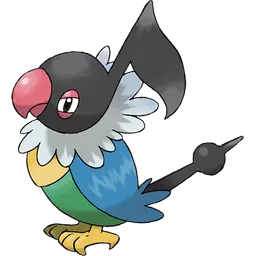
Chatot most closely resembles the Budgerigar.
Closest animal
BudgerigarConfidence
Reasonable animal match
How Chatot compares to the real Budgerigar
Chatot's official category is the Music Note Pokémon. AnimalDex rates its resemblance to the Budgerigar as a reasonable match, meaning the animal is clear but the design mixes in other traits. Chatot is the Music Note Pokemon, a small colourful parrot that mimics human speech. Its chattering, bright green-and-yellow plumage and long tail are closest to a budgerigar, a famous talking parrot.
The comparison covers looks and behavior cues, not biology: Chatot is a fictional Pokémon, while the Budgerigar (Melopsittacus undulatus) is a real animal. On AnimalDex the real Budgerigar scores 19 for dominance, 57 for speed, 9 for size and 56 for intelligence, out of 100, so its strongest trait is speed. AnimalDex also links Chatot to the African Grey Parrot, covered below.
Official category: Music Note Pokemon. This page is an AnimalDex comparison for real-animal resemblance, not an official design-origin claim.
Meet the real Budgerigar
Melopsittacus undulatus
Adults go on learning calls: birds that pair up or join a new group alter their contact calls until they match those of their companions. This small, long-tailed parrot of Australia's dry interior at times gathers in flocks of many thousands.
How to recognize it
- Wild birds are green below with a yellow face
- Fine black barring on head, back and wings
- Row of black spots across the throat
Real Budgerigar facts
- The blue, white, grey and all-yellow birds seen in cages are products of selective breeding from the wild green form.
- The naturalist John Gould took live budgerigars to England in 1840, and they went on to become one of the most widely kept pet birds.
- Diet
- Grass seeds, grains, greens, and occasional fruit.
- Lifespan
- Pet budgerigars typically live 5 to 10 years, and some reach 15 or more. Wild birds probably live shorter lives, though few have been followed.
- Predators and threats
- Hawks, falcons, snakes, cats, and nest predators threaten it.
| Dominance | Speed | Size | Intelligence |
|---|---|---|---|
| 19/100 | 57/100 | 9/100 | 56/100 |
Meet the real African Grey Parrot
Psittacus erithacus
This parrot of West and Central African rainforest goes on learning new sounds throughout its life instead of hatching with a fixed set of calls. In decades of laboratory work by Irene Pepperberg, a bird named Alex used spoken English labels for objects, colours and shapes and answered simple questions about number.
How to recognize it
- vocal mimicry
- grey plumage
- red tail
- Diet
- African Grey Parrot feeds on seeds, nuts, fruit, berries, and palm foods.
- Lifespan
- Captive birds have lived 40 to 60 years, though many die younger. Lifespan in the wild is poorly measured and is thought to be considerably shorter.
- Predators and threats
- Birds of prey, including palm-nut vultures, have been recorded taking grey parrots, and monkeys and snakes are thought to raid nest holes. Flocks keep to the high canopy and are wary when they come to the ground. Trapping for the pet trade, with forest loss, is by far the greatest threat.
| Dominance | Speed | Size | Intelligence |
|---|---|---|---|
| 42/100 | 55/100 | 22/100 | 88/100 |
Chatot animal FAQ
- What animal is Chatot based on?
- Chatot most closely resembles the Budgerigar. Chatot is the Music Note Pokemon, a small colourful parrot that mimics human speech. Its chattering, bright green-and-yellow plumage and long tail are closest to a budgerigar, a famous talking parrot.
- Is Chatot a real animal?
- No. Chatot is a fictional Pokémon. Its closest real counterpart is the Budgerigar (Melopsittacus undulatus), which AnimalDex covers with real field-guide facts.
- What is the real Budgerigar like?
- Adults go on learning calls: birds that pair up or join a new group alter their contact calls until they match those of their companions. This small, long-tailed parrot of Australia's dry interior at times gathers in flocks of many thousands.