#0014 · Generation I
What Animal Is Kakuna Based On?
Kakuna most closely resembles the Death's-head Hawkmoth.
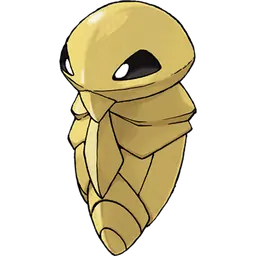
Closest animal
Death's-head HawkmothConfidence
Reasonable animal match
How Kakuna compares to the real Death's-head Hawkmoth
Kakuna's official category is the Cocoon Pokémon. AnimalDex rates its resemblance to the Death's-head Hawkmoth as a reasonable match, meaning the animal is clear but the design mixes in other traits. Kakuna is a hard, motionless pupa hanging from branches. It continues Weedle's larva-to-adult story, and its smooth segmented casing resembles the pupa of a hawkmoth more than any bee or wasp nest cell.
The comparison covers looks and behavior cues, not biology: Kakuna is a fictional Pokémon, while the Death's-head Hawkmoth (Acherontia atropos) is a real insect. On AnimalDex the real Death's-head Hawkmoth scores 13 for dominance, 44 for speed, 9 for size and 17 for intelligence, out of 100, so its strongest trait is speed. AnimalDex also links Kakuna to the German Yellowjacket, covered below.
Official category: Cocoon Pokemon. This page is an AnimalDex comparison for real-animal resemblance, not an official design-origin claim.
Meet the real Death's-head Hawkmoth
Acherontia atropos
Death's-head Hawkmoth teaches Unmistakable Mark through a night moth owning the strange sign on its body. Skull-like thorax mark, strong flight, squeak, hive entry, and honey theft make identity powerful because it cannot be mistaken for ordinary.
How to recognize it
- Skull-like marking on the thorax creates an unmistakable visual identity.
- Strong body and wings allow powerful night flight and migration.
- Can produce squeaking sounds when disturbed.
- Diet
- Adults feed on honey, nectar, and sweet liquids, while caterpillars feed on host plant leaves.
- Lifespan
- Adults usually live only weeks, while the full life cycle includes egg, caterpillar, pupa, and adult stages. The brief adult span makes the unmistakable mark feel urgent.
- Predators and threats
- Birds, bats, spiders, parasitoids, honeybees, humans, and pesticides threaten them. Squeaking, strong flight, and hive adaptations help but do not remove the risk.
| Dominance | Speed | Size | Intelligence |
|---|---|---|---|
| 13/100 | 44/100 | 9/100 | 17/100 |
Meet the real German Yellowjacket
Vespula germanica
European wasp carries Collective Defense through colonies, paper architecture, and quick response to disturbance, succeeding by making many small workers act like one dangerous body.
How to recognize it
- Black-and-yellow warning pattern
- Paper nest colony life
- Fast defensive flight
Real German Yellowjacket facts
- Workers build papery nests from chewed wood fibers.
- Colonies grow through the warm season and can become highly defensive near nests.
- Diet
- They eat nectar, fruit, carrion, human scraps, and insects gathered for larvae. The diet supports flexible colony growth because workers can switch between hunting and scavenging.
- Lifespan
- Individual workers usually live weeks, while queens can survive through winter to start new colonies. The colony itself is mostly seasonal in temperate climates.
- Predators and threats
- Birds, mammals, spiders, parasitoids, weather, and humans can threaten nests or individuals. Group defense and hidden paper nests reduce the risk of losing the whole colony.
| Dominance | Speed | Size | Intelligence |
|---|---|---|---|
| 22/100 | 26/100 | 4/100 | 19/100 |
Kakuna animal FAQ
- What animal is Kakuna based on?
- Kakuna most closely resembles the Death's-head Hawkmoth. Kakuna is a hard, motionless pupa hanging from branches. It continues Weedle's larva-to-adult story, and its smooth segmented casing resembles the pupa of a hawkmoth more than any bee or wasp nest cell.
- Is Kakuna a real animal?
- No. Kakuna is a fictional Pokémon. Its closest real counterpart is the Death's-head Hawkmoth (Acherontia atropos), which AnimalDex covers with real field-guide facts.
- What is the real Death's-head Hawkmoth like?
- Death's-head Hawkmoth teaches Unmistakable Mark through a night moth owning the strange sign on its body. Skull-like thorax mark, strong flight, squeak, hive entry, and honey theft make identity powerful because it cannot be mistaken for ordinary.
- Which other Pokémon are based on the Death's-head Hawkmoth?
- AnimalDex also pairs Weedle, Duskull, Dusclops, Yamask and Cofagrigus with the Death's-head Hawkmoth.
More Death's-head Hawkmoth comparisons in Generation I
| No. | Pokemon | Closest animal | Basis |
|---|---|---|---|
| #0013 |  Weedle | medium |