#0844 · Generation VIII
What Animal Is Sandaconda Based On?
Sandaconda most closely resembles the Arabian Sand Boa.
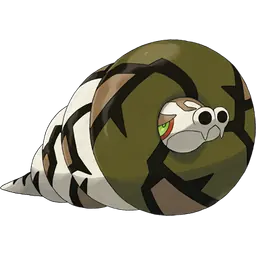
Closest animal
Arabian Sand BoaConfidence
Strong animal match
How Sandaconda compares to the real Arabian Sand Boa
Sandaconda's official category is the Sand Snake Pokémon. AnimalDex rates its resemblance to the Arabian Sand Boa as a strong match, meaning the design reads directly as this animal. Sandaconda coils its body around a sand sac and sprays sand, keeping the Sand Snake Pokémon category. It is a desert sand boa at heart, while its name puns on the anaconda's bulk.
The comparison covers looks and behavior cues, not biology: Sandaconda is a fictional Pokémon, while the Arabian Sand Boa (Eryx jayakari) is a real reptile. On AnimalDex the real Arabian Sand Boa scores 20 for dominance, 24 for speed, 13 for size and 32 for intelligence, out of 100, so its strongest trait is intelligence. AnimalDex also links Sandaconda to the Green Anaconda, covered below.
Official category: Sand Snake Pokemon. This page is an AnimalDex comparison for real-animal resemblance, not an official design-origin claim.
Meet the real Arabian Sand Boa
Eryx jayakari
Seldom longer than about 40 centimetres, this small, stout boa of the Arabian Peninsula and south-western Iran strikes sideways at a passing lizard with great speed and then wraps it in its coils.
How to recognize it
- Blunt sand-burrowing head
- Eyes set high on head
- Ambush under loose sand
- Diet
- Small lizards are the main prey, chiefly geckos that come out onto the sand after dark, and worm lizards are also reported. Prey is swallowed whole, head first.
- Lifespan
- Individuals kept in captivity are reported to reach 10 years or more; no figure has been published for wild snakes.
- Predators and threats
- Records of predation are scarce. Owls, foxes, monitor lizards and larger snakes probably take some, most likely when a snake is caught crossing the surface at night.
| Dominance | Speed | Size | Intelligence |
|---|---|---|---|
| 20/100 | 24/100 | 13/100 | 32/100 |
Meet the real Green Anaconda
Eunectes murinus
The green anaconda is a giant semi-aquatic constrictor built for ambush from dark water, with heavy body mass and cryptic olive coloration.
How to recognize it
- Very thick olive-green body marked with dark round blotches
- Head and eyes positioned for low-water concealment
- Often partly submerged in slow swamp or marsh habitat
Real Green Anaconda facts
- Green anacondas are outstanding examples of water-assisted constrictor strategy.
- Their size and secrecy make them powerful symbols of tropical wetland function.
- Diet
- Fish, birds, capybaras, caimans, turtles, mammals, and other wetland animals.
- Lifespan
- Green Anacondas can live for decades in suitable conditions.
- Predators and threats
- Jaguars, caimans, large birds for young, humans, and habitat disturbance threaten anacondas. Water, size, concealment, and patience reduce risk, but the setting remains the real ally.
| Dominance | Speed | Size | Intelligence |
|---|---|---|---|
| 90/100 | 23/100 | 84/100 | 28/100 |
Sandaconda animal FAQ
- What animal is Sandaconda based on?
- Sandaconda most closely resembles the Arabian Sand Boa. Sandaconda coils its body around a sand sac and sprays sand, keeping the Sand Snake Pokémon category. It is a desert sand boa at heart, while its name puns on the anaconda's bulk.
- Is Sandaconda a real animal?
- No. Sandaconda is a fictional Pokémon. Its closest real counterpart is the Arabian Sand Boa (Eryx jayakari), which AnimalDex covers with real field-guide facts.
- What is the real Arabian Sand Boa like?
- Seldom longer than about 40 centimetres, this small, stout boa of the Arabian Peninsula and south-western Iran strikes sideways at a passing lizard with great speed and then wraps it in its coils.
- Which other Pokémon are based on the Arabian Sand Boa?
- AnimalDex also pairs Silicobra with the Arabian Sand Boa.
More Arabian Sand Boa comparisons in Generation VIII
| No. | Pokemon | Closest animal | Basis |
|---|---|---|---|
| #0843 |  Silicobra | strong |