#0387 · Generation IV
What Animal Is Turtwig Based On?
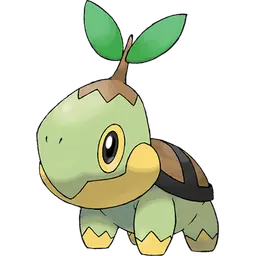
Turtwig most closely resembles the Galapagos Tortoise.
Closest animal
Galapagos TortoiseConfidence
Reasonable animal match
How Turtwig compares to the real Galapagos Tortoise
Turtwig's official category is the Tiny Leaf Pokémon. AnimalDex rates its resemblance to the Galapagos Tortoise as a reasonable match, meaning the animal is clear but the design mixes in other traits. Turtwig is a small, stocky turtle with a hard, soil-covered shell and a sprout on its head. Its domed shell, stubby legs and plodding land-based life point to a tortoise, and the Galapagos tortoise is the iconic example.
The comparison covers looks and behavior cues, not biology: Turtwig is a fictional Pokémon, while the Galapagos Tortoise (Chelonoidis niger) is a real reptile. AnimalDex also links Turtwig to the Alligator Snapping Turtle, covered below.
Official category: Tiny Leaf Pokemon. This page is an AnimalDex comparison for real-animal resemblance, not an official design-origin claim.
Meet the real Galapagos Tortoise
Chelonoidis niger
The Galápagos giant tortoise (Chelonoidis niger and related species) is the largest living tortoise, native only to the Galápagos Islands. Large males can exceed 250 kg, with shells over 1.5 m long. Several island populations are now treated as separate species.
How to recognize it
- Huge, dark brown to black shell.
- Shell shape varies by island: domed on wet, high islands and saddle-shaped with a raised front on dry islands.
- Long neck and thick, scaly, elephant-like legs.
Real Galapagos Tortoise facts
- Wild tortoises often live more than 100 years.
- Saddleback shells let tortoises on dry islands stretch their necks up to reach cactus pads.
Meet the real Alligator Snapping Turtle
Macrochelys temminckii
The largest freshwater turtle in North America, confined to rivers that drain into the Gulf of Mexico. Large males commonly reach 70 kilograms or more. It can stay under water for 40 to 50 minutes between breaths and almost never comes out to bask.
How to recognize it
- Worm-like tongue lure that brings curious fish close
- Massive head and hooked beak for sudden close-range capture
- Ridged shell that resembles old submerged debris
- Diet
- Alligator Snapping Turtle feeds on fish, frogs, snakes, turtles, birds, carrion, and prey drawn by its tongue lure.
- Lifespan
- Often several decades and may exceed 70 years; Attraction here is not charm, but a lifetime of designing the trap so opportunity swims inward.
- Predators and threats
- Raccoons dig up many nests, and hatchlings are eaten by large fish, wading birds and other turtles. Adults have no regular predator except people, who trapped them heavily for meat. A cornered turtle gapes and bites; its small lower shell leaves the limbs exposed.
| Dominance | Speed | Size | Intelligence |
|---|---|---|---|
| 72/100 | 18/100 | 42/100 | 28/100 |
Turtwig animal FAQ
- What animal is Turtwig based on?
- Turtwig most closely resembles the Galapagos Tortoise. Turtwig is a small, stocky turtle with a hard, soil-covered shell and a sprout on its head. Its domed shell, stubby legs and plodding land-based life point to a tortoise, and the Galapagos tortoise is the iconic example.
- Is Turtwig a real animal?
- No. Turtwig is a fictional Pokémon. Its closest real counterpart is the Galapagos Tortoise (Chelonoidis niger), which AnimalDex covers with real field-guide facts.
- What is the real Galapagos Tortoise like?
- The Galápagos giant tortoise (Chelonoidis niger and related species) is the largest living tortoise, native only to the Galápagos Islands. Large males can exceed 250 kg, with shells over 1.5 m long. Several island populations are now treated as separate species.
- Which other Pokémon are based on the Galapagos Tortoise?
- AnimalDex also pairs Golem, Grotle, Torterra, Bergmite, Avalugg and Terapagos with the Galapagos Tortoise.
More Galapagos Tortoise comparisons in Generation IV
| No. | Pokemon | Closest animal | Basis |
|---|---|---|---|
| #0388 |  Grotle | medium | |
| #0389 |  Torterra | broad |