#0893 · Generation VIII
What Animal Is Zarude Based On?
Zarude most closely resembles the Capuchin Monkey.
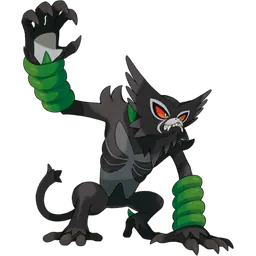
Closest animal
Capuchin MonkeyConfidence
Reasonable animal match
How Zarude compares to the real Capuchin Monkey
Zarude's official category is the Rogue Monkey Pokémon. AnimalDex rates its resemblance to the Capuchin Monkey as a reasonable match, meaning the animal is clear but the design mixes in other traits. Zarude is the Rogue Monkey Pokémon, a vine-wielding jungle primate. Its agile limbs, tail and troop behaviour fit a capuchin monkey, the clever, tool-using monkey of Central and South American forests.
The comparison covers looks and behavior cues, not biology: Zarude is a fictional Pokémon, while the Capuchin Monkey (Cebidae) is a real mammal. On AnimalDex the real Capuchin Monkey scores 36 for dominance, 52 for speed, 23 for size and 72 for intelligence, out of 100, so its strongest trait is intelligence.
Official category: Rogue Monkey Pokemon. This page is an AnimalDex comparison for real-animal resemblance, not an official design-origin claim.
Meet the real Capuchin Monkey
Cebidae
Stocky, cat-sized monkeys of the genera Cebus and Sapajus, with dexterous hands and large brains for their size. Bearded capuchins in dry parts of Brazil crack palm nuts with stone hammers on rock or log anvils, choosing stones by weight, and the young watch adults for years before they succeed.
How to recognize it
- Dark cap of fur on the crown
- Tail often carried with the tip curled
- Stocky body, roughly the size of a cat
Real Capuchin Monkey facts
- Archaeologists in north-eastern Brazil have excavated capuchin stone tools up to about 3,000 years old, the oldest known outside the apes and humans.
- Hammer stones used by bearded capuchins often weigh about a kilogram, a third or more of the body weight of the monkey lifting them.
- Diet
- Omnivorous: fruit, nuts, seeds, flowers, insects, spiders, eggs and small vertebrates such as lizards, frogs and nestlings; coastal groups eat crabs and shellfish. Much food is extracted by hand, by stripping bark, breaking dead twigs, unrolling leaves and pounding hard items open.
- Lifespan
- About 15 to 25 years in the wild; captive animals commonly reach 40 and a few have passed 50.
- Predators and threats
- Harpy eagles and other large raptors, jaguars, ocelots, tayras and large snakes hunt them. In the species studied, group members give different alarm calls for threats from the air and from the ground. Capuchins also dive into dense cover and mob snakes and cats.
| Dominance | Speed | Size | Intelligence |
|---|---|---|---|
| 36/100 | 52/100 | 23/100 | 72/100 |
Zarude animal FAQ
- What animal is Zarude based on?
- Zarude most closely resembles the Capuchin Monkey. Zarude is the Rogue Monkey Pokémon, a vine-wielding jungle primate. Its agile limbs, tail and troop behaviour fit a capuchin monkey, the clever, tool-using monkey of Central and South American forests.
- Is Zarude a real animal?
- No. Zarude is a fictional Pokémon. Its closest real counterpart is the Capuchin Monkey (Cebidae), which AnimalDex covers with real field-guide facts.
- What is the real Capuchin Monkey like?
- Stocky, cat-sized monkeys of the genera Cebus and Sapajus, with dexterous hands and large brains for their size. Bearded capuchins in dry parts of Brazil crack palm nuts with stone hammers on rock or log anvils, choosing stones by weight, and the young watch adults for years before they succeed.
- Which other Pokémon are based on the Capuchin Monkey?
- AnimalDex also pairs Pansage, Simisage and Grafaiai with the Capuchin Monkey.