
Back to Powers

Animal Powers

Calm

Hold steady.

Animals grouped here express a similar power through their behavior in nature. Each species still has its own principle, lesson, meaning, and field-guide page.

26 species

Ball Python animal lesson image on AnimalDex

Ball Python

Species principle: Leverage

Hold steady.

Power does not need to rush when it knows where to apply pressure.

Ball Pythons are ambush predators. They strike at close range and use muscular coils to restrain prey with sustained pressure instead of chasing over long distances.
Buff Orpington Duck animal lesson image on AnimalDex

Buff Orpington Duck

Species principle: Warm Provision

Provide warmly.

Reliable care often looks simple because it is repeated well.

Buff Orpington Ducks are domestic ducks valued for calm temperament, egg production, and practical farm utility.

Chaco Golden Knee Tarantula animal lesson image on AnimalDex

Chaco Golden Knee Tarantula

Species principle: Slow Temperament

Big, and in no hurry.

Being formidable and being calm are not opposites.

Chaco Golden Knee Tarantula is one of the largest and least defensive tarantulas kept, retreating or flicking urticating hairs long before it will consider a bite.

Coscoroba Swan (Coscoroba coscoroba) thumbnail image on AnimalDex

Coscoroba Swan

Species principle: Simple Elegance

Call across white water.

A clean signal can make quiet water feel ceremonial.

Coscoroba Swans are white waterfowl with strong calls and graceful movement on lakes and wetlands of southern South America.

Cow animal lesson image on AnimalDex

Cow

Species principle: Consistency

Small actions. Every day.

Ordinary actions repeated create extraordinary results.

Cows convert simple resources into nourishment through steady daily rhythms.

Crested Gecko animal lesson image on AnimalDex

Crested Gecko

Species principle: Sticky Patience

Hold steady.

Patience helps you stay steady when rushing would make things worse.

Crested geckos use sticky toe pads and careful climbing to move across branches, walls, and leaves without falling.

De Brazza's Monkey (Cercopithecus neglectus) thumbnail image on AnimalDex

De Brazza's Monkey

Species principle: Quiet Distinction

Still the beard.

Be quiet enough to be missed, distinct enough to be remembered.

De Brazza's monkeys have striking facial hair and are known for quiet, concealed behavior near forested rivers.

Discus Fish (Symphysodon aequifasciatus) thumbnail image on AnimalDex

Discus Fish

Species principle: Hovering Calm

Hold the circle.

Stay steady enough to hold your shape.

Discus fish use laterally compressed round bodies, controlled hovering, and social behavior in calm freshwater environments.

Dugong (Dugong dugon) thumbnail image on AnimalDex

Dugong

Species principle: Gentle Grazing

Graze the meadow.

A calm life can be shaped by returning to the same nourishing field.

Dugongs are marine mammals that graze on seagrass in shallow coastal habitats using downturned mouths and slow, steady movement.

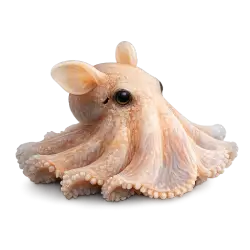
Dumbo Octopus animal lesson image on AnimalDex

Dumbo Octopus

Species principle: Ease

Float under pressure.

Calm movement can be the strongest response in extreme conditions.

Dumbo octopuses inhabit deep-sea environments and move with fin-powered hovering rather than constant aggressive swimming.

Dusky Leaf Monkey (Trachypithecus obscurus) thumbnail image on AnimalDex

Dusky Leaf Monkey

Species principle: Leaf Routine

Repeat the leaf.

Quiet repetition can become a peaceful strength.

Dusky leaf monkeys feed heavily on leaves and rely on specialized digestion, calm group life, and canopy routines.

French Lop Rabbit animal lesson image on AnimalDex

French Lop Rabbit

Species principle: Heavy Ease

Big and easy.

Calm presence can make largeness feel safe.

French Lop Rabbits are large lop-eared domestic rabbits associated with substantial build and calm companion-breed temperament.

Giraffe (Giraffa camelopardalis) thumbnail image on AnimalDex

Giraffe

Species principle: High Reach

Reach higher.

A different perspective can open resources hidden to everyone else.

Giraffes use long necks to browse high vegetation and scan across open habitats.

Jabiru (Jabiru mycteria) thumbnail image on AnimalDex

Jabiru

Species principle: Measured Strike

Step, then spear.

Move slowly enough for the moment to sharpen.

Jabirus are large wetland storks that walk deliberately through shallows and strike aquatic prey with a powerful bill.

Mallard animal lesson image on AnimalDex

Mallard

Species principle: Calm Flow

Float and follow.

Peace comes from moving with the water, not fighting every ripple.

Mallards feed, swim, migrate, and rest across changing wetlands while staying alert and socially connected.

Manta Ray (Mobula birostris) thumbnail image on AnimalDex

Manta Ray

Species principle: Open Grace

Glide wide.

Great width can move gently when it trusts the water.

Manta Rays are large filter-feeding rays that glide through ocean water with wing-like pectoral fins and use cephalic lobes to help guide plankton-rich water into the mouth.

Moon Jellyfish animal lesson image on AnimalDex

Moon Jellyfish

Species principle: Lunar Drift

Pulse with the moon.

Calm comes from pulsing with rhythm rather than forcing direction.

Moon Jellyfish drift and pulse through coastal waters with translucent bodies and simple rhythmic movement.

Panther Chameleon (Furcifer pardalis) thumbnail image on AnimalDex

Panther Chameleon

Species principle: Chameleon Aim

Aim before motion.

Careful aim beats frantic motion.

Panther Chameleons use independently moving eyes, grasping feet, color signaling, and a fast projectile tongue to capture prey from branches.

Explore related indexes