Back to Powers

Animal Powers

Canopy Life

Trust the glide.

Animals grouped here express a similar power through their behavior in nature. Each species still has its own principle, lesson, meaning, and field-guide page.

64 species

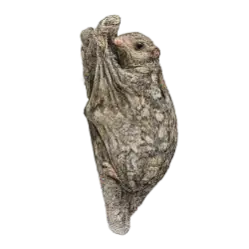
Sunda Colugo animal lesson image on AnimalDex

Sunda Colugo

Species principle: Canopy Membrane

Trust the glide.

Transition becomes smoother when support is stretched across the whole body.

Sunda Colugos glide between rainforest trees using a broad membrane that extends from neck to limbs and tail, allowing long controlled aerial movement.
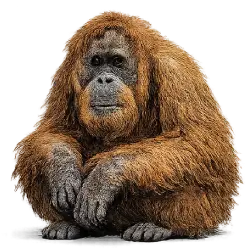
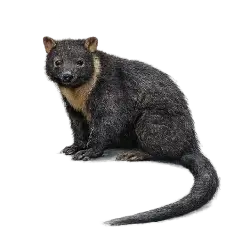
Tapanuli Orangutan (Pongo tapanuliensis) thumbnail image on AnimalDex

Tapanuli Orangutan

Species principle: Highland Nestcraft

Build above the mountain.

Thoughtful work becomes strength when it can make a home above the ground.

Tapanuli Orangutans are highly arboreal great apes that build nests in trees and live in a restricted highland forest range in Sumatra.

Tenkile animal lesson image on AnimalDex

Tenkile

Species principle: New Direction

Take the old body upward.

A familiar body can find a rare future by going upward.

Tenkiles are tree kangaroos from New Guinea mountain forests, using strong forelimbs, gripping paws, and tails for arboreal movement.

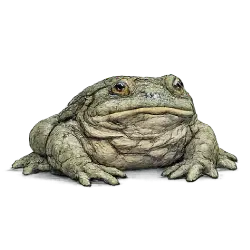
Titicaca Water Frog (Telmatobius culeus) thumbnail image on AnimalDex

Titicaca Water Frog

Species principle: Folded-Skin Breathing

Breathe through the folds.

Unusual surfaces can solve what ordinary lungs cannot.

Titicaca Water Frogs have loose folded skin that increases surface area for cutaneous respiration in cold, oxygen-rich high-altitude lake water.

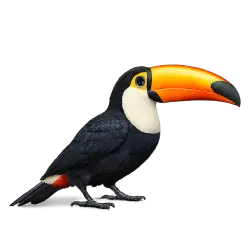
Toco Toucan (Ramphastos toco) thumbnail image on AnimalDex

Toco Toucan

Species principle: Bill Reach

Reach with color.

An unusual gift becomes useful when it extends what the body can touch.

Toco Toucans use large lightweight bills to reach, pluck, toss, and handle fruit in the canopy; the bill also helps with display and heat exchange.

Tree Pangolin animal lesson image on AnimalDex

Tree Pangolin

Species principle: Arboreal Armor

Armor in branches.

Protection can be quiet when armor and patience travel together.

Tree Pangolins are arboreal mammals with keratin scales, prehensile tails, and insect-feeding habits in African forests.

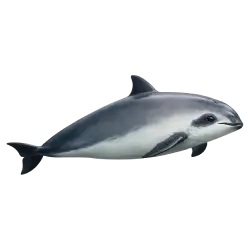
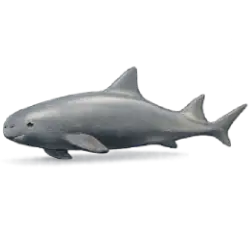
Vaquita (Phocoena sinus) thumbnail image on AnimalDex

Vaquita

Species principle: Fragility

Notice the whisper.

The quietest lives can vanish first if no one learns to notice them.

Vaquitas are small porpoises restricted to the northern Gulf of California, using subtle surfacing and echolocation in shallow waters while facing extreme conservation risk.

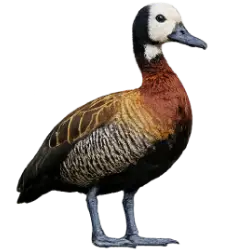
White-faced Whistling-duck (Dendrocygna viduata) thumbnail image on AnimalDex

White-faced Whistling-duck

Species principle: Flock Contact

Whistle together.

The right company is held together by a voice that keeps returning.

White-faced Whistling-ducks are social wetland ducks that use whistling calls and flocking behavior while feeding, resting, and traveling around marshes and lagoons.

Yangtze Finless Porpoise (Neophocaena asiaeorientalis asiaeorientalis) thumbnail image on AnimalDex

Yangtze Finless Porpoise

Species principle: River Smoothness

Glide without a fin.

A smooth design can move through pressure without making noise about it.

Yangtze Finless Porpoises lack a dorsal fin and use streamlined bodies, echolocation, and agile swimming to live in freshwater river systems.

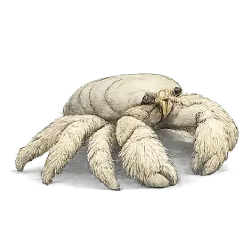
Yeti Crab animal lesson image on AnimalDex

Yeti Crab

Species principle: Vent Gardening

Farm the vent.

Strange places reward the one who learns what can be tended there.

Yeti Crabs live near deep-sea hydrothermal vents and use hairy setae on their claws to cultivate or collect bacteria for food.

Explore related indexes