
Back to Powers

Animal Powers

Renewal

Sing the change.

Animals grouped here express a similar power through their behavior in nature. Each species still has its own principle, lesson, meaning, and field-guide page.

11 species

American Robin animal lesson image on AnimalDex

American Robin

Species principle: Seasonal Signal

Sing the change.

Renewal becomes easier when you notice and answer seasonal change.

American Robins are familiar songbirds associated with seasonal movement, foraging on lawns, and visible dawn singing.
Common Earthworm animal lesson image on AnimalDex

Common Earthworm

Species principle: Transformation

Transform the foundation.

Growth often starts underground.

Worms break down dead material and create fertile soil for new growth.

Common Hydra animal lesson image on AnimalDex

Common Hydra

Species principle: Hydra Renewal

Bud and continue.

Longevity can come from constant renewal rather than heavy armor.

Hydra are tiny freshwater cnidarians that reproduce by budding and have strong regenerative ability, making them symbols of persistent renewal.

Common Rotifer animal lesson image on AnimalDex

Common Rotifer

Species principle: Wheel-Mouth Renewal

Turn the tiny wheel.

Tiny systems can renew quickly when conditions return.

Rotifers are microscopic aquatic animals with ciliated feeding structures and many species capable of dormancy or rapid reproduction in temporary waters.

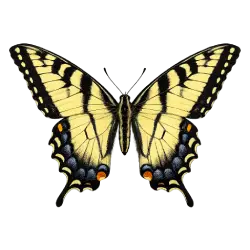
Eastern Tiger Swallowtail animal lesson image on AnimalDex

Eastern Tiger Swallowtail

Species principle: Emergence

Become visible.

After preparation, there is a moment to move openly and be seen.

Adult swallowtails emerge from metamorphosis as mobile pollinators that travel between flowers and habitats.

Kenya Tree Coral animal lesson image on AnimalDex

Kenya Tree Coral

Species principle: Branch and Multiply

Drop a branch, grow a tree.

Something released on purpose can become the next whole thing.

Kenya Tree Coral drops branchlets from its own arms, and each dropped piece settles nearby and grows into a complete new colony.

Quenda (Isoodon fusciventer) thumbnail image on AnimalDex

Quenda

Species principle: Soil Turning

Turn the litter.

Progress begins by turning over the ground others leave untouched.

Quendas are bandicoots that dig and forage through leaf litter and soil, helping aerate soil and locate fungi, insects, and roots.

Red-crowned Crane (Grus japonensis) thumbnail image on AnimalDex

Red-crowned Crane

Species principle: Lifelong Pairing

Dance the bond.

A bond is renewed by moving in rhythm again and again.

Red-crowned Cranes are known for pair bonding, unison calls, and elaborate dances involving leaps, bows, and wing displays.

Toadstool Leather Coral animal lesson image on AnimalDex

Toadstool Leather Coral

Species principle: Shed and Renew

Shed, then reopen.

Growth needs a clean surface as much as it needs new material.

Toadstool Leather Coral periodically closes its polyps, sheds a waxy surface film carrying algae and debris, and reopens onto clean tissue.

Turkey Tail animal lesson image on AnimalDex

Turkey Tail

Species principle: Nutrient Recycling

Transform decay into growth.

Turkey Tail fungi excel at breaking down lignin in dead wood, turning it into nutrients that enrich the forest floor and support new growth.

Turkey Tail mushrooms decompose tough lignin in dead hardwood, recycling nutrients back into the ecosystem.

Wood Frog (Lithobates sylvaticus) thumbnail image on AnimalDex

Wood Frog

Species principle: Revival

Wake from ice.

Life can pause almost completely and still answer when spring calls.

Wood Frogs survive winter freezing by tolerating ice formation in parts of the body while using cryoprotectants, then thawing and resuming activity in spring.

Explore related indexes