
Animal field guide
Chinese Mantis
Tenodera sinensis
Females reach about 10 cm, making this a large mantis. It waits motionless on grass and shrubs, then snaps its spiny forelegs shut on prey in a fraction of a second.
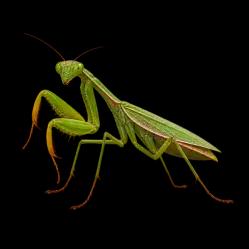
Chinese Mantis at a glance
Animal · East Asia · Tall grasses · Relatively common
Known for: Large, Brownish wings with a green stripe along the front, Long, Triangular head that can turn to look over the
Its Power
Strategic Patience
Wait for the perfect moment before making your move.
The Chinese Mantis exemplifies strategic patience by remaining motionless and blending into its surroundings until the ideal opportunity to strike arises.
“Patience Pays Off.”
Capture a Chinese Mantis, and it's yours when you finish one step it gives you.
Biological basis
Chinese Mantises are ambush predators, relying on their ability to stay still and camouflage themselves to catch prey by surprise.
Put it into practice
An employee holds his pay request until the week his project lands the company's biggest client.
What does the Chinese mantis symbolize?
The Chinese mantis symbolizes strategic patience: wait for the perfect moment before making your move. It represents patient progress, right timing and strategy. Its AnimalDex motto: "Patience Pays Off."
The Chinese mantis as a spirit animal
If the Chinese mantis is your spirit animal, the AnimalDex reading is Strategic Patience: the Chinese Mantis exemplifies strategic patience by remaining motionless and blending into its surroundings until the ideal opportunity to strike arises. It suggests a strength in patient progress and right timing, and a reminder to use it on purpose.
What can the Chinese mantis help you with in life?
The Chinese mantis is a guide for patient progress, right timing and strategy. Its lesson applies wherever patient progress matters: the Chinese Mantis exemplifies strategic patience by remaining motionless and blending into its surroundings until the ideal opportunity to strike arises.
- Patient Progress
- Right Timing
- Strategy
In practice: An employee holds his pay request until the week his project lands the company's biggest client.
What can we learn from the Chinese Mantis?What does it mean to dream about or encounter a wild Chinese mantis?
A wild Chinese mantis, whether in a dream or in front of you, tends to show up when patient progress or right timing is on your mind. In AnimalDex, the Chinese mantis's principle is Strategic Patience: wait for the perfect moment before making your move. Read the moment through its core lesson: The Chinese Mantis exemplifies strategic patience by remaining motionless and blending into its surroundings until the ideal opportunity to strike arises.
Neither good nor bad on its own. How the Chinese mantis acts matters: at ease, it reflects patient progress; hostile, it flags patient progress out of balance.
Spotting a Chinese mantis in the wild
If a Chinese mantis crosses your path, take it as a cue to look at where patient progress fits your day. Its AnimalDex motto: "Patience Pays Off."
A Chinese mantis that keeps appearing
Seeing the Chinese mantis again and again, in dreams or outside, suggests patient progress is a theme you have not settled yet.
Dreaming of being chased by a Chinese mantis
A chase often means a demand for patient progress is catching up with you. The Chinese mantis's lesson, "The Chinese Mantis exemplifies strategic patience by remaining motionless and blending into its surroundings until the ideal opportunity to strike arises", is the part you may be running from.
Dreaming that a Chinese mantis attacks you
An attack points to patient progress turned against you: someone using it on you, or your own patient progress overused until it costs you.
A calm or friendly Chinese mantis
A calm Chinese mantis suggests you have made peace with patient progress and can use it without force.
A dead or injured Chinese mantis
A dead or injured Chinese mantis, dreamed or found, can mark patient progress you have let lapse, or a phase built on Strategic Patience coming to an end.
These readings are reflective prompts drawn from how the Chinese mantis really lives, not predictions. If you meet one in the wild, watch from a distance and leave it undisturbed.
Capture your own Chinese Mantis
Photograph or film one in the wild, at a zoo or at home with the app. It becomes yours: it remembers you, gives you steps, and can debate your problems with your other animals.
Animal field guide
Chinese Mantis
Sign in to hear this read by a natural AI voice instead of your browser's.
Females reach about 10 cm, making this a large mantis. It waits motionless on grass and shrubs, then snaps its spiny forelegs shut on prey in a fraction of a second.
Native range
Natural range, not this capture location
Tall grasses, meadows, shrubby field edges, gardens and open woodland margins with dense low vegetation, mostly in lowland areas of temperate East Asia.
Search near meAnimalDex stats
Size scale
Understand the animal
Understand the Chinese Mantis
Factual biology first: what this animal is like, where it lives, how it survives, and why those traits exist.
01
Introduction to Chinese Mantis
Females reach about 10 cm, making this a large mantis. It waits motionless on grass and shrubs, then snaps its spiny forelegs shut on prey in a fraction of a second.
How to identify a Chinese Mantis
- Large, long-bodied mantis, green or brown
- Brownish wings with a green stripe along the front edge
- Long, slender neck-like front section of the thorax
- Triangular head that can turn to look over the shoulder
Why Chinese Mantis are interesting
- Females sometimes eat the male during or after mating, though many males escape.
- In China its egg cases have long been used in traditional medicine.
- Newly hatched nymphs will eat each other if food is short.
- A single female may produce more than one egg case in an autumn.
02
Adaptations and biological abilities
03
Why does Chinese Mantis behave this way?
- Large, long-bodied mantis, green or brown
- Brownish wings with a green stripe along the front edge
- Long, slender neck-like front section of the thorax
- Triangular head that can turn to look over the shoulder
Hunts by day in warm weather. At night it stays still on vegetation, though adult males often fly after dark and come to lights.
04
Why Tall grasses?
Habitat: Tall grasses, meadows, shrubby field edges, gardens and open woodland margins with dense low vegetation, mostly in lowland areas of temperate East Asia.
Native range: East Asia
Native range
Natural range, not this specific capture location.
Tall grasses, meadows, shrubby field edges, gardens and open woodland margins with dense low vegetation, mostly in lowland areas of temperate East Asia.
05
Why this diet?
A predator that grabs any animal it can overpower, such as flies, bees, grasshoppers, butterflies and moths. Large adults have occasionally caught small vertebrates, and young nymphs have been shown to eat pollen.
06
Activity, rest, and lifespan
Hunts by day in warm weather. At night it stays still on vegetation, though adult males often fly after dark and come to lights.
One season: nymphs hatch in spring, become adults in late summer and die with the first hard frosts, a life of about six months after the egg stage.
07
Chinese Mantis reproduction
In autumn the female produces a foamy egg case, the ootheca, attached to a stem or twig. It hardens to a pale tan mass, overwinters, and in spring releases from about a hundred to a few hundred tiny nymphs, which disperse and fend for themselves.
Females are heavier with a broad abdomen that often extends past the wings when full of eggs. Males are slimmer, fly more readily, and have more visible abdominal segments.
08
Predators, threats, and defense
Birds, spiders, other mantises and parasitic wasps that lay eggs in its egg cases all take a toll. When threatened it may flare its wings, raise its forelegs and sway to look bigger, or simply rely on camouflage.
09
Conservation and rarity
Rarity: Relatively common · 11/100. AnimalDex canonical rarity score: 11/100, maintained by the live indexed species profile.
- Observe from a respectful distance and avoid changing the animal's behavior.
- Do not block feeding, shelter, nesting, or travel routes.
- Use a live camera capture without handling or staging wildlife.
Talk to it
Talk to the Chinese Mantis
It answers as itself: ask about how it lives, or bring it something of yours and hear what it would do, from its own Power.
Anonymous: 6/day. Signed-in: 10/day. Pro: 100/day.
Side by side
The Chinese Mantis, side by side
Nothing written side by side for the Chinese Mantis yet. Pick any animal to compare it with. Compare with any animal →
Where to find them
Where to find Chinese Mantis
To find Chinese Mantis in the wild, focus on the exact habitat patches that match its body design and daily behavior, not just the broad country where it exists. You usually do better by working one good piece of habitat inside east Asia than by covering too much ground.
- Forest edge, canopy gaps, fruiting trees, or shaded trails where cover and food meet
- Open grassland edges, lightly wooded plains, or raised ground where you can scan long distances
- Protected habitat blocks within east Asia
Where explorers saw it
- Riverside, Washington County, United StatesAug · 1 sighting
Guides to seeing Chinese Mantis
In the Ark
3 Chinese Mantises are aboard right now.
Since November 5: 3 came aboard.
The Ark is a live, shared animal world. Animals come aboard when people capture them, and live there by rules based on their field guides.
Scientific name
Tenodera sinensis
Category
Animal
Habitat
Tall grasses, meadows, shrubby field edges, gardens and open woodland margins with dense low vegetation, mostly in lowland areas of temperate East Asia.
Rarity
Relatively common · 11/100
Native range
East Asia
Take the encyclopedia outside
AnimalDex helps you scan real animals, identify species, collect cards, and learn from nature wherever you are.