Animal field guide
Common Rat Snake
Ptyas mucosa
Ptyas mucosa is a large, nonvenomous Asian colubrid that actively hunts rodents, frogs, lizards, birds, and other small animals.
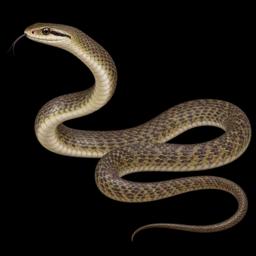
Common Rat Snake at a glance
Reptile · South Asia · Farms · Relatively common
Known for: Long slender body, Large eyes and alert posture, Olive-brown to yellow-brown coloration, Fast terrestrial movement
Its Power
Shed Skin
Grow a new layer underneath before you shed the old one.
The outer skin does not stretch and becomes worn and restrictive, so the snake generates a fresh epidermal layer beneath it, loosens the old one with fluid and works it off. The replacement exists before the old covering goes.
“New skin first.”
Capture a Common Rat Snake, and it's yours when you finish one step it gives you.
Biological basis
Common Rat Snakes regularly shed their skin to accommodate growth and maintain health.
Put it into practice
After a challenging project, Mia reflects on her mistakes, learns from them, and moves forward with a fresh perspective.
What does the common rat snake symbolize?
The common rat snake symbolizes shed skin: grow a new layer underneath before you shed the old one. It represents renewal, letting go and transformation. Its AnimalDex motto: "New skin first."
The common rat snake as a spirit animal
If the common rat snake is your spirit animal, the AnimalDex reading is Shed Skin: the outer skin does not stretch and becomes worn and restrictive, so the snake generates a fresh epidermal layer beneath it, loosens the old one with fluid and works it off. The replacement exists before the old covering goes. It suggests a strength in renewal and letting go, and a reminder to use it on purpose.
What can the common rat snake help you with in life?
The common rat snake is a guide for renewal, letting go and transformation. Its lesson applies wherever renewal matters: the outer skin does not stretch and becomes worn and restrictive, so the snake generates a fresh epidermal layer beneath it, loosens the old one with fluid and works it off. The replacement exists before the old covering goes.
- Renewal
- Letting Go
- Transformation
In practice: After a challenging project, Mia reflects on her mistakes, learns from them, and moves forward with a fresh perspective.
What can we learn from the Common Rat Snake?What does it mean to dream about or encounter a wild common rat snake?
Meeting a wild common rat snake, asleep or awake, is often a nudge toward renewal, the quality the common rat snake is built around. In AnimalDex, the common rat snake's principle is Shed Skin: grow a new layer underneath before you shed the old one. Read the moment through its core lesson: The outer skin does not stretch and becomes worn and restrictive, so the snake generates a fresh epidermal layer beneath it, loosens the old one with fluid and works it off. The replacement exists before the old covering goes.
Mostly a prompt rather than a warning. A calm common rat snake suggests renewal you already have; a threatening one suggests renewal is being tested or pushed too far.
Spotting a common rat snake in the wild
A real encounter is the plainest version of the sign: notice what the common rat snake was doing. Grow a new layer underneath before you shed the old one. That is the renewal worth borrowing today.
A common rat snake that keeps appearing
A common rat snake that keeps turning up points to letting go you keep circling back to. The repetition is the message.
Dreaming of being chased by a common rat snake
A chase often means a demand for renewal is catching up with you. The common rat snake's lesson, "The outer skin does not stretch and becomes worn and restrictive, so the snake generates a fresh epidermal layer beneath it, loosens the old one with fluid and works it off. The replacement exists before the old covering goes", is the part you may be running from.
Dreaming that a common rat snake attacks you
When the common rat snake attacks, the dream may be about pressure: letting go or transformation applied too hard, by you or by someone close to you.
A calm or friendly common rat snake
Meeting a peaceful common rat snake is usually encouraging: letting go and transformation are within reach.
A dead or injured common rat snake
A dead or injured common rat snake, dreamed or found, can mark renewal you have let lapse, or a phase built on Shed Skin coming to an end.
These readings are reflective prompts drawn from how the common rat snake really lives, not predictions. If you meet one in the wild, watch from a distance and leave it undisturbed.
Capture your own Common Rat Snake
Photograph or film one in the wild, at a zoo or at home with the app. It becomes yours: it remembers you, gives you steps, and can debate your problems with your other animals.
Animal field guide
Common Rat Snake
Sign in to hear this read by a natural AI voice instead of your browser's.
Ptyas mucosa is a large, nonvenomous Asian colubrid that actively hunts rodents, frogs, lizards, birds, and other small animals.
Native range
Natural range, not this capture location
Farms, scrub, open forest, wetlands, and settlements.
Search near meAnimalDex stats
Size scale
Understand the animal
Understand the Common Rat Snake
Factual biology first: what this animal is like, where it lives, how it survives, and why those traits exist.
01
Introduction to Common Rat Snake
Ptyas mucosa is a large, nonvenomous Asian colubrid that actively hunts rodents, frogs, lizards, birds, and other small animals.
How to identify a Common Rat Snake
- Long slender body
- Large eyes and alert posture
- Olive-brown to yellow-brown coloration
- Fast terrestrial movement
Why Common Rat Snake are interesting
- Despite its name it eats more than rats.
- It can raise the front of its body when threatened but lacks a cobra hood.
- It is an accomplished climber and swimmer, and it can also move quickly across open ground.
- It ranges widely across South and Southeast Asia, from Afghanistan and Pakistan to southern China and Indonesia.
02
Adaptations and biological abilities
03
Why does Common Rat Snake behave this way?
- Long slender body
- Large eyes and alert posture
- Olive-brown to yellow-brown coloration
- Fast terrestrial movement
Mostly active by day, resting in cover or burrows.
04
Why Farms?
Habitat: Farms, scrub, open forest, wetlands, and settlements.
Native range: South Asia, Southeast Asia, East Asia
Native range
Natural range, not this specific capture location.
Farms, scrub, open forest, wetlands, and settlements.
05
Why this diet?
06
Activity, rest, and lifespan
Mostly active by day, resting in cover or burrows.
Commonly more than a decade under favorable conditions.
07
Common Rat Snake reproduction
Females lay clutches of eggs in protected warm sites.
Males may grow longer and engage in ritual combat during breeding.
08
Predators, threats, and defense
09
Conservation and rarity
Rarity: Relatively common · 29/100. AnimalDex canonical rarity score: 29/100, maintained by the live indexed species profile.
- Observe from a respectful distance and avoid changing the animal's behavior.
- Do not block feeding, shelter, nesting, or travel routes.
- Use a live camera capture without handling or staging wildlife.
Talk to it
Talk to the Common Rat Snake
It answers as itself: ask about how it lives, or bring it something of yours and hear what it would do, from its own Power.
Anonymous: 6/day. Signed-in: 10/day. Pro: 100/day.
Side by side
The Common Rat Snake, side by side
Nothing written side by side for the Common Rat Snake yet. Pick any animal to compare it with. Compare with any animal →
Where to find them
Where to find Common Rat Snake
To find Common Rat Snake in the wild, focus on the exact habitat patches that match its body design and daily behavior, not just the broad country where it exists. You usually do better by working one good piece of habitat inside south Asia, Southeast Asia, East Asia than by covering too much ground.
- Quiet marsh edges, reedbeds, river bends, or shallow wetland margins
- Forest edge, canopy gaps, fruiting trees, or shaded trails where cover and food meet
- Protected habitat blocks within south Asia, Southeast Asia, East Asia
Where explorers saw it
- Jerteh, Terengganu, MalaysiaAug · 1 sighting
Guides to seeing Common Rat Snake
In the Ark
No Common Rat Snake is aboard yet.
The Ark is a live, shared animal world. Animals come aboard when people capture them, and live there by rules based on their field guides.
See the ArkScientific name
Ptyas mucosa
Category
Reptile
Habitat
Farms, scrub, open forest, wetlands, and settlements.
Rarity
Relatively common · 29/100
Native range
South Asia, Southeast Asia, East Asia
Take the encyclopedia outside
AnimalDex helps you scan real animals, identify species, collect cards, and learn from nature wherever you are.
Related blog guides
Continue learning with practical articles connected to this species.
How to Organize Snake and Reptile Photos by Species
Sort snake and reptile pictures by honest identity, not trip folder: lookalike groups, the features that separate them, when to stop at genus, and setting.
Read blog article