
Animal field guide
European Crane Fly
Tipula paludosa
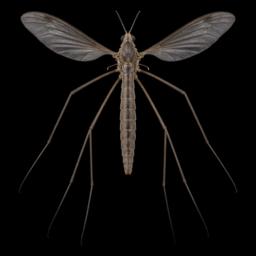
A large crane fly, one of the commonest in Europe, whose grey-brown adults rise in great numbers from lawns and pasture in late summer and early autumn. They fly weakly and clumsily on long, trailing legs, often blundering into lit rooms on autumn evenings.
European Crane Fly at a glance
Bird · Europe · Grassland of all kinds · Relatively common
Known for: Slender body roughly 2 to 3 centimetres long, Very long, Narrow wings with a brownish front edge, Two small knobbed halteres behind the wings
Its Power
Brief Burst
Maximize the impact of short-lived opportunities.
When time is limited, focus all your energy on what matters most to make the most of fleeting chances.
“Few days, one purpose.”
Capture a European Crane Fly, and it's yours when you finish one step it gives you.
Biological basis
The European Crane Fly lives only a few days as an adult, during which it focuses solely on reproduction.
Put it into practice
In a tight deadline, Sarah prioritizes the key task that will have the biggest impact, ignoring minor distractions.
What does the European crane fly symbolize?
The European crane fly symbolizes brief burst: maximize the impact of short-lived opportunities. It represents full commitment, preparation and purpose. Its AnimalDex motto: "Few days, one purpose."
The European crane fly as a spirit animal
If the European crane fly is your spirit animal, the AnimalDex reading is Brief Burst: when time is limited, focus all your energy on what matters most to make the most of fleeting chances. It suggests a strength in full commitment and preparation, and a reminder to use it on purpose.
What can the European crane fly help you with in life?
The European crane fly is a guide for full commitment, preparation and purpose. Its lesson applies wherever full commitment matters: when time is limited, focus all your energy on what matters most to make the most of fleeting chances.
- Full Commitment
- Preparation
- Purpose
In practice: In a tight deadline, Sarah prioritizes the key task that will have the biggest impact, ignoring minor distractions.
What can we learn from the European Crane Fly?What does it mean to dream about or encounter a wild European crane fly?
Dreaming about a wild European crane fly, or coming across one, usually points to full commitment and preparation: the qualities the European crane fly lives by. In AnimalDex, the European crane fly's principle is Brief Burst: maximize the impact of short-lived opportunities. Read the moment through its core lesson: When time is limited, focus all your energy on what matters most to make the most of fleeting chances.
It depends on how the European crane fly behaved. Calm or close by, it reads as preparation within reach; aggressive or fleeing, it points to full commitment you are resisting.
Spotting an European crane fly in the wild
Coming across an European crane fly in person asks for attention more than interpretation. Watch it for a minute; the European crane fly's way of working is Brief Burst, and the lesson is: when time is limited, focus all your energy on what matters most to make the most of fleeting chances.
An European crane fly that keeps appearing
Repeated sightings of an European crane fly usually mean the Brief Burst lesson is still open: when time is limited, focus all your energy on what matters most to make the most of fleeting chances.
Dreaming of being chased by an European crane fly
If the European crane fly pursues you, look at where preparation is being asked of you and you are stepping away instead of meeting it.
Dreaming that an European crane fly attacks you
An attack points to full commitment turned against you: someone using it on you, or your own full commitment overused until it costs you.
A calm or friendly European crane fly
Meeting a peaceful European crane fly is usually encouraging: preparation and purpose are within reach.
A dead or injured European crane fly
A dead or injured European crane fly, dreamed or found, can mark full commitment you have let lapse, or a phase built on Brief Burst coming to an end.
These readings are reflective prompts drawn from how the European crane fly really lives, not predictions. If you meet one in the wild, watch from a distance and leave it undisturbed.
Capture your own European Crane Fly
Photograph or film one in the wild, at a zoo or at home with the app. It becomes yours: it remembers you, gives you steps, and can debate your problems with your other animals.
Animal field guide
European Crane Fly
Sign in to hear this read by a natural AI voice instead of your browser's.
A large crane fly, one of the commonest in Europe, whose grey-brown adults rise in great numbers from lawns and pasture in late summer and early autumn. They fly weakly and clumsily on long, trailing legs, often blundering into lit rooms on autumn evenings.
Native range
Natural range, not this capture location
Grassland of all kinds, including lawns, pasture, playing fields, verges and cereal fields, especially on damp ground. Larvae live in the top few centimetres of soil beneath the turf.
Search near meAnimalDex stats
Size scale
Understand the animal
Understand the European Crane Fly
Factual biology first: what this animal is like, where it lives, how it survives, and why those traits exist.
01
Introduction to European Crane Fly
A large crane fly, one of the commonest in Europe, whose grey-brown adults rise in great numbers from lawns and pasture in late summer and early autumn. They fly weakly and clumsily on long, trailing legs, often blundering into lit rooms on autumn evenings.
How to identify a European Crane Fly
- Slender body roughly 2 to 3 centimetres long
- Very long, fragile legs that break off easily
- Narrow wings with a brownish front edge
- Two small knobbed halteres behind the wings
- Larva a legless, tough grey-brown grub
Why European Crane Fly are interesting
- In Britain and Ireland it is one of the insects most often called daddy-long-legs, a name also given to harvestmen and cellar spiders.
- It was accidentally introduced to North America and has become a pest of turf and pasture in the Pacific Northwest and parts of Canada.
- The tough skin of the larva gives it the name leatherjacket.
- Despite widespread myths, crane flies cannot bite or sting people.
02
Adaptations and biological abilities
03
Why does European Crane Fly behave this way?
- Slender body roughly 2 to 3 centimetres long
- Very long, fragile legs that break off easily
- Narrow wings with a brownish front edge
- Two small knobbed halteres behind the wings
- Larva a legless, tough grey-brown grub
Adults are active by day and at night, resting in grass and on walls when not flying. Leatherjackets stay in the soil and feed mostly at night.
04
Why Grassland of all kinds?
Habitat: Grassland of all kinds, including lawns, pasture, playing fields, verges and cereal fields, especially on damp ground. Larvae live in the top few centimetres of soil beneath the turf.
Native range: Europe
Native range
Natural range, not this specific capture location.
Grassland of all kinds, including lawns, pasture, playing fields, verges and cereal fields, especially on damp ground. Larvae live in the top few centimetres of soil beneath the turf.
05
Why this diet?
Leatherjackets eat grass roots and the bases of stems, and sometimes cereals and vegetables; on mild, damp nights they come to the surface to feed on leaves. Adults feed very little, if at all.
06
Activity, rest, and lifespan
Adults are active by day and at night, resting in grass and on walls when not flying. Leatherjackets stay in the soil and feed mostly at night.
The life cycle takes about a year, almost all of it as a larva. Adults usually live from a few days to about two weeks.
07
European Crane Fly reproduction
Females mate soon after emerging and lay a few hundred eggs in the soil, often close to where they emerged. Eggs hatch in about two weeks, and the larvae feed until the following summer before pupating.
The female's abdomen ends in a pointed egg-laying tip, while the male's is blunt and club-shaped. Females are also heavier, their abdomens swollen with eggs.
08
Predators, threats, and defense
09
Conservation and rarity
Rarity: Relatively common · 12/100. AnimalDex canonical rarity score: 12/100, maintained by the live indexed species profile.
- Observe from a respectful distance and avoid changing the animal's behavior.
- Do not block feeding, shelter, nesting, or travel routes.
- Use a live camera capture without handling or staging wildlife.
Talk to it
Talk to the European Crane Fly
It answers as itself: ask about how it lives, or bring it something of yours and hear what it would do, from its own Power.
Anonymous: 6/day. Signed-in: 10/day. Pro: 100/day.
Side by side
The European Crane Fly, side by side
Nothing written side by side for the European Crane Fly yet. Pick any animal to compare it with. Compare with any animal →
Where to find them
Where to find European Crane Fly
To find European Crane Fly in the wild, focus on the exact habitat patches that match its body design and daily behavior, not just the broad country where it exists. You usually do better by working one good piece of habitat inside europe than by covering too much ground.
- Open grassland edges, lightly wooded plains, or raised ground where you can scan long distances
- Protected habitat blocks within europe
Where explorers saw it
- Ronchamp, Bourgogne-Franche-Comté, FranceNov · 1 sighting
In the Ark
5 European Crane Flies are aboard right now.
Since November 17: 15 died of old age.
The Ark is a live, shared animal world. Animals come aboard when people capture them, and live there by rules based on their field guides.
Scientific name
Tipula paludosa
Category
Bird
Habitat
Grassland of all kinds, including lawns, pasture, playing fields, verges and cereal fields, especially on damp ground. Larvae live in the top few centimetres of soil beneath the turf.
Rarity
Relatively common · 12/100
Native range
Europe
Take the encyclopedia outside
AnimalDex helps you scan real animals, identify species, collect cards, and learn from nature wherever you are.