Animal field guide
Finlayson's Squirrel
Callosciurus finlaysonii
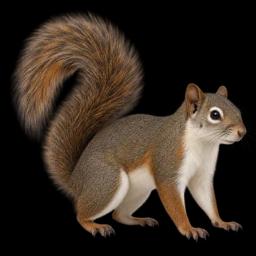
Coat colour in this tree squirrel changes from one population to the next, from pure white or cream through bright red and chestnut to black, some with pale or grizzled tails. Many subspecies have been named largely on colour.
Finlayson's Squirrel at a glance
Animal · Southeast Asia · Evergreen and deciduous forest in · Relatively common
Known for: Medium-sized tree squirrel, Long, Small, Moves in quick
Its Power
Flexible Coat
Keep the core behaviour useful even when appearance varies.
“Same squirrel, any colour.”
Capture a Finlayson's Squirrel, and it's yours when you finish one step it gives you.
Biological basis
Callosciurus finlaysonii ranges from white or cream through red and chestnut to black between populations, while the species as a whole eats fruit, seeds, flowers, sap and insects in the canopy and escapes by slipping round to the far side of a trunk.
Put it into practice
A charity runs branches that look different in each town, from shopfront to van colour, but every branch follows the same intake checklist, so clients get identical help anywhere.
What does the Finlayson's squirrel symbolize?
The Finlayson's squirrel symbolizes flexible coat: keep the core behaviour useful even when appearance varies. It represents self-knowledge, healthy routine and self-acceptance. Its AnimalDex motto: "Same squirrel, any colour."
The Finlayson's squirrel as a spirit animal
If the Finlayson's squirrel is your spirit animal, the AnimalDex reading is Flexible Coat: keep the core behaviour useful even when appearance varies. It suggests a strength in self-knowledge and healthy routine, and a reminder to use it on purpose.
What can the Finlayson's squirrel help you with in life?
The Finlayson's squirrel is a guide for self-knowledge, healthy routine and self-acceptance. Its lesson applies wherever self-knowledge matters: keep the core behaviour useful even when appearance varies.
- Self-Knowledge
- Healthy Routine
- Self-Acceptance
In practice: A charity runs branches that look different in each town, from shopfront to van colour, but every branch follows the same intake checklist, so clients get identical help anywhere.
What can we learn from the Finlayson's Squirrel?What does it mean to dream about or encounter a wild Finlayson's squirrel?
A wild Finlayson's squirrel, whether in a dream or in front of you, tends to show up when self-knowledge or healthy routine is on your mind. In AnimalDex, the Finlayson's squirrel's principle is Flexible Coat: keep the core behaviour useful even when appearance varies. Read the moment through its core lesson: Keep the core behaviour useful even when appearance varies.
Neither good nor bad on its own. How the Finlayson's squirrel acts matters: at ease, it reflects self-knowledge; hostile, it flags self-knowledge out of balance.
Spotting a Finlayson's squirrel in the wild
If a Finlayson's squirrel crosses your path, take it as a cue to look at where self-knowledge fits your day. Its AnimalDex motto: "Same squirrel, any colour."
A Finlayson's squirrel that keeps appearing
Seeing the Finlayson's squirrel again and again, in dreams or outside, suggests self-knowledge is a theme you have not settled yet.
Dreaming of being chased by a Finlayson's squirrel
A chase often means a demand for self-knowledge is catching up with you. The Finlayson's squirrel's lesson, "Keep the core behaviour useful even when appearance varies", is the part you may be running from.
Dreaming that a Finlayson's squirrel attacks you
An aggressive Finlayson's squirrel can mirror a conflict where self-knowledge has become a weapon rather than a strength.
A calm or friendly Finlayson's squirrel
A relaxed Finlayson's squirrel near you, in a dream or in person, reads as readiness: Flexible Coat is available to you now, as its motto puts it, "Same squirrel, any colour.".
A dead or injured Finlayson's squirrel
Seeing the Finlayson's squirrel hurt may point to healthy routine that has been neglected. Ask what it would take to restore it.
These readings are reflective prompts drawn from how the Finlayson's squirrel really lives, not predictions. If you meet one in the wild, watch from a distance and leave it undisturbed.
Capture your own Finlayson's Squirrel
Photograph or film one in the wild, at a zoo or at home with the app. It becomes yours: it remembers you, gives you steps, and can debate your problems with your other animals.
Animal field guide
Finlayson's Squirrel
Sign in to hear this read by a natural AI voice instead of your browser's.
Coat colour in this tree squirrel changes from one population to the next, from pure white or cream through bright red and chestnut to black, some with pale or grizzled tails. Many subspecies have been named largely on colour.
Native range
Natural range, not this capture location
Evergreen and deciduous forest in mainland Southeast Asia, from lowlands into hills, together with secondary growth, plantations, city parks and wooded gardens. It lives mainly in the middle and upper canopy.
Search near meAnimalDex stats
Size scale
Understand the animal
Understand the Finlayson's Squirrel
Factual biology first: what this animal is like, where it lives, how it survives, and why those traits exist.
01
Introduction to Finlayson's Squirrel
Coat colour in this tree squirrel changes from one population to the next, from pure white or cream through bright red and chestnut to black, some with pale or grizzled tails. Many subspecies have been named largely on colour.
How to identify a Finlayson's Squirrel
- Medium-sized tree squirrel, head and body about 20 cm
- Long, bushy tail about as long as the body
- Small, rounded ears without tufts
- Moves in quick, jerky bounds along branches and trunks
Why Finlayson's Squirrel are interesting
- It is listed as Least Concern by the IUCN because it is widespread and common across its range.
- The species is named after George Finlayson, a Scottish surgeon and naturalist who collected in Siam in the early 1820s.
- The genus name Callosciurus comes from Greek and means beautiful squirrel.
- In English it is also known as the variable squirrel.
02
Adaptations and biological abilities
03
Why does Finlayson's Squirrel behave this way?
- Medium-sized tree squirrel, head and body about 20 cm
- Long, bushy tail about as long as the body
- Small, rounded ears without tufts
- Moves in quick, jerky bounds along branches and trunks
Active by day, busiest in the morning and late afternoon, and often resting in the canopy around midday. Nights are spent in a leafy nest or a tree hollow.
04
Why Evergreen and deciduous forest in mainland Southeast Asia?
Habitat: Evergreen and deciduous forest in mainland Southeast Asia, from lowlands into hills, together with secondary growth, plantations, city parks and wooded gardens. It lives mainly in the middle and upper canopy.
Native range: Southeast Asia
Native range
Natural range, not this specific capture location.
Evergreen and deciduous forest in mainland Southeast Asia, from lowlands into hills, together with secondary growth, plantations, city parks and wooded gardens. It lives mainly in the middle and upper canopy.
05
Why this diet?
Mainly fruit, seeds and flowers, with nectar, young leaves and some insects. It sometimes strips bark to lick the sap beneath, and it will come down to pick up fallen fruit.
06
Activity, rest, and lifespan
Active by day, busiest in the morning and late afternoon, and often resting in the canopy around midday. Nights are spent in a leafy nest or a tree hollow.
Wild lifespan has not been documented for this species, and no reliable captive figure is widely reported.
07
Finlayson's Squirrel reproduction
Litters are thought to be small, probably one to three young, born in a leaf nest or tree hollow. Gestation, weaning age and breeding season are poorly documented for this species.
The sexes share the same size and colouring; only close handling separates them.
08
Predators, threats, and defense
09
Conservation and rarity
Rarity: Relatively common · 28/100. AnimalDex canonical rarity score: 28/100, maintained by the live indexed species profile.
- Observe from a respectful distance and avoid changing the animal's behavior.
- Do not block feeding, shelter, nesting, or travel routes.
- Use a live camera capture without handling or staging wildlife.
Talk to it
Talk to the Finlayson's Squirrel
It answers as itself: ask about how it lives, or bring it something of yours and hear what it would do, from its own Power.
Anonymous: 6/day. Signed-in: 10/day. Pro: 100/day.
Side by side
The Finlayson's Squirrel, side by side
Nothing written side by side for the Finlayson's Squirrel yet. Pick any animal to compare it with. Compare with any animal →
Where to find them
Where to find Finlayson's Squirrel
To find Finlayson's Squirrel in the wild, focus on the exact habitat patches that match its body design and daily behavior, not just the broad country where it exists. You usually do better by working one good piece of habitat inside southeast Asia than by covering too much ground.
- Forest edge, canopy gaps, fruiting trees, or shaded trails where cover and food meet
- Sunlit logs, exposed branches, warm rocks, or regular perch sites used for scanning
- Protected habitat blocks within southeast Asia
In the Ark
No Finlayson's Squirrel is aboard yet.
The Ark is a live, shared animal world. Animals come aboard when people capture them, and live there by rules based on their field guides.
See the ArkScientific name
Callosciurus finlaysonii
Category
Animal
Habitat
Evergreen and deciduous forest in mainland Southeast Asia, from lowlands into hills, together with secondary growth, plantations, city parks and wooded gardens. It lives mainly in the middle and upper canopy.
Rarity
Relatively common · 28/100
Native range
Southeast Asia
Take the encyclopedia outside
AnimalDex helps you scan real animals, identify species, collect cards, and learn from nature wherever you are.