
Animal field guide
Florida Scrub-Jay
Aphelocoma coerulescens
Found nowhere but Florida, this crestless blue jay lives in family groups on year-round territories. Grown young often stay home for a year or more, helping their parents guard the territory and feed new nestlings, and a son may eventually inherit part of the land.
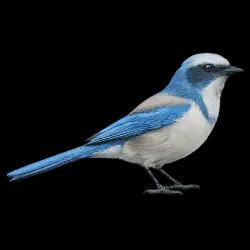
Florida Scrub-Jay at a glance
Animal · North America · Low evergreen oak scrub · Uncommon
Known for: Blue head, Plain grey-brown back and shoulders, Whitish forehead and pale throat, Blue-grey band across the upper breast
Its Power
Scrub Memory
Remember the small territory because the whole family depends on it.
Intelligence becomes loyalty when it protects a local place over time.
“Know the scrub.”
Capture a Florida Scrub-Jay, and it's yours when you finish one step it gives you.
Biological basis
Florida Scrub Jays live in family groups, cache food, and depend on fire-maintained scrub habitat in Florida.
Put it into practice
You become useful by knowing the small system better than anyone else.
What does the florida scrub-jay symbolize?
The florida scrub-jay symbolizes scrub memory: remember the small territory because the whole family depends on it. It represents memory, loyalty and saving for later. Its AnimalDex motto: "Know the scrub."
The florida scrub-jay as a spirit animal
If the florida scrub-jay is your spirit animal, the AnimalDex reading is Scrub Memory: intelligence becomes loyalty when it protects a local place over time. It suggests a strength in memory and loyalty, and a reminder to use it on purpose.
What can the florida scrub-jay help you with in life?
The florida scrub-jay is a guide for memory, loyalty and saving for later. Its lesson applies wherever memory matters: intelligence becomes loyalty when it protects a local place over time.
- Memory
- Loyalty
- Saving for Later
In practice: You become useful by knowing the small system better than anyone else.
What can we learn from the Florida Scrub-Jay?What does it mean to dream about or encounter a wild florida scrub-jay?
Dreaming about a wild florida scrub-jay, or coming across one, usually points to memory and loyalty: the qualities the florida scrub-jay lives by. In AnimalDex, the florida scrub-jay's principle is Scrub Memory: remember the small territory because the whole family depends on it. Read the moment through its core lesson: Intelligence becomes loyalty when it protects a local place over time.
Mostly a prompt rather than a warning. A calm florida scrub-jay suggests memory you already have; a threatening one suggests memory is being tested or pushed too far.
Spotting a florida scrub-jay in the wild
Coming across a florida scrub-jay in person asks for attention more than interpretation. Watch it for a minute; the florida scrub-jay's way of working is Scrub Memory, and the lesson is: intelligence becomes loyalty when it protects a local place over time.
A florida scrub-jay that keeps appearing
A florida scrub-jay that keeps turning up points to loyalty you keep circling back to. The repetition is the message.
Dreaming of being chased by a florida scrub-jay
Being chased suggests you are avoiding the Scrub Memory the florida scrub-jay stands for: intelligence becomes loyalty when it protects a local place over time. Ask what you keep postponing that needs memory.
Dreaming that a florida scrub-jay attacks you
An attack points to memory turned against you: someone using it on you, or your own memory overused until it costs you.
A calm or friendly florida scrub-jay
A relaxed florida scrub-jay near you, in a dream or in person, reads as readiness: Scrub Memory is available to you now, as its motto puts it, "Know the scrub.".
A dead or injured florida scrub-jay
Seeing the florida scrub-jay hurt may point to loyalty that has been neglected. Ask what it would take to restore it.
These readings are reflective prompts drawn from how the florida scrub-jay really lives, not predictions. If you meet one in the wild, watch from a distance and leave it undisturbed.
Capture your own Florida Scrub-Jay
Photograph or film one in the wild, at a zoo or at home with the app. It becomes yours: it remembers you, gives you steps, and can debate your problems with your other animals.
Animal field guide
Florida Scrub-Jay
Sign in to hear this read by a natural AI voice instead of your browser's.
Found nowhere but Florida, this crestless blue jay lives in family groups on year-round territories. Grown young often stay home for a year or more, helping their parents guard the territory and feed new nestlings, and a son may eventually inherit part of the land.
Native range
Natural range, not this capture location
Low evergreen oak scrub, mostly under 3 metres tall, on dry, well-drained sandy ridges and old coastal dunes in peninsular Florida, with patches of bare sand. It needs fires every few years to decades to keep the scrub short and open.
Search near meAnimalDex stats
Size scale
Understand the animal
Understand the Florida Scrub-Jay
Factual biology first: what this animal is like, where it lives, how it survives, and why those traits exist.
01
Introduction to Florida Scrub-Jay
Found nowhere but Florida, this crestless blue jay lives in family groups on year-round territories. Grown young often stay home for a year or more, helping their parents guard the territory and feed new nestlings, and a son may eventually inherit part of the land.
How to identify a Florida Scrub-Jay
- Blue head, wings and tail with no crest
- Plain grey-brown back and shoulders
- Whitish forehead and pale throat
- Blue-grey band across the upper breast
- Long, fairly slender tail
Why Florida Scrub-Jay are interesting
- Pairs living near suburbs tend to lay eggs earlier than those in wild scrub, a shift linked to food provided by people.
- It has been listed as threatened under the US Endangered Species Act since 1987.
- Families at Archbold Biological Station have been followed since 1969, one of the longest continuous studies of any bird.
- A family territory typically covers roughly 10 hectares of oak scrub.
02
Adaptations and biological abilities
03
Why does Florida Scrub-Jay behave this way?
- Blue head, wings and tail with no crest
- Plain grey-brown back and shoulders
- Whitish forehead and pale throat
- Blue-grey band across the upper breast
- Long, fairly slender tail
Each bird spends the night hidden in dense oak foliage within its home territory, becoming active again at dawn.
04
Why Low evergreen oak scrub?
Habitat: Low evergreen oak scrub, mostly under 3 metres tall, on dry, well-drained sandy ridges and old coastal dunes in peninsular Florida, with patches of bare sand. It needs fires every few years to decades to keep the scrub short and open.
Native range: North America
Native range
Natural range, not this specific capture location.
Low evergreen oak scrub, mostly under 3 metres tall, on dry, well-drained sandy ridges and old coastal dunes in peninsular Florida, with patches of bare sand. It needs fires every few years to decades to keep the scrub short and open.
05
Why this diet?
Insects such as grasshoppers and caterpillars, spiders, small lizards, frogs, snakes and mice, and bird eggs make up much of the summer diet. Acorns dominate in autumn and winter.
06
Activity, rest, and lifespan
Each bird spends the night hidden in dense oak foliage within its home territory, becoming active again at dawn.
Most live only a few years, but ringed birds in long-term studies have survived for more than a decade.
07
Florida Scrub-Jay reproduction
Usually 3 or 4 eggs are laid in spring in a twig cup set in a low oak; only the female incubates, for about 18 days. Parents and helpers feed the nestlings, which leave the nest at around two and a half weeks.
The sexes look alike, though males are slightly larger. Only females give a distinctive rapid hiccup call.
08
Predators, threats, and defense
09
Conservation and rarity
Rarity: Uncommon · 66/100. AnimalDex canonical rarity score: 66/100, maintained by the live indexed species profile.
- Observe from a respectful distance and avoid changing the animal's behavior.
- Do not block feeding, shelter, nesting, or travel routes.
- Use a live camera capture without handling or staging wildlife.
Talk to it
Talk to the Florida Scrub-Jay
It answers as itself: ask about how it lives, or bring it something of yours and hear what it would do, from its own Power.
Anonymous: 6/day. Signed-in: 10/day. Pro: 100/day.
Side by side
The Florida Scrub-Jay, side by side
Nothing written side by side for the Florida Scrub-Jay yet. Pick any animal to compare it with. Compare with any animal →
Where to find them
Where to find Florida Scrub-Jay
To find Florida Scrub-Jay in the wild, focus on the exact habitat patches that match its body design and daily behavior, not just the broad country where it exists. You usually do better by working one good piece of habitat inside north America than by covering too much ground.
- Forest edge, canopy gaps, fruiting trees, or shaded trails where cover and food meet
- Rocky slopes, ridge lines, cliff ledges, or open mountain meadows with a wide view
- Water sources, dune bases, rocky wadis, or shaded scrub at first and last light
In the Ark
No Florida Scrub-Jay is aboard yet.
None have come aboard or left since November 17.
The Ark is a live, shared animal world. Animals come aboard when people capture them, and live there by rules based on their field guides.
Scientific name
Aphelocoma coerulescens
Category
Animal
Habitat
Low evergreen oak scrub, mostly under 3 metres tall, on dry, well-drained sandy ridges and old coastal dunes in peninsular Florida, with patches of bare sand. It needs fires every few years to decades to keep the scrub short and open.
Rarity
Uncommon · 66/100
Native range
North America
Take the encyclopedia outside
AnimalDex helps you scan real animals, identify species, collect cards, and learn from nature wherever you are.
Featured in tier lists
See where this species appears in AnimalDex tier-list pages built around structured comparison and methodology.
#10 · Character
Most Loyal Animals
Young birds often stay home for a year or more as helpers, guarding the territory and feeding their parents' next brood.
Read tier list