Animal field guide
Horse Fly
Tabanidae
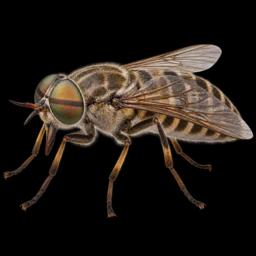
Horse flies are robust, strong-flying tabanids with large eyes; females of many species take blood meals.
Horse Fly at a glance
Invertebrate · Australia & Oceania · Wetlands · Relatively common
Known for: Large often patterned eyes, Strong direct flight, Blade-like female mouthparts, Broad clear or patterned wings
Its Power
Persistent Pursuit
Stay focused on your target despite distractions.
Horse flies relentlessly pursue their targets, demonstrating the power of unwavering focus even in the face of obstacles.
“Focus and Persist.”
Capture a Horse Fly, and it's yours when you finish one step it gives you.
Biological basis
Horse flies are known for their persistent pursuit of hosts, driven by their need to feed on blood for reproductive purposes.
Put it into practice
In a bustling office, Sarah ignores the noise and chatter, concentrating solely on completing her project ahead of the deadline.
What does the horse fly symbolize?
The horse fly symbolizes persistent pursuit: stay focused on your target despite distractions. It represents determined pursuit, focus and commitment. Its AnimalDex motto: "Focus and Persist."
The horse fly as a spirit animal
If the horse fly is your spirit animal, the AnimalDex reading is Persistent Pursuit: horse flies relentlessly pursue their targets, demonstrating the power of unwavering focus even in the face of obstacles. It suggests a strength in determined pursuit and focus, and a reminder to use it on purpose.
What can the horse fly help you with in life?
The horse fly is a guide for determined pursuit, focus and commitment. Its lesson applies wherever determined pursuit matters: horse flies relentlessly pursue their targets, demonstrating the power of unwavering focus even in the face of obstacles.
- Determined Pursuit
- Focus
- Commitment
In practice: In a bustling office, Sarah ignores the noise and chatter, concentrating solely on completing her project ahead of the deadline.
What can we learn from the Horse Fly?What does it mean to dream about or encounter a wild horse fly?
A wild horse fly, whether in a dream or in front of you, tends to show up when determined pursuit or focus is on your mind. In AnimalDex, the horse fly's principle is Persistent Pursuit: stay focused on your target despite distractions. Read the moment through its core lesson: Horse flies relentlessly pursue their targets, demonstrating the power of unwavering focus even in the face of obstacles.
Neither good nor bad on its own. How the horse fly acts matters: at ease, it reflects determined pursuit; hostile, it flags determined pursuit out of balance.
Spotting a horse fly in the wild
Coming across a horse fly in person asks for attention more than interpretation. Watch it for a minute; the horse fly's way of working is Persistent Pursuit, and the lesson is: horse flies relentlessly pursue their targets, demonstrating the power of unwavering focus even in the face of obstacles.
A horse fly that keeps appearing
Repeated sightings of a horse fly usually mean the Persistent Pursuit lesson is still open: horse flies relentlessly pursue their targets, demonstrating the power of unwavering focus even in the face of obstacles.
Dreaming of being chased by a horse fly
Being chased suggests you are avoiding the Persistent Pursuit the horse fly stands for: horse flies relentlessly pursue their targets, demonstrating the power of unwavering focus even in the face of obstacles. Ask what you keep postponing that needs determined pursuit.
Dreaming that a horse fly attacks you
When the horse fly attacks, the dream may be about pressure: focus or commitment applied too hard, by you or by someone close to you.
A calm or friendly horse fly
Meeting a peaceful horse fly is usually encouraging: focus and commitment are within reach.
A dead or injured horse fly
A dead or injured horse fly, dreamed or found, can mark determined pursuit you have let lapse, or a phase built on Persistent Pursuit coming to an end.
These readings are reflective prompts drawn from how the horse fly really lives, not predictions. If you meet one in the wild, watch from a distance and leave it undisturbed.
Capture your own Horse Fly
Photograph or film one in the wild, at a zoo or at home with the app. It becomes yours: it remembers you, gives you steps, and can debate your problems with your other animals.
Animal field guide
Horse Fly
Sign in to hear this read by a natural AI voice instead of your browser's.
Horse flies are robust, strong-flying tabanids with large eyes; females of many species take blood meals.
Native range
Natural range, not this capture location
Wetlands, pastures, woodland edges, river margins, and livestock areas.
Search near meAnimalDex stats
Size scale
Understand the animal
Understand the Horse Fly
Factual biology first: what this animal is like, where it lives, how it survives, and why those traits exist.
01
Introduction to Horse Fly
Horse flies are robust, strong-flying tabanids with large eyes; females of many species take blood meals.
How to identify a Horse Fly
- Large often patterned eyes
- Strong direct flight
- Blade-like female mouthparts
- Broad clear or patterned wings
Why Horse Fly are interesting
- Males usually feed on nectar rather than blood.
- Many larvae are aquatic or live in saturated soil.
- Polarized light reflected from water surfaces helps some species locate water and places to lay eggs.
- Their bites can mechanically carry disease agents between livestock, including the virus that causes equine infectious anaemia.
02
Adaptations and biological abilities
03
Why does Horse Fly behave this way?
- Large often patterned eyes
- Strong direct flight
- Blade-like female mouthparts
- Broad clear or patterned wings
Active mainly in warm daylight; rests on vegetation in cool or dark periods.
04
Why Wetlands?
Habitat: Wetlands, pastures, woodland edges, river margins, and livestock areas.
Native range: Australia & Oceania, Central Asia, East Asia, Europe, North Africa & Middle East, North America, South America, South Asia, Southeast Asia, Sub-Saharan Africa
Native range
Natural range, not this specific capture location.
Wetlands, pastures, woodland edges, river margins, and livestock areas.
05
Why this diet?
Adults use nectar; females of many species also take blood. Larvae prey on small invertebrates or scavenge.
06
Activity, rest, and lifespan
Active mainly in warm daylight; rests on vegetation in cool or dark periods.
Usually weeks as an adult, with immature stages lasting months or longer.
07
Horse Fly reproduction
Females lay layered egg masses on vegetation above water or damp soil.
Males often have eyes meeting on top of the head; female eyes are separated.
08
Predators, threats, and defense
Birds, dragonflies, robber flies, spiders, and amphibians.
09
Conservation and rarity
Rarity: Relatively common · 8/100. AnimalDex canonical rarity score: 8/100, maintained by the live indexed species profile.
- Observe from a respectful distance and avoid changing the animal's behavior.
- Do not block feeding, shelter, nesting, or travel routes.
- Use a live camera capture without handling or staging wildlife.
Talk to it
Talk to the Horse Fly
It answers as itself: ask about how it lives, or bring it something of yours and hear what it would do, from its own Power.
Anonymous: 6/day. Signed-in: 10/day. Pro: 100/day.
Side by side
The Horse Fly, side by side
Nothing written side by side for the Horse Fly yet. Pick any animal to compare it with. Compare with any animal →
Where to find them
Where to find Horse Fly
To find Horse Fly in the wild, focus on the exact habitat patches that match its body design and daily behavior, not just the broad country where it exists. You usually do better by working one good piece of habitat inside australia & Oceania, Central Asia, East Asia, Europe, North Africa & Middle East, North America, South America, South Asia, Southeast Asia, Sub-Saharan Africa than by covering too much ground.
- Quiet marsh edges, reedbeds, river bends, or shallow wetland margins
- Forest edge, canopy gaps, fruiting trees, or shaded trails where cover and food meet
- Protected habitat blocks within australia & Oceania, Central Asia, East Asia, Europe, North Africa & Middle East, North America, South America, South Asia, Southeast Asia, Sub-Saharan Africa
Scientific name
Tabanidae
Category
Invertebrate
Habitat
Wetlands, pastures, woodland edges, river margins, and livestock areas.
Rarity
Relatively common · 8/100
Native range
Australia & Oceania, Central Asia, East Asia, Europe, North Africa & Middle East, North America, South America, South Asia, Southeast Asia, Sub-Saharan Africa
Take the encyclopedia outside
AnimalDex helps you scan real animals, identify species, collect cards, and learn from nature wherever you are.