
Animal field guide
Mugger Crocodile
Crocodylus palustris
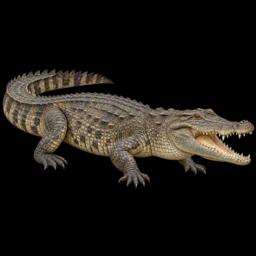
A heavy, broad-snouted crocodile of South Asian fresh waters that hunts mostly by waiting. It lies motionless at the edge of rivers, lakes and waterholes where animals come to drink, then lunges from the shallows to seize them.
Mugger Crocodile at a glance
Reptile · South Asia · Slow rivers · Uncommon
Known for: Olive-grey to brown back, Fourth lower tooth shows when the jaws are shut, Rows of rough, Often lies still with the jaws gaping wide open
Its Power
Bank Ambush
Let patience remove the distance that speed would have to cross.
“Wait where they must come.”
Capture a Mugger Crocodile, and it's yours when you finish one step it gives you.
Biological basis
Crocodylus palustris lies motionless in the shallows at the edges of rivers, lakes and waterholes where animals come to drink, then lunges a short distance to seize them and drags large prey under, twisting to tear it apart.
Put it into practice
Instead of cold-calling hundreds of firms, a recruiter sets up at the one industry job fair every graduate attends and makes her offers when candidates reach her table.
What does the mugger crocodile symbolize?
The mugger crocodile symbolizes bank ambush: let patience remove the distance that speed would have to cross. It represents patient progress, right timing and strategy. Its AnimalDex motto: "Wait where they must come."
The mugger crocodile as a spirit animal
If the mugger crocodile is your spirit animal, the AnimalDex reading is Bank Ambush: let patience remove the distance that speed would have to cross. It suggests a strength in patient progress and right timing, and a reminder to use it on purpose.
What can the mugger crocodile help you with in life?
The mugger crocodile is a guide for patient progress, right timing and strategy. Its lesson applies wherever patient progress matters: let patience remove the distance that speed would have to cross.
- Patient Progress
- Right Timing
- Strategy
In practice: Instead of cold-calling hundreds of firms, a recruiter sets up at the one industry job fair every graduate attends and makes her offers when candidates reach her table.
What can we learn from the Mugger Crocodile?What does it mean to dream about or encounter a wild mugger crocodile?
Meeting a wild mugger crocodile, asleep or awake, is often a nudge toward patient progress, the quality the mugger crocodile is built around. In AnimalDex, the mugger crocodile's principle is Bank Ambush: let patience remove the distance that speed would have to cross. Read the moment through its core lesson: Let patience remove the distance that speed would have to cross.
Neither good nor bad on its own. How the mugger crocodile acts matters: at ease, it reflects patient progress; hostile, it flags patient progress out of balance.
Spotting a mugger crocodile in the wild
A real encounter is the plainest version of the sign: notice what the mugger crocodile was doing. Let patience remove the distance that speed would have to cross. That is the patient progress worth borrowing today.
A mugger crocodile that keeps appearing
A mugger crocodile that keeps turning up points to right timing you keep circling back to. The repetition is the message.
Dreaming of being chased by a mugger crocodile
Being chased suggests you are avoiding the Bank Ambush the mugger crocodile stands for: let patience remove the distance that speed would have to cross. Ask what you keep postponing that needs patient progress.
Dreaming that a mugger crocodile attacks you
When the mugger crocodile attacks, the dream may be about pressure: right timing or strategy applied too hard, by you or by someone close to you.
A calm or friendly mugger crocodile
A calm mugger crocodile suggests you have made peace with patient progress and can use it without force.
A dead or injured mugger crocodile
An injured mugger crocodile often reflects patient progress under strain; rest and repair come before pushing again.
These readings are reflective prompts drawn from how the mugger crocodile really lives, not predictions. If you meet one in the wild, watch from a distance and leave it undisturbed.
Capture your own Mugger Crocodile
Photograph or film one in the wild, at a zoo or at home with the app. It becomes yours: it remembers you, gives you steps, and can debate your problems with your other animals.
Animal field guide
Mugger Crocodile
Sign in to hear this read by a natural AI voice instead of your browser's.
A heavy, broad-snouted crocodile of South Asian fresh waters that hunts mostly by waiting. It lies motionless at the edge of rivers, lakes and waterholes where animals come to drink, then lunges from the shallows to seize them.
Native range
Natural range, not this capture location
Slow rivers, freshwater lakes, marshes, reservoirs, irrigation tanks and village ponds on the plains and lower hills of South Asia. It readily uses man-made waters and occasionally enters brackish coastal lagoons.
Search near meAnimalDex stats
Size scale
Understand the animal
Understand the Mugger Crocodile
Factual biology first: what this animal is like, where it lives, how it survives, and why those traits exist.
01
Introduction to Mugger Crocodile
A heavy, broad-snouted crocodile of South Asian fresh waters that hunts mostly by waiting. It lies motionless at the edge of rivers, lakes and waterholes where animals come to drink, then lunges from the shallows to seize them.
How to identify a Mugger Crocodile
- Olive-grey to brown back, young marked with dark cross-bands
- Fourth lower tooth shows when the jaws are shut
- Rows of rough, bony scutes along the back and tail
- Often lies still with the jaws gaping wide open
Why Mugger Crocodile are interesting
- Muggers have been recorded lying with sticks balanced on their snouts in the egret nesting season, possibly luring birds gathering nest material.
- The IUCN lists it as Vulnerable, and it is protected by law in India.
- In drought it may walk long distances overland in search of water.
- The name mugger comes from the Hindi word magar, meaning crocodile.
02
Adaptations and biological abilities
03
Why does Mugger Crocodile behave this way?
- Olive-grey to brown back, young marked with dark cross-bands
- Fourth lower tooth shows when the jaws are shut
- Rows of rough, bony scutes along the back and tail
- Often lies still with the jaws gaping wide open
Basks on banks and sandbars in the cooler hours, retreating to water or shade in midday heat; much hunting happens at dusk and at night. In drought or cold spells it may shelter in burrows dug into banks.
04
Why Slow rivers?
Habitat: Slow rivers, freshwater lakes, marshes, reservoirs, irrigation tanks and village ponds on the plains and lower hills of South Asia. It readily uses man-made waters and occasionally enters brackish coastal lagoons.
Native range: South Asia
Native range
Natural range, not this specific capture location.
Slow rivers, freshwater lakes, marshes, reservoirs, irrigation tanks and village ponds on the plains and lower hills of South Asia. It readily uses man-made waters and occasionally enters brackish coastal lagoons.
05
Why this diet?
06
Activity, rest, and lifespan
Basks on banks and sandbars in the cooler hours, retreating to water or shade in midday heat; much hunting happens at dusk and at night. In drought or cold spells it may shelter in burrows dug into banks.
Wild lifespan is not known. Like other large crocodiles it is thought to live for several decades, but no reliable figure exists for wild muggers.
07
Mugger Crocodile reproduction
In the dry season the female digs a nest hole in a sandy bank and lays about 20 to 40 eggs, which hatch after roughly two months, as the rains begin. She guards the nest, opens it when the young call, and carries hatchlings to water in her mouth.
Males grow larger and heavier, with the biggest over 4 m long; females are usually well under 3 m. Otherwise the sexes look alike.
08
Predators, threats, and defense
Grown muggers have few enemies besides people. Monitor lizards, jackals and mongooses dig up eggs, and birds, fish and larger crocodiles take hatchlings, though the guarding mother drives many off. Wetland loss and drowning in fishing nets are major threats.
09
Conservation and rarity
Rarity: Uncommon · 66/100. AnimalDex canonical rarity score: 66/100, maintained by the live indexed species profile.
- Observe from a respectful distance and avoid changing the animal's behavior.
- Do not block feeding, shelter, nesting, or travel routes.
- Use a live camera capture without handling or staging wildlife.
Talk to it
Talk to the Mugger Crocodile
It answers as itself: ask about how it lives, or bring it something of yours and hear what it would do, from its own Power.
Anonymous: 6/day. Signed-in: 10/day. Pro: 100/day.
Side by side
The Mugger Crocodile, side by side
Nothing written side by side for the Mugger Crocodile yet. Pick any animal to compare it with. Compare with any animal →
Where to find them
Where to find Mugger Crocodile
To find Mugger Crocodile in the wild, focus on the exact habitat patches that match its body design and daily behavior, not just the broad country where it exists. You usually do better by working one good piece of habitat inside south Asia than by covering too much ground.
- Quiet marsh edges, reedbeds, river bends, or shallow wetland margins
- Open grassland edges, lightly wooded plains, or raised ground where you can scan long distances
- Headlands, reef edges, island colonies, tidal channels, or productive coastal water
Where explorers saw it
Mugger Crocodile is threatened, so only countries are shown. Look for it with a licensed local guide.
- Sri LankaAug · 1 sighting
Guides to seeing Mugger Crocodile
In the Ark
1 Mugger Crocodile is aboard right now.
Since November 5: 1 came aboard.
The Ark is a live, shared animal world. Animals come aboard when people capture them, and live there by rules based on their field guides.
Scientific name
Crocodylus palustris
Category
Reptile
Habitat
Slow rivers, freshwater lakes, marshes, reservoirs, irrigation tanks and village ponds on the plains and lower hills of South Asia. It readily uses man-made waters and occasionally enters brackish coastal lagoons.
Rarity
Uncommon · 66/100
Native range
South Asia
Take the encyclopedia outside
AnimalDex helps you scan real animals, identify species, collect cards, and learn from nature wherever you are.