
Animal field guide
Roadside Hawk
Rupornis magnirostris
This small, stocky hawk, roughly 31 to 41 centimetres long, is one of the most frequently seen birds of prey in South America. Unlike many raptors it thrives where forest has been cleared for pasture, crops and towns, and it is seen so often beside highways that it is named after them.
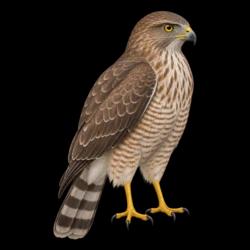
Roadside Hawk at a glance
Bird · South America · Forest edges · Relatively common
Known for: Pale yellow eyes set in a grey head, Grey head and chest contrasting with a finely, Long tail crossed by several broad dark and pale, Yellow legs and a yellow patch of bare skin at the
Its Power
Adaptable Hunting
Adjust your strategy to suit the environment.
The Roadside Hawk thrives by adapting its hunting techniques to diverse habitats, from forests to urban areas, showcasing its versatile approach to survival.
“Hunt from the edge.”
Capture a Roadside Hawk, and it's yours when you finish one step it gives you.
Biological basis
Roadside Hawks are known for their ability to hunt in a wide range of environments, utilizing different strategies based on the available prey and terrain.
Put it into practice
A salesperson pitches by phone in the city and over coffee in the small towns.
What does the roadside hawk symbolize?
The roadside hawk symbolizes adaptable hunting: adjust your strategy to suit the environment. It represents versatility, adaptability and strategy. Its AnimalDex motto: "Hunt from the edge."
The roadside hawk as a spirit animal
If the roadside hawk is your spirit animal, the AnimalDex reading is Adaptable Hunting: the Roadside Hawk thrives by adapting its hunting techniques to diverse habitats, from forests to urban areas, showcasing its versatile approach to survival. It suggests a strength in versatility and adaptability, and a reminder to use it on purpose.
What can the roadside hawk help you with in life?
The roadside hawk is a guide for versatility, adaptability and strategy. Its lesson applies wherever versatility matters: the Roadside Hawk thrives by adapting its hunting techniques to diverse habitats, from forests to urban areas, showcasing its versatile approach to survival.
- Versatility
- Adaptability
- Strategy
In practice: A salesperson pitches by phone in the city and over coffee in the small towns.
What can we learn from the Roadside Hawk?What does it mean to dream about or encounter a wild roadside hawk?
A wild roadside hawk, whether in a dream or in front of you, tends to show up when versatility or adaptability is on your mind. In AnimalDex, the roadside hawk's principle is Adaptable Hunting: adjust your strategy to suit the environment. Read the moment through its core lesson: The Roadside Hawk thrives by adapting its hunting techniques to diverse habitats, from forests to urban areas, showcasing its versatile approach to survival.
Neither good nor bad on its own. How the roadside hawk acts matters: at ease, it reflects versatility; hostile, it flags versatility out of balance.
Spotting a roadside hawk in the wild
Coming across a roadside hawk in person asks for attention more than interpretation. Watch it for a minute; the roadside hawk's way of working is Adaptable Hunting, and the lesson is: the Roadside Hawk thrives by adapting its hunting techniques to diverse habitats, from forests to urban areas, showcasing its versatile approach to survival.
A roadside hawk that keeps appearing
Repeated sightings of a roadside hawk usually mean the Adaptable Hunting lesson is still open: the Roadside Hawk thrives by adapting its hunting techniques to diverse habitats, from forests to urban areas, showcasing its versatile approach to survival.
Dreaming of being chased by a roadside hawk
Being chased suggests you are avoiding the Adaptable Hunting the roadside hawk stands for: the Roadside Hawk thrives by adapting its hunting techniques to diverse habitats, from forests to urban areas, showcasing its versatile approach to survival. Ask what you keep postponing that needs versatility.
Dreaming that a roadside hawk attacks you
When the roadside hawk attacks, the dream may be about pressure: adaptability or strategy applied too hard, by you or by someone close to you.
A calm or friendly roadside hawk
Meeting a peaceful roadside hawk is usually encouraging: adaptability and strategy are within reach.
A dead or injured roadside hawk
A dead or injured roadside hawk, dreamed or found, can mark versatility you have let lapse, or a phase built on Adaptable Hunting coming to an end.
These readings are reflective prompts drawn from how the roadside hawk really lives, not predictions. If you meet one in the wild, watch from a distance and leave it undisturbed.
Capture your own Roadside Hawk
Photograph or film one in the wild, at a zoo or at home with the app. It becomes yours: it remembers you, gives you steps, and can debate your problems with your other animals.
Animal field guide
Roadside Hawk
Sign in to hear this read by a natural AI voice instead of your browser's.
This small, stocky hawk, roughly 31 to 41 centimetres long, is one of the most frequently seen birds of prey in South America. Unlike many raptors it thrives where forest has been cleared for pasture, crops and towns, and it is seen so often beside highways that it is named after them.
Native range
Natural range, not this capture location
Forest edges, open and secondary woodland, savanna, riverside trees, plantations, pasture with scattered trees, roadsides and wooded parts of towns. It avoids the interior of dense unbroken forest and is commonest in lowlands, though it also occurs in foothills and mountain valleys.
Search near meAnimalDex stats
Size scale
Understand the animal
Understand the Roadside Hawk
Factual biology first: what this animal is like, where it lives, how it survives, and why those traits exist.
01
Introduction to Roadside Hawk
This small, stocky hawk, roughly 31 to 41 centimetres long, is one of the most frequently seen birds of prey in South America. Unlike many raptors it thrives where forest has been cleared for pasture, crops and towns, and it is seen so often beside highways that it is named after them.
How to identify a Roadside Hawk
- Pale yellow eyes set in a grey head
- Grey head and chest contrasting with a finely barred brownish belly
- Long tail crossed by several broad dark and pale bands
- Yellow legs and a yellow patch of bare skin at the bill base
- Rufous patches in the outer wing show in flight in many populations
Why Roadside Hawk are interesting
- It was long placed in the genus Buteo, but DNA studies led many authorities to move it into its own genus, Rupornis.
- About a dozen subspecies have been described, differing mainly in how grey or brown the plumage is.
- The scientific name magnirostris means large-billed, although its bill is not especially big for a hawk of its size.
- Young birds are browner than adults, with a streaked chest instead of the plain grey bib.
- Pairs often soar together over their territory, calling repeatedly, particularly early in the breeding season.
02
Adaptations and biological abilities
03
Why does Roadside Hawk behave this way?
- Pale yellow eyes set in a grey head
- Grey head and chest contrasting with a finely barred brownish belly
- Long tail crossed by several broad dark and pale bands
- Yellow legs and a yellow patch of bare skin at the bill base
- Rufous patches in the outer wing show in flight in many populations
Active by day, most visibly in the morning. At night it roosts on a branch in a leafy tree, usually within its territory.
04
Why Forest edges?
Habitat: Forest edges, open and secondary woodland, savanna, riverside trees, plantations, pasture with scattered trees, roadsides and wooded parts of towns. It avoids the interior of dense unbroken forest and is commonest in lowlands, though it also occurs in foothills and mountain valleys.
Native range: South America
Native range
Natural range, not this specific capture location.
Forest edges, open and secondary woodland, savanna, riverside trees, plantations, pasture with scattered trees, roadsides and wooded parts of towns. It avoids the interior of dense unbroken forest and is commonest in lowlands, though it also occurs in foothills and mountain valleys.
05
Why this diet?
Large insects such as grasshoppers and beetles, lizards, small snakes, frogs, rodents and occasionally small birds. Most prey is caught on or near the ground; insects and lizards are sometimes snatched from foliage.
06
Activity, rest, and lifespan
07
Roadside Hawk reproduction
The pair builds a stick nest in a tree fork, usually well above the ground. Clutches are small, typically 1 or 2 eggs, incubated mainly by the female for roughly five to six weeks; the young fledge after several more weeks and depend on the adults for a while after leaving.
Males and females have the same plumage. Females average larger and heavier, but the difference is hard to judge unless a pair perches together.
08
Predators, threats, and defense
09
Conservation and rarity
Rarity: Relatively common · 22/100. AnimalDex canonical rarity score: 22/100, maintained by the live indexed species profile.
- Observe from a respectful distance and avoid changing the animal's behavior.
- Do not block feeding, shelter, nesting, or travel routes.
- Use a live camera capture without handling or staging wildlife.
Talk to it
Talk to the Roadside Hawk
It answers as itself: ask about how it lives, or bring it something of yours and hear what it would do, from its own Power.
Anonymous: 6/day. Signed-in: 10/day. Pro: 100/day.
Side by side
The Roadside Hawk, side by side
Nothing written side by side for the Roadside Hawk yet. Pick any animal to compare it with. Compare with any animal →
Where to find them
Where to find Roadside Hawk
To find Roadside Hawk in the wild, focus on the exact habitat patches that match its body design and daily behavior, not just the broad country where it exists. You usually do better by working one good piece of habitat inside south America than by covering too much ground.
- Quiet marsh edges, reedbeds, river bends, or shallow wetland margins
- Forest edge, canopy gaps, fruiting trees, or shaded trails where cover and food meet
- Rocky slopes, ridge lines, cliff ledges, or open mountain meadows with a wide view
Where explorers saw it
- La Reina, Región Metropolitana, ChileNov · 1 sighting
- Barra da Tijuca, Rio de Janeiro, BrasilJul · 1 sighting
Guides to seeing Roadside Hawk
In the Ark
4 Roadside Hawks are aboard right now.
None have come aboard or left since November 17.
The Ark is a live, shared animal world. Animals come aboard when people capture them, and live there by rules based on their field guides.
Scientific name
Rupornis magnirostris
Category
Bird
Habitat
Forest edges, open and secondary woodland, savanna, riverside trees, plantations, pasture with scattered trees, roadsides and wooded parts of towns. It avoids the interior of dense unbroken forest and is commonest in lowlands, though it also occurs in foothills and mountain valleys.
Rarity
Relatively common · 22/100
Native range
South America
Take the encyclopedia outside
AnimalDex helps you scan real animals, identify species, collect cards, and learn from nature wherever you are.