
Animal field guide
Sterlet Sturgeon
Acipenser ruthenus
One of the smallest sturgeons, usually well under a metre long. It belongs to a lineage of fishes whose fossils reach back to the Jurassic, and it has kept their cartilage-rich skeleton.
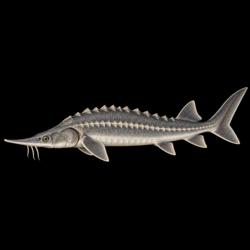
Sterlet Sturgeon at a glance
Animal · Europe · Large lowland rivers and their · Relatively common
Known for: Long, Dark grey-brown back and yellowish-white belly, Fringed barbels in front of the mouth, Five rows of bony plates along the body
Its Power
Ancient Resilience
Embrace your roots to navigate modern challenges.
Sterlet Sturgeons have thrived for millions of years by adapting ancient traits to changing environments. Embrace your foundational strengths to face new challenges.
“Rooted in Resilience.”
Capture a Sterlet Sturgeon, and it's yours when you finish one step it gives you.
Biological basis
The Sterlet Sturgeon is a species that has survived since the time of the dinosaurs, utilizing its ancient adaptations to thrive in diverse aquatic environments.
Put it into practice
A carpenter trained on hand tools moves into modern kit homes, and his old joinery sets him apart.
What does the sterlet sturgeon symbolize?
The sterlet sturgeon symbolizes ancient resilience: embrace your roots to navigate modern challenges. It represents self-knowledge, resilience and grounding. Its AnimalDex motto: "Rooted in Resilience."
The sterlet sturgeon as a spirit animal
If the sterlet sturgeon is your spirit animal, the AnimalDex reading is Ancient Resilience: sterlet Sturgeons have thrived for millions of years by adapting ancient traits to changing environments. Embrace your foundational strengths to face new challenges. It suggests a strength in self-knowledge and resilience, and a reminder to use it on purpose.
What can the sterlet sturgeon help you with in life?
The sterlet sturgeon is a guide for self-knowledge, resilience and grounding. Its lesson applies wherever self-knowledge matters: sterlet Sturgeons have thrived for millions of years by adapting ancient traits to changing environments. Embrace your foundational strengths to face new challenges.
- Self-Knowledge
- Resilience
- Grounding
In practice: A carpenter trained on hand tools moves into modern kit homes, and his old joinery sets him apart.
What can we learn from the Sterlet Sturgeon?What does it mean to dream about or encounter a wild sterlet sturgeon?
Dreaming about a wild sterlet sturgeon, or coming across one, usually points to self-knowledge and resilience: the qualities the sterlet sturgeon lives by. In AnimalDex, the sterlet sturgeon's principle is Ancient Resilience: embrace your roots to navigate modern challenges. Read the moment through its core lesson: Sterlet Sturgeons have thrived for millions of years by adapting ancient traits to changing environments. Embrace your foundational strengths to face new challenges.
Mostly a prompt rather than a warning. A calm sterlet sturgeon suggests self-knowledge you already have; a threatening one suggests self-knowledge is being tested or pushed too far.
Spotting a sterlet sturgeon in the wild
Coming across a sterlet sturgeon in person asks for attention more than interpretation. Watch it for a minute; the sterlet sturgeon's way of working is Ancient Resilience, and the lesson is: sterlet Sturgeons have thrived for millions of years by adapting ancient traits to changing environments. Embrace your foundational strengths to face new challenges.
A sterlet sturgeon that keeps appearing
A sterlet sturgeon that keeps turning up points to resilience you keep circling back to. The repetition is the message.
Dreaming of being chased by a sterlet sturgeon
A chase often means a demand for self-knowledge is catching up with you. The sterlet sturgeon's lesson, "Sterlet Sturgeons have thrived for millions of years by adapting ancient traits to changing environments. Embrace your foundational strengths to face new challenges", is the part you may be running from.
Dreaming that a sterlet sturgeon attacks you
An aggressive sterlet sturgeon can mirror a conflict where self-knowledge has become a weapon rather than a strength.
A calm or friendly sterlet sturgeon
Meeting a peaceful sterlet sturgeon is usually encouraging: resilience and grounding are within reach.
A dead or injured sterlet sturgeon
A dead or injured sterlet sturgeon, dreamed or found, can mark self-knowledge you have let lapse, or a phase built on Ancient Resilience coming to an end.
These readings are reflective prompts drawn from how the sterlet sturgeon really lives, not predictions. If you meet one in the wild, watch from a distance and leave it undisturbed.
Capture your own Sterlet Sturgeon
Photograph or film one in the wild, at a zoo or at home with the app. It becomes yours: it remembers you, gives you steps, and can debate your problems with your other animals.
Animal field guide
Sterlet Sturgeon
Sign in to hear this read by a natural AI voice instead of your browser's.
One of the smallest sturgeons, usually well under a metre long. It belongs to a lineage of fishes whose fossils reach back to the Jurassic, and it has kept their cartilage-rich skeleton.
Native range
Natural range, not this capture location
Large lowland rivers and their deeper channels in eastern Europe and western Asia, including the Danube and Volga basins. It lives over sand and gravel beds and rarely enters brackish water.
Search near meAnimalDex stats
Size scale
Understand the animal
Understand the Sterlet Sturgeon
Factual biology first: what this animal is like, where it lives, how it survives, and why those traits exist.
01
Introduction to Sterlet Sturgeon
One of the smallest sturgeons, usually well under a metre long. It belongs to a lineage of fishes whose fossils reach back to the Jurassic, and it has kept their cartilage-rich skeleton.
How to identify a Sterlet Sturgeon
- Long, narrow, often upturned snout
- Dark grey-brown back and yellowish-white belly
- Fringed barbels in front of the mouth
- Five rows of bony plates along the body
- Shark-like tail with a longer upper lobe
Why Sterlet Sturgeon are interesting
- Both long-snouted and shorter, blunter-snouted forms occur within the species.
- Crossed with the beluga sturgeon, it is one parent of the bester, a hybrid farmed for meat and caviar.
- Each side row usually holds about 55 to 70 small, closely set bony plates, far more than in most sturgeons.
- The IUCN Red List currently classes the sterlet as Endangered.
02
Adaptations and biological abilities
03
Why does Sterlet Sturgeon behave this way?
- Long, narrow, often upturned snout
- Dark grey-brown back and yellowish-white belly
- Fringed barbels in front of the mouth
- Five rows of bony plates along the body
- Shark-like tail with a longer upper lobe
Feeding is often heaviest at dusk and through the night; by day fish rest near the bottom in deeper water.
04
Why Large lowland rivers and their deeper channels in eastern Europe and western Asia?
Habitat: Large lowland rivers and their deeper channels in eastern Europe and western Asia, including the Danube and Volga basins. It lives over sand and gravel beds and rarely enters brackish water.
Native range: Europe, Central Asia
Native range
Natural range, not this specific capture location.
Large lowland rivers and their deeper channels in eastern Europe and western Asia, including the Danube and Volga basins. It lives over sand and gravel beds and rarely enters brackish water.
05
Why this diet?
Bottom-living invertebrates, especially insect larvae such as midges and caddisflies, with small crustaceans and molluscs. It finds food with its barbels and sucks it up with a toothless mouth that extends downwards.
06
Activity, rest, and lifespan
Feeding is often heaviest at dusk and through the night; by day fish rest near the bottom in deeper water.
Recorded ages reach about 20 years or a little more; most wild fish are much younger.
07
Sterlet Sturgeon reproduction
Females mature at about 5 to 8 years and may not breed every year. Each produces thousands to tens of thousands of eggs, which hatch in about a week; the young get no parental care.
The sexes look alike from outside; females grow slightly larger and are fuller-bodied before spawning.
08
Predators, threats, and defense
Eggs and young are eaten by other fish, while adults have few natural enemies. Dams that block spawning runs, river pollution and overfishing, including for caviar, have caused steep declines.
09
Conservation and rarity
Rarity: Relatively common · 36/100. AnimalDex canonical rarity score: 36/100, maintained by the live indexed species profile.
- Observe from a respectful distance and avoid changing the animal's behavior.
- Do not block feeding, shelter, nesting, or travel routes.
- Use a live camera capture without handling or staging wildlife.
Talk to it
Talk to the Sterlet Sturgeon
It answers as itself: ask about how it lives, or bring it something of yours and hear what it would do, from its own Power.
Anonymous: 6/day. Signed-in: 10/day. Pro: 100/day.
Side by side
The Sterlet Sturgeon, side by side
Nothing written side by side for the Sterlet Sturgeon yet. Pick any animal to compare it with. Compare with any animal →
Where to find them
Where to find Sterlet Sturgeon
To find Sterlet Sturgeon in the wild, focus on the exact habitat patches that match its body design and daily behavior, not just the broad country where it exists. You usually do better by working one good piece of habitat inside europe, Central Asia than by covering too much ground.
- Quiet marsh edges, reedbeds, river bends, or shallow wetland margins
- Protected habitat blocks within europe, Central Asia
In the Ark
1 Sterlet Sturgeon is aboard right now.
None have come aboard or left since November 17.
The Ark is a live, shared animal world. Animals come aboard when people capture them, and live there by rules based on their field guides.
Scientific name
Acipenser ruthenus
Category
Animal
Habitat
Large lowland rivers and their deeper channels in eastern Europe and western Asia, including the Danube and Volga basins. It lives over sand and gravel beds and rarely enters brackish water.
Rarity
Relatively common · 36/100
Native range
Europe, Central Asia
Take the encyclopedia outside
AnimalDex helps you scan real animals, identify species, collect cards, and learn from nature wherever you are.