
Animal field guide
Walnut Orb-weaver
Nuctenea umbratica
An orb-weaving spider with an unusually flat, dark body built for squeezing into narrow cracks. By day it lies pressed into a crevice under loose bark or in old woodwork, almost invisible, and only comes out at dusk to build its web.
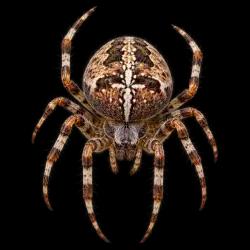
Walnut Orb-weaver at a glance
Animal · Europe · Old trees with loose bark · Wrinkled · Relatively common
Known for: Very flat, Wrinkled, Faint leaf-shaped pattern along the abdomen, Legs banded pale and dark
Its Power
Flattened Under Bark
Blend into your surroundings to gain an advantage.
The Walnut Orb-weaver camouflages itself against tree bark, using its environment to hide from predators and ambush prey.
“Hide in plain sight.”
Capture a Walnut Orb-weaver, and it's yours when you finish one step it gives you.
Biological basis
This spider flattens its body against tree bark, making it nearly invisible to both predators and prey.
Put it into practice
A poker player keeps a plain face and plain habits, so rivals never notice how strong her hand is.
What does the walnut orb-weaver symbolize?
The walnut orb-weaver symbolizes flattened under bark: blend into your surroundings to gain an advantage. It represents blending in, discretion and mode switching. Its AnimalDex motto: "Hide in plain sight."
The walnut orb-weaver as a spirit animal
If the walnut orb-weaver is your spirit animal, the AnimalDex reading is Flattened Under Bark: the Walnut Orb-weaver camouflages itself against tree bark, using its environment to hide from predators and ambush prey. It suggests a strength in blending in and discretion, and a reminder to use it on purpose.
What can the walnut orb-weaver help you with in life?
The walnut orb-weaver is a guide for blending in, discretion and mode switching. Its lesson applies wherever blending in matters: the Walnut Orb-weaver camouflages itself against tree bark, using its environment to hide from predators and ambush prey.
- Blending In
- Discretion
- Mode Switching
In practice: A poker player keeps a plain face and plain habits, so rivals never notice how strong her hand is.
What can we learn from the Walnut Orb-weaver?What does it mean to dream about or encounter a wild walnut orb-weaver?
Meeting a wild walnut orb-weaver, asleep or awake, is often a nudge toward blending in, the quality the walnut orb-weaver is built around. In AnimalDex, the walnut orb-weaver's principle is Flattened Under Bark: blend into your surroundings to gain an advantage. Read the moment through its core lesson: The Walnut Orb-weaver camouflages itself against tree bark, using its environment to hide from predators and ambush prey.
Mostly a prompt rather than a warning. A calm walnut orb-weaver suggests blending in you already have; a threatening one suggests blending in is being tested or pushed too far.
Spotting a walnut orb-weaver in the wild
Coming across a walnut orb-weaver in person asks for attention more than interpretation. Watch it for a minute; the walnut orb-weaver's way of working is Flattened Under Bark, and the lesson is: the Walnut Orb-weaver camouflages itself against tree bark, using its environment to hide from predators and ambush prey.
A walnut orb-weaver that keeps appearing
A walnut orb-weaver that keeps turning up points to discretion you keep circling back to. The repetition is the message.
Dreaming of being chased by a walnut orb-weaver
Being chased suggests you are avoiding the Flattened Under Bark the walnut orb-weaver stands for: the Walnut Orb-weaver camouflages itself against tree bark, using its environment to hide from predators and ambush prey. Ask what you keep postponing that needs blending in.
Dreaming that a walnut orb-weaver attacks you
An attack points to blending in turned against you: someone using it on you, or your own blending in overused until it costs you.
A calm or friendly walnut orb-weaver
A relaxed walnut orb-weaver near you, in a dream or in person, reads as readiness: Flattened Under Bark is available to you now, as its motto puts it, "Hide in plain sight.".
A dead or injured walnut orb-weaver
A dead or injured walnut orb-weaver, dreamed or found, can mark blending in you have let lapse, or a phase built on Flattened Under Bark coming to an end.
These readings are reflective prompts drawn from how the walnut orb-weaver really lives, not predictions. If you meet one in the wild, watch from a distance and leave it undisturbed.
Capture your own Walnut Orb-weaver
Photograph or film one in the wild, at a zoo or at home with the app. It becomes yours: it remembers you, gives you steps, and can debate your problems with your other animals.
Animal field guide
Walnut Orb-weaver
Sign in to hear this read by a natural AI voice instead of your browser's.
An orb-weaving spider with an unusually flat, dark body built for squeezing into narrow cracks. By day it lies pressed into a crevice under loose bark or in old woodwork, almost invisible, and only comes out at dusk to build its web.
Native range
Natural range, not this capture location
Old trees with loose bark, dead wood, wooden fences, gates, sheds and outbuildings across Europe, in woodland, parkland and gardens from lowlands to hills.
Search near meAnimalDex stats
Size scale
Understand the animal
Understand the Walnut Orb-weaver
Factual biology first: what this animal is like, where it lives, how it survives, and why those traits exist.
01
Introduction to Walnut Orb-weaver
An orb-weaving spider with an unusually flat, dark body built for squeezing into narrow cracks. By day it lies pressed into a crevice under loose bark or in old woodwork, almost invisible, and only comes out at dusk to build its web.
How to identify a Walnut Orb-weaver
- Very flat, dark brown body
- Wrinkled, leathery-looking abdomen with paired dimples
- Faint leaf-shaped pattern along the abdomen
- Legs banded pale and dark
Why Walnut Orb-weaver are interesting
- Its bite is harmless to people, though a large female can give a slight nip if handled.
- Several individuals are sometimes found sheltering under the same piece of loose bark.
- Adults can be found for much of the year, with females outliving males.
- It was formerly placed in the genus Araneus and appears as Araneus umbraticus in older books.
02
Adaptations and biological abilities
03
Why does Walnut Orb-weaver behave this way?
- Very flat, dark brown body
- Wrinkled, leathery-looking abdomen with paired dimples
- Faint leaf-shaped pattern along the abdomen
- Legs banded pale and dark
Nocturnal: it hunts from dusk until shortly before dawn and stays inactive through the daylight hours.
04
Why Old trees with loose bark?
Habitat: Old trees with loose bark, dead wood, wooden fences, gates, sheds and outbuildings across Europe, in woodland, parkland and gardens from lowlands to hills.
Native range: Europe
Native range
Natural range, not this specific capture location.
Old trees with loose bark, dead wood, wooden fences, gates, sheds and outbuildings across Europe, in woodland, parkland and gardens from lowlands to hills.
05
Why this diet?
Flying insects caught in its sticky orb web at night, especially moths, flies, mosquitoes and small beetles. Prey is wrapped in silk and bitten before being eaten.
06
Activity, rest, and lifespan
Nocturnal: it hunts from dusk until shortly before dawn and stays inactive through the daylight hours.
Probably one to two years; lifespan in the wild has not been measured precisely.
07
Walnut Orb-weaver reproduction
Females lay eggs in a silk sac hidden in a crevice near the retreat in summer. Spiderlings disperse after hatching and receive no care.
Females are larger, about 10 to 15 millimetres, with a broad, flattened abdomen. Males reach roughly two-thirds of that length, with a narrower abdomen and bulbous palps, and roam in search of females.
08
Predators, threats, and defense
Bark-searching birds such as tits are likely predators, and spider-hunting wasps are thought to take it. When disturbed on the web it tends to drop on a silk line or run back into cover.
09
Conservation and rarity
Rarity: Relatively common · 20/100. AnimalDex canonical rarity score: 20/100, maintained by the live indexed species profile.
- Observe from a respectful distance and avoid changing the animal's behavior.
- Do not block feeding, shelter, nesting, or travel routes.
- Use a live camera capture without handling or staging wildlife.
Talk to it
Talk to the Walnut Orb-weaver
It answers as itself: ask about how it lives, or bring it something of yours and hear what it would do, from its own Power.
Anonymous: 6/day. Signed-in: 10/day. Pro: 100/day.
Side by side
The Walnut Orb-weaver, side by side
Nothing written side by side for the Walnut Orb-weaver yet. Pick any animal to compare it with. Compare with any animal →
Where to find them
Where to find Walnut Orb-weaver
To find Walnut Orb-weaver in the wild, focus on the exact habitat patches that match its body design and daily behavior, not just the broad country where it exists. You usually do better by working one good piece of habitat inside europe than by covering too much ground.
- Forest edge, canopy gaps, fruiting trees, or shaded trails where cover and food meet
- Protected habitat blocks within europe
Where explorers saw it
- Niederneuching, Erding, DeutschlandAug · 1 sighting
Guides to seeing Walnut Orb-weaver
In the Ark
1 Walnut Orb-weaver is aboard right now.
None have come aboard or left since November 17.
The Ark is a live, shared animal world. Animals come aboard when people capture them, and live there by rules based on their field guides.
Scientific name
Nuctenea umbratica
Category
Animal
Habitat
Old trees with loose bark, dead wood, wooden fences, gates, sheds and outbuildings across Europe, in woodland, parkland and gardens from lowlands to hills.
Rarity
Relatively common · 20/100
Native range
Europe
Take the encyclopedia outside
AnimalDex helps you scan real animals, identify species, collect cards, and learn from nature wherever you are.