

wildlife-guidesherping
How Herpers Can Turn Local Knowledge Into Guided Walks
Night herping walks can be offered if you stay legal, skip handling and never promise a snake. Scouting, lights, chytrid hygiene, group size and pricing.
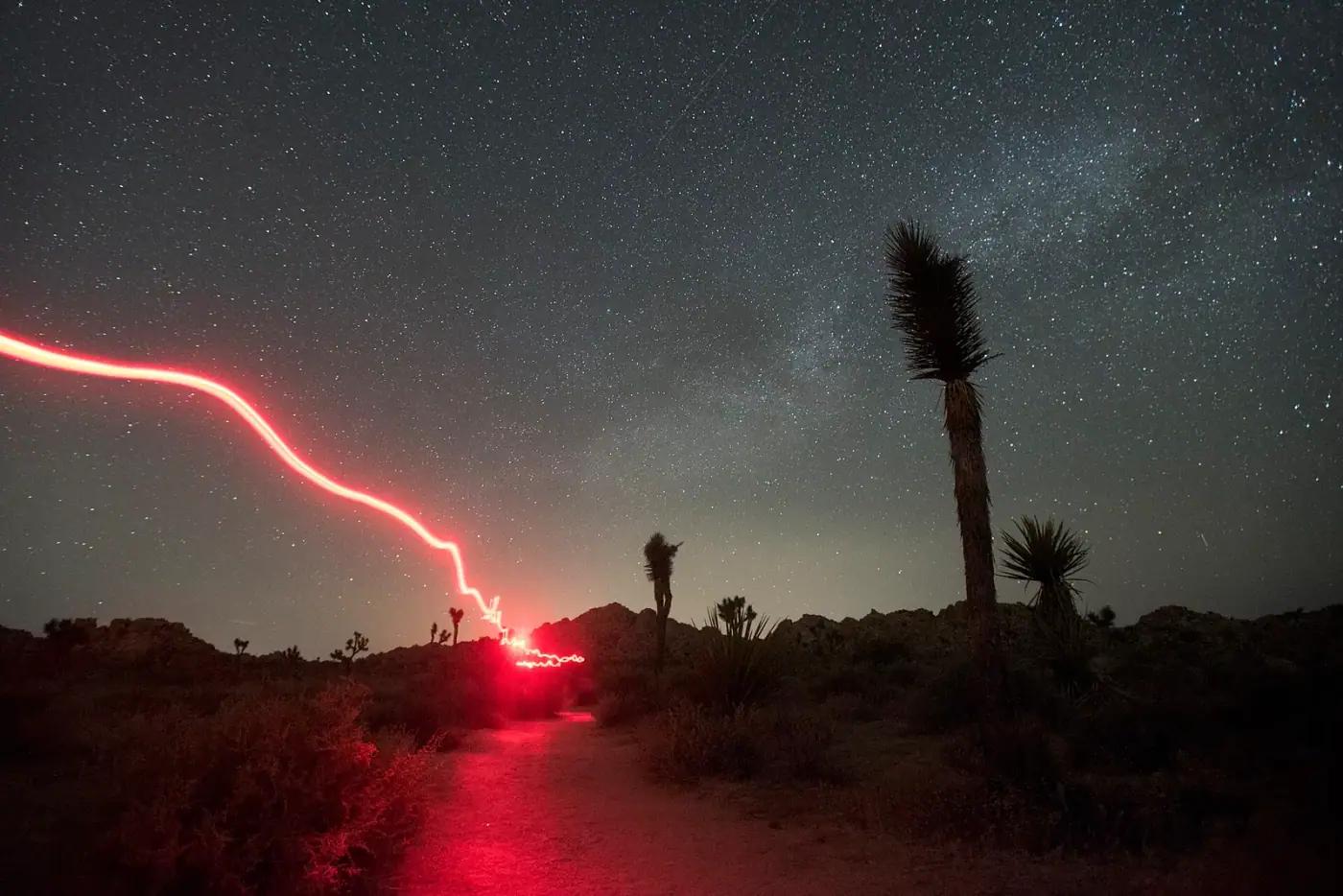
Herping is easy to do badly
Flipping cover boards for a crowd, pinning a snake for a photo, or shining a frog in the face for ten minutes so everyone gets the shot is not a walk worth selling, and it is not what careful herpers do on their own time either. Hold yourself to a simple rule: no baiting, luring, calling in, cornering or handling of wild animals, and nothing that disturbs dens, nests or protected habitat.
The reason is not squeamishness. Amphibians breathe and drink through skin that absorbs whatever is on your hands. Reptiles under cover are there for temperature and moisture, and a board left askew is a refuge lost. A guided walk multiplies whatever the guide does by the number of guests and the number of nights, so the standard has to be higher than for a solo outing.
What a good night walk looks like
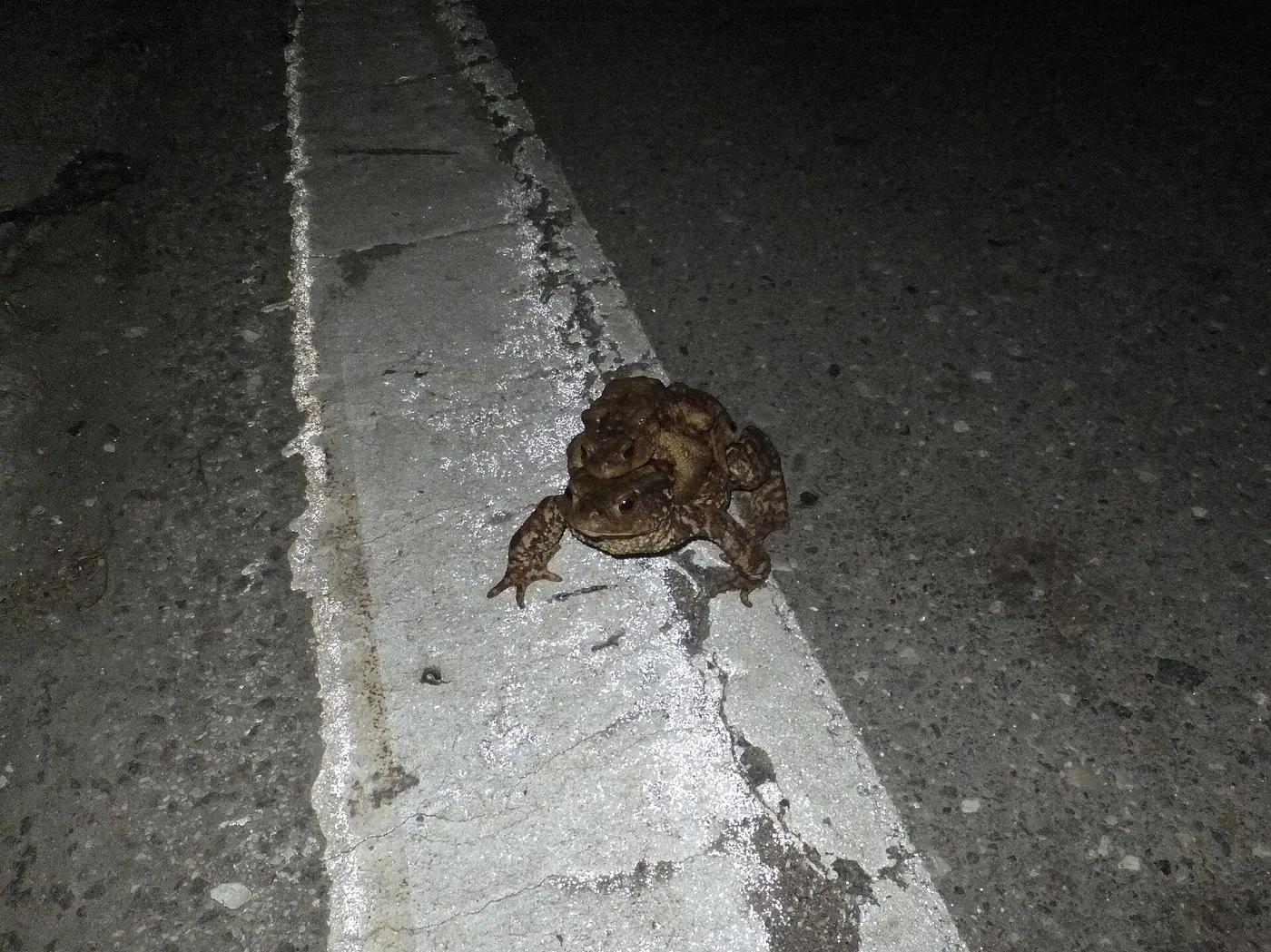
Public trails, a group of four to six, lights used to look rather than to lure, and identification talk that does not depend on finding anything. You walk slowly, you stop at the pond edge and the warm path and the stone wall, you explain what lives here and why tonight is or is not a good night, and when a toad crosses the path everyone watches it finish crossing. No collection, no bags, no cover flipping on a paid walk, and no promise of a snake.
The product is the guide's attention and the night itself. Guests who have never stood at a breeding pond in March with a chorus going do not need a handled animal to have a good evening.
What makes a great ethical Wildlife GuideWhat happens on a night wildlife walk
Timing by season and weather
Herps are the most weather-dependent wildlife you can guide for, and that is the honest core of the listing. Amphibian movement is driven by mild temperatures and rain: common and American toads move to breeding ponds on the first wet nights above roughly 5 °C in late winter and early spring, wood frogs chorus in flooded woodland pools within days of thaw, and fire salamanders in Europe come out on damp autumn and spring nights. Snakes and lizards bask in morning sun on cool days and shift to evenings when daytime heat is extreme.
So a herping listing is really a weather window with a route attached. Say so. A night that turns cold and dry is a short walk with good talk, and your guests should know that before they book.
| Target | Conditions that work | Window |
|---|---|---|
| Toads and frogs moving to ponds | Mild (above about 5 °C), wet or humid, little wind | Late winter to spring, first two hours after dark |
| Frog chorus at a pool | Mild evening after rain | Spring; dusk onward |
| Salamanders and newts on land | Rain or heavy dew, mild | Spring and autumn nights |
| Snakes and lizards basking | Cool morning after a cold night, sun on banks and walls | Spring and autumn, mid-morning |
| Nocturnal reptiles in hot regions | Warm, humid night after a hot day | Summer; first hours after dark |
| Anything in a cold, dry spell | Nothing works well | Reschedule or shorten |
Lights, hygiene and the chytrid rule
A headlamp with a wide beam for walking and a hand torch for pointing is enough. Keep light on an animal for seconds, not minutes, and never aim at a frog's eyes at close range while a group leans in. Red light helps you keep your own night vision but does not make shining an animal acceptable.
The chytrid fungus Batrachochytrium dendrobatidis has driven amphibian declines on several continents, and it travels on wet boots and nets. Clean and dry footwear between sites, and do not move water, mud or animals between ponds. On a guided walk that means a boot brush at the car and a flat rule that nobody touches an amphibian. Hand sanitiser and sunscreen on skin make the rule stricter, not looser.
Safety: venomous species, terrain and the group
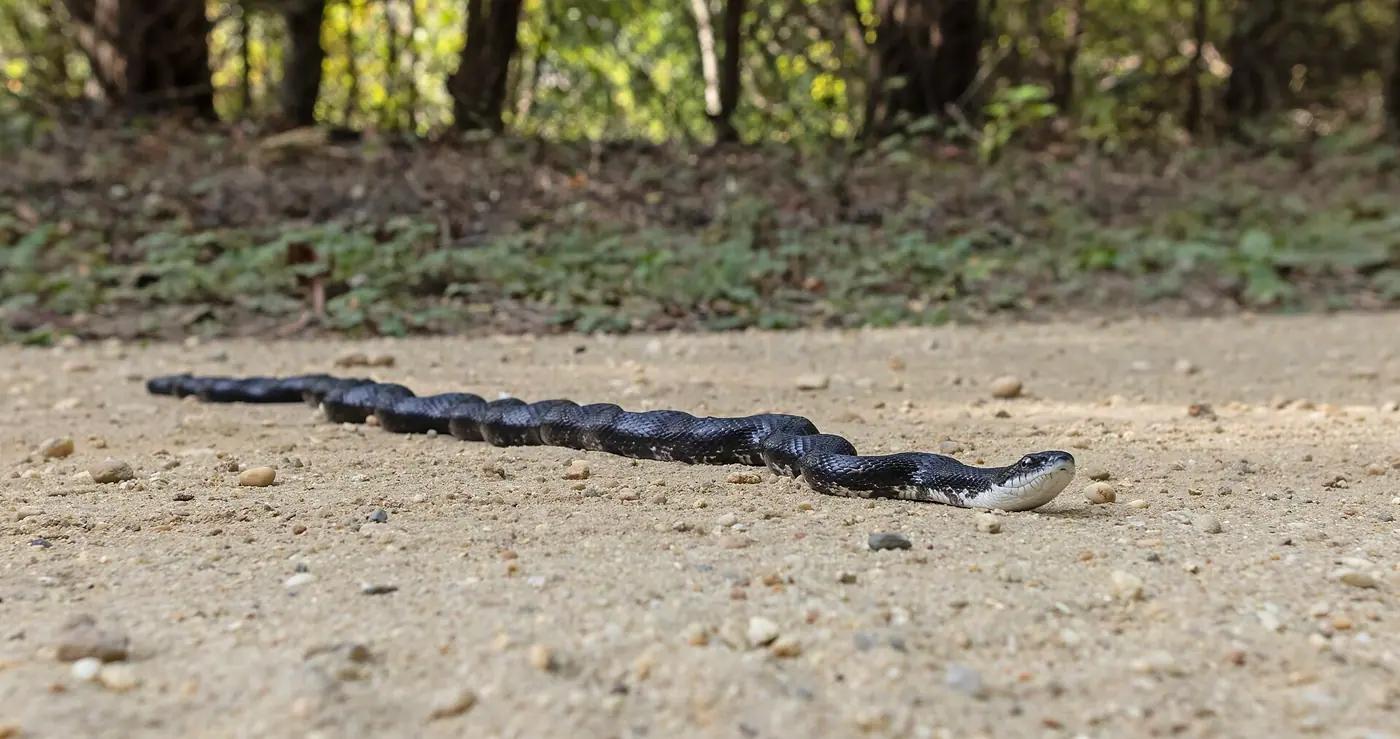
Know which venomous species occur on your route and what they look like at night in a torch beam. Most bites happen to people who reached toward a snake, which a no-handling rule already prevents; the rest happen to feet, so closed boots are a listing condition. Keep the group on the path, keep a two-metre gap from any snake, and let it leave. A black rat snake on a trail is harmless and still gets the same distance, because the rule has to be the same for every animal or guests will not follow it.
Night terrain is the bigger risk. Pond edges are slick, ditches are invisible, and a group walking in a beam tends to look at the ground where the light is rather than at the branch at head height. Walk the route in daylight first, cap the group at six, keep everyone behind you on narrow sections, and carry a first-aid kit, a spare light and a charged phone.
Pricing a night walk
Night walks are shorter than dawn birding walks and cancel more often, so price per person needs to cover a two-hour outing with a small group and a lost night or two per month. Start from your costs and compare with other guided evening activities nearby, such as a bat walk or a stargazing session, which is what guests will compare you to.
| Factor | How it shows up in the price |
|---|---|
| Two to three hours including the briefing | Your main cost; night work is tiring and starts after a full day |
| Weather cancellations | Higher than for birding; spread the lost nights across the season |
| Group cap of six | Fixed costs divide over fewer people, so set a minimum group or charge |
| Kit | Spare torches for guests, boot-cleaning gear, first-aid kit |
| Permits and insurance | Night access to reserves often needs explicit permission |
| Local comparison | Check against bat walks and night sky events in your area |
Where AnimalDex fits
AnimalDex does not list or book night walks; a walk you lead is your own business, arranged and paid directly with your guests, under whatever permits your site needs. What AnimalDex does is turn your sightings into a virtual guide. Each place where you log 3 or more wild species, with a public photo, becomes a guide visitors will be able to buy for a small fee: your notes on every animal, a direct chat with you, and introductions to local people you met.
For threatened species, no spot or timing is shared in a guide; point buyers to a licensed local guide instead. A guide is advice, not a tour, and it never promises anyone a snake. Buying is coming soon.
How virtual Wildlife Guides workVirtual Wildlife Guides on AnimalDexHerping field journal
Your first three walks
Run the route before you sell it, then run it for strangers, then fix the listing.
Walk one: a daylight recce and a solo night
Walk the route in daylight to find the ditches, the slick edges and the head-height branches. Then do it alone on a listed-type night and time it. Note where you would stand a group of six.
Walk two: first strangers
Brief the night before: boots, a torch each, no touching anything, the weather call. Start with the rules at the car. Afterwards, write down what guests wanted to know about species you did not see.
Walk three: the honest listing
Rewrite the pitch around the season window and the talk, with sightings described as possible. Fix the cap, the duration and the price from the first two nights. Add the cancellation rule.
Quick questions
Short answers to common questions readers ask on this topic.
- Can you touch frogs or snakes on a guided herping walk?
- No. Careful herping practice rules out handling, cornering, baiting and luring wild animals. Amphibian skin absorbs whatever is on your hands, and chytrid fungus spreads on wet gear. Guests watch animals in place, lights stay on them for seconds, and nobody picks anything up.
- What is the best time of year for a herping walk?
- Late winter to spring for amphibians, on mild wet nights above roughly 5 °C when toads and frogs move to breeding ponds. Spring and autumn mornings for basking snakes and lizards. In hot regions, warm humid summer nights after a hot day. A cold, dry spell is poor for everything, so a herping listing is really a weather window.
- How do I stop spreading chytrid fungus between ponds?
- Clean mud off boots and let them dry fully between sites, do not carry water, nets or animals from one pond to another, and do not let anyone handle amphibians. Batrachochytrium dendrobatidis spreads on damp equipment and has caused declines worldwide. On a guided walk, a boot brush at the car and a no-touching rule cover most of the risk.
- Can I sell a night herping walk on AnimalDex?
- No. AnimalDex does not list or book in-person walks. Your sightings can become a virtual guide instead: notes on every animal, a chat with you, and introductions to local people you met, for a small fee once buying opens. Threatened species get no spot or timing, and sightings are never promised.
Animals mentioned
Jump from this article into the species pages behind the examples, systems notes, and field-guide references.
Answer guides related to this topic
If you want direct comparisons and clear recommendations, continue with these answer-focused pages.
Best Animal Identification Apps
Compare the best animal identification apps by features like photo/video identification, species coverage, collection capabilities, offline use, and more.
What Is Animal Collecting
Learn what animal collecting means in modern apps and how AnimalDex turns real-world sightings into cards, sets, rarity, and species learning.
Pokemon-Like Animal App
Looking for a Pokemon-like animal app with real species? AnimalDex combines creature-collection energy with AI scanning and wildlife learning.
Related guides
wildlife-guides
What Makes a Great Ethical Wildlife Guide?
An ethical wildlife guide sells orientation, not a guaranteed animal. Distance rules, no baiting or handling, honest pitches, safety and permits.
6 min read
What to Expect on a Guided Herping Trip
What a guided herping trip is actually like: the pace, a typical evening hour by hour, what the Guide should refuse, what to bring, and how to log finds.
7 min read
What Happens on a Night Wildlife Walk?
What a night wildlife walk is really like: how lights are used, who is active after dark, what to bring, how weather changes the night, and how to log it.
7 min read