

sponsored-challengeszoos
Interactive Zoo Marketing Ideas That Go Beyond Discount Tickets
Price promotions fill the car park but do not change the visit. Eight interactive zoo ideas, what each costs in staff time, and how to measure them.
Discounts are not a program
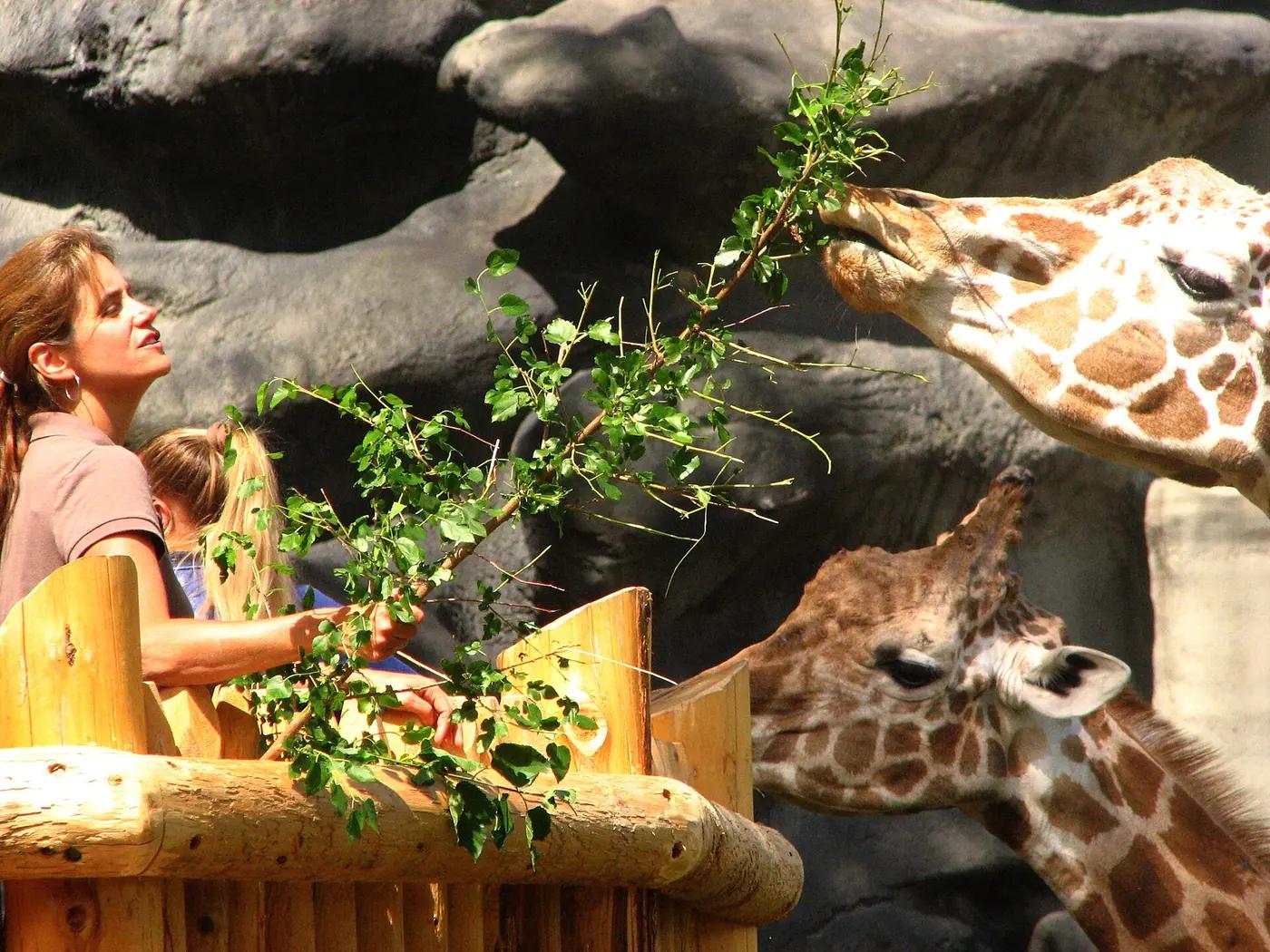
A cheaper ticket is a transaction. An interactive program is a reason to look at the next habitat instead of the gift shop. Zoos already run the best version of this: the keeper talk, where a person who knows the animal tells a crowd what to look for in the next ten minutes. Most of the ideas below are variations on that principle, with and without a phone.
The ideas that fail are the ones that put the activity between the visitor and the animal. Scavenger hunts that reward speed crowd the glass. QR codes that open a video make people watch a screen in front of a live giraffe. The test for any idea is simple: does it make someone look longer at an animal, or does it make them look at something else?
Eight ideas, compared
Costs here are phrased in staff time rather than money, because that is where the real budget goes. None of these needs a prize pool.
| Idea | What it changes | Staff cost | How to measure |
|---|---|---|---|
| Keeper talk schedule on the map | Visitors plan around animals, not food | Low: keepers already talk | Crowd counts at talks; exit survey recall |
| Quiet hour before opening | Slow looking, members and photographers | Low: one host, no extra keepers | Member uptake; repeat bookings |
| Species ID cards at the viewing line | People compare individuals, not just species | Low: print once, replace monthly | Hold time at the habitat |
| Sketching stools and clipboards | Ten-minute stops instead of ten-second ones | Low: stools and paper | Hold time; drawings left behind |
| Timed feeding encounters | A reason to be somewhere at a set time | Medium: keeper plus host per slot | Slot sell-through; dwell on the route to it |
| Sponsored AnimalDex Challenge | A published objective across the whole site | Low-medium: one-page brief, signage | Joins and completions after the window; stop rates |
| Family trail with a finish stamp | Route coverage for under-tens | Medium: trail design, restock | Stamps handed out; route survey |
| Member-only dawn walk | Repeat visits from existing members | Medium: keeper time at dawn | Attendance; renewals in the cohort |
Ideas that need nothing but staff
Quiet hours, sketching stools and species ID cards at the viewing line still work, and they work because they lower the pace. A card that says how to tell the two meerkat sentinels apart turns a glance into a comparison. A stool says you are allowed to stay. None of this is new, and none of it needs a vendor.
The keeper talk deserves a specific mention. Printing the talk schedule on the map, and saying at each talk what the next one is and where, is the cheapest route-coverage tool a zoo has. Visitors who attend two talks have, by definition, walked between them.
Ideas that use a phone without crowding the glass
A phone is fine if the task is to look at the animal through it and then put it away. The task should be an identification, a comparison or a count, not a video. That is the design logic behind a species-spotting Challenge: the capture is a live photo of an animal, the app identifies it, and the visitor moves on to find the next one. A gallery upload does not count, and if the campaign is live-only neither does an Instagram import.
Pair digital tasks with the slow ideas above rather than running them against each other. A Challenge that asks for 15 different animals and a keeper-talk schedule that tells people where the animals are active will send the same families to the same quiet habitats.
Family zoo and safari learning appHow zoos can turn visitors into active wildlife explorers
A Challenge is a rule set, not a coupon
If you sponsor an AnimalDex Challenge, guests join free and complete a published objective. No paid entry. No random winner. No prize pool. That keeps the activity on the right side of a sweepstake, and it means the reward is an achievement on the visitor's account rather than something you have to fund, insure or post.
Pair it with what you already run: an exhibition month, a new habitat opening, or a school-holiday window. The Challenge should name the behaviour you want, more different animals noticed or more days people come back, not a prize. Say which objective you want when you enquire; AnimalDex configures the campaign with you, and there is no self-serve portal.
Sponsor a ChallengeHow can a business sponsor an AnimalDex Challenge?
Budgeting in staff hours, not prize money
The honest budget for an interactive program is time. A keeper talk schedule costs an afternoon of planning and a line on the map. A quiet hour costs one host. A Challenge costs a one-page brief, two signs, a mention in the pre-visit email and whatever AnimalDex agrees with you for the campaign; ask about that in the enquiry rather than assuming. What none of them costs is a prize pool, because none of them has one.
If a proposal arrives with a prize budget attached, ask what behaviour the prize buys. Usually it buys entries, not looking.
Measuring whether any of it worked
Pick one measure per idea before you launch, from the table above. Stop rates and hold times at two or three habitats, sampled by an evaluator on the same weekdays before and during the program, are enough for most decisions. Add one exit-survey question about which zones people reached. For a Challenge, AnimalDex can talk about joins and completions after the window; it is not a live analytics suite and we will not pretend otherwise.
The test for any interactive idea: does it make someone look longer at an animal, or at something else?
Quick questions
Short answers to common questions readers ask on this topic.
- What are good interactive zoo marketing ideas?
- The ones that make people look at animals longer. Keeper-talk schedules printed on the map, quiet hours before opening, species ID cards at the viewing line, sketching stools, timed feeding encounters and a free-to-join species-spotting Challenge all do that. Ideas that reward speed, or that replace the animal with a screen, tend to crowd the glass and shorten stops.
- How do I increase dwell time at a zoo?
- Lower the pace at a few habitats and give people a reason to reach the quiet ones. Stools, comparison cards and keeper talks lengthen individual stops. A whole-site objective, such as capturing 15 different animals during a visit, improves route coverage. Measure with observed stop rates and hold times before and during the program, not with guesswork.
- Is a zoo challenge with prizes a sweepstake?
- It can be, which is why an AnimalDex Sponsored Challenge has no prize pool. Guests join free, there is no random draw, and completion is deterministic against published rules. The reward is an achievement on the visitor's account. Cash rewards are not live and should not be advertised to visitors.
- How much does an interactive zoo program cost?
- Mostly staff time. A keeper-talk schedule or quiet hour costs a few hours of planning and one host. Printed cards and stools are a one-off. A Challenge needs a one-page brief, signage and a pre-visit mention; ask AnimalDex about campaign costs when you enquire. Nothing in this list needs a prize budget.
Animals mentioned
Jump from this article into the species pages behind the examples, systems notes, and field-guide references.
Answer guides related to this topic
If you want direct comparisons and clear recommendations, continue with these answer-focused pages.
Best Animal Identification Apps
Compare the best animal identification apps by features like photo/video identification, species coverage, collection capabilities, offline use, and more.
What Is Animal Collecting
Learn what animal collecting means in modern apps and how AnimalDex turns real-world sightings into cards, sets, rarity, and species learning.
Pokemon-Like Animal App
Looking for a Pokemon-like animal app with real species? AnimalDex combines creature-collection energy with AI scanning and wildlife learning.
Related comparisons
Continue with structured animal-vs-animal comparison pages connected to the species in this guide.
Elephant vs Giraffe: Which Is Stronger?
Elephant is the stronger overall answer because it carries much more mass and pushing power. Giraffe stays dangerous through height, kicking, and awkward geometry rather than through direct bulk.
Giraffe vs Lion: Who Would Win in a Fight?
Adult giraffe is far more dangerous than people assume and can absolutely repel or injure lions. Lion still gets the better overall predation answer once pride pressure, target vulnerability, or repeated attacks enter the story.
Related guides
sponsored-challenges
How Zoos Can Turn Visitors Into Active Wildlife Explorers
Most zoo visits end at the gate. Here is how a free-to-join species-spotting challenge works end to end, how to measure dwell time, and what to avoid.
8 min read
Gamification Ideas for Wildlife Parks and Nature Attractions
Gamification at a wildlife park should make people look longer, not run. Slow game loops, challenge designs for reserves and safari parks, and metrics.
6 min read
What Is a Sponsored Wildlife Challenge?
A sponsored wildlife challenge is a free-to-join, time-boxed campaign with a published objective and an achievement reward. What it is and what counts.
6 min read