

talk to animalsanimal communicationAI
Talk to Animals App: Whales Have 'Vowels', Translators Don't
Sperm whales seem to have vowel-like sounds, yet no app can translate your pet. Here's how AnimalDex lets 2,500+ species answer from real biology.
The short version · 0:22
THIS MONKEY CALLS ITS FRIEND BY NAME
This article in under a minute. Watch it here, then read on for the detail and sources.
AI-narrated, with motion added to some photos. Photo credits are with each image in the article.
In this guide
- Can you really talk to animals with an app?
- Can AI translate animal sounds yet?
- Have scientists decoded whale language?
- Which animals call each other by name?
- How do you talk to an animal on AnimalDex? Step by step
- Is talking to animals free? Limits, tips and fixes
- Where can you see these animals, and what should you ask them?
The short answer
Quick answer
Sperm whales seem to have something like vowels. Your pet collar doesn't speak dog. No app can translate an individual animal, and no published study has turned animal sounds into sentences. On AnimalDex, tap "Speak to" on any of more than 2,500 animals and the species answers in the first person from real biology, saying which parts are interpretation.
The honest version
Can you really talk to animals with an app?
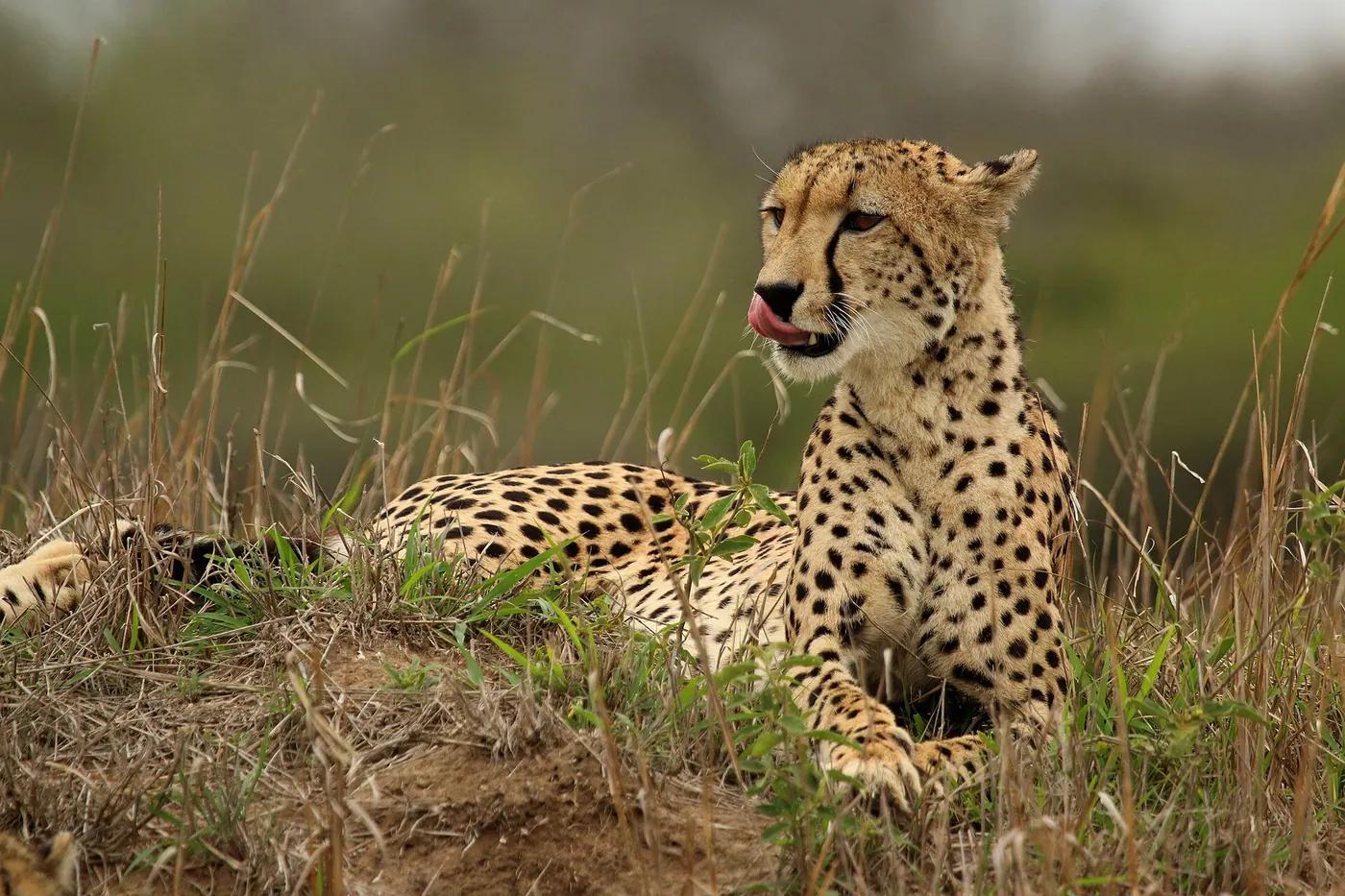
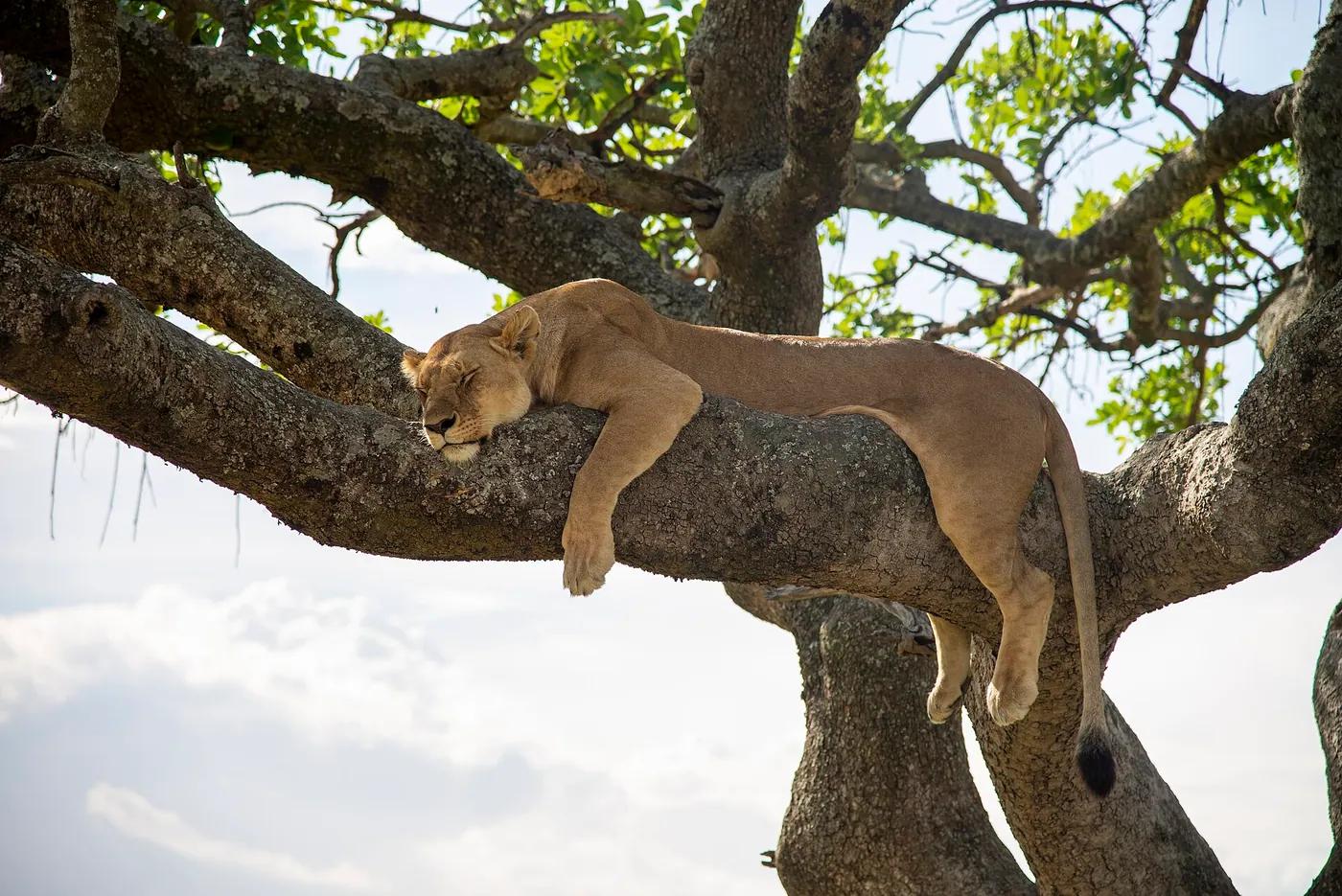
You can ask a cheetah why it sleeps about 12 hours a day, and it answers as a cheetah. It isn't 18 hours, as the popular claim goes. That number doesn't hold up: the Queensland Brain Institute and Cincinnati Zoo both put cheetahs at about 12. The cat that really sleeps the day away is the lion, at about 20.
Animal 'facts' bend as they spread, so the answers in a talk to animals app need to come from real biology. AnimalDex's answers do, and the app is blunt about its limits: "No app can decode what an individual animal is saying, and anyone claiming to is selling a trick."
So nothing is being translated. The species answers in the first person, working from what science knows about it, and tells you which parts are fact and which are AnimalDex's interpretation. It can't tell you what one particular cat meant by one particular chirp.
Further down you'll find how to talk to any of more than 2,500 animals, step by step. First, here is where the real race to decode animal language stands, from a 27-gram collar to a chatty whale grandmother called Pinchy.
Reality check
Can AI translate animal sounds yet?
A 27-gram collar from China claims to translate your pet with 94.6% accuracy. The PettiChat runs sounds through Alibaba's Qwen language model, and it took more than 10,000 pre-orders at 799 yuan, about US$118 each. Shipping is promised for the last quarter of 2026.
That 94.6% comes from the maker alone. Meng Xiaoyi, the company behind the collar, was founded in January 2026, and no peer-reviewed study backs the number. The tech site HotHardware called its demo videos "undeniably choreographed".
Independent research cited by IBTimes UK in its report on the collar is far more modest. AI working from sounds alone picks the right broad mood roughly 57% of the time. Adding video and body posture raises that to about 89–92%, but only in controlled settings and only for broad emotional states.
Here is the line that belongs on every translator box: no published study has turned animal sounds into human-language sentences. When your domestic dog barks at 3am, the best any machine can offer is a guess at its mood. It can't give you a message.
| Method | Accuracy | What it actually detects | Who says so |
|---|---|---|---|
| PettiChat collar | 94.6% | Unverified, with no peer-reviewed study behind it | The maker |
| Audio, video and posture combined | About 89–92% | Broad emotional states, in controlled settings only | Independent research, via IBTimes UK |
| Sound alone | About 57% | Broad mood only | Independent research, via IBTimes UK |
| Turning sounds into sentences | No published study | Nothing so far | IBTimes UK |
Whale vowels
Have scientists decoded whale language?
Sperm whales seem to have vowels. Project CETI researchers sped up the whales' click patterns and cut out the silences between them. Inside, they found two vowel-like sounds that work like our "a" and "i". Sometimes a whale glides from one to the other, like the vowel in "cow", and the "a" sounds last much longer than the "i" sounds.
A CETI analysis first revealed the vowels in November 2025. The full study appeared on 14 April 2026 in Proceedings of the Royal Society B, based on more than 1,100 codas from a wild group of 15 females and calves off Dominica. One of its stars is Pinchy, "a particularly vocal grandma" in National Geographic's words.
CETI's linguistics lead, Gašper Beguš, previously studied ancient languages such as Hittite, Tocharian and Sanskrit, and he is a fan of Pinchy: "She's very chatty, she's very structured... She's the best."
The groundwork came in May 2024. MIT CSAIL and CETI published a sperm whale "phonetic alphabet" in Nature Communications, built from 9,000 codas that the Dominica Sperm Whale Project recorded with D-tags attached to the whales. The click bursts vary in rhythm, tempo, rubato (stretched timing) and ornamentation (extra clicks), and those parts combine into a large repertoire.
The way the whales produce these sounds is strange too. Sperm whales use "phonic lips" in their noses that vibrate like our vocal cords, and they have the largest brains of any known animal. MIT CSAIL director Daniela Rus said the findings "challenge the prevailing belief among many linguists that complex communication is unique to humans." Lead author Pratyusha Sharma compared the work to contacting an alien species.
There are important limits. CETI founder David Gruber says the whales have "independently evolved a very vowel-like system", but that reading is contested and the field is young. Nobody has decoded what a single sound means, and the team's next step is "to decipher the meaning." Robert Seyfarth of the University of Pennsylvania, who was not involved in the 2024 study, praised its "new, tantalizing details", carefully.
Whale sounds have changed history before. Roger Payne's 1971 Science paper on humpback whale song, "Songs of Humpback Whales", helped spark the Save the Whales movement and build public support for the Marine Mammal Protection Act.
Sperm whales seem to have vowels. Nobody knows yet what they mean.
Names and prizes
Which animals call each other by name?
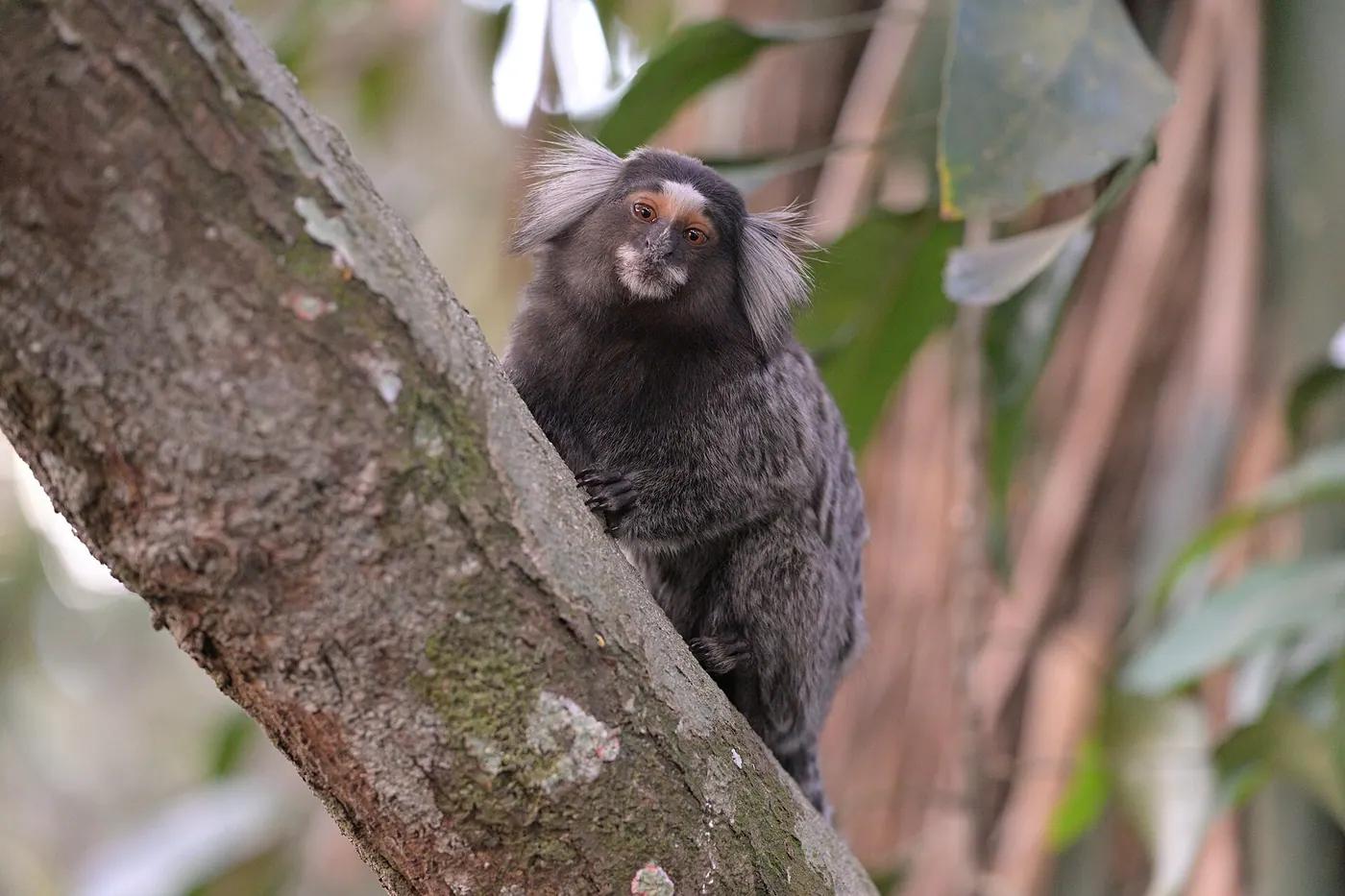
Marmoset monkeys call each other by name. A Hebrew University team reported in Science on 29 August 2024 that the common marmoset uses "phee-calls" to address specific individuals. Each monkey can also tell when a call is meant for it.
Before that study, the only animals with strong evidence of name-like calls were humans, dolphins and elephants. The list now has four members, and one of them is a small monkey.
Findings like this are why the Jeremy Coller Foundation and Tel Aviv University created a Turing test for animals. The Coller Dolittle Grand Prize offers a US$10 million equity investment or US$500,000 in cash. It goes to the first team whose animal communicates with researchers on its own without recognising they are human. Entries must be non-invasive, use the animal's own signals, work in more than one context and show a measurable response.
Until someone wins the grand prize, there is an annual prize of US$100,000. The 2026 finalists, announced on 4 June 2026, worked with zebra finches (UC Berkeley), African striped mice whose ultrasonic calls encode group identity (Saint-Étienne/EPHE), chimpanzees (CNRS Lyon and the Taï Chimpanzee Project) and bonobos (Zürich and Harvard). The bonobos combine calls in ways where the meaning depends on the combination, a building block of grammar.
There is a prize of up to US$10 million for the first team whose animal chats with humans without realising they're human.
Step by step
How do you talk to an animal on AnimalDex? Step by step
You don't need to find a sperm whale to talk to one. Here is how to start a conversation with any of more than 2,500 animals.
1. Pick or scan your animal. Scan a real animal with the AnimalDex camera, or open any species in the app or on the website.
2. Tap the floating "Speak to" button on its card. On the cheetah's card, it reads "Speak to the Cheetah".
3. Type anything, or tap a suggested opener. The openers point straight at the moments when the animal's strategy works and the moments when it breaks down. The animal replies in the first person.
4. Check the labels. The animal tells you which parts of its answer are biology and which are AnimalDex's interpretation.
Before every reply, the server loads that species' record. That includes its field guide (habitat, diet, predators, lifespan, where to look), its Animal Power and the lesson behind it, and its stats, Trials and qualities. It also loads how the animal behaves: the states it switches between, what triggers them, how its strategy fails, and where that pattern shows up in business and relationships. In AnimalDex's words, "The biology is fact; the voice is AnimalDex's interpretation of it."
Then comes the strange part: the animals share what they learn about you. Mention to the wolf that you run a bakery, and the cheetah knows it next week, in a brand-new chat. Memory is kept per account and stores short facts, not transcripts. If you've never used the scanner, the capture animals app hub explains how the camera works.
Tell the wolf you run a bakery and the cheetah knows it next week.
Good to know
Is talking to animals free? Limits, tips and fixes
Yes. AnimalDex's own FAQ answers "Is talking to animals free?" with one word: "Yes." Free accounts get 30 messages a day in the app, and Pro gets 100. On the website you get a few messages a day without an account, and more when you sign in.
Vague questions get vague answers. Bring a cheetah a real decision, habit or work problem and it answers from its Power, the survival strategy its species has evolved. Then it does something most advice won't: it tells you where that strategy would let you down. You can also put the same problem to two very different species and compare. For a team problem, try a species from the animals that work together list.
It won't diagnose you or act as your therapist, and the memory skips health and finances on purpose. You need an account to save your captures, credits and progress. Only photos taken live with the in-app camera join your collection; uploaded photos never do.
| Problem | What's going on | What to do |
|---|---|---|
| Your messages stopped | You've hit the daily limit: 30 a day on a free account in the app, 100 on Pro | Wait until the next day or switch to Pro; on the website, sign in for more |
| The answers feel vague | Open-ended questions get general answers | Bring a specific decision, habit or work problem, or tap a suggested opener |
| You want health or money advice | It won't diagnose you or act as a therapist, and memory skips health and finances | Take those questions to a qualified person |
| A photo didn't join your collection | Only live captures with the in-app camera count | Photograph the animal through the AnimalDex scanner instead of uploading a photo |
Go see one
Where can you see these animals, and what should you ask them?
The best conversations start with a real animal in front of you. In the Masai Mara, which is home to both cheetahs and lions, a lion that lies flat out in the grass all afternoon is simply doing what lions do for about 20 hours a day. The cheetah, on its 12-hour schedule, gives you far more waking time to watch.
Closer to home, any animal counts: a garden bird, a street cat, a dog in the park. Keep your distance and open the scanner. Photograph the animal live with the AnimalDex camera and confirm, and AnimalDex identifies it, grades the capture and adds it to your collection. Then tap "Speak to" and ask about what you just watched it do.
If you want one question to start with, open the marmoset and ask about names. The Hebrew University team found that marmoset families have dialects: relatives use similar sound features to make different names. Even unrelated adults pick up the family style.
Quick questions
Short answers to common questions readers ask on this topic.
- Is there an app that lets you talk to animals?
- AnimalDex lets you talk to more than 2,500 animals, but it doesn't translate them. Each species answers in the first person, based on what science knows about its biology, and tells you which parts are fact and which are AnimalDex's interpretation.
- Can AI translate animal sounds, and do dog or cat translator apps work?
- No published study has turned animal sounds into human-language sentences. Independent research reported by IBTimes UK puts AI at about 57% for detecting broad moods from sound alone, rising to around 89–92% with video and posture in controlled settings. One pet collar's 94.6% accuracy claim is self-reported and unverified.
- Is talking to animals on AnimalDex free, and how many messages do I get?
- Yes, it's free. Free accounts get 30 messages a day in the app, and Pro accounts get 100. On the website you get a few messages a day without an account, and more when you sign in.
- Does the animal remember me?
- Yes, and the animals share what they learn about you. Tell the wolf you run a bakery and the cheetah knows it next week, in a new chat. Memory is kept per account, stores short facts rather than transcripts, and skips sensitive topics such as health and finances.
- Do I have to photograph the animal to talk to it?
- No. You can scan a real animal with the AnimalDex camera, or open any species in the app or on the website and tap "Speak to" on its card. Only live captures with the in-app camera are added to your collection.
- Have scientists decoded whale language?
- Not yet. Project CETI has found a "phonetic alphabet" in sperm whale clicks, plus two vowel-like sounds similar to our "a" and "i". How to interpret this is still debated, and the team says its next step is to work out what the sounds mean.
Animals mentioned
Jump from this article into the species pages behind the examples, systems notes, and field-guide references.
CheetahLionSperm WhaleHumpback WhaleDolphinElephantZebra FinchChimpanzeeBonoboWolf
Sources and further reading
- National Geographic: We're one step closer to understanding the sperm whale 'alphabet'
- Phys.org: Using algorithms to decode the complex phonetic alphabet of sperm whales
- EurekAlert: Uncovering the secret communication of monkeys: They have names
- American Friends of Tel Aviv University: Finalists announced for US$100,000 TAU Coller Foundation prize to decode animal communication
- IBTimes UK: Chinese AI pet translator claims 95% accuracy
- Queensland Brain Institute: What sleeping animals can tell us about our sleep
- Cincinnati Zoo: Post on cheetah sleep
Answer guides related to this topic
If you want direct comparisons and clear recommendations, continue with these answer-focused pages.