lionsanimal communicationanimal cognition
Why Do Lions Roar? Lionesses Are Counting the Voices
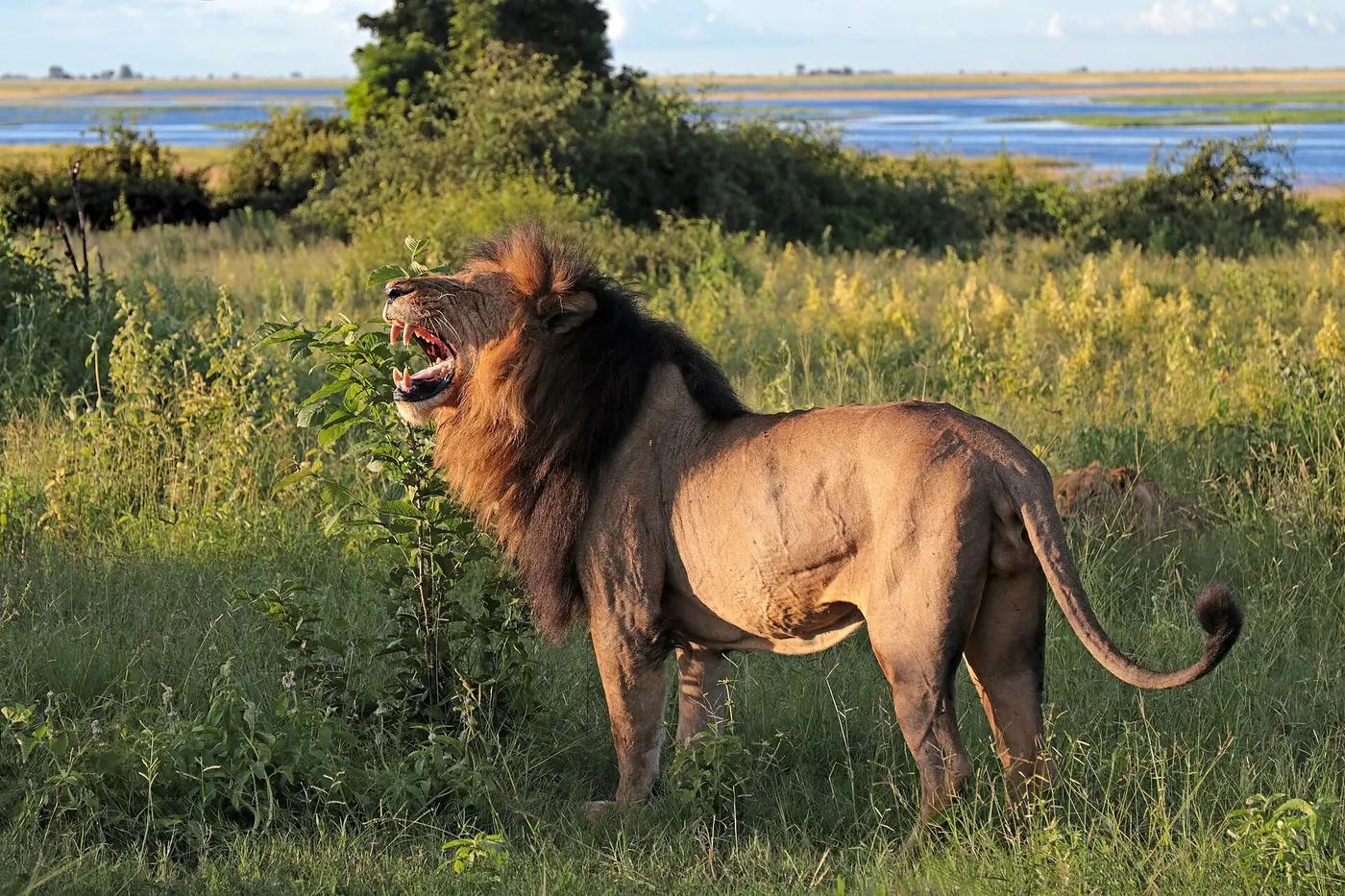
Why do lions roar? To broadcast a head count. In Serengeti playback tests, lionesses weighed strangers' roars against their own numbers before advancing.
The short version · 0:25
#1 REASON LIONS ROAR: MATH
This article in under a minute. Watch it here, then read on for the detail and sources.
AI-narrated, with motion added to some photos. Photo credits are with each image in the article.
In this guide
- Why do lions roar? To broadcast a head count
- Can lions count? The Serengeti loudspeaker test
- Why don't nomadic male lions roar?
- Do female lions roar? Yes, and the chorus is a shield
- Do all lionesses fight? The leaders, the laggards and the argument
- How loud is a lion's roar, and how do lions roar so loudly?
- Is there more than one type of lion roar? AI found a second
- What can a lion's roar teach you about making a claim?
The short answer
Quick answer
Lions roar to claim territory and announce how many lions stand behind the claim. Males signal dominance, females deter intruders, and pride members keep in touch. Playback experiments in the Serengeti showed lionesses compare the number of roaring strangers with their own group size, and are less likely to advance when outnumbered.
Why do lions roar? To broadcast a head count
Short answer
Wild lionesses can tell one roaring stranger from three, and they use that number to decide whether to fight. Scientists showed it in the Serengeti by playing recordings of lions that weren't there inside the territories of real prides.
Some of the reasons lions roar are the ones you'd guess: males signal dominance, females deter intruders, and the pride keeps in touch across the dark. But the sound most people hope to hear on an African safari works less like a snarl and more like a census, broadcast at up to 114 decibels. The lions that hear it treat it as one.
That makes the most famous sound the lion makes closer to an honest declaration than a bluff. Below: how researchers worked that out, why some lions never roar at all, and why machine learning picked out a second kind of roar in 2025.
The experiment
Can lions count? The Serengeti loudspeaker test
In February 1994, Karen McComb, with Packer and Pusey, published a study in Animal Behaviour with a simple, slightly sneaky design. They played recordings of either one unfamiliar female roaring or three females roaring in chorus inside the territories of 21 prides in Serengeti National Park, Tanzania.
Until then, studies of animal contests had looked at fights between single individuals. The team wanted to know what happens when groups fight groups, and whether each side sizes up both teams before committing.
The lionesses did. Defenders were less likely to approach three roaring strangers than one, and when they did go toward the trio, they moved more cautiously. The more adult defenders there were, the more likely the pride was to approach and roar back. The more intruders on the recording, the less likely.
In other words, they compared two numbers: the voices out in the grass, and the bodies beside them. McComb's lab at the University of Sussex describes lionesses relating the number of roaring intruders to their own group size “in order to avoid conflicts when they are outnumbered.”
The lab calls it the first demonstration of numerical assessment by a wild mammal, and suggests the cost of fighting bigger groups may have selected for number skills, a hint at a biological basis for maths. It set off similar work on other wild mammals, including chimpanzees. A 2018 Royal Society review credits the study with introducing playback as a tool for studying contests between groups.
Wild lionesses compare the voices out in the grass with the bodies beside them, and back off when they're outnumbered.
Honest signal
Why don't nomadic male lions roar?
Nomadic male lions, the ones without a territory, don't roar. Jon Grinnell's playback research found that roaring “is confined to males that are resident in prides and prepared to escalate in contest situations.”
That silence may come at a price. Grinnell's work suggests roaring probably matters for holding a coalition of males together, yet nomads keep quiet anyway. One way to read it: a roar is a promise to fight, and lions without a territory don't make promises they can't keep.
Resident males are the opposite. They approached the speaker almost every time they heard intruder males. Grinnell's research, including a 2002 paper in Human Nature on cooperation during territorial defence, suggests males cooperate unconditionally, answering roaring intruders whatever their partners' kinship or behaviour. The best explanation is mutualism: every male in the coalition gains from holding the ground.
Put it together and the roar looks like an honest signal. If silence is the safe choice for any lion that can't back up a claim, then a roar tells every listener the claim has bodies behind it.
| Listener | What they heard | What they did |
|---|---|---|
| Resident lionesses | One strange female vs a three-female chorus | Less likely to approach three; more cautious when they did |
| Resident males | Roaring intruder males | Approached almost every time |
| Males without a territory | Resident males' roars | Avoided them |
| Males without a territory | Female roars | Drawn to them, but less to three females than to one |
| Nomadic males | Their own chance to roar | Stay silent |
One way to read it: a roar is a promise to fight, and lions without a territory don't make promises they can't keep.
Safety in numbers
Do female lions roar? Yes, and the chorus is a shield
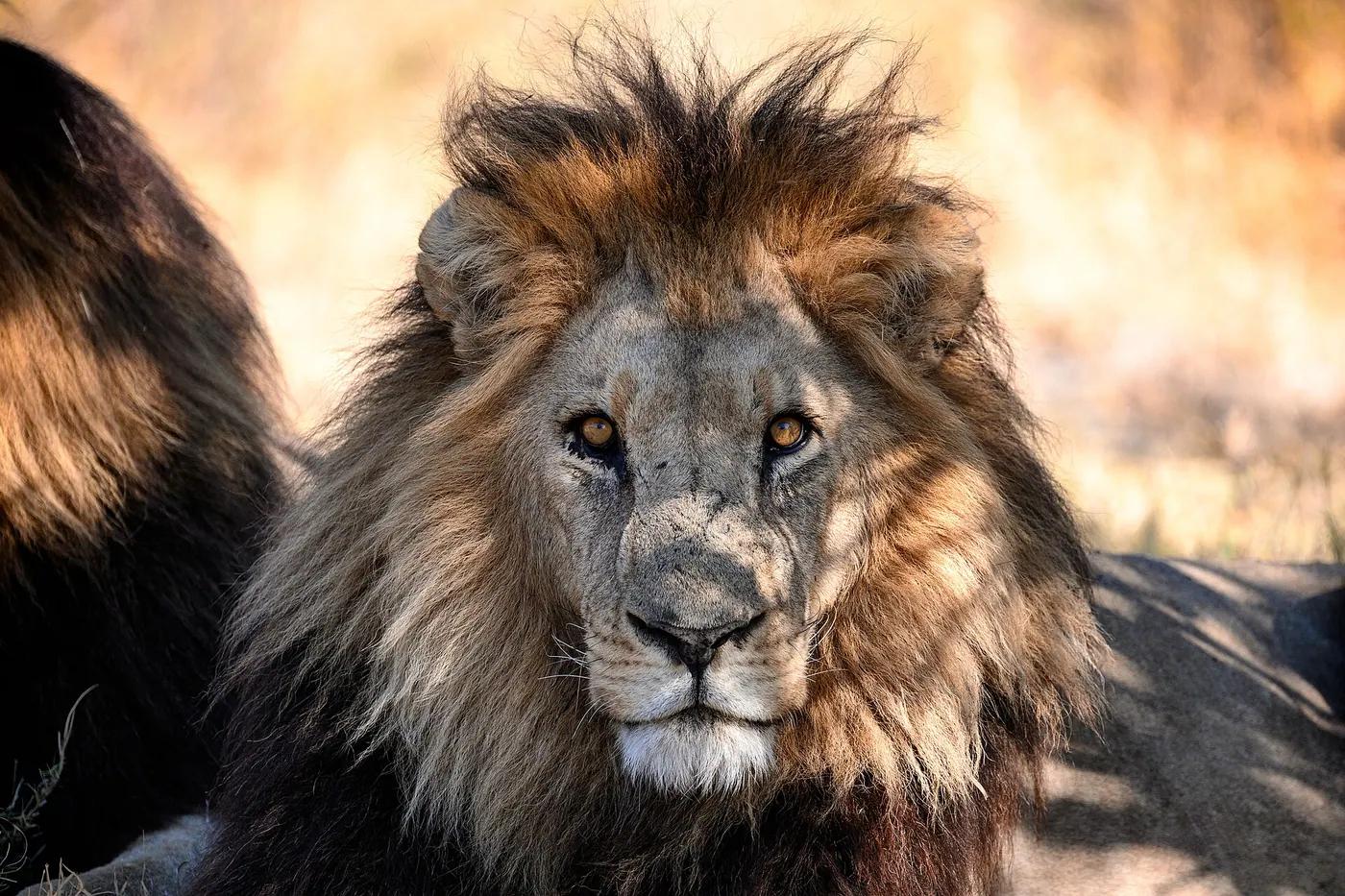
Female lions roar, alone and in choruses. The whole 1994 experiment was built on female voices. But a lioness roaring alone takes a risk the resident males don't.
Males without a territory avoid the roars of resident males but are drawn to female roars. The 2018 review in Philosophical Transactions of the Royal Society B spells out why that matters: those outsiders can kill cubs, and a lone female is the most attractive target.
So the outsiders count too. They were more reluctant to approach three females roaring than one. Single males hung back more than pairs, and old males more than young ones.
Roaring together turns a pride's voices into protection for its cubs. It fits a wider pattern: an analysis by Mosser and Packer published in 2009 found that larger groups did better in territorial competition and had higher overall reproductive success.
A lone lioness roaring is an invitation; a chorus is a wall.
The debate
Do all lionesses fight? The leaders, the laggards and the argument
Here is the uncomfortable part. In playbacks published in Science in 1995, Heinsohn and Packer found that some lionesses consistently led the approach toward the speaker. Others consistently lagged behind, keeping clear of the fight.
The leaders noticed. They recognised who the laggards were and seemed to mistrust them more than they mistrusted other leaders. Yet they didn't punish them.
That broke a tidy theory. If cooperation rested on reciprocity, where I help you because you helped me, the slackers should have paid a price. Heinsohn and Packer argued that reciprocity doesn't explain what holds lioness cooperation together; one reading is that tolerating a laggard costs a leader less than she gains from defending the territory.
Not everyone accepted it. The finding was argued over in the pages of Science, with Packer and Heinsohn publishing a 1996 reply titled “Lioness Leadership”. Theorists later modelled “beneficial laggards” in threshold public-goods games, where a group only needs enough contributors to succeed, so a few who hang back can persist. Why laggards survive in prides is still debated.
The males fight no matter what. The females keep score, and still don't collect.
The anatomy
How loud is a lion's roar, and how do lions roar so loudly?
A lion's roar hits about 114 decibels, measured roughly a metre from the animal. Humans start to feel physical pain from sound at around 120 dB or higher, so a roar at that range sits only about six decibels short of the point where sound starts to hurt.
You will often read that a roar carries 8 km (5 miles). Live Science repeats that figure and calls the lion the loudest of the big cats, but the distance has never been properly measured, so treat it as a popular estimate.
The volume doesn't come from giant lungs. In November 2011, Klemuk, Riede, Walsh and Ingo Titze of the University of Utah published “Adapted to Roar” in PLOS ONE, using vocal folds from three lions and three tigers at Omaha's Henry Doorly Zoo that had been euthanised for humane reasons.
In most species the vocal folds are triangular. Lions and tigers have flat, square folds that can take extreme stretching, and it is that shape and the way the folds stretch and shear that set the roar's frequency, not nerve impulses from the brain.
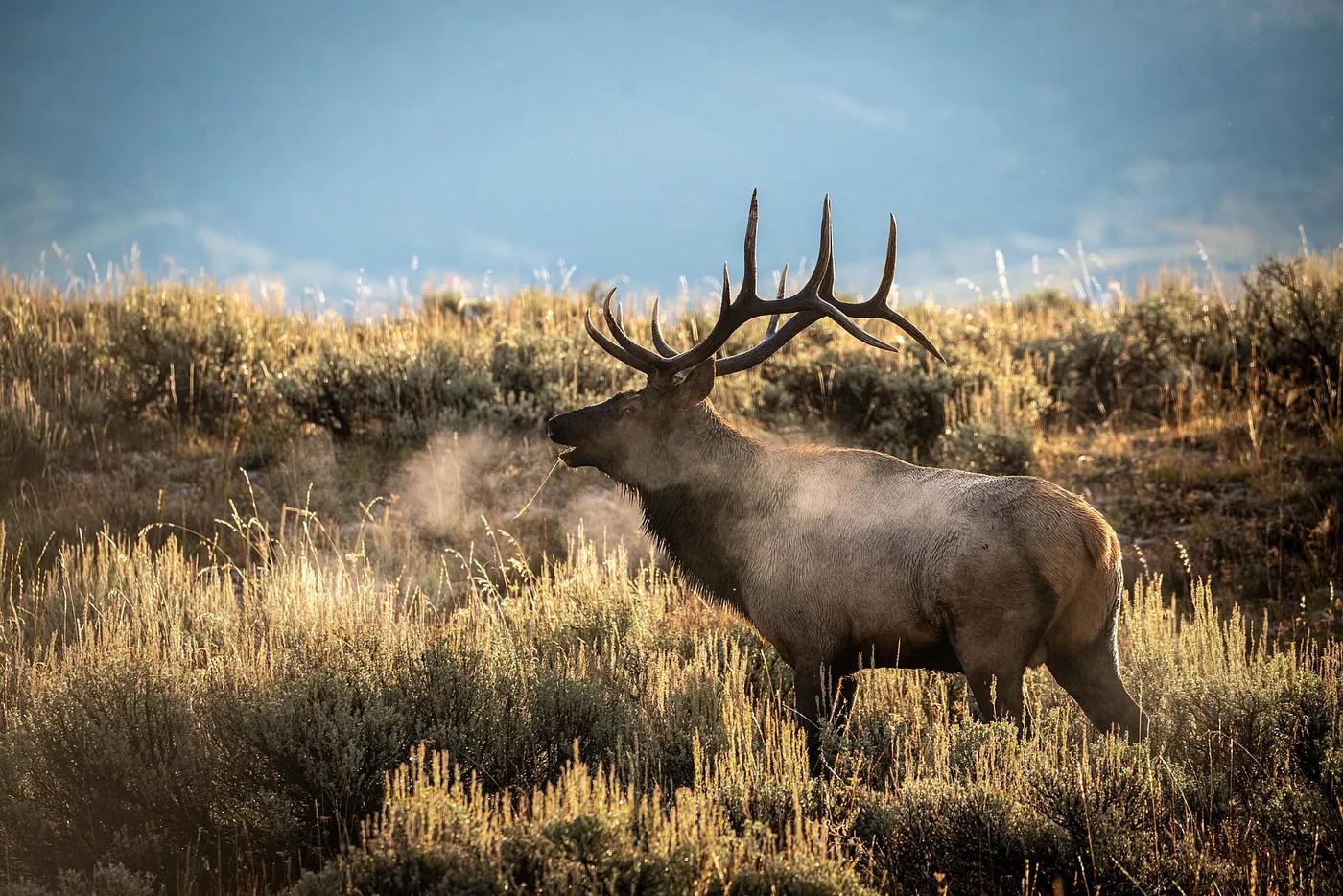
The old theory was that fat made the folds heavy, and heavy folds rumble. The fat is there, but its job is to create the square shape. The elk has vocal folds of similar size and produces a high-pitched bugle.
Lion folds are “very loose and gel-like” and vibrate irregularly, which is where the roughness comes from. Titze's verdict: a roar is “a large replica of a crying baby, loud and noisy, but at very low pitch.”
New in 2025
Is there more than one type of lion roar? AI found a second
Researchers had long described one classic full-throated roar. On 22 November 2025, the University of Exeter announced that machine learning had picked out a previously unrecognised second kind.
The study, “Roar Data” by Jonathan Growcott and colleagues in Ecology and Evolution, used 10 continuous days of recordings from Nyerere National Park in southern Tanzania. Within a roaring bout it separated the full-throated roar from the new “intermediary roar”, alongside grunts and moans. Partners included Oxford's WildCRU, Lion Landscapes, Frankfurt Zoological Society, TAWIRI and TANAPA.
The classifier sorted the two roar types with 95.4% accuracy. It builds on a 2020 study, reported by Live Science, that identified individual lions from their roars with 91.5% accuracy. The two figures measure different tasks, but they point the same way: each roar works like a voiceprint.
Which brings the story full circle. Lionesses count strangers by their roars, and now scientists want to count lions the same way. “Lion roars are not just iconic—they are unique signatures that can be used to estimate population sizes and monitor individual animals,” Growcott said.
With an estimated 20,000 to 25,000 lions left in the wild and the species described as vulnerable, a census you can run by ear is worth having.
Each lion's roar is a voiceprint, and scientists now want to count lions the way lionesses do.
The lesson
What can a lion's roar teach you about making a claim?
Strip the experiments down and the lion's rule is simple: a roar only works when the numbers behind it are real. Nomadic males stay silent rather than bluff, and lionesses weigh every chorus against the bodies standing beside them.
The pride that roars with three voices makes rivals think twice; the nomad who stays silent lives to roar another day.
On AnimalDex you can take your own idea to the lion and hear how its kind would size it up, instead of the usual answer. For the older, more mythic side of the animal, there is also our piece on lion symbolism.
take your own idea to the lionlion symbolism
Quick questions
Short answers to common questions readers ask on this topic.
- Why do lions roar?
- Lions roar to claim territory and broadcast how many lions stand behind that claim. Males signal dominance, females deter intruders, and pride members use roars to stay in touch.
- Can lions count?
- In a 1994 playback study across 21 Serengeti prides, lionesses were less likely to approach three roaring strangers than one, and more likely to approach when they had more defenders. The University of Sussex lab behind the work calls it the first demonstration of numerical assessment by a wild mammal.
- Do female lions roar?
- Yes, alone and in choruses. Roaring together helps deter outside males that can kill cubs, since those males are more reluctant to approach three roaring females than one.
- How loud is a lion's roar in decibels?
- About 114 dB, measured roughly a metre away. That is only about six decibels short of the level, around 120 dB or higher, at which humans start to feel physical pain from sound.
- How far can you hear a lion roar?
- The figure usually quoted is up to 8 km (5 miles). It is widely repeated but has never been properly measured, so treat it as a popular estimate.
- Is a lion louder than a tiger?
- Live Science ranks the lion as the loudest of the big cats, at up to 114 dB. Tigers share the same flat, square vocal-fold design, so both roars are built the same way.
Animals mentioned
Jump from this article into the species pages behind the examples, systems notes, and field-guide references.
Sources and further reading
- Animal Behaviour (ScienceDirect): Roaring and numerical assessment in contests between groups of female lions
- Royal Society Phil. Trans. B: Numerical assessment in the wild: insights from social carnivores
- Academia.edu: Jon Grinnell paper abstracts
- Science: Complex Cooperative Strategies in Group-Territorial African Lions
- Salt Lake Tribune: Shape, not size, of vocal cords is key to lion's roar
- Ecology and Evolution (Wiley): Roar Data: Redefining a Lion's Roar Using Machine Learning
- Phys.org: A new type of lion roar could help protect the iconic big cats
- Live Science: 32 of the loudest animals on Earth
Answer guides related to this topic
If you want direct comparisons and clear recommendations, continue with these answer-focused pages.
Best Animal Identification Apps
Compare the best animal identification apps by features like photo/video identification, species coverage, collection capabilities, offline use, and more.
What Is Animal Collecting
Learn what animal collecting means in modern apps and how AnimalDex turns real-world sightings into cards, sets, rarity, and species learning.
Pokemon-Like Animal App
Looking for a Pokemon-like app with real animals? AnimalDex is something else: take any idea to a real animal for a genuinely different take, and every animal you meet in the wild joins your collection.