

African Civet vs Zebra Mongoose: Who Actually Wins?
African civet vs zebra (banded) mongoose: size, bite, speed, and group tactics compared. Here is who wins one-on-one and when the mongoose mob flips the result.
African Civet vs Zebra Mongoose
Matchup winner
African Civet
Quick verdict
Start with the direct answer, then use the structured comparison below to see what changes the outcome.
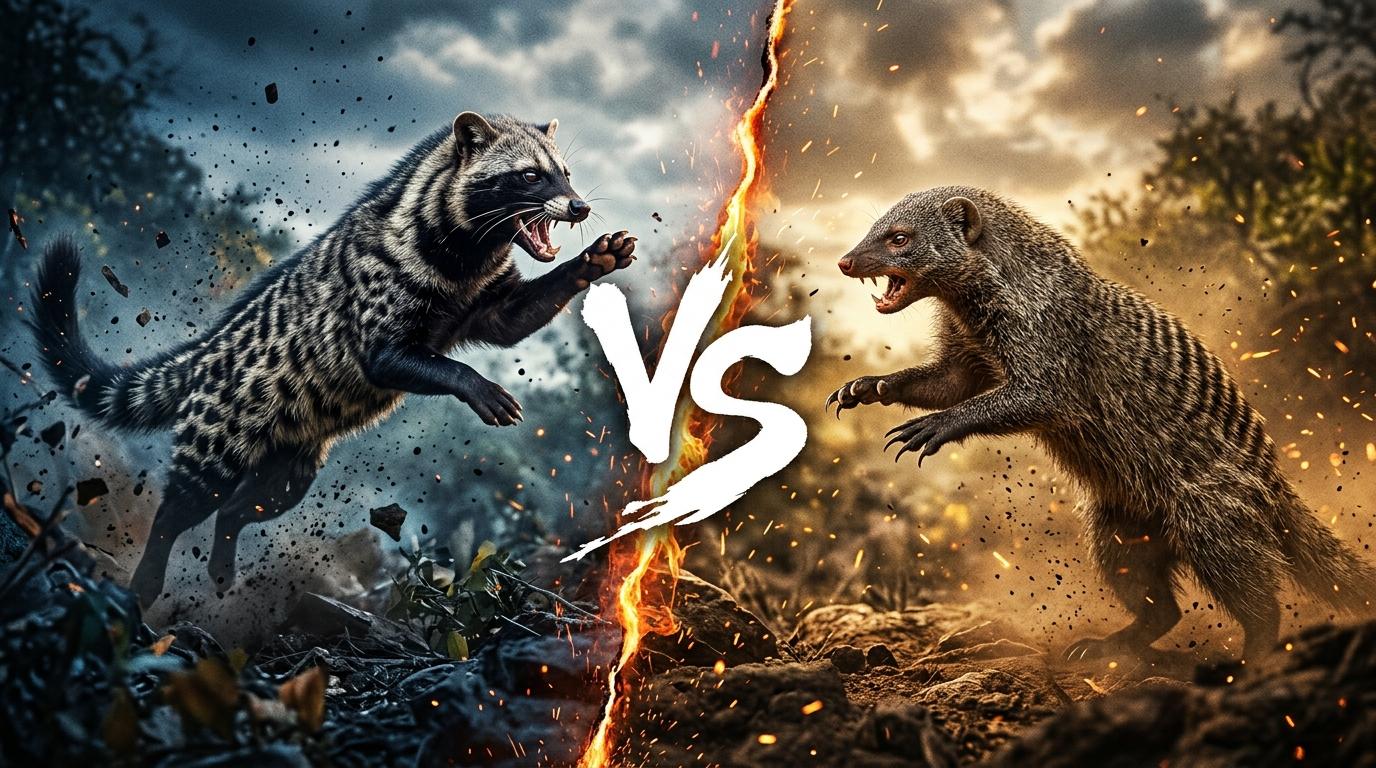
The African civet wins a one-on-one fight, and it is not especially close. A civet typically weighs about 7–20 kg. The zebra mongoose (Mungos mungo, more widely called the banded mongoose) weighs roughly 1.5–2.3 kg, so the civet often carries five times the mass or more. That mass comes with a long, powerful jaw built for crunching hard prey, along with a thick coat and an erectile dorsal crest that make it hard to land a meaningful bite on. The mongoose is quicker, twitchier, and remarkably bold. Its biggest weapon, though, is the troop: banded mongooses live in packs of roughly 10–40 that mob snakes, jackals, and raptors. Take the troop away and you have a fast, fearless animal giving up too much size, reach, and bite force to finish a civet. The mongoose wins only when the fight stops being a duel and becomes a mob.
Read the full explanation
One-on-one, the African civet wins. It is several times heavier and has a far stronger bite.
The zebra mongoose is faster and more agile, but speed cannot close a gap of five times the body mass.
A full banded mongoose troop can drive a civet off a food source through coordinated mobbing.
Most real encounters end in avoidance, because both species prefer to disengage.
Reader vote
Who do you think wins?
Pick a side — no account needed. Results update live.
No votes yet — be the first to call it.
Editorial note
Why people disagree
Mongoose reputation inflation: stories of mongooses beating cobras lead people to assume they beat anything their size or larger. Snake-fighting reflexes do not translate into wrestling a 12 kg mammal.
Body mass & frame
In small-carnivore fights, mass controls who pins whom. The civet's weight advantage is the single biggest factor.
Bite and jaw leverage
The civet can inflict serious damage with one solid grip. The mongoose relies on many fast, shallow bites.
Reflex speed & agility
Speed lets the mongoose avoid the civet's bite and choose when to strike. That buys survival, not a win.
Read the full explanation +
Solo vs troop confusion: banded mongooses are among the most social carnivores in Africa, so many people picture a pack fight instead of a single animal.
Civets look gentle: the civet's slow, waddling, nocturnal foraging hides how heavy-boned and strong-jawed it really is.
Comparison FAQ
Short, direct answers to the next questions readers usually ask after the headline verdict.
Would an African civet beat a zebra mongoose in a fight?+
Yes. One-on-one, the civet wins because it is several times heavier, bites much harder, and is far more durable at close range.
Which is stronger, the African civet or the zebra mongoose?+
The African civet. At roughly 7–20 kg against the mongoose's 1.5–2.3 kg, it has much more raw strength and a far more powerful jaw.
Is the zebra mongoose the same as the banded mongoose?+
Yes. Mungos mungo is most commonly called the banded mongoose. 'Zebra mongoose' is an alternate name based on its striped back.
Why is the zebra mongoose still dangerous even though it loses?+
It is extremely fast, bold, and quick to bite, and it rarely fights alone. A troop can mob much larger animals and drive them away, and even a single cornered mongoose can inflict painful wounds.
Do civets and mongooses actually fight in the wild?+
Rarely. They overlap in African savanna and woodland, but the civet is mostly nocturnal and the banded mongoose is diurnal. Encounters usually end in avoidance or a brief standoff over food.
Head-to-head species stats
These are the same core AnimalDex stat dimensions used on the dedicated animal pages, pulled side by side so the matchup is faster to scan.
African Civet
Tier CZebra Mongoose
Tier BTrait-by-trait comparison
Only the categories that matter to this matchup are included. The goal is not filler stats, but the real design differences that change the result.
~7–20 kg, long heavy body
Body mass & frame
African Civet
~1.5–2.3 kg, compact and wiry
Body mass & frame
African Civet
Long jaw, 40 teeth, built to crush millipedes, carrion, and small vertebrates
Bite and jaw leverage
African Civet
Sharp, quick bite tuned for insects, eggs, and small prey
Bite and jaw leverage
African Civet
Deliberate, steady trotter
Reflex speed & agility
Zebra Mongoose
Explosive darts, fast lateral dodges
Reflex speed & agility
Zebra Mongoose
Thick coarse coat, erectile crest, larger frame absorbs bites
Close-range durability
African Civet
Tough for its size, but little margin for error
Close-range durability
African Civet
Solitary forager
Social force multiplier
Zebra Mongoose
Troops of ~10–40 that mob threats cooperatively
Social force multiplier
Zebra Mongoose
Potent perineal-gland musk used in marking
Chemical deterrence
African Civet
Anal-gland scent, mainly for group communication
Chemical deterrence
African Civet
How the verdict forms
Verdict timeline
01 · Body mass & frame
African Civet
02 · Bite and jaw leverage
African Civet
03 · Reflex speed & agility
Zebra Mongoose
04 · Close-range durability
African Civet
05 · Social force multiplier
Zebra Mongoose
06 · Chemical deterrence
African Civet
Change the conditions
Scenario breakdown
This is where shallow battle content usually fails. Terrain, spacing, timing, and engagement style can change the answer.
Scenario lean
African Civet
Verdict confidence
82%
Civet wins clearly.
In tight cover the mongoose loses room to use its dodging speed. The civet is most at home here as a nocturnal brush forager. Once contact happens, size and jaw leverage decide the fight, and the civet holds both.
AnimalDex field profiles
Explore these animals
African Civet
Civettictis civetta
woodland, savannah edge, riverine thicket, and mixed scrub
Zebra Mongoose
Mungos mungo
savannah, woodland, and rocky scrub country
Systems Intelligence & Hidden Purpose
See the animals behind this comparison as engineered biological systems: what each one is built to do, where it gains leverage, and why the matchup changes by scenario.
Specialized Hardware
bold black-and-white pattern, night-active scavenging and hunting, and scent-heavy territorial life give the African Civet a body plan tuned for its niche.
Systems Script
African Civets operate through woodland, savannah edge, riverine thicket, and mixed scrub Their design links movement, shelter, and feeding into one workable survival system.
Strategic Insight
Versatility matters most when the environment changes faster than any one plan can.
Specialized Hardware
dark body crossed with pale stripes, busy group foraging, and quick ground communication give the Zebra Mongoose a body plan tuned for its niche.
Systems Script
Zebra Mongooses operate through savannah, woodland, and rocky scrub country. Their design links movement, feeding, shelter, and timing into one workable survival system.
Strategic Insight
Dense environments reward precision, patience, and the ability to read layered cover.
Final take
As a duel, African civet vs zebra mongoose is a size mismatch. The civet's mass, jaw, and coat beat the mongoose's speed and nerve in almost any one-on-one setting.
Read the full explanation
The mongoose story is really a team story. Banded mongooses survive among bigger predators by acting together, and a troop can push a civet off food or away from a den. That is why the mongoose wins some scenarios and loses the head-to-head.
Overall winner: the African civet. It holds the decisive individual advantages, and the mongoose's winning cards only appear when the fight stops being one animal against one animal.
Collect both animals in AnimalDex
Track the species behind this matchup, compare their real traits, and build the rivalry into your AnimalDex collection.
Related comparisons
Continue with nearby matchups to compare more real-world animal traits without dropping into junky who-wins filler.
African Civet vs Senegal Bushbaby: Who Actually Wins?
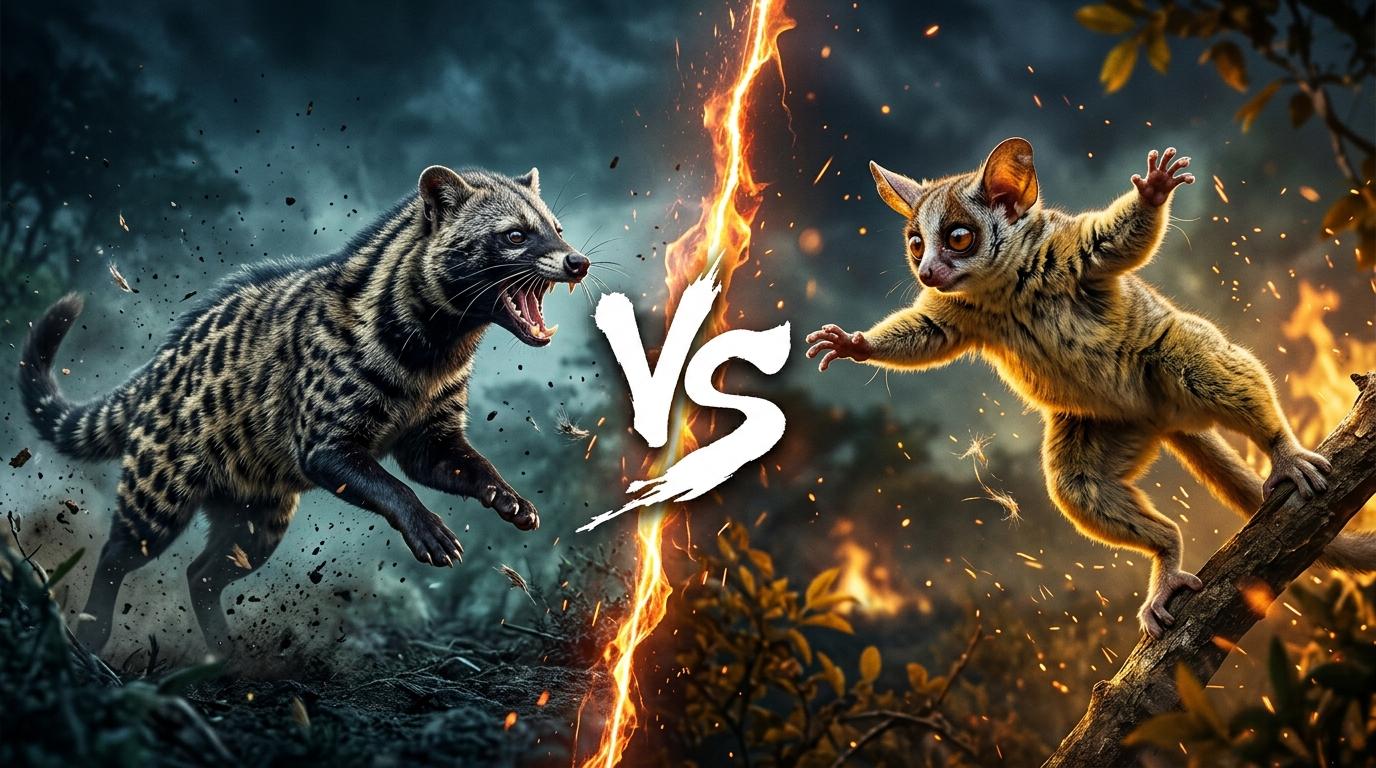
The African civet wins clearly. At roughly 7–20 kg against a bushbaby of about 150–300 g, the civet carries something like forty to sixty times the body mass. It also has a carnivoran skull with real canines and shearing teeth, and its omnivorous diet already includes small vertebrates. Any contact on the ground or within reach is decided almost instantly. The bushbaby's real weapon is not fighting. It is vertical escape: spring-loaded hind legs can launch it a couple of meters straight up, and it lives in the acacia canopy, where the mostly terrestrial civet rarely follows. So the matchup is lopsided whenever the two actually meet, and the bushbaby's only win condition is to never be there.
Read comparison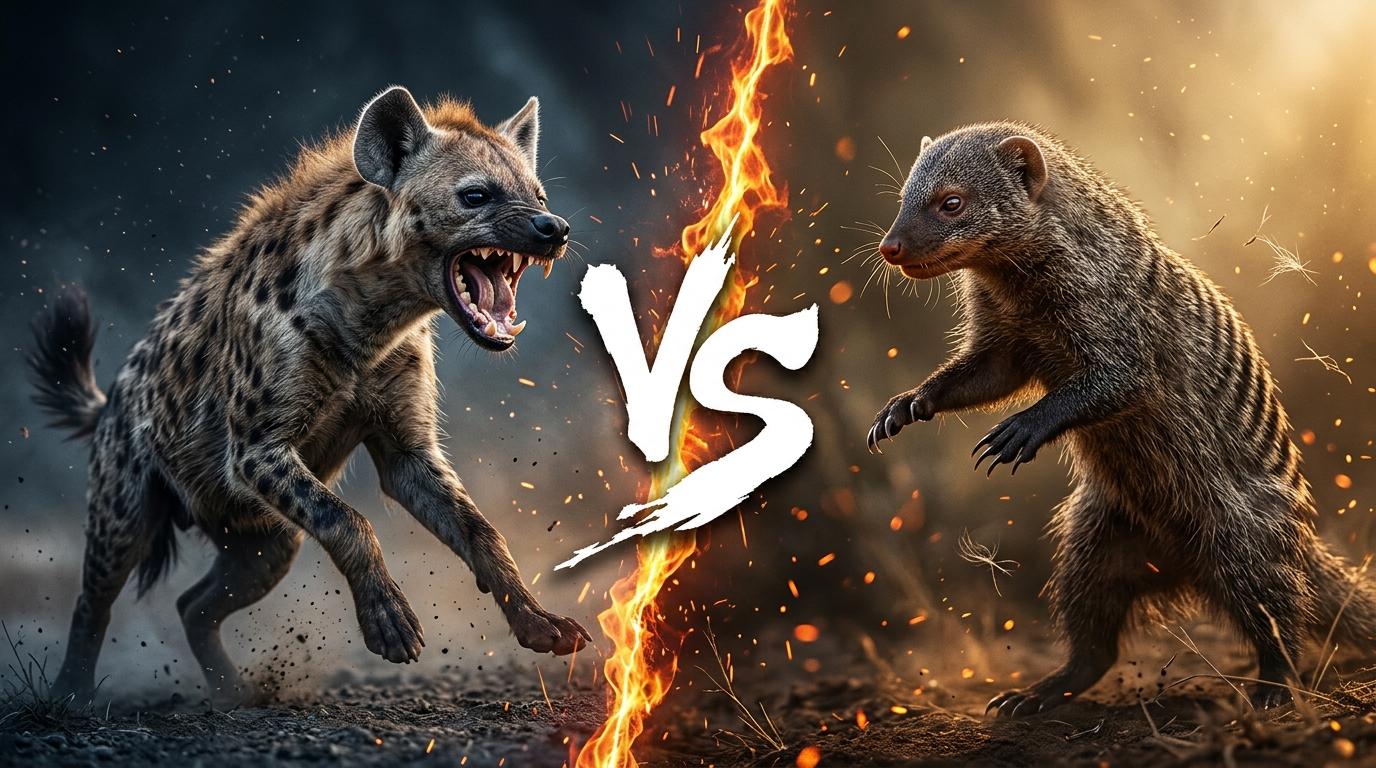
Spotted Hyena vs Banded Mongoose: Who Actually Wins?
The spotted hyena wins, and it isn't close in a one-on-one meeting. An adult Crocuta weighs roughly 45–70 kg against a banded mongoose's 1.5–2 kg, about thirty to forty times the mass. Its jaws and skull are built to crack giraffe bone, and it chases prey over kilometres with high stamina. The banded mongoose, also called the zebra mongoose, is a fearless, fast, social carnivore. Its best weapon is the troop. Packs of 10–40 animals mob, bunch together, and bite in unison, which can make a single hyena decide a meal isn't worth the hassle. Those tactics win the argument about whether to fight, not the fight itself. If a hyena commits, the outcome is decided in seconds.
Read comparison
Discussion
What do you think?
Share your reasoning with other readers. Be civil and stick to the animals.
Sign in to join the discussion.
Sign inNo comments yet. Start the conversation.