


Beluga Whale vs Walrus: Who Actually Wins?
Beluga whale vs walrus: who would win? A biology-first breakdown of size, tusks, blubber, speed and smarts, with a clear verdict on which Arctic heavyweight comes out on top.
Beluga Whale vs Walrus
Matchup winner
Walrus
Quick verdict
Start with the direct answer, then use the structured comparison below to see what changes the outcome.
The walrus wins. A big bull walrus weighs 1,200–1,500 kg, roughly the same as or heavier than an adult male beluga at 1,100–1,600 kg. The weight is close, but the hardware is not. The walrus carries ivory tusks up to a meter long, and its neck and shoulders are wrapped in hide 2–4 cm thick that evolved for stabbing contests with other bulls. The beluga has no weapon better than a mouth of small, peg-like teeth built for grabbing fish and squid, and its defense depends on avoiding trouble. Belugas really do fear walruses. Walruses have been recorded attacking and killing belugas trapped in ice openings, and belugas in Hudson Bay and the Canadian Arctic tend to steer clear of them. The beluga is faster, smarter, and more agile in open water, so it usually escapes. If the fight actually happens, though, the walrus's tusks, armor, and aggression decide it.
Read the full explanation
Walrus wins most realistic encounters. Its tusks and armored hide outclass anything the beluga can bring to a fight.
The two are close in weight, but only the walrus is built to fight. Bulls spend their lives jousting with other tusked bulls.
The beluga's best move is to leave. Its speed, agility and echolocation make escape in open water very likely.
Walruses have been documented killing belugas trapped in ice holes, which is real-world evidence of the mismatch.
Reader vote
Who do you think wins?
Pick a side — no account needed. Results update live.
No votes yet — be the first to call it.
Editorial note
Why people disagree
Belugas are whales, so people assume they are bigger and stronger. In fact belugas are small toothed whales, and many bull walruses outweigh them.
Built-in weaponry
Only one animal has a true stabbing weapon. Tusks can open wounds in blubber and skin that beluga teeth cannot answer.
Close-range durability
Walrus neck and shoulder hide evolved to survive tusk strikes from rival bulls, so beluga bites barely register.
Mass and leverage
The weight is roughly even. The walrus packs its mass into a forward-driving front end, which gives it better leverage in a clash.
Read the full explanation +
Brain versus brawn is a real tension. The beluga's echolocation and social intelligence are elite, but they help it avoid a fight rather than win one.
Setting matters a lot. In deep open water the beluga dictates terms and leaves. In ice-choked shallows the walrus is close to unstoppable.
Comparison FAQ
Short, direct answers to the next questions readers usually ask after the headline verdict.
Would a walrus beat a beluga whale in a fight?+
Yes. The walrus wins most realistic fights. Its tusks and thick hide give it offense and defense the beluga cannot match, and walruses have been recorded killing belugas trapped in ice openings.
Which is stronger, a beluga or a walrus?+
In fighting terms the walrus is stronger. The two weigh about the same, but the walrus has a massively muscled neck and shoulders built for driving its tusks, plus armor-like skin.
Is a beluga bigger than a walrus?+
They are similar. Adult male belugas reach about 1,100–1,600 kg, and bull walruses about 1,200–1,500 kg or more. Belugas are longer, while walruses are bulkier and denser.
Do walruses actually attack belugas?+
Yes, though it is uncommon. Most documented cases involve belugas trapped in ice holes, where they can't escape and are exposed to tusk strikes from above.
Why is the beluga still dangerous or hard to beat?+
Its intelligence, echolocation and agility let it detect a walrus early and avoid it. In open water a beluga is very hard to catch, so most encounters end with it simply leaving. Like any large wild mammal, a beluga can also ram or bite if forced.
Could a pod of belugas fight off a walrus?+
A pod gives better vigilance and coordinated escape, but belugas don't team up to attack. Even in groups, their best defense is avoiding the walrus.
Head-to-head species stats
These are the same core AnimalDex stat dimensions used on the dedicated animal pages, pulled side by side so the matchup is faster to scan.
Beluga Whale
Tier CWalrus
Tier BTrait-by-trait comparison
Only the categories that matter to this matchup are included. The goal is not filler stats, but the real design differences that change the result.
Small peg teeth for grabbing fish
Built-in weaponry
Walrus
Ivory tusks up to ~1 m
Built-in weaponry
Walrus
Thick blubber, fairly thin skin
Close-range durability
Walrus
2–4 cm hide plus blubber armor
Close-range durability
Walrus
1,100–1,600 kg, sleek
Mass and leverage
Walrus
1,200–1,500+ kg, dense
Mass and leverage
Walrus
Flexible neck, nimble turns
Open-water agility
Beluga Whale
Lumbering, ~7 km/h cruise
Open-water agility
Beluga Whale
Elite echolocation, social coordination
Sensory intelligence
Beluga Whale
Sensitive whiskers, tactile foraging
Sensory intelligence
Beluga Whale
Avoids conflict, flees threats
Combat temperament
Walrus
Territorial, quick to charge
Combat temperament
Walrus
How the verdict forms
Verdict timeline
01 · Built-in weaponry
Walrus
02 · Close-range durability
Walrus
03 · Mass and leverage
Walrus
04 · Open-water agility
Beluga Whale
05 · Sensory intelligence
Beluga Whale
06 · Combat temperament
Walrus
Change the conditions
Scenario breakdown
This is where shallow battle content usually fails. Terrain, spacing, timing, and engagement style can change the answer.
Scenario lean
Walrus
Verdict confidence
82%
Decisive walrus win.
This is the documented real-world case. When belugas are trapped in small openings in sea ice (savssats), they cannot use speed or distance. Walruses can haul out on the ice edge and strike downward with their tusks. With no room to escape, the beluga's main advantage is gone, and the walrus's weapon and armor do the rest.
AnimalDex field profiles
Explore these animals
Beluga Whale
Delphinapterus leucas
Arctic and sub-Arctic coastal seas, estuaries, and river mouths.
Walrus
Odobenus rosmarus
Arctic seas, ice edges, and shallow marine feeding grounds.
Systems Intelligence & Hidden Purpose
See the animals behind this comparison as engineered biological systems: what each one is built to do, where it gains leverage, and why the matchup changes by scenario.
Specialized Hardware
Pure white body in adults, rounded forehead called a melon, and no dorsal fin give the Beluga Whale a body plan tuned for its niche.
Systems Script
Beluga Whales operate in arctic and sub-Arctic coastal seas, estuaries, and river mouths. Their design helps them match food access, shelter, and timing inside that environment.
Strategic Insight
In cloudy or icy environments, communication and sensing become as important as raw power.
Specialized Hardware
Long ivory tusks, heavy wrinkled brown body, and dense whiskers around the muzzle give the Walrus a body plan tuned for its niche.
Systems Script
Walruss operate in arctic seas, ice edges, and shallow marine feeding grounds. Their design helps them match food access, shelter, and timing inside that environment.
Strategic Insight
Scale works best when it is paired with a reliable platform to rest, gather, and launch from.
Final take
The walrus is the clear winner. This is one of the few whale-versus-pinniped matchups where the pinniped is the dangerous one. Tusks, thick armored hide, a dense build and a short temper make the walrus a purpose-built Arctic fighter, while the beluga is a precision forager with no real weapon.
Read the full explanation
The beluga still deserves respect. Its intelligence, echolocation and agility make it very good at not losing, and in deep water it can simply leave. Beluga survival depends on detecting danger early and avoiding it. Once a beluga is cornered in ice or shallows, though, that strategy runs out, and the walrus's tusks settle the matter.
Collect both animals in AnimalDex
Track the species behind this matchup, compare their real traits, and build the rivalry into your AnimalDex collection.
Related comparisons
Continue with nearby matchups to compare more real-world animal traits without dropping into junky who-wins filler.
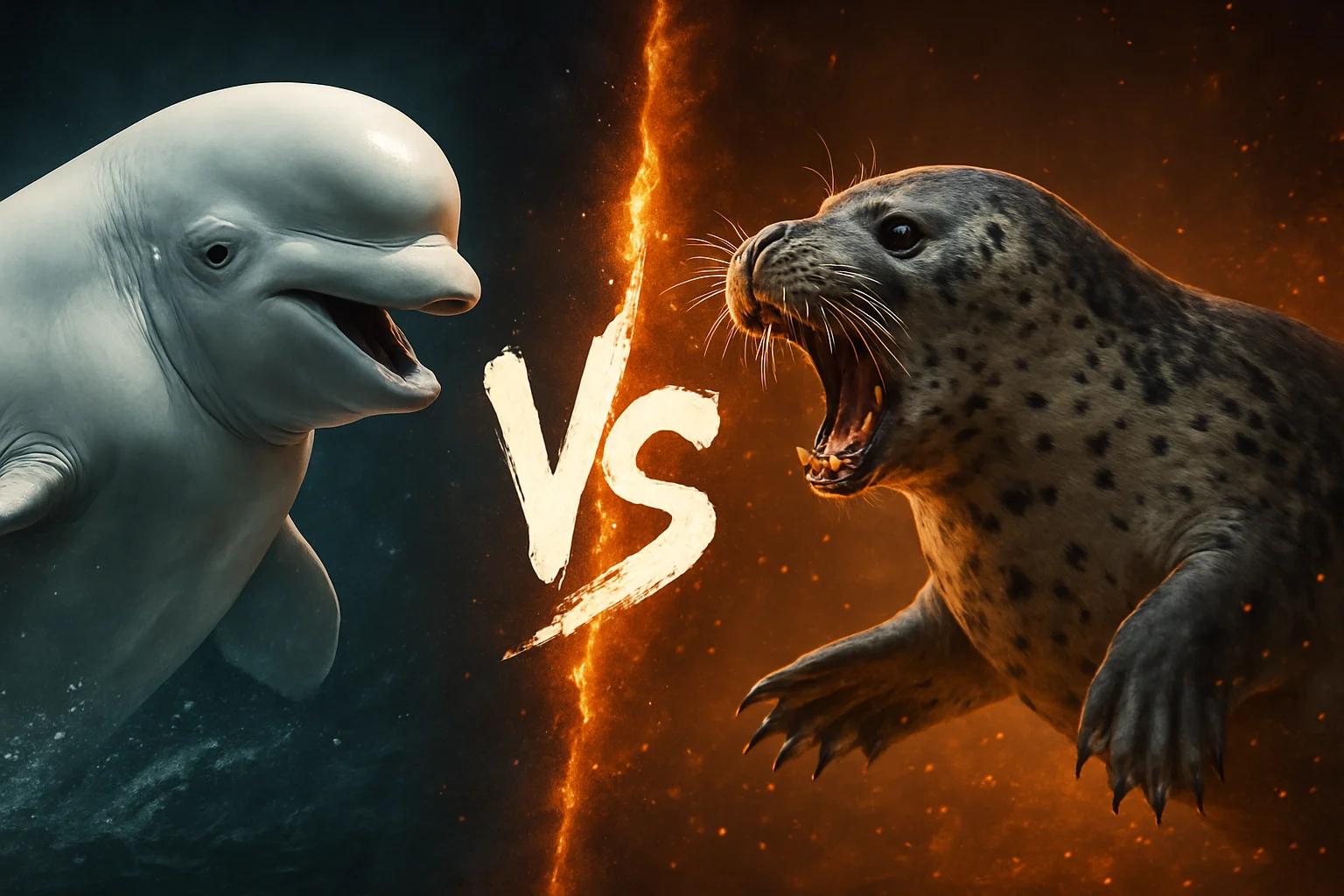
Beluga Whale vs Harbor Seal: Who Actually Wins?
The beluga whale wins this matchup clearly. An adult beluga runs roughly 3.5–5.5 m and 700–1,600 kg. A large harbor seal is about 1.5–1.9 m and 50–170 kg. That puts the whale at five to ten times the seal's mass, which in water translates directly into ramming force, momentum and the ability to shrug off bites. Belugas also bring 30–40 peg-like teeth, a flexible unfused neck for close-quarters head swings, and echolocation that tracks a target in murky or ice-covered water. They are highly social, so a fight rarely stays one-on-one. The harbor seal is quick, agile and armed with a sharp carnivore bite, but its toolkit is built for catching fish and escaping danger, not for subduing a toothed whale several times its size. In reality the two usually ignore each other. Belugas eat fish, squid and invertebrates, not seals. In a forced confrontation, though, mass and sensory control decide it, and the seal's best result is a clean escape.
Read comparison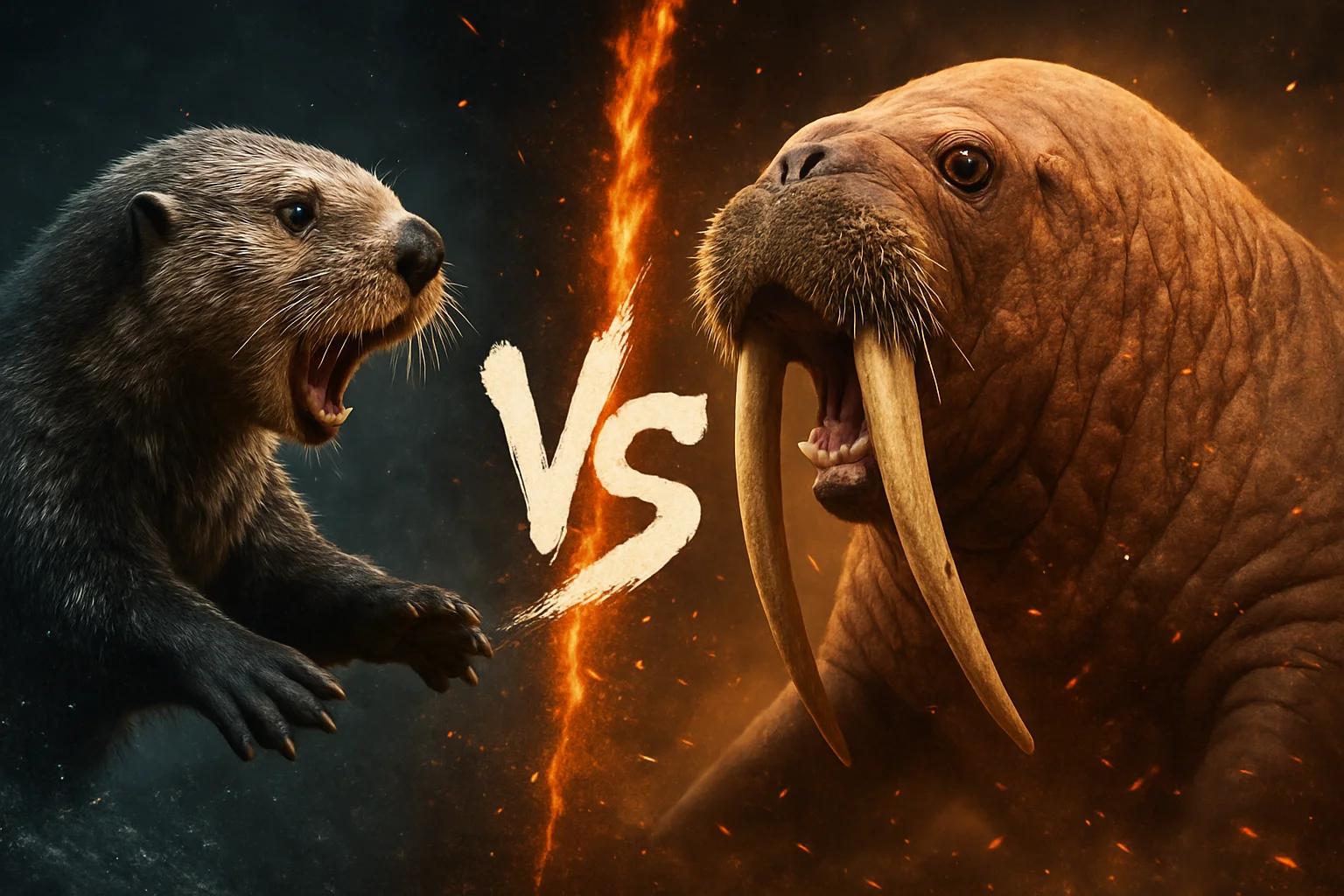
Sea Otter vs Walrus: Who Actually Wins?
The walrus wins, and it isn't close. An adult male walrus can weigh 800–1,700 kg (1,800–3,700 lb) against a sea otter's 14–45 kg (30–100 lb), a mass gap of roughly 30 to 1 or more. The walrus brings tusks up to a meter long, skin several centimeters thick over a deep blubber layer, and a neck and shoulder build forged in brutal male-on-male tusk fights. The sea otter has real strengths: it is quick, clever, dexterous, and has a bite strong enough to crack urchins and clams. But nothing in its toolkit can get through a walrus's armor. Its best play is speed and retreat, not victory.
Read comparison
Discussion
What do you think?
Share your reasoning with other readers. Be civil and stick to the animals.
Sign in to join the discussion.
Sign inNo comments yet. Start the conversation.