

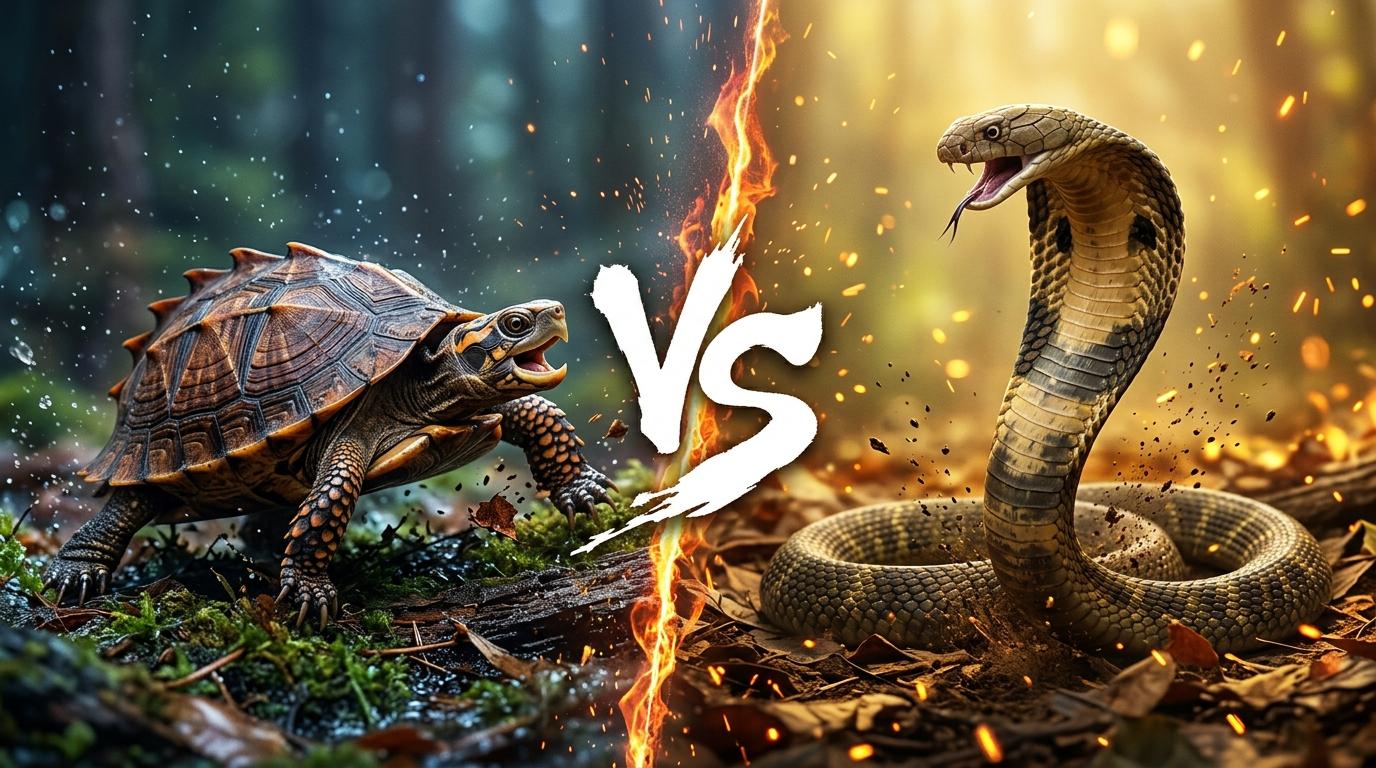
Black-breasted Leaf Turtle vs King Cobra: Who Actually Wins?
Black-breasted Leaf Turtle vs King Cobra: a biology-first breakdown of size, venom, armor, and behavior to show who wins and why the tiny turtle still isn't easy prey.
Black-breasted Leaf Turtle vs King Cobra
Matchup winner
King Cobra
Quick verdict
Start with the direct answer, then use the structured comparison below to see what changes the outcome.
The King Cobra wins, and it is not close. Ophiophagus hannah can stretch past 4 meters, delivers large doses of neurotoxic venom, and is an active forest hunter. The Black-breasted Leaf Turtle is a palm-sized forest-floor specialist, usually around 11–13 cm in shell length, built for staying hidden rather than fighting. Its best defenses are leaf-litter camouflage, a rigid serrated shell, and staying still, so it has no real tool to hurt a cobra. The cobra's limit is diet, not ability. King Cobras specialize in other snakes and rarely target turtles. In a forced confrontation, though, the cobra controls every phase: it can reach the turtle first, outweighs it many times over, and can afford to walk away. The turtle's realistic win condition is surviving the encounter, not winning it.
Read the full explanation
King Cobra wins decisively on size, reach, venom, and mobility.
The leaf turtle's shell and camouflage are survival tools, not weapons.
Cobras mostly eat snakes, so a real-world encounter often ends with the cobra ignoring the turtle.
The turtle 'wins' only by not being noticed, or by being too awkward and hard-shelled to bother with.
Reader vote
Who do you think wins?
Pick a side — no account needed. Results update live.
No votes yet — be the first to call it.
Editorial note
Why people disagree
Shell armor sounds unbeatable, but a small, flattened carapace doesn't make the turtle dangerous. It only makes it harder to swallow.
Body size and mass
The cobra outweighs the turtle by an enormous margin, so the turtle can't push, pin, or meaningfully injure it.
Offensive weaponry
Only one of these animals carries a weapon designed to kill vertebrates.
Close-range durability
The shell is the turtle's one real edge. It makes the turtle a hard, awkward target rather than an easy meal.
Read the full explanation +
Some readers count 'cobra loses interest' as a turtle win. Biologically, that is the turtle surviving, not the turtle beating the cobra.
Venom isn't automatically decisive against a shelled animal. The cobra's real advantage is total physical control of the encounter.
Comparison FAQ
Short, direct answers to the next questions readers usually ask after the headline verdict.
Would a Black-breasted Leaf Turtle beat a King Cobra?+
No. The King Cobra wins any forced confrontation because of its overwhelming size, reach, venom, and mobility.
Which is stronger, the leaf turtle or the King Cobra?+
The King Cobra, by a wide margin. It is many times longer and heavier than the turtle, which is a small, lightweight forest-floor species.
Can a King Cobra's venom get through a turtle's shell?+
Not through the carapace itself. The cobra would need to bite exposed skin. Even so, the shell only buys time, because the turtle can't fight back.
Why is the leaf turtle still hard to beat?+
Its dead-leaf camouflage often keeps it from being found at all. Its rigid, serrated shell also makes it an awkward and unrewarding target for a snake built to swallow long, flexible prey.
Do King Cobras eat turtles?+
Rarely. King Cobras specialize in eating other snakes, so turtles are not typical prey.
Head-to-head species stats
These are the same core AnimalDex stat dimensions used on the dedicated animal pages, pulled side by side so the matchup is faster to scan.
Black-breasted Leaf Turtle
Tier BKing Cobra
Tier BTrait-by-trait comparison
Only the categories that matter to this matchup are included. The goal is not filler stats, but the real design differences that change the result.
About 11–13 cm shell, palm-sized
Body size and mass
King Cobra
Often 3–4+ m, several kilograms
Body size and mass
King Cobra
Small beak-like jaws for invertebrates
Offensive weaponry
King Cobra
Fixed front fangs with high-yield neurotoxic venom
Offensive weaponry
King Cobra
Rigid, serrated, leaf-shaped carapace
Close-range durability
Black-breasted Leaf Turtle
Scaled skin, no armor
Close-range durability
Black-breasted Leaf Turtle
Slow walker on the forest floor
Strike reach and mobility
King Cobra
Fast ground mover with a long strike radius
Strike reach and mobility
King Cobra
Near-perfect dead-leaf camouflage
Ambush-proof concealment
Black-breasted Leaf Turtle
Forest-floor cryptic coloring, but large and active
Ambush-proof concealment
Black-breasted Leaf Turtle
None; freezes and withdraws
Intimidation and threat display
King Cobra
Raises its hood, lifts the front third of its body, growls
Intimidation and threat display
King Cobra
How the verdict forms
Verdict timeline
01 · Body size and mass
King Cobra
02 · Offensive weaponry
King Cobra
03 · Close-range durability
Black-breasted Leaf Turtle
04 · Strike reach and mobility
King Cobra
05 · Ambush-proof concealment
Black-breasted Leaf Turtle
06 · Intimidation and threat display
King Cobra
Change the conditions
Scenario breakdown
This is where shallow battle content usually fails. Terrain, spacing, timing, and engagement style can change the answer.
Scenario lean
King Cobra
Verdict confidence
82%
The cobra wins if it engages; the turtle survives if it's overlooked.
Dense leaf litter is the turtle's home turf. Its camouflage may keep it from being noticed at all. Once detected, though, the turtle has no way to escape or retaliate. The cobra can investigate, bite, or simply move it aside. Cover delays the outcome but doesn't change it.
AnimalDex field profiles
Explore these animals
Black-breasted Leaf Turtle
Geoemyda spengleri
hill forest, bamboo thicket, and moist ravine
King Cobra
Ophiophagus hannah
Tropical forest, swamp forest, bamboo thicket, agricultural edge, and streamside cover with abundant snakes.
Systems Intelligence & Hidden Purpose
See the animals behind this comparison as engineered biological systems: what each one is built to do, where it gains leverage, and why the matchup changes by scenario.
Specialized Hardware
sharply keeled shell, leaf-litter camouflage, and steep-forest walking give the Black-breasted Leaf Turtle a body plan tuned for its niche.
Systems Script
Black-breasted Leaf Turtles operate through hill forest, bamboo thicket, and moist ravine. Their design links movement, feeding, shelter, and timing into one workable survival system.
Strategic Insight
Dense environments reward precision, patience, and the ability to read layered cover.
Specialized Hardware
Long-range chemosensory tracking, elevated striking posture, large venom yield, and a body built to move efficiently through forest structure make the king cobra specialized anti-snake hardware.
Systems Script
King cobras sit high in reptile food chains and apply pressure to other snake populations. They occupy a narrow but strategic niche, proving that specialization can stabilize a system by targeting one hard problem well.
Strategic Insight
Broad competence is useful, but deep specialization can create uncontested territory. Pick the problem where precision matters more than popularity.
Final take
The King Cobra is the clear winner. It is bigger, faster, venomous, and fully in control of distance and timing. The Black-breasted Leaf Turtle simply has no offensive answer.
Read the full explanation
The matchup is still a useful lesson. The turtle is a master of not being part of the fight. Camouflage, stillness, and an awkward armored shape let a tiny, endangered reptile persist in forests full of larger hunters. It loses the battle and often survives the encounter anyway.
Collect both animals in AnimalDex
Track the species behind this matchup, compare their real traits, and build the rivalry into your AnimalDex collection.
Related comparisons
Continue with nearby matchups to compare more real-world animal traits without dropping into junky who-wins filler.
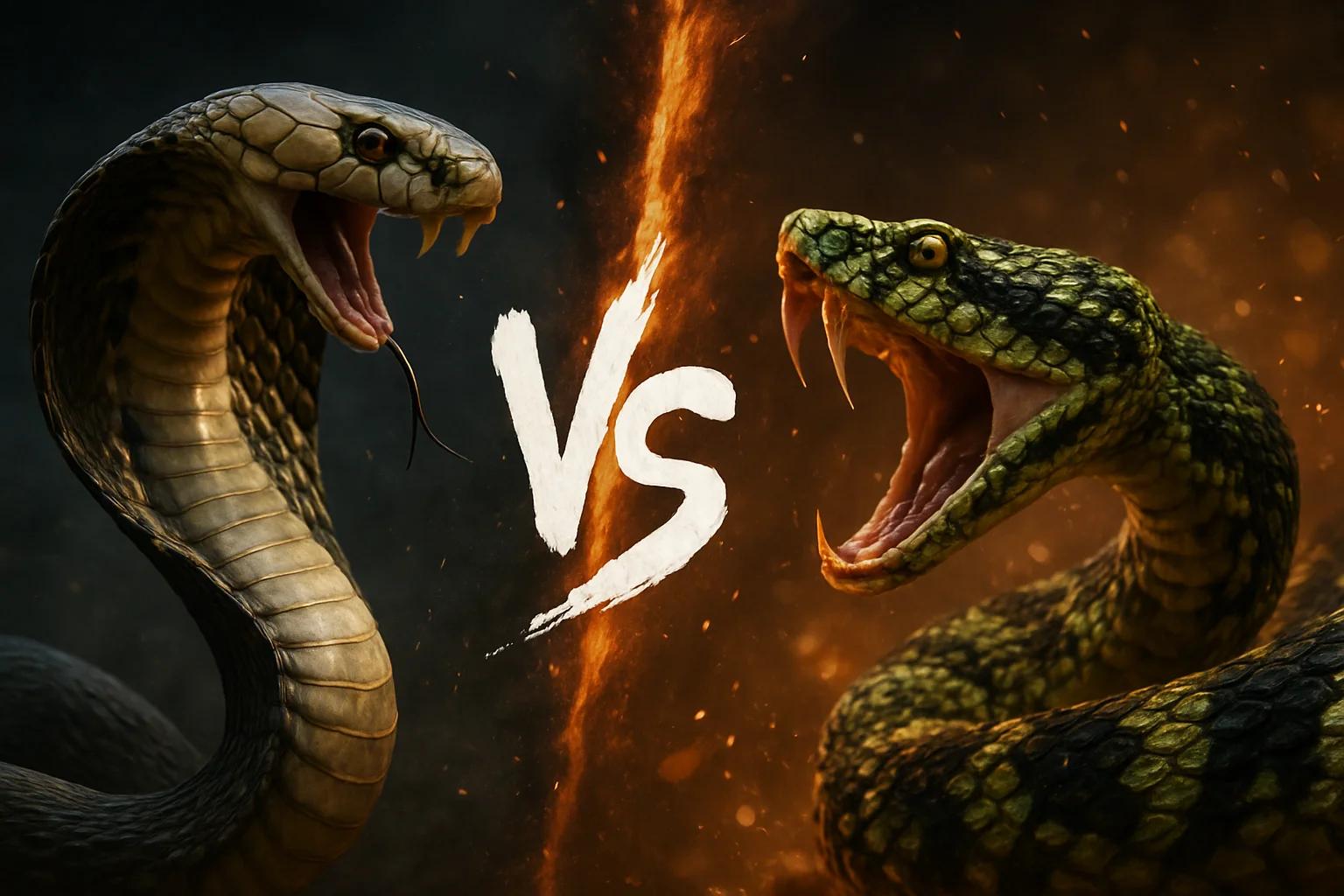
King Cobra vs Mangshan Pit Viper: Who Actually Wins?
The King Cobra wins, and it is not especially close. As Ophiophagus hannah, literally the 'snake-eater,' it is the world's longest venomous snake. Adults commonly reach 3–4 m and can exceed 5 m. Its hunting system is built for subduing other snakes, venomous ones included. The Mangshan Pit Viper is a formidable, heavy-bodied Chinese endemic at roughly 1.5–2 m. It carries potent hemotoxic venom and long, hinged fangs. But it is a sit-and-wait ambusher designed for rodents and small vertebrates, not for fighting a reach-dominant serpent hunter. The cobra's length lets it strike from beyond the viper's effective range and pin the head. Its neurotoxic venom then overwhelms a much smaller body. The viper's best chance is a lucky defensive bite that delivers a meaningful hemotoxic dose. That keeps the matchup dangerous, but it does not make it even.
Read comparison
Burmese Python vs King Cobra: Who Actually Wins?
A full-grown Burmese python beats an adult king cobra in most realistic encounters, because body mass decides this fight. A large Burmese python can stretch past 5 meters and weigh 50–90 kg. A king cobra of similar length usually weighs under 10 kg. The cobra is a specialist snake-eater with large venom yields, and it is faster, more alert and better at striking first. But its hunting style is built for prey it can overpower and swallow, such as rat snakes, keelbacks and young pythons. It is not built for a muscular giant several times its weight. Neurotoxic venom needs time to work through that much body, and constriction does not. Once the python gets coils around the cobra's forebody, the cobra's breathing and circulation shut down well before the venom can disable a heavyweight. The cobra wins against juvenile and subadult pythons and in open-ground skirmishes where it can strike and withdraw. In a committed fight between adults, the python's mass carries it.
Read comparison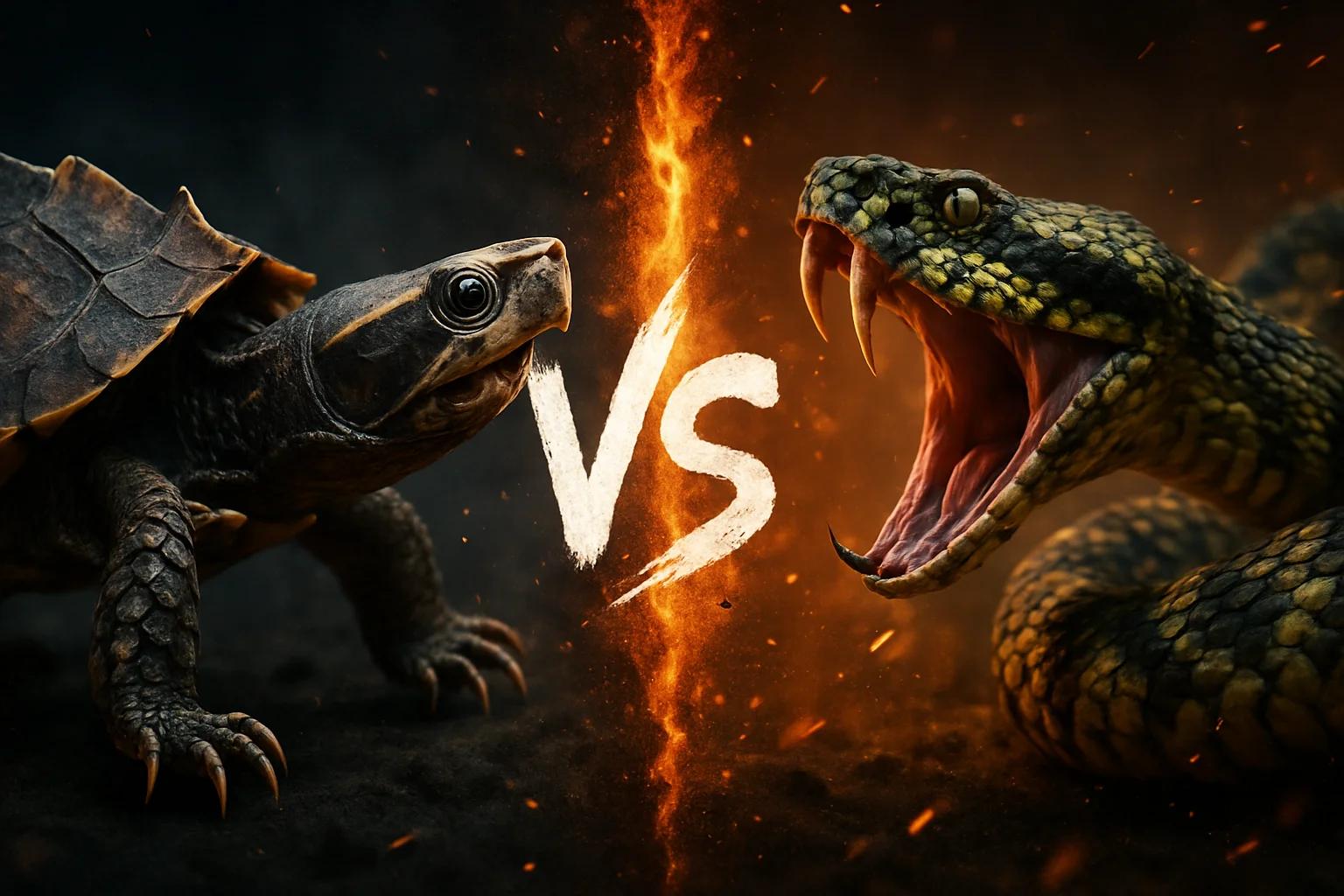
Black-breasted Leaf Turtle vs Mangshan Pit Viper: Who Actually Wins?
The Mangshan Pit Viper wins this matchup clearly. At up to roughly 2 meters and over 3 kg, it is one of the heaviest pit vipers in Asia. It carries long hinged fangs, potent hemotoxic venom, and heat-sensing pits, and it hunts by ambush in the same misty karst forests of southern China. The Black-breasted Leaf Turtle is tiny, usually about 11–13 cm in shell length. It survives by camouflage, a serrated leaf-like shell, and stillness rather than force. Its shell gives real protection, but it is a small, low-domed shell that a snake this size can grip and pressure. In any encounter where the viper commits, the turtle's best possible result is to avoid being noticed.
Read comparison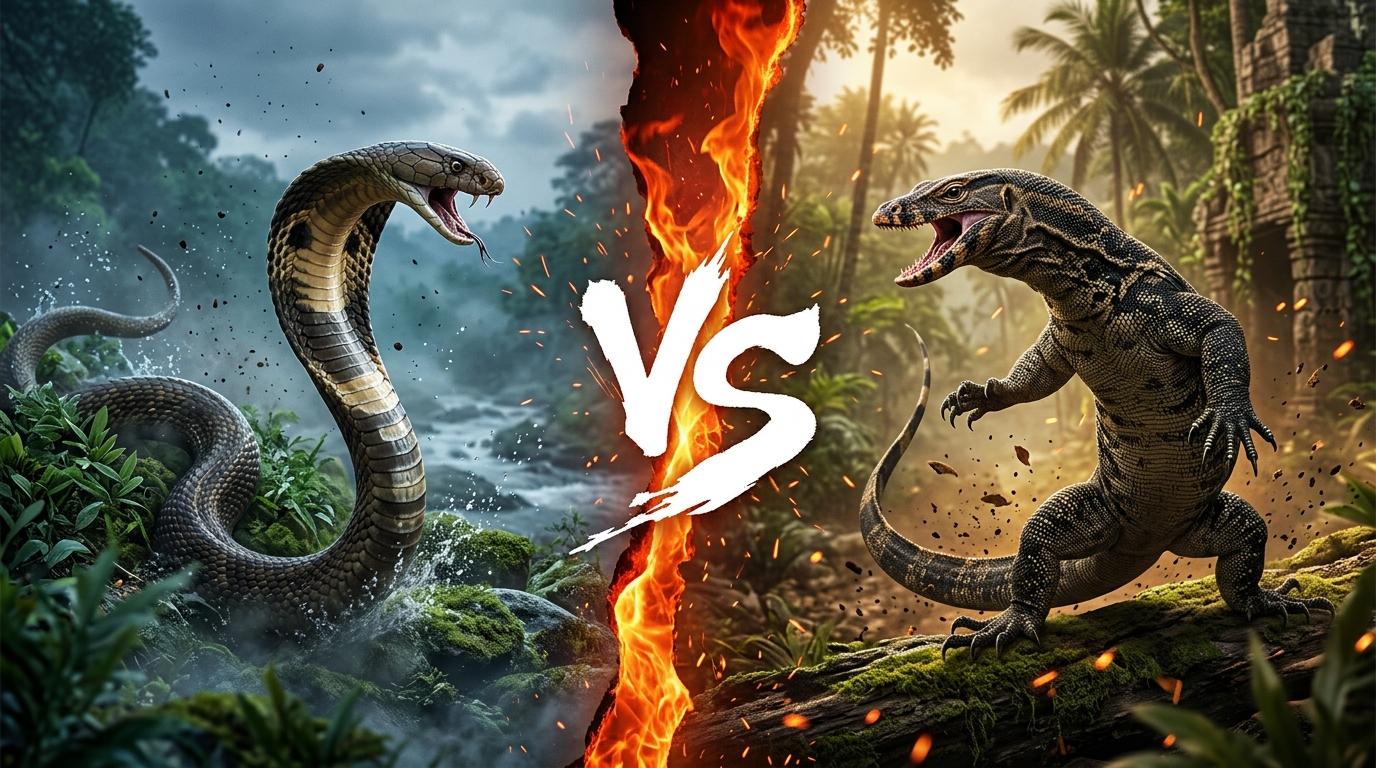
King Cobra vs Asian Water Monitor: Who Actually Wins?
The King Cobra wins more often than not, but the margin is narrower than its reputation suggests. A large Asian Water Monitor is the heavier, sturdier animal. Big individuals can outweigh even a very large cobra several times over. The monitor also carries serrated teeth, raking claws, and a powerful tail. The cobra's edge is chemical rather than physical. A King Cobra delivers some of the largest venom yields of any snake, and its potent neurotoxins can stop a large animal's breathing. It strikes from a raised posture at head height, so it can land a bite before the monitor closes the distance. The monitor needs a sustained bite-and-shake to win. The cobra needs one well-placed, deep bite and the patience to retreat while the venom works. In most realistic encounters, that asymmetry favors the snake. The monitor's best path is a head-first ambush on a small or distracted cobra.
Read comparison
Discussion
What do you think?
Share your reasoning with other readers. Be civil and stick to the animals.
Sign in to join the discussion.
Sign inNo comments yet. Start the conversation.