

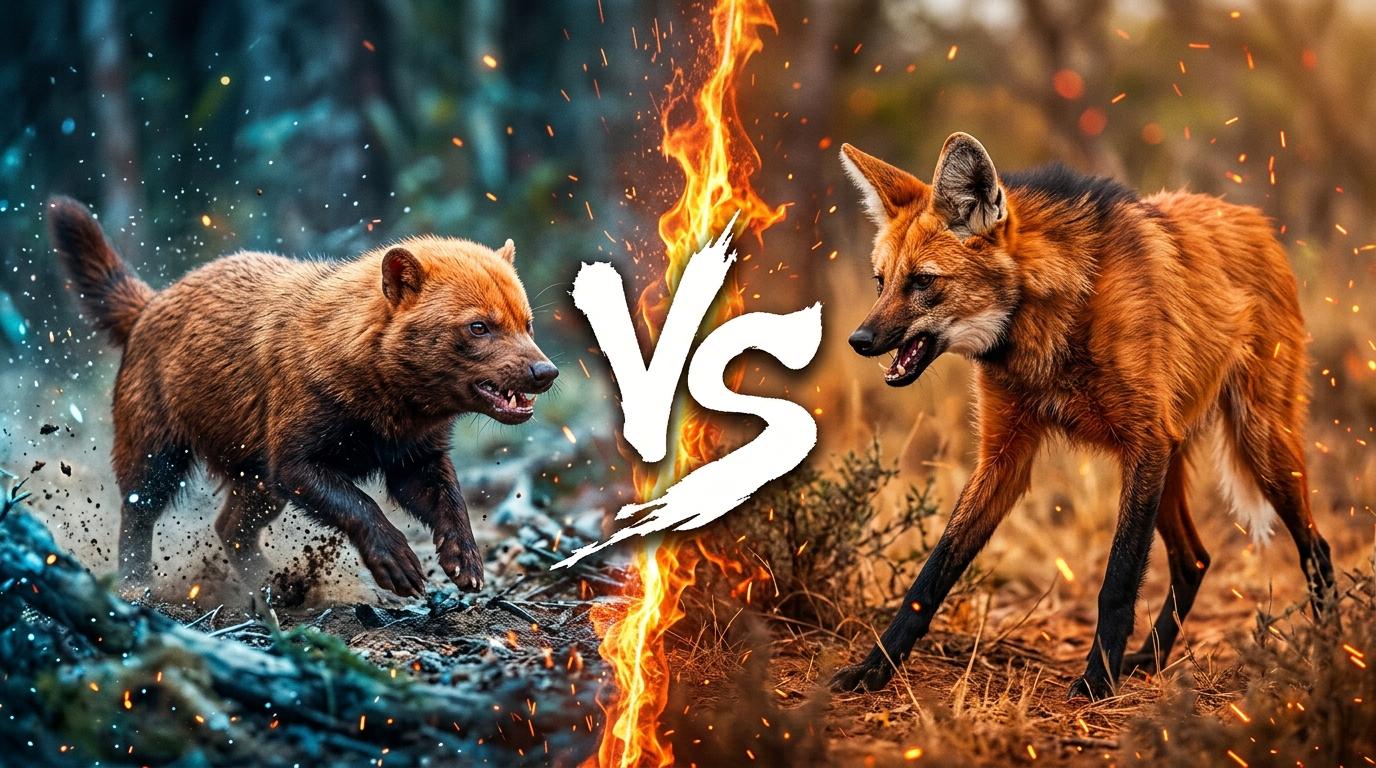
Bush Dog vs Maned Wolf: Who Actually Wins?
Bush dog vs maned wolf: who would win a fight? A biology-first breakdown of size, reach, pack tactics, and terrain to see which South American canid comes out on top.
Bush Dog vs Maned Wolf
Matchup winner
Maned Wolf
Quick verdict
Start with the direct answer, then use the structured comparison below to see what changes the outcome.
The maned wolf wins a one-on-one encounter. At roughly 20–30 kg and nearly a meter tall at the shoulder, it outweighs a 5–8 kg bush dog three to four times over. It also has far longer legs, a higher strike angle, and enough reach to keep the stocky little hunter from getting underneath it. The bush dog is no pushover. It is a compact, muscular, semi-aquatic pack predator with a powerful bite for its size, and it takes prey heavier than itself by working in coordinated groups. Alone, though, it loses the physics battle. The maned wolf rarely fights and would usually rather leave, but cornered or contesting space, its mass and leverage decide the outcome. The picture changes only when a full bush dog pack enters the frame, and that is a different question.
Read the full explanation
Maned wolf wins one-on-one, mostly on size: about 3–4x the bush dog's body mass.
Its long legs and tall build give it reach and an escape option the bush dog can't match.
The bush dog's real weapon is the pack. A group of 4–10 can harass and pressure a much larger animal.
In dense, wet forest the bush dog is far more at home, which narrows the gap but doesn't erase it.
Reader vote
Who do you think wins?
Pick a side — no account needed. Results update live.
No votes yet — be the first to call it.
Editorial note
Why people disagree
Pack framing: many people picture bush dogs as a group, and a coordinated pack is a genuine threat to a solitary maned wolf.
Raw body mass
Mass dominates small-canid confrontations. Every shove, pin, and bite is weighted in the maned wolf's favor.
Reach and strike angle
A higher strike angle lets the maned wolf bite down onto the neck and back while staying clear of low lunges.
Pound-for-pound tenacity
The bush dog commits harder, which keeps it dangerous even when it is overmatched.
Read the full explanation +
Looks deceive: the maned wolf's stilt-legged, fox-like build reads as fragile, so people underrate its mass and reach.
Temperament gap: the maned wolf is shy and partly omnivorous (it eats a lot of fruit), while the bush dog is a dedicated carnivore. Some argue intent beats size.
Comparison FAQ
Short, direct answers to the next questions readers usually ask after the headline verdict.
Would a bush dog beat a maned wolf?+
Not in a one-on-one fight. The maned wolf is roughly three to four times heavier and much taller, so it should win most encounters. A bush dog pack, however, could plausibly drive off a lone maned wolf.
Which is stronger, the bush dog or the maned wolf?+
The maned wolf has more absolute strength because of its size. The bush dog is impressively strong for its weight, with a muscular, compact build, but that pound-for-pound strength doesn't close a 3–4x mass gap.
Why is the bush dog still dangerous if it loses?+
It is a dedicated carnivore with a strong bite, a stubborn fighting style, and a low profile that lets it attack legs and flanks. It rarely acts alone, and in a pack it routinely takes prey larger than itself.
Do bush dogs and maned wolves actually meet in the wild?+
Their ranges overlap in parts of South America, but they favor different habitats: bush dogs in forest and wetland edges, maned wolves in open grassland and savanna. Direct conflict is likely rare and poorly documented.
Is the maned wolf actually a wolf?+
No. It is the only living member of the genus Chrysocyon, a distinct South American canid that is neither a true wolf nor a fox.
Head-to-head species stats
These are the same core AnimalDex stat dimensions used on the dedicated animal pages, pulled side by side so the matchup is faster to scan.
Bush Dog
Tier BManed Wolf
Tier BTrait-by-trait comparison
Only the categories that matter to this matchup are included. The goal is not filler stats, but the real design differences that change the result.
About 5–8 kg, compact and low
Raw body mass
Maned Wolf
About 20–30 kg, tall and rangy
Raw body mass
Maned Wolf
Short legs, attacks from below
Reach and strike angle
Maned Wolf
Long legs and neck, attacks from above
Reach and strike angle
Maned Wolf
Muscular, stubborn, carnivore-driven
Pound-for-pound tenacity
Bush Dog
Cautious, prefers avoidance
Pound-for-pound tenacity
Bush Dog
Short bursts, built for undergrowth
Open-ground mobility
Maned Wolf
Long stride across tall grassland
Open-ground mobility
Maned Wolf
Low profile, strong swimmer, webbed toes
Dense-cover and water agility
Bush Dog
Tall frame snags in tight thicket
Dense-cover and water agility
Bush Dog
Highly social pack hunter
Coordinated tactics
Bush Dog
Largely solitary or loosely paired
Coordinated tactics
Bush Dog
How the verdict forms
Verdict timeline
01 · Raw body mass
Maned Wolf
02 · Reach and strike angle
Maned Wolf
03 · Pound-for-pound tenacity
Bush Dog
04 · Open-ground mobility
Maned Wolf
05 · Dense-cover and water agility
Bush Dog
06 · Coordinated tactics
Bush Dog
Change the conditions
Scenario breakdown
This is where shallow battle content usually fails. Terrain, spacing, timing, and engagement style can change the answer.
Scenario lean
Maned Wolf
Verdict confidence
82%
Maned wolf, comfortably.
This is the maned wolf's home terrain. Its stride and height let it choose when to engage and when to leave. If it does fight, its size and downward strike angle overwhelm a lone bush dog that has no cover to exploit.
AnimalDex field profiles
Explore these animals
Bush Dog
Speothos venaticus
forest, wet grassland, and river-edge woodland
Maned Wolf
Chrysocyon brachyurus
cerrado, tall grassland, scrubland, and wet meadow edge
Systems Intelligence & Hidden Purpose
See the animals behind this comparison as engineered biological systems: what each one is built to do, where it gains leverage, and why the matchup changes by scenario.
Specialized Hardware
short-legged pack body, wetland-friendly feet, and cooperative chasing give the Bush Dog a body plan tuned for its niche.
Systems Script
Bush Dogs operate through forest, wet grassland, and river-edge woodland Their design links movement, shelter, feeding, and survival into one workable system.
Strategic Insight
A small team can outgrow its size when coordination stays tight.
Specialized Hardware
very long legs, fox-like face with large ears, and solitary grassland hunting give the Maned Wolf a body plan tuned for its niche.
Systems Script
Maned Wolfs operate through cerrado, tall grassland, scrubland, and wet meadow edge Their design links movement, shelter, and feeding into one workable survival system.
Strategic Insight
Sometimes the best way to disappear is to rise just high enough to read the field.
Final take
In a fair one-on-one, the maned wolf wins. Biology is blunt about small predators: mass, reach, and leverage usually beat grit. The maned wolf has all three by a wide margin, and it adds the option to walk away on long legs whenever a fight looks costly.
Read the full explanation
The bush dog still earns respect. It is one of South America's most underrated hunters: dense, fearless, and lethal in a coordinated group. Count the pack, and the matchup tilts toward the smaller animal. Strip it down to a single individual, and the larger canid holds the advantage.
Collect both animals in AnimalDex
Track the species behind this matchup, compare their real traits, and build the rivalry into your AnimalDex collection.
Related comparisons
Continue with nearby matchups to compare more real-world animal traits without dropping into junky who-wins filler.
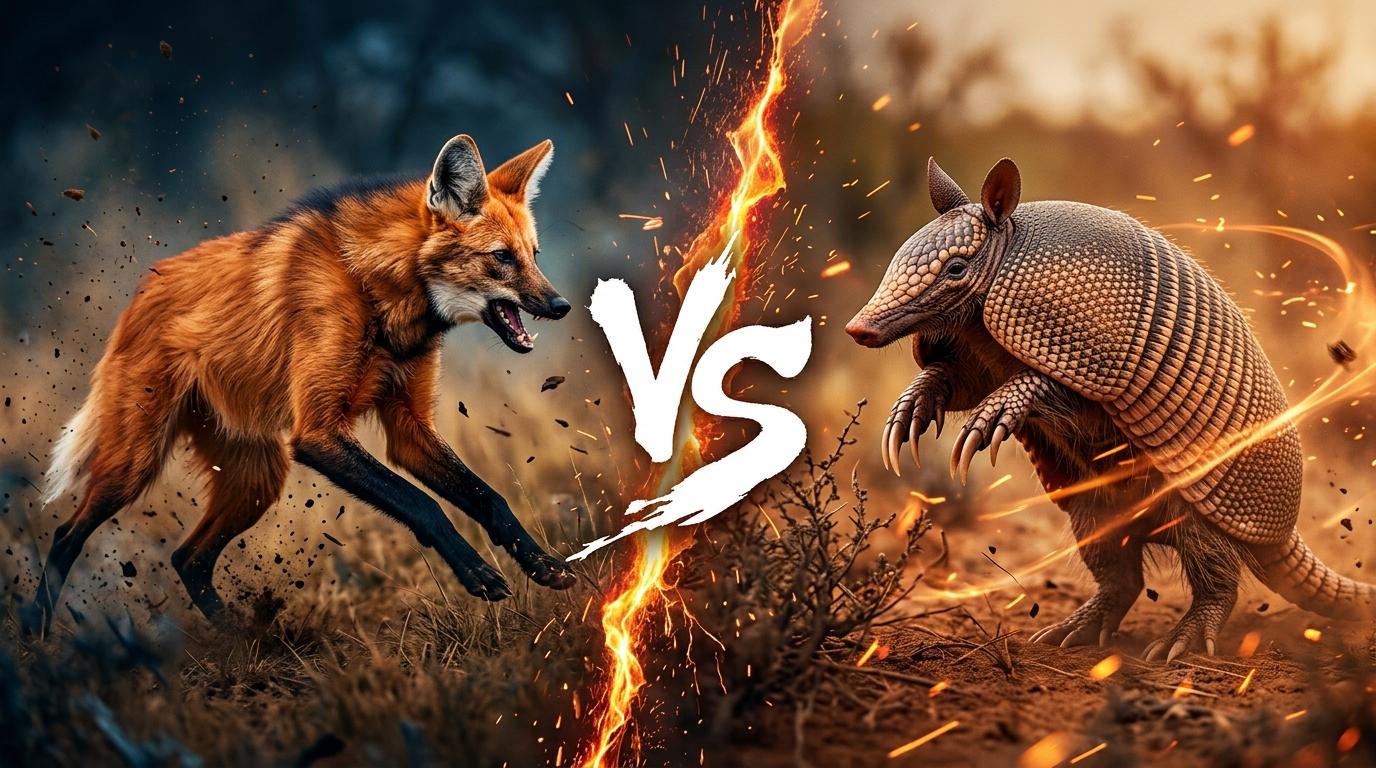
Maned Wolf vs Nine-banded Armadillo: Who Actually Wins?
The maned wolf wins clearly. At roughly 20–30 kg and standing about 90 cm at the shoulder on stilt-like legs, it outweighs a 3–6 kg nine-banded armadillo several times over. It also has the long jaws, height advantage and mobility to control any encounter. The armadillo's banded carapace is real protection, and its best tools are bolting, wedging into a burrow or thorny scrub, and digging with startling speed. Those tools keep it alive, but they don't let it beat a larger predator. Maned wolves are omnivores that eat plenty of fruit, but they readily take small vertebrates and include armadillos in their diet. That makes this less a fair duel than a predator testing prey defenses. In the open, the wolf decides how the encounter goes. Near a burrow, the armadillo can deny the win by disappearing.
Read comparison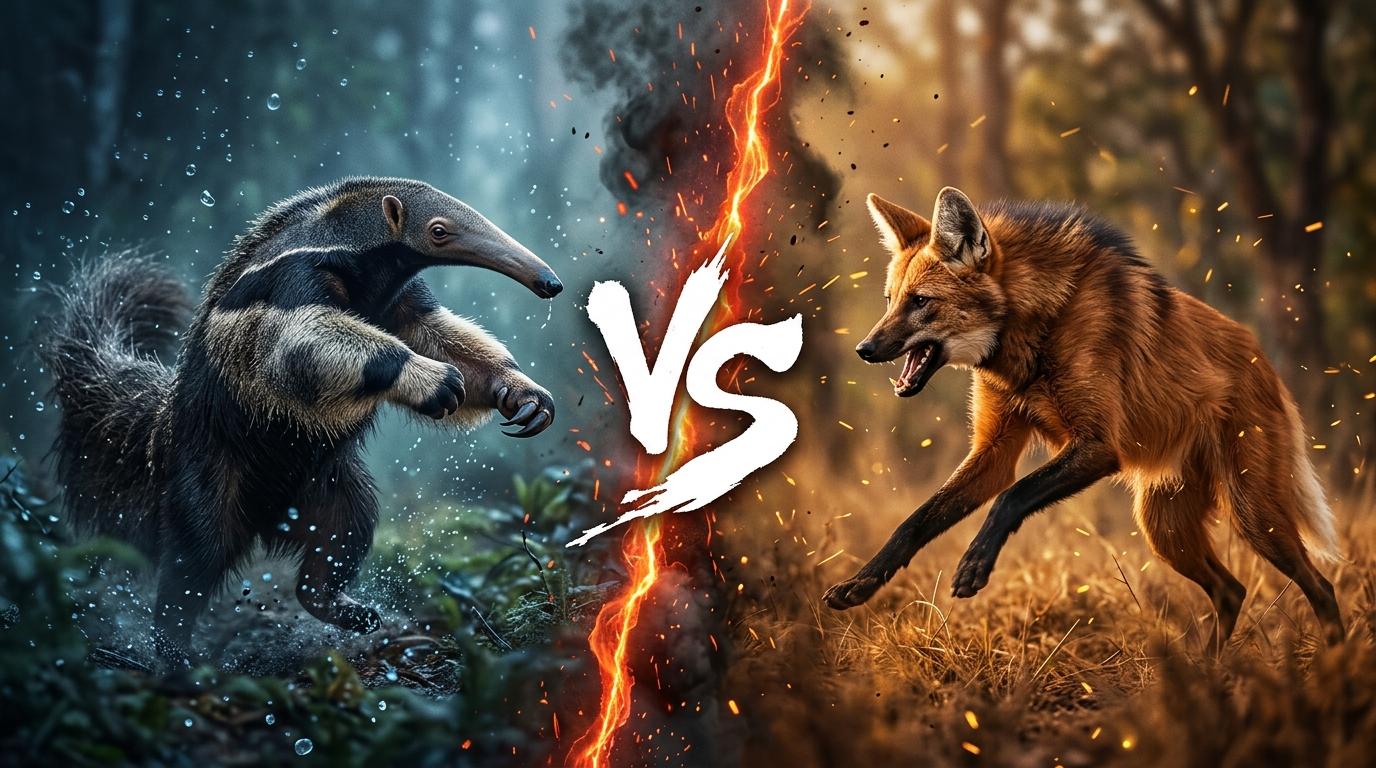
Giant Anteater vs Maned Wolf: Who Actually Wins?
The giant anteater wins. The two species share the grasslands and savannas of South America, but in a direct confrontation the anteater has the decisive tools. It is usually heavier (roughly 25–50 kg against the maned wolf's 20–30 kg), has a thick, coarse coat and dense hide, and carries foreclaws up to about 10 cm long, driven by powerful forearms built to rip open termite mounds as hard as concrete. When threatened, it rears onto its hind legs, braces on its tail, and swipes or clamps with those claws. That defense has fatally injured jaguars, pumas, dogs, and people. The maned wolf is a long-legged, fox-like canid built for wading through tall grass after rodents, birds, and fruit. Its bite is modest for its height, and its whole strategy is avoidance rather than taking on dangerous prey. The wolf is faster and more agile, so it can decline the fight. If it has to commit, it is reaching into the anteater's best weapon with a jaw that was never built to finish a large, armored animal.
Read comparison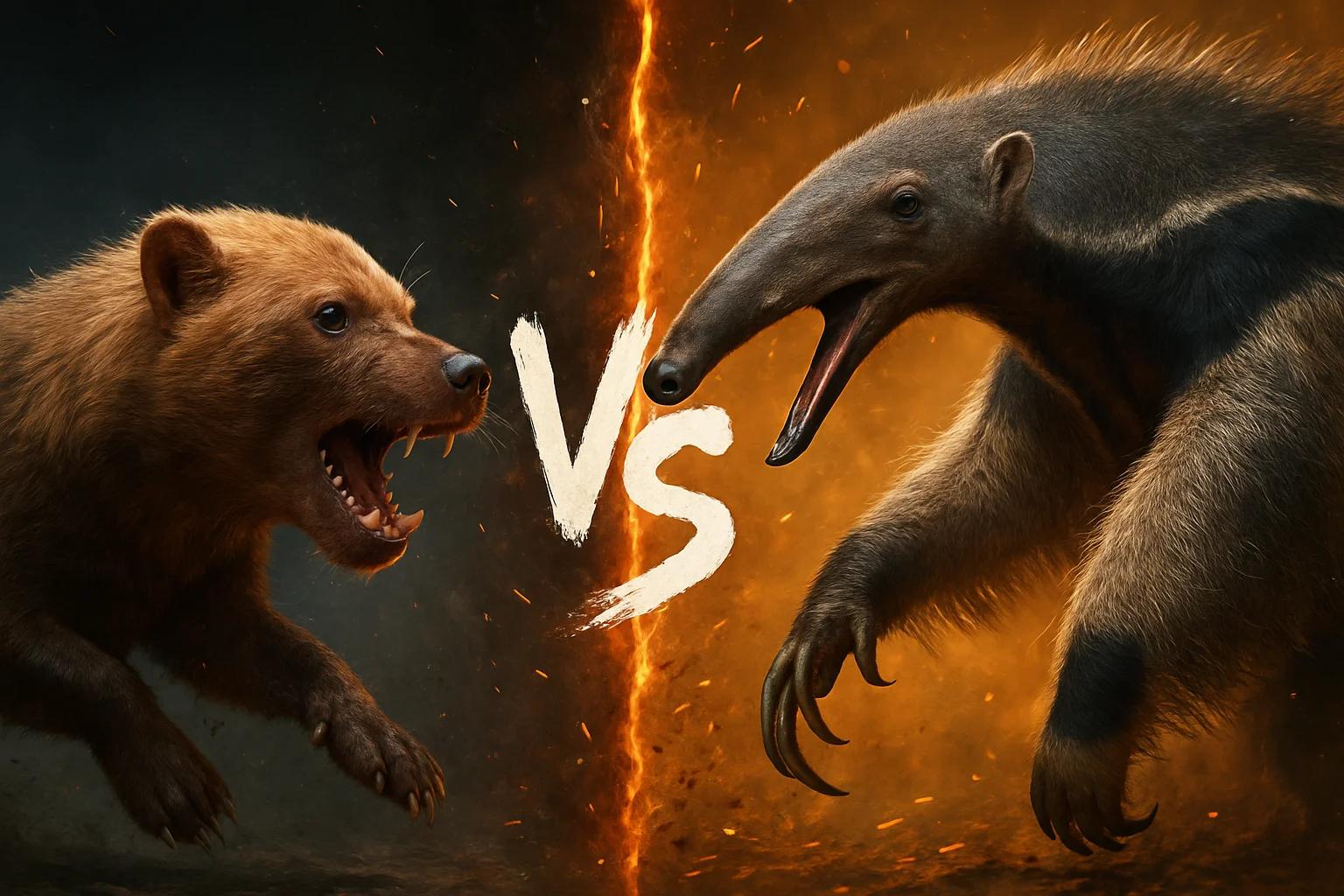
Bush Dog vs Giant Anteater: Who Actually Wins?
The giant anteater wins a one-on-one fight with a bush dog, and it isn't close. A large adult anteater weighs roughly 25–40 kg, about four to six times a typical 5–8 kg bush dog. It carries foreclaws close to 10 cm long, driven by massive forearm muscles that evolved to rip open termite mounds as hard as concrete. When threatened, it rears into a tripod stance on its hind legs and tail, swinging those claws with enough force to wound jaguars and pumas. The bush dog is a tough, short-legged, water-savvy hunter. Its real power is the pack: tight family groups that run down agoutis, pacas, and even capybaras. A lone dog has neither the size nor the bite to get past an anteater's guard without taking injuries that could end its life. Only a coordinated pack makes this a contest, and even then the anteater is a risky target that most packs would sensibly avoid.
Read comparison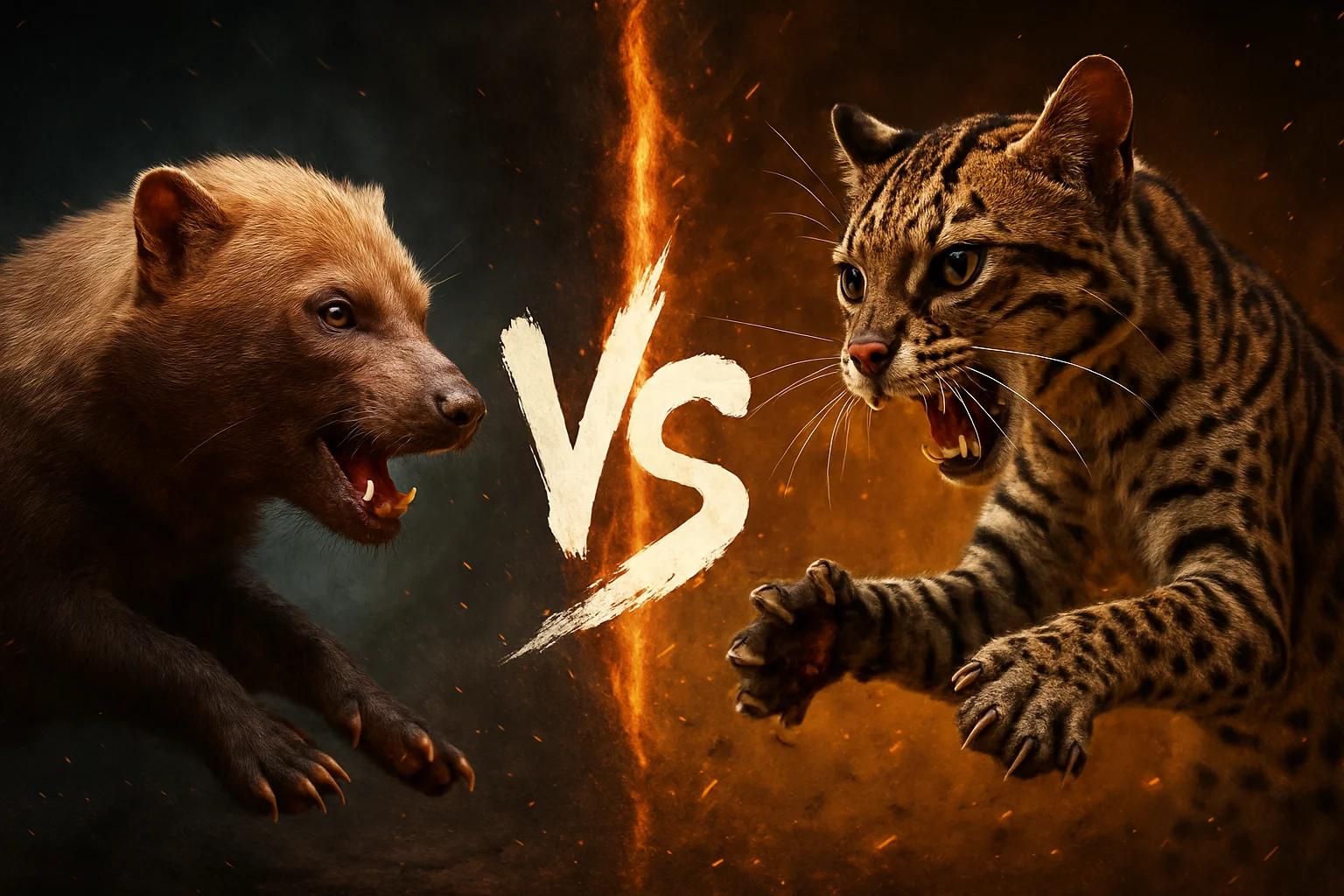
Bush Dog vs Margay: Who Actually Wins?
The bush dog wins this matchup most of the time. Both animals weigh roughly 4–8 kg, so neither has a size edge. The bush dog is built for close-quarters grappling. It is low, stocky and thick-necked, with a short powerful jaw. It hunts prey like pacas and agoutis that can match or outweigh it, and it does not let go. The margay is a smarter, more agile cat with retractile claws and great reflexes. But its whole body is tuned for climbing and catching birds and small mammals in the canopy, not for trading bites on the ground. If the fight happens on the forest floor and the margay cannot escape upward, the bush dog's grip, durability and persistence usually win out. The margay's best result is a sharp defensive flurry and a fast retreat up a tree.
Read comparison
Discussion
What do you think?
Share your reasoning with other readers. Be civil and stick to the animals.
Sign in to join the discussion.
Sign inNo comments yet. Start the conversation.