

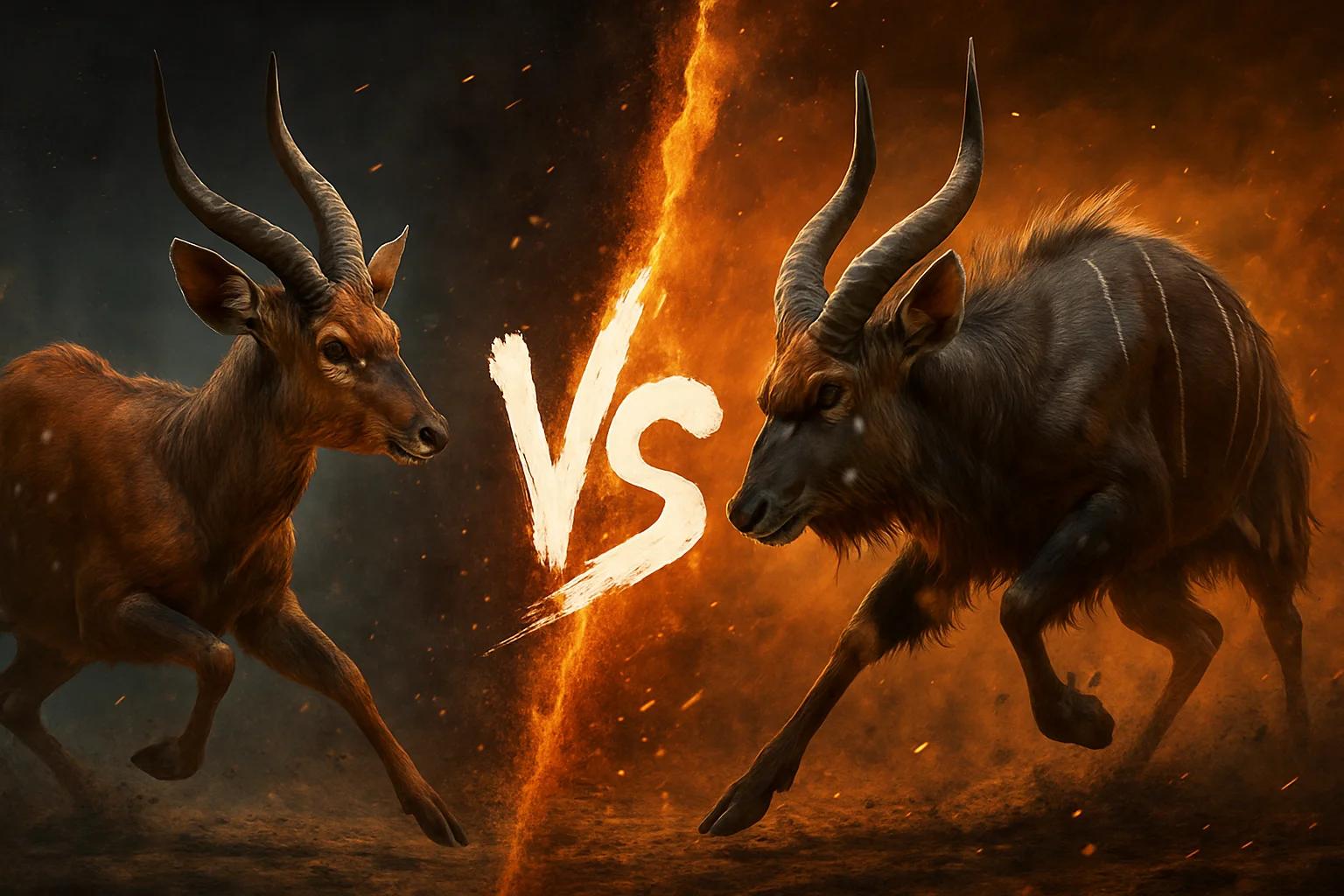
Bushbuck vs Nyala: Who Actually Wins?
Bushbuck vs nyala: who would win a fight between these spiral-horned antelope cousins? The nyala's size usually decides it, but the bushbuck's notorious pugnacity keeps it close in thick cover.
Bushbuck vs Nyala
Matchup winner
Nyala
Quick verdict
Start with the direct answer, then use the structured comparison below to see what changes the outcome.
The nyala wins most realistic fights between adult males, and the main reason is mass. A mature nyala bull typically weighs about 98–125 kg and stands roughly 110 cm at the shoulder. A bushbuck ram is far more variable, usually somewhere around 40–80 kg depending on region. These two are close cousins in the genus Tragelaphus, built on the same spiral-horned blueprint, so neither brings a radically different weapon. When the tools are similar, weight behind the horns, neck strength and reach decide shoving matches. The nyala's longer horns (up to about 80 cm) and heavier frame let it win the push and control the angle of engagement. The bushbuck earns real respect, though. It is one of Africa's most famously combative small antelope, with credible accounts of rams goring dogs and even leopards. In a cramped thicket where it can strike first and the nyala can't use its bulk, an upset is plausible. Over many encounters, the bigger bull wins more often.
Read the full explanation
Overall winner: Nyala. It is substantially heavier, taller and longer-horned.
The bushbuck is the scrappier fighter pound-for-pound and has a well-earned reputation for ferocity when cornered.
In dense, tight cover a bushbuck ram can land damaging first strikes. In any sustained shoving contest, the nyala's mass dominates.
Same genus, same weapon design: size is the tiebreaker, and it favors the nyala.
Reader vote
Who do you think wins?
Pick a side — no account needed. Results update live.
No votes yet — be the first to call it.
Editorial note
Why people disagree
Bushbuck have an outsized reputation among hunters and rangers as dangerous when wounded or cornered, which makes people overestimate them against a bigger rival.
Weight behind the horns
In horn-locked shoving matches between similar species, the heavier animal usually dictates position and wears the other down.
Horn reach
Longer horns let the nyala engage from farther away and catch the bushbuck's head before it closes in.
Pound-for-pound pugnacity
Willingness to commit instantly can steal the opening exchange, which matters most in short, chaotic clashes.
Read the full explanation +
Nyala bulls spend more of their rivalry on slow, crest-raised lateral displays than on outright combat, so they can look like show over substance. When they do fight, though, it can be serious and even fatal.
Bushbuck size varies enormously across their huge range, so a large southern ram against a young nyala is a very different matchup from a small forest ram against a prime bull.
Comparison FAQ
Short, direct answers to the next questions readers usually ask after the headline verdict.
Would a bushbuck beat a nyala in a fight?+
Usually not. A mature nyala bull is much heavier and longer-horned, so it wins most fights. A bushbuck can win in dense cover or when cornered, where its aggression and agility matter more than size.
Which is stronger, a bushbuck or a nyala?+
The nyala. Bulls typically weigh about 98–125 kg versus roughly 40–80 kg for bushbuck rams, giving the nyala far more pushing power in horn-to-horn contests.
Why is the bushbuck still dangerous even though it usually loses?+
Bushbuck rams are famously combative. They commit quickly, strike with sharp spiral horns, and have been reported to injure dogs and even leopards when cornered. In tight quarters that first-strike aggression can wound a larger rival.
Are bushbuck and nyala related?+
Yes. Both belong to the spiral-horned antelope group (Tragelaphini) and are commonly placed in the genus Tragelaphus, alongside kudu and sitatunga.
Do bushbuck and nyala live in the same places?+
Their ranges overlap in parts of southeastern Africa, such as South Africa, Mozambique, Zimbabwe and Malawi, where both favor dense bush near water. The bushbuck's overall range is far wider, spanning much of sub-Saharan Africa.
How do nyala bulls fight?+
They usually begin with a slow, broadside display: raising the white dorsal crest, lowering the head and stepping stiffly. Most disputes end there. When they escalate, horn-locked fights can be intense and occasionally fatal.
Head-to-head species stats
These are the same core AnimalDex stat dimensions used on the dedicated animal pages, pulled side by side so the matchup is faster to scan.
Bushbuck
Tier CNyala
Tier CTrait-by-trait comparison
Only the categories that matter to this matchup are included. The goal is not filler stats, but the real design differences that change the result.
Roughly 40–80 kg rams, regionally variable
Weight behind the horns
Nyala
Roughly 98–125 kg bulls
Weight behind the horns
Nyala
Short, tight spiral horns, up to about 50 cm
Horn reach
Nyala
Longer spiral horns, up to about 80 cm, with ivory-colored tips
Horn reach
Nyala
Notoriously combative; known to attack dogs and predators when cornered
Pound-for-pound pugnacity
Bushbuck
Display-first; escalates mainly after ritual posturing
Pound-for-pound pugnacity
Bushbuck
Compact, low-slung, built to slip through dense undergrowth
Thicket agility
Bushbuck
Taller and bulkier; agile but needs more room
Thicket agility
Bushbuck
Hair-raised posturing, sharp barking alarms
Display and intimidation
Nyala
Dramatic white dorsal crest, shaggy fringe, slow broadside parade
Display and intimidation
Nyala
Explosive but tires against heavier resistance
Sustained pressure
Nyala
Steady, heavy pushing power
Sustained pressure
Nyala
How the verdict forms
Verdict timeline
01 · Weight behind the horns
Nyala
02 · Horn reach
Nyala
03 · Pound-for-pound pugnacity
Bushbuck
04 · Thicket agility
Bushbuck
05 · Display and intimidation
Nyala
06 · Sustained pressure
Nyala
Change the conditions
Scenario breakdown
This is where shallow battle content usually fails. Terrain, spacing, timing, and engagement style can change the answer.
Scenario lean
Bushbuck
Verdict confidence
82%
Bushbuck's best chance, and a real one.
In tangled riverine thicket the nyala cannot swing broadside to display or set its feet for a full shove. The bushbuck is compact, low and quick to commit, and its willingness to strike first suits close quarters, where it can drive short horns at the flank before the bigger animal squares up. This is where the bushbuck's reputation was earned. It is the one frame where agility and aggression beat mass.
AnimalDex field profiles
Explore these animals
Bushbuck
Tragelaphus scriptus
riverine thicket, woodland edge, and dense bush
Nyala
Tragelaphus angasii
dense thicket, river forest, and woodland edge
Systems Intelligence & Hidden Purpose
See the animals behind this comparison as engineered biological systems: what each one is built to do, where it gains leverage, and why the matchup changes by scenario.
Specialized Hardware
striped chestnut woodland coat, curving spiral horns in males, and quiet edge-cover browsing give the Bushbuck a body plan tuned for its niche.
Systems Script
Bushbucks operate through riverine thicket, woodland edge, and dense bush. Their design links movement, feeding, shelter, and timing into one workable survival system.
Strategic Insight
Dense environments reward precision, patience, and the ability to read layered cover.
Specialized Hardware
striped forest-edge coat, spiraled horns on males, and quiet browsing behavior give the Nyala a body plan tuned for its niche.
Systems Script
Nyalas operate through dense thicket, river forest, and woodland edge Their design links movement, shelter, feeding, and survival into one workable system.
Strategic Insight
Patterns work best when they match the place where you move.
Final take
The nyala is the overall winner. This is a family matchup: two spiral-horned Tragelaphus antelope carrying the same basic weapon design. When biology hands both fighters similar tools, the heavier frame and longer reach usually decide it, and the nyala has both by a clear margin.
Read the full explanation
Don't write off the bushbuck. It is one of the most pugnacious small antelope in Africa, and in thick cover or when cornered it can strike first and hard enough to turn a bigger animal away. That is why this page sits at moderate confidence rather than calling it a blowout. Most of the time, though, the big shaggy bull walks away with the ground.
Collect both animals in AnimalDex
Track the species behind this matchup, compare their real traits, and build the rivalry into your AnimalDex collection.
Related comparisons
Continue with nearby matchups to compare more real-world animal traits without dropping into junky who-wins filler.
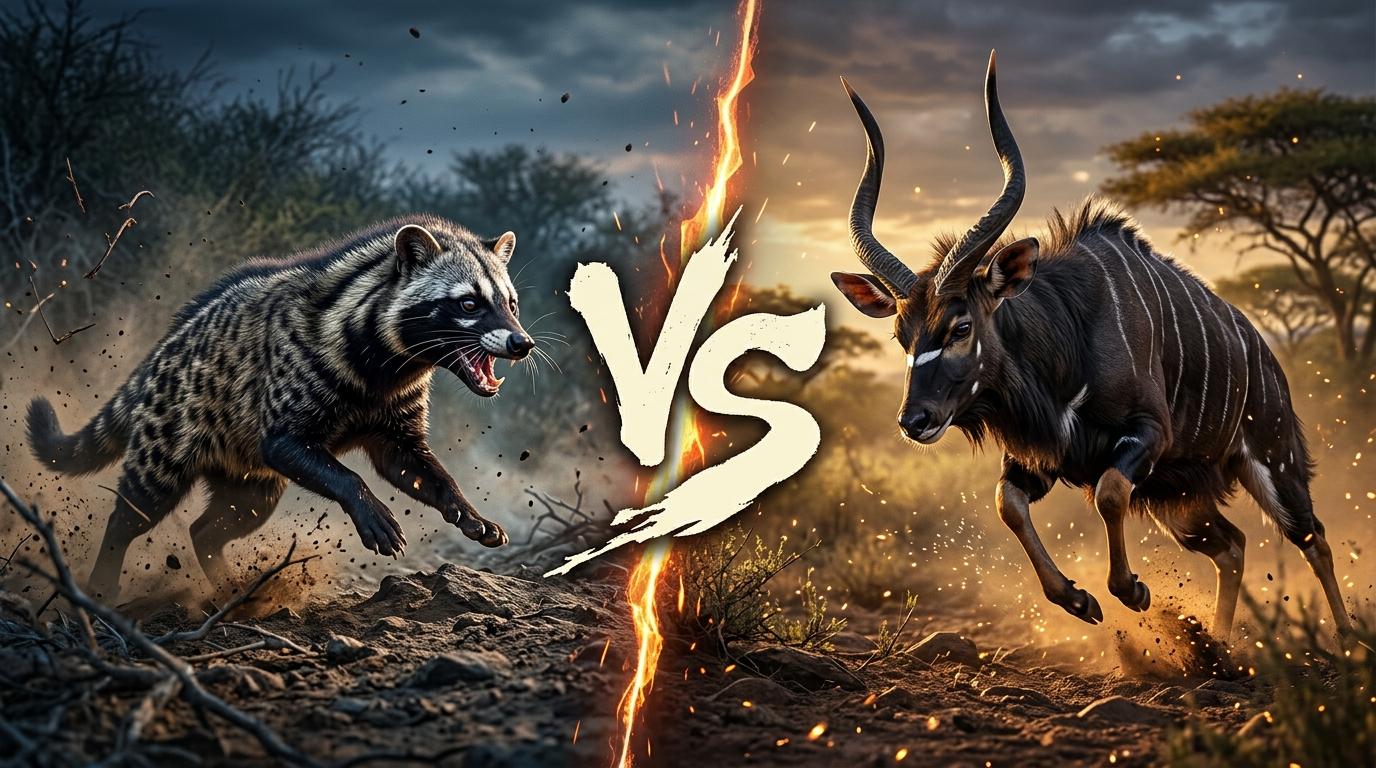
African Civet vs Nyala: Who Actually Wins?
The nyala wins, and it isn't especially close. An adult male nyala weighs roughly 98–125 kg, about eight to ten times the mass of a 7–20 kg African civet. He also carries spiralled horns up to about 80 cm long and is built for shoving matches with other males. The civet is a tough, nocturnal omnivore with a strong bite, a bristling defensive crest and a potent musk. That kit is designed to deter predators and eat insects, fruit, carrion and small prey, not to bring down a horned antelope. In any confrontation where the nyala chooses to engage, mass, reach and horn leverage decide it. The civet's realistic best outcome is a successful retreat into thicket or a burrow, not a win.
Read comparison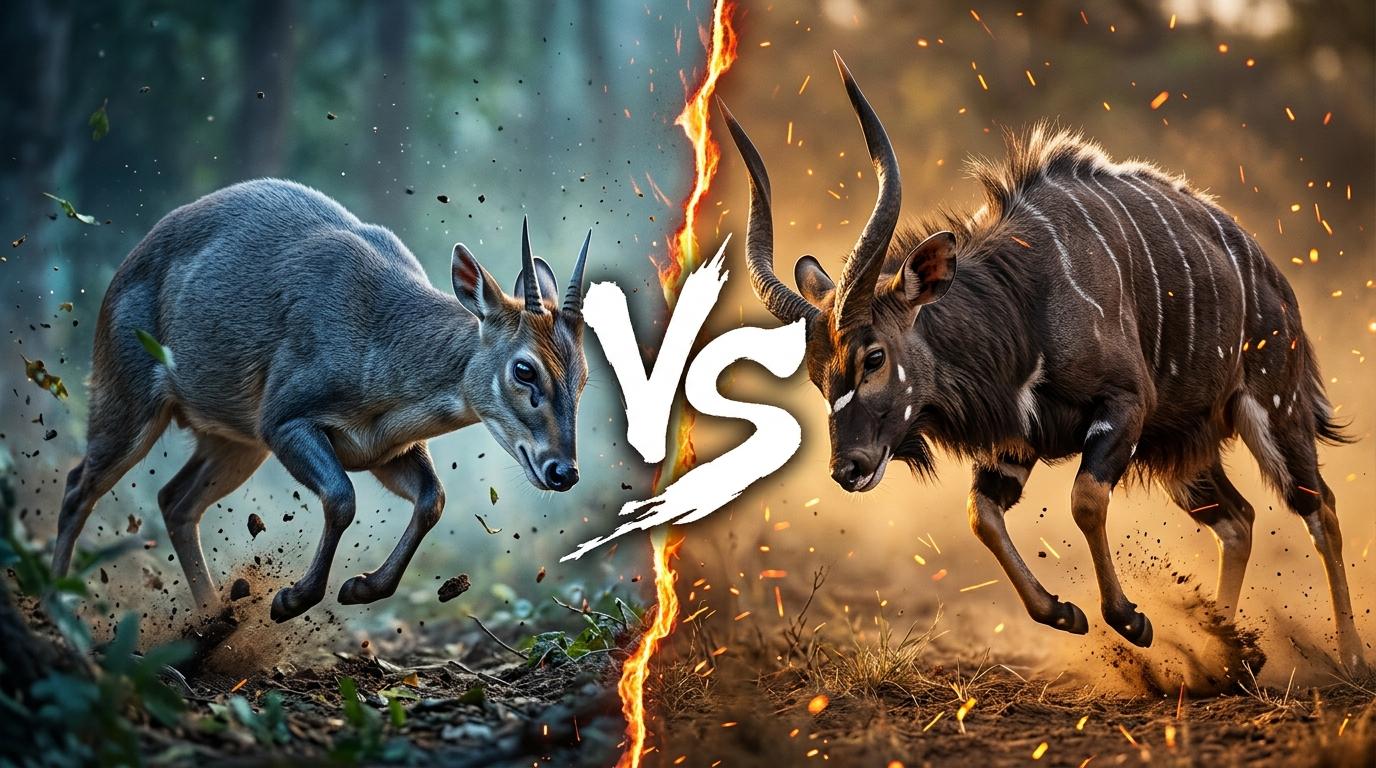
Blue Duiker vs Nyala: Who Actually Wins?
The nyala wins clearly. A mature nyala bull stands roughly 1.1 m at the shoulder and weighs around 100–125 kg. A blue duiker is one of Africa's smallest antelopes at about 35 cm tall and 4–6 kg, so the nyala carries roughly twenty times the mass. Its spiraled, lyre-shaped horns can reach 60–80 cm and are built for shoving contests between rivals. The duiker's horns are short spikes of a few centimeters. The blue duiker is a superb forest specialist, with quick reflexes, a low profile and a talent for vanishing into dense undergrowth. In any contest that involves actual contact, though, mass and horn reach decide it. The duiker's real advantage is that it can avoid the fight entirely.
Read comparison
Discussion
What do you think?
Share your reasoning with other readers. Be civil and stick to the animals.
Sign in to join the discussion.
Sign inNo comments yet. Start the conversation.