

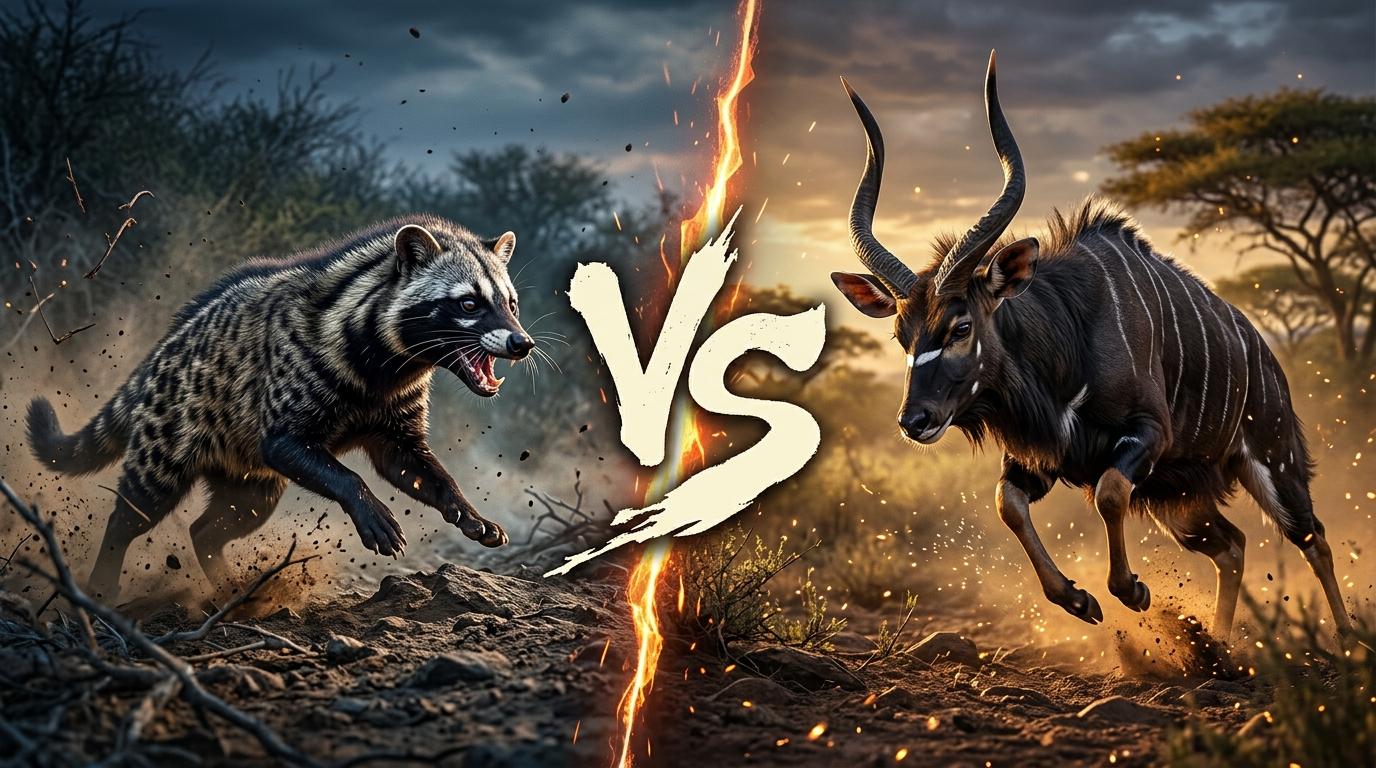
African Civet vs Nyala: Who Actually Wins?
African civet vs nyala: a biology-first breakdown of size, weaponry, speed and behavior to answer who would win in a real confrontation.
African Civet vs Nyala
Matchup winner
African Civet
Quick verdict
Start with the direct answer, then use the structured comparison below to see what changes the outcome.
The nyala wins, and it isn't especially close. An adult male nyala weighs roughly 98–125 kg, about eight to ten times the mass of a 7–20 kg African civet. He also carries spiralled horns up to about 80 cm long and is built for shoving matches with other males. The civet is a tough, nocturnal omnivore with a strong bite, a bristling defensive crest and a potent musk. That kit is designed to deter predators and eat insects, fruit, carrion and small prey, not to bring down a horned antelope. In any confrontation where the nyala chooses to engage, mass, reach and horn leverage decide it. The civet's realistic best outcome is a successful retreat into thicket or a burrow, not a win.
Read the full explanation
Nyala wins: much greater body mass plus long spiral horns.
The civet has no realistic way to subdue an adult nyala; it doesn't hunt prey that size.
Females and calves lack horns, but adult mass and kicking hooves still favor the nyala.
The civet stays dangerous up close thanks to its bite, claws and deterrent musk.
Reader vote
Who do you think wins?
Pick a side — no account needed. Results update live.
No votes yet — be the first to call it.
Editorial note
Why people disagree
"Carnivore beats herbivore" is a myth. The civet is a carnivoran by family, but in practice it's an opportunistic omnivore, not a large-game hunter.
Mass advantage
An eight- to tenfold mass gap means the nyala can trample, pin or simply overpower the civet.
Reach weapons
Horns strike from outside the civet's bite range, so the civet must close distance under fire.
Close-range durability
Pound for pound, the civet is hard to handle and unpleasant to grab. It survives scuffles better than its size suggests.
Read the full explanation +
People picture a cat. The civet looks feline but is a heavyset, short-legged viverrid built for foraging, not pouncing on big prey.
Nyala are shy and skittish, so readers underrate them. A cornered or rutting bull is a serious horned fighter.
Comparison FAQ
Short, direct answers to the next questions readers usually ask after the headline verdict.
Would an African civet beat a nyala?+
No. An adult nyala, especially a horned bull, would win almost every confrontation thanks to its far greater mass and long horns.
Which is stronger, a civet or a nyala?+
The nyala is far stronger in absolute terms. It is roughly eight to ten times heavier and capable of powerful horn shoves and kicks.
Does the African civet hunt antelope?+
Not adult antelope. Civets mainly eat insects, fruit, small vertebrates and carrion.
Why is the civet still dangerous in this matchup?+
Its strong bite, claws, raised defensive crest and pungent musk make it costly to grab or corner. Most animals that harass it come away regretting it.
Would a female nyala beat a civet?+
Usually yes. Even hornless females have much greater mass and sharp hooves, though a determined civet could hold its own briefly before retreating.
Head-to-head species stats
These are the same core AnimalDex stat dimensions used on the dedicated animal pages, pulled side by side so the matchup is faster to scan.
African Civet
Tier CNyala
Tier CTrait-by-trait comparison
Only the categories that matter to this matchup are included. The goal is not filler stats, but the real design differences that change the result.
About 7–20 kg, low-slung
Mass advantage
Nyala
Bulls about 98–125 kg; ewes about 55–68 kg
Mass advantage
Nyala
Strong bite, blunt digging claws
Reach weapons
Nyala
Spiral horns up to about 80 cm, sharp hooves
Reach weapons
Nyala
Dense coat, erectile dorsal crest, musk deterrent
Close-range durability
African Civet
Thick neck skin and mane on bulls for sparring
Close-range durability
African Civet
Moderate trot, poor sprinter
Burst and escape speed
Nyala
Agile bounding through woodland
Burst and escape speed
Nyala
Nocturnal, uses burrows and dense scrub
Thicket craft
African Civet
Dense riverine woodland specialist
Thicket craft
African Civet
Avoids large animals unless cornered
Fight motivation
Nyala
Bulls display and fight readily in rut
Fight motivation
Nyala
How the verdict forms
Verdict timeline
01 · Mass advantage
Nyala
02 · Reach weapons
Nyala
03 · Close-range durability
African Civet
04 · Burst and escape speed
Nyala
05 · Thicket craft
African Civet
06 · Fight motivation
Nyala
Change the conditions
Scenario breakdown
This is where shallow battle content usually fails. Terrain, spacing, timing, and engagement style can change the answer.
Scenario lean
African Civet
Verdict confidence
82%
The civet escapes, which counts as its only 'win'.
In tangled riverine bush, horn length becomes a liability and the civet's low build lets it slip into burrows or under deadfall. It doesn't defeat the nyala; it denies the fight. On points of survival, cover favors the small specialist.
AnimalDex field profiles
Explore these animals
African Civet
Civettictis civetta
woodland, savannah edge, riverine thicket, and mixed scrub
Nyala
Tragelaphus angasii
dense thicket, river forest, and woodland edge
Systems Intelligence & Hidden Purpose
See the animals behind this comparison as engineered biological systems: what each one is built to do, where it gains leverage, and why the matchup changes by scenario.
Specialized Hardware
bold black-and-white pattern, night-active scavenging and hunting, and scent-heavy territorial life give the African Civet a body plan tuned for its niche.
Systems Script
African Civets operate through woodland, savannah edge, riverine thicket, and mixed scrub Their design links movement, shelter, and feeding into one workable survival system.
Strategic Insight
Versatility matters most when the environment changes faster than any one plan can.
Specialized Hardware
striped forest-edge coat, spiraled horns on males, and quiet browsing behavior give the Nyala a body plan tuned for its niche.
Systems Script
Nyalas operate through dense thicket, river forest, and woodland edge Their design links movement, shelter, feeding, and survival into one workable system.
Strategic Insight
Patterns work best when they match the place where you move.
Final take
The nyala is the clear winner. Everything in its body plan, from mass and horns to sparring-hardened neck skin, is built for physical contests. The civet's toolkit is built for avoiding them.
Read the full explanation
The civet is no pushover. It's a resilient, well-defended night forager whose real strategy is to never let the fight happen. In thick cover it usually succeeds. But when the question is who wins, the antelope takes it.
Collect both animals in AnimalDex
Track the species behind this matchup, compare their real traits, and build the rivalry into your AnimalDex collection.
Related comparisons
Continue with nearby matchups to compare more real-world animal traits without dropping into junky who-wins filler.
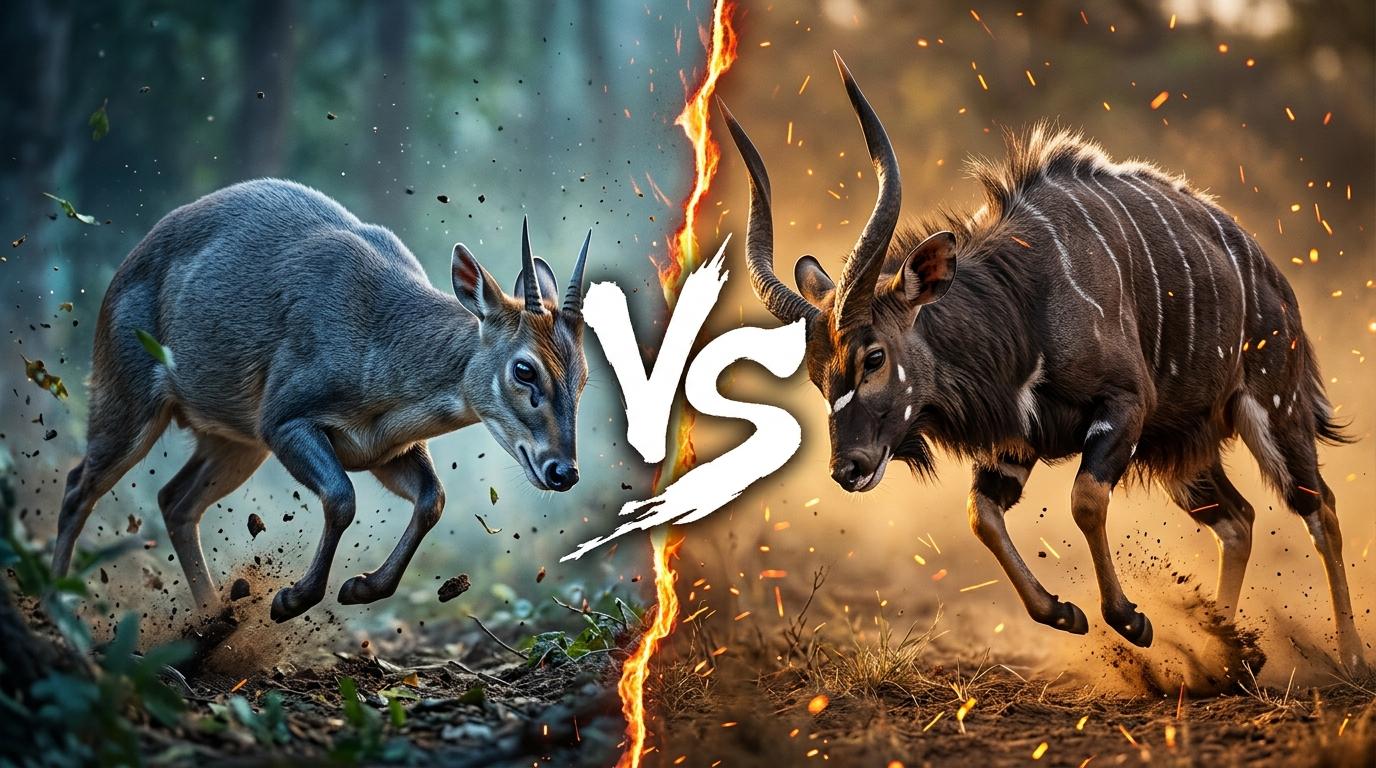
Blue Duiker vs Nyala: Who Actually Wins?
The nyala wins clearly. A mature nyala bull stands roughly 1.1 m at the shoulder and weighs around 100–125 kg. A blue duiker is one of Africa's smallest antelopes at about 35 cm tall and 4–6 kg, so the nyala carries roughly twenty times the mass. Its spiraled, lyre-shaped horns can reach 60–80 cm and are built for shoving contests between rivals. The duiker's horns are short spikes of a few centimeters. The blue duiker is a superb forest specialist, with quick reflexes, a low profile and a talent for vanishing into dense undergrowth. In any contest that involves actual contact, though, mass and horn reach decide it. The duiker's real advantage is that it can avoid the fight entirely.
Read comparison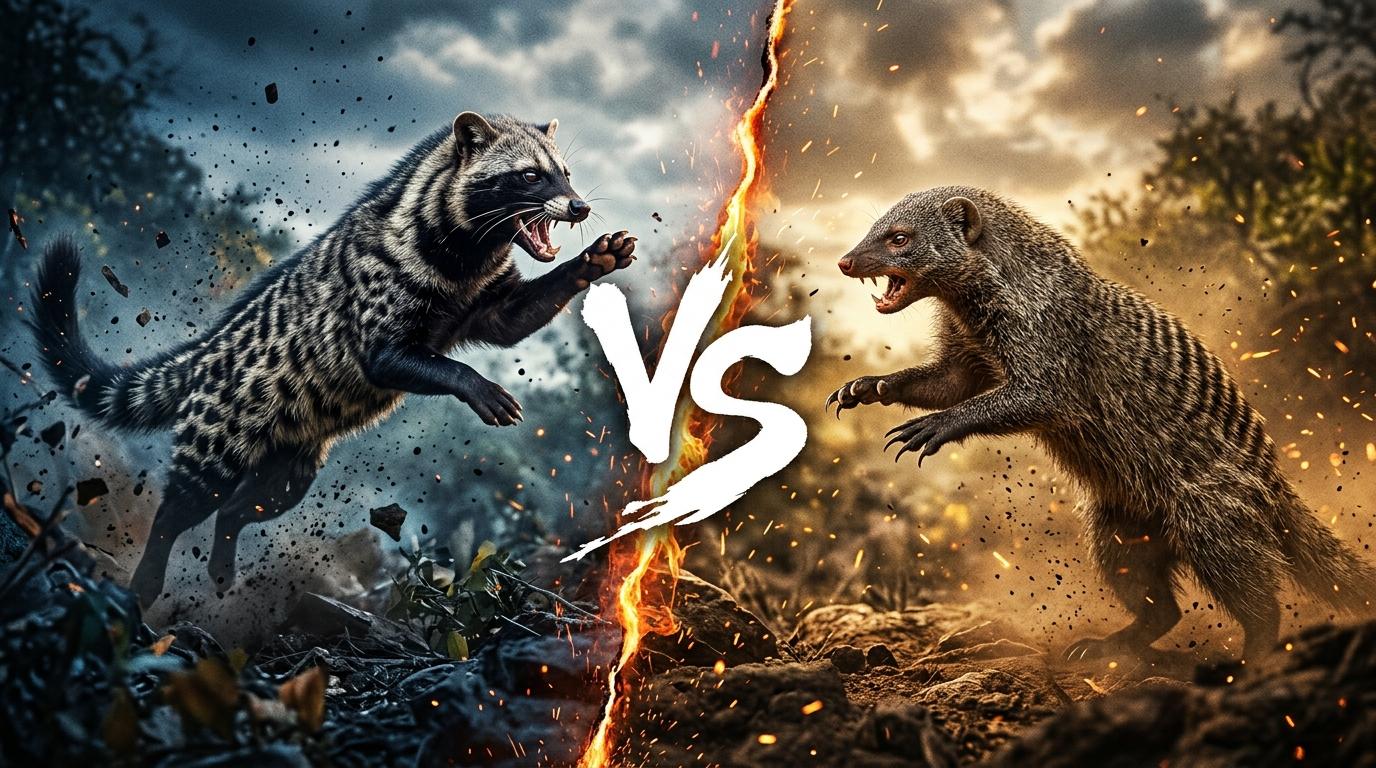
African Civet vs Zebra Mongoose: Who Actually Wins?
The African civet wins a one-on-one fight, and it is not especially close. A civet typically weighs about 7–20 kg. The zebra mongoose (Mungos mungo, more widely called the banded mongoose) weighs roughly 1.5–2.3 kg, so the civet often carries five times the mass or more. That mass comes with a long, powerful jaw built for crunching hard prey, along with a thick coat and an erectile dorsal crest that make it hard to land a meaningful bite on. The mongoose is quicker, twitchier, and remarkably bold. Its biggest weapon, though, is the troop: banded mongooses live in packs of roughly 10–40 that mob snakes, jackals, and raptors. Take the troop away and you have a fast, fearless animal giving up too much size, reach, and bite force to finish a civet. The mongoose wins only when the fight stops being a duel and becomes a mob.
Read comparison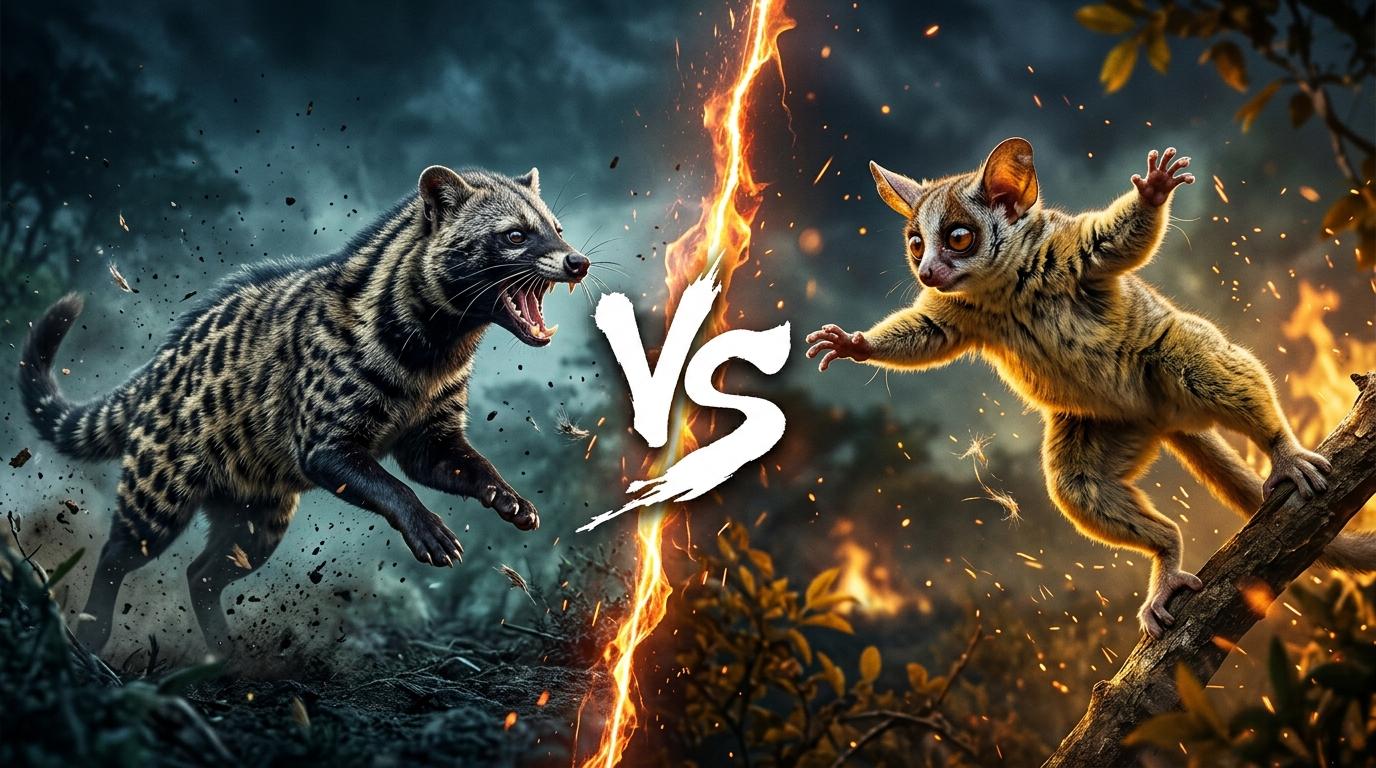
African Civet vs Senegal Bushbaby: Who Actually Wins?
The African civet wins clearly. At roughly 7–20 kg against a bushbaby of about 150–300 g, the civet carries something like forty to sixty times the body mass. It also has a carnivoran skull with real canines and shearing teeth, and its omnivorous diet already includes small vertebrates. Any contact on the ground or within reach is decided almost instantly. The bushbaby's real weapon is not fighting. It is vertical escape: spring-loaded hind legs can launch it a couple of meters straight up, and it lives in the acacia canopy, where the mostly terrestrial civet rarely follows. So the matchup is lopsided whenever the two actually meet, and the bushbaby's only win condition is to never be there.
Read comparison
Discussion
What do you think?
Share your reasoning with other readers. Be civil and stick to the animals.
Sign in to join the discussion.
Sign inNo comments yet. Start the conversation.