

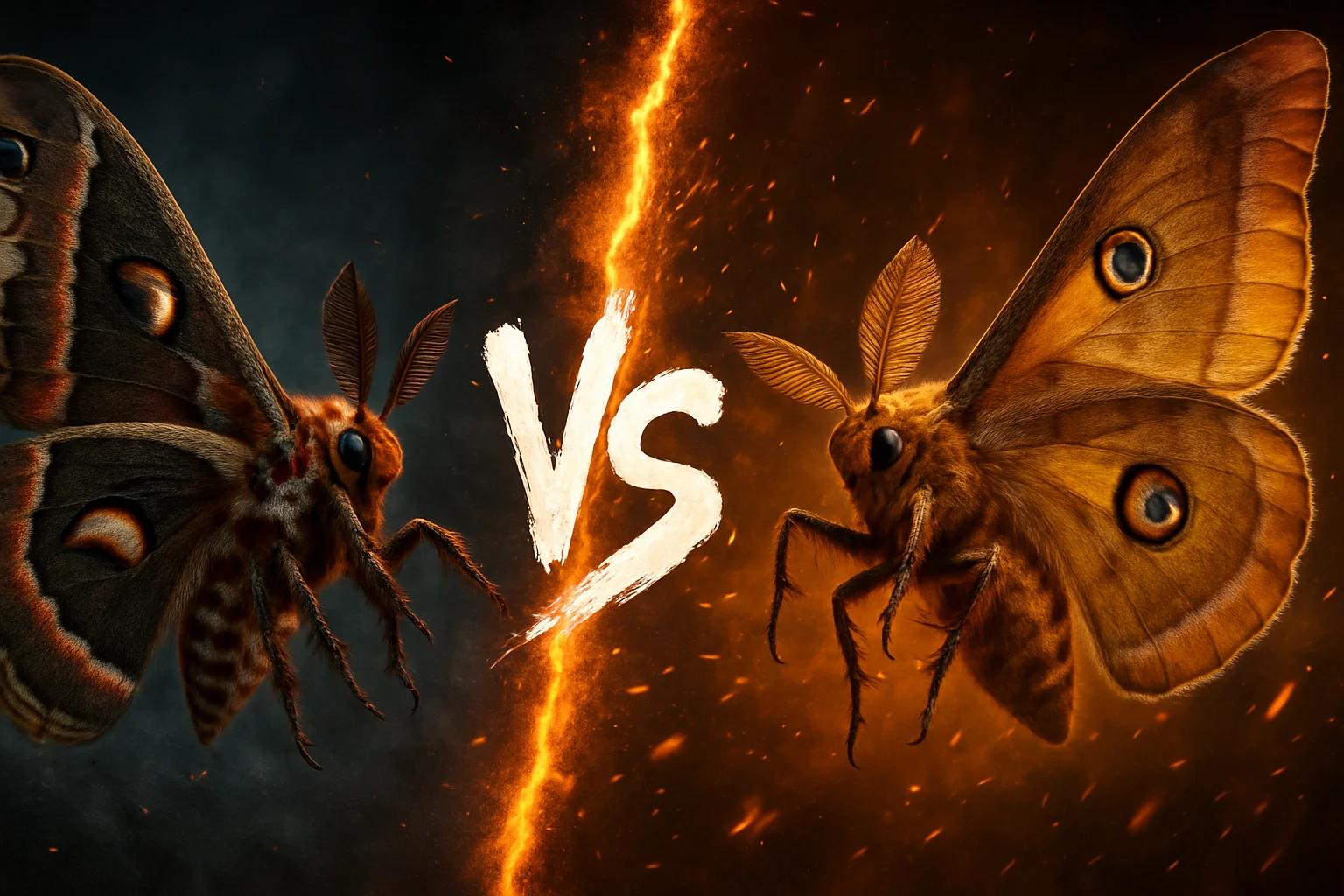
Cecropia Moth vs Polyphemus Moth: Who Actually Wins?
Cecropia moth vs polyphemus moth: North America's two giant silk moths compared on size, flight, defenses and survival strategy. Here's which one comes out on top.
Cecropia Moth vs Polyphemus Moth
Matchup winner
Cecropia Moth
Quick verdict
Start with the direct answer, then use the structured comparison below to see what changes the outcome.
The Cecropia moth wins. As North America's largest native moth, with wingspans reaching about 13–15 cm against the Polyphemus moth's typical 10–15 cm, the Cecropia brings more body mass, broader wings and a slightly stronger flight profile. Neither moth can bite or sting. Adult giant silk moths have vestigial mouthparts and never feed. A 'fight' between them really means jostling, wing-buffeting and displacement on a perch or at a female's scent trail. In that kind of contest, the heavier, more powerfully built Cecropia shoulders the smaller moth aside more often than not. The Polyphemus is no pushover, though. Its famous eyespots are an excellent anti-predator weapon, but they are designed to startle birds, not to beat a rival moth.
Read the full explanation
Overall winner: Cecropia moth, thanks to larger size, heavier body and a stronger wingbeat.
Neither species can bite, sting or eat as adults, so any 'fight' is shoving and displacement, not injury.
Polyphemus has the better bluff: huge eyespots that startle birds, but they do nothing against another moth.
Advantage in contests over perches or mates: Cecropia, roughly 70/30.
Reader vote
Who do you think wins?
Pick a side — no account needed. Results update live.
No votes yet — be the first to call it.
Editorial note
Why people disagree
Wingspans overlap. A big Polyphemus can match a small Cecropia, so photos make the two look evenly matched.
Size and body mass
In a contest decided by pushing and wing-buffeting, mass and wing area are the closest thing to raw power.
Flight power
A stronger wingbeat lets the Cecropia hold a perch or a scent trail when another moth crowds in.
Bluff and startle defense
The Polyphemus has the elite predator deterrent, which explains why it survives so well. It just isn't a dueling tool.
Read the full explanation +
The Polyphemus's giant eyespots look intimidating, and people assume intimidation translates to winning. It mostly works on birds, not moths.
Neither moth fights in nature, so some argue the question has no answer. Size-based displacement still decides real encounters at lights, perches and pheromone plumes.
Comparison FAQ
Short, direct answers to the next questions readers usually ask after the headline verdict.
Would a Cecropia moth beat a Polyphemus moth?+
Yes, in most encounters. The Cecropia is larger and more powerful in flight, so it would usually displace the Polyphemus from a perch or contested spot.
Which moth is stronger?+
The Cecropia. As North America's largest native moth, it has more body mass and wing area, which gives it more pushing and flight power.
Can these moths actually hurt each other?+
No. Adult giant silk moths have no functional mouthparts and no sting. Any contest is shoving and wing-buffeting, with wing scale loss as the worst damage.
Why is the Polyphemus moth still dangerous to underestimate?+
Its huge hindwing eyespots are an outstanding startle defense against birds and other predators. That makes it a superb survivor, even if it loses a size contest with the Cecropia.
Which moth is bigger?+
The Cecropia, generally. Their wingspans overlap, but the Cecropia averages larger and heavier.
Head-to-head species stats
These are the same core AnimalDex stat dimensions used on the dedicated animal pages, pulled side by side so the matchup is faster to scan.
Cecropia Moth
Tier DPolyphemus Moth
Tier DTrait-by-trait comparison
Only the categories that matter to this matchup are included. The goal is not filler stats, but the real design differences that change the result.
Up to ~15 cm wingspan, heavy furry body
Size and body mass
Cecropia Moth
~10–15 cm wingspan, lighter build
Size and body mass
Cecropia Moth
Strong, steady nocturnal flier
Flight power
Cecropia Moth
Agile but slightly less forceful
Flight power
Cecropia Moth
Bold red-white banding, small eyespots
Bluff and startle defense
Polyphemus Moth
Massive hindwing eyespots flashed on contact
Bluff and startle defense
Polyphemus Moth
Thick scales and dense body hair
Close-range durability
Cecropia Moth
Robust but smaller frame
Close-range durability
Cecropia Moth
Feathery antennae, detects pheromones over long distances
Mate-tracking range
Cecropia Moth
Equally elite feathered antennae
Mate-tracking range
Cecropia Moth
Wide range of host trees, including in suburbs
Habitat flexibility
Polyphemus Moth
Very broad host range across North America
Habitat flexibility
Polyphemus Moth
How the verdict forms
Verdict timeline
01 · Size and body mass
Cecropia Moth
02 · Flight power
Cecropia Moth
03 · Bluff and startle defense
Polyphemus Moth
04 · Close-range durability
Cecropia Moth
05 · Mate-tracking range
Cecropia Moth
06 · Habitat flexibility
Polyphemus Moth
Change the conditions
Scenario breakdown
This is where shallow battle content usually fails. Terrain, spacing, timing, and engagement style can change the answer.
Scenario lean
Cecropia Moth
Verdict confidence
82%
Cecropia holds the branch.
On a cramped twig, body mass and grip strength decide who stays. The larger Cecropia's wing-buffeting displaces the Polyphemus, which tends to flutter off rather than contest.
AnimalDex field profiles
Explore these animals
Cecropia Moth
Hyalophora cecropia
deciduous woodland and suburban tree cover
Polyphemus Moth
Antheraea polyphemus
forest, orchard, and suburban woodland
Systems Intelligence & Hidden Purpose
See the animals behind this comparison as engineered biological systems: what each one is built to do, where it gains leverage, and why the matchup changes by scenario.
Specialized Hardware
giant russet wings with pale crescents, fuzzy red-and-white body, and short-lived adult emergence give the Cecropia Moth a body plan tuned for its niche.
Systems Script
Cecropia Moths operate through deciduous woodland and suburban tree cover. Their design links movement, feeding, shelter, and timing into one workable survival system.
Strategic Insight
Dense environments reward precision, patience, and the ability to read layered cover.
Specialized Hardware
huge eye-spot wings, thick silken body, and short-lived adult emergence give the Polyphemus Moth a body plan tuned for its niche.
Systems Script
Polyphemus Moths operate through forest, orchard, and suburban woodland. Their design links movement, feeding, shelter, and timing into one workable survival system.
Strategic Insight
Dense environments reward precision, patience, and the ability to read layered cover.
Final take
The Cecropia moth is the overall winner. In every scenario that resembles a head-to-head contest, whether over a perch, at a light or along a scent trail, its superior size and flight power decide the outcome.
Read the full explanation
Don't sleep on the Polyphemus. Its eyespot defense is one of the best bluffs in North American insects, and it beats the Cecropia when the real enemy is a hungry bird. Both moths live only about a week as adults, without eating, so their whole design is built for reproduction, not combat.
Collect both animals in AnimalDex
Track the species behind this matchup, compare their real traits, and build the rivalry into your AnimalDex collection.
Related comparisons
Continue with nearby matchups to compare more real-world animal traits without dropping into junky who-wins filler.
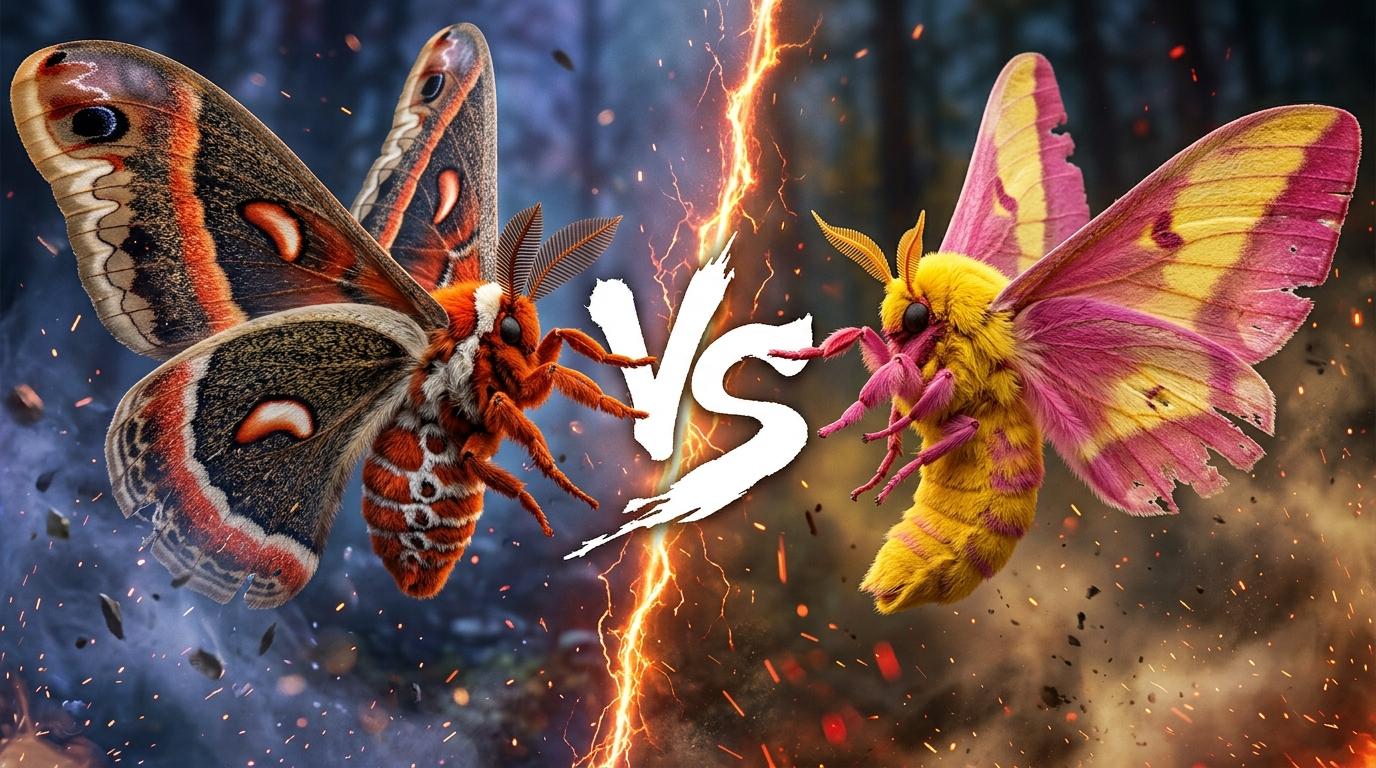
Cecropia Moth vs Rosy Maple Moth: Who Actually Wins?
The Cecropia Moth wins clearly. It is North America's largest native moth, with a wingspan of up to about 15 cm (6 in) against the Rosy Maple Moth's roughly 3–5 cm. That makes it several times heavier, with far more wing area and flight muscle. Neither species can truly fight, because adults of both have reduced, non-feeding mouthparts and no stingers or bite. So any "battle" comes down to who can push, shove and out-fly the other around a perch or a mate's scent trail. In that frame, sheer mass and wingbeat force decide it. The Rosy Maple Moth is a bit more agile for its size and is just as hardy, but it is simply outclassed in physical presence.
Read comparison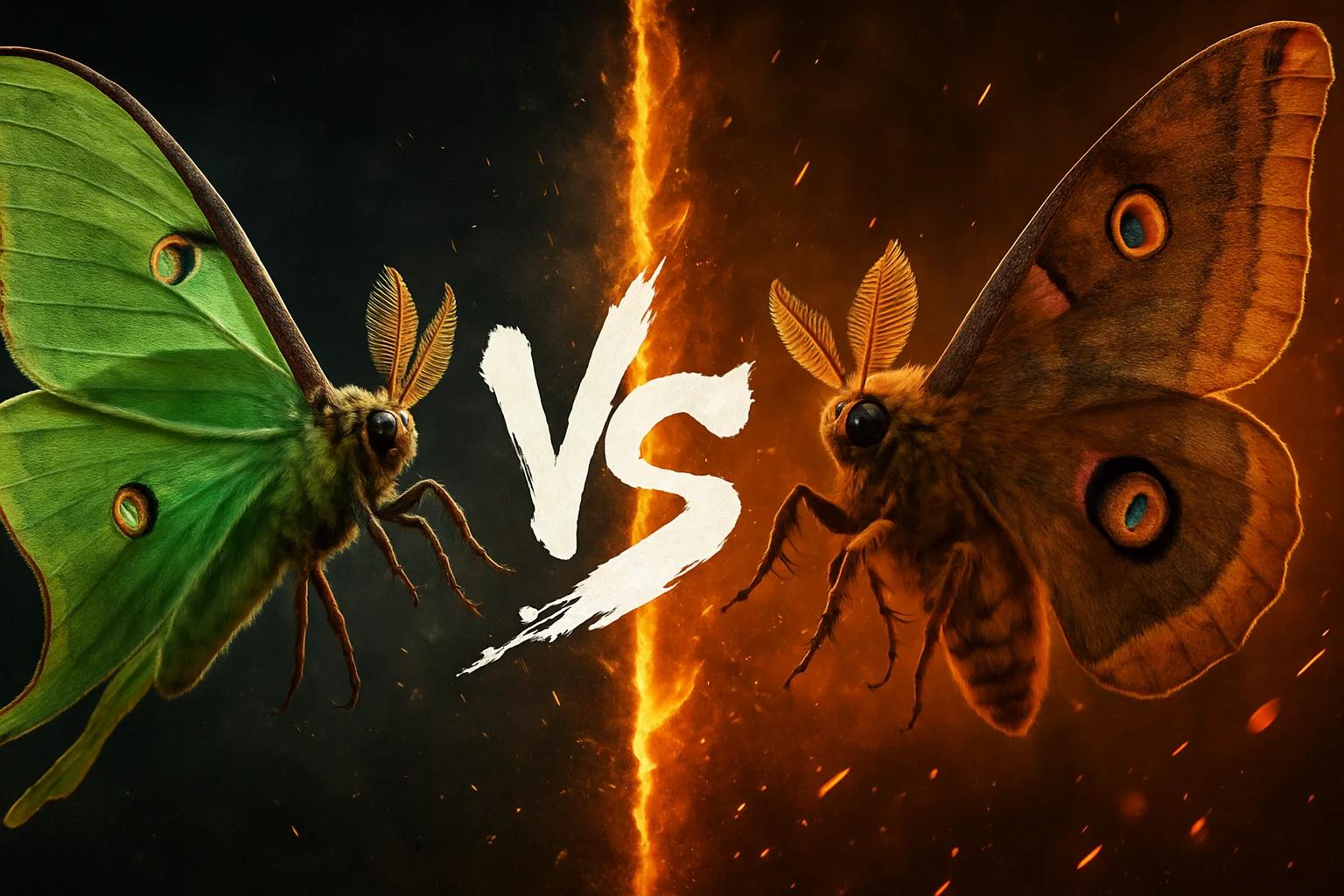
Luna Moth vs Polyphemus Moth: Who Actually Wins?
The Polyphemus moth wins. These two North American giant silk moths share forests, host trees, and a life plan built around a short adult stage without feeding. Neither hunts and neither is built to fight. So a 'battle' between them is really a contest of mass, presence, and defensive theater. Polyphemus usually carries the wider wingspan, often 10–15 cm against the Luna's roughly 8–11.5 cm, plus a stockier, furrier body. It also has one of the best startle weapons in the insect world: two huge hindwing eyespots it flashes when disturbed. In any shoving, fluttering, perch-holding encounter, that extra bulk and display give Polyphemus control. The Luna's real superpower is its long twisting tails, which scatter bat echolocation. That trait is about escaping a predator, not winning a head-to-head.
Read comparison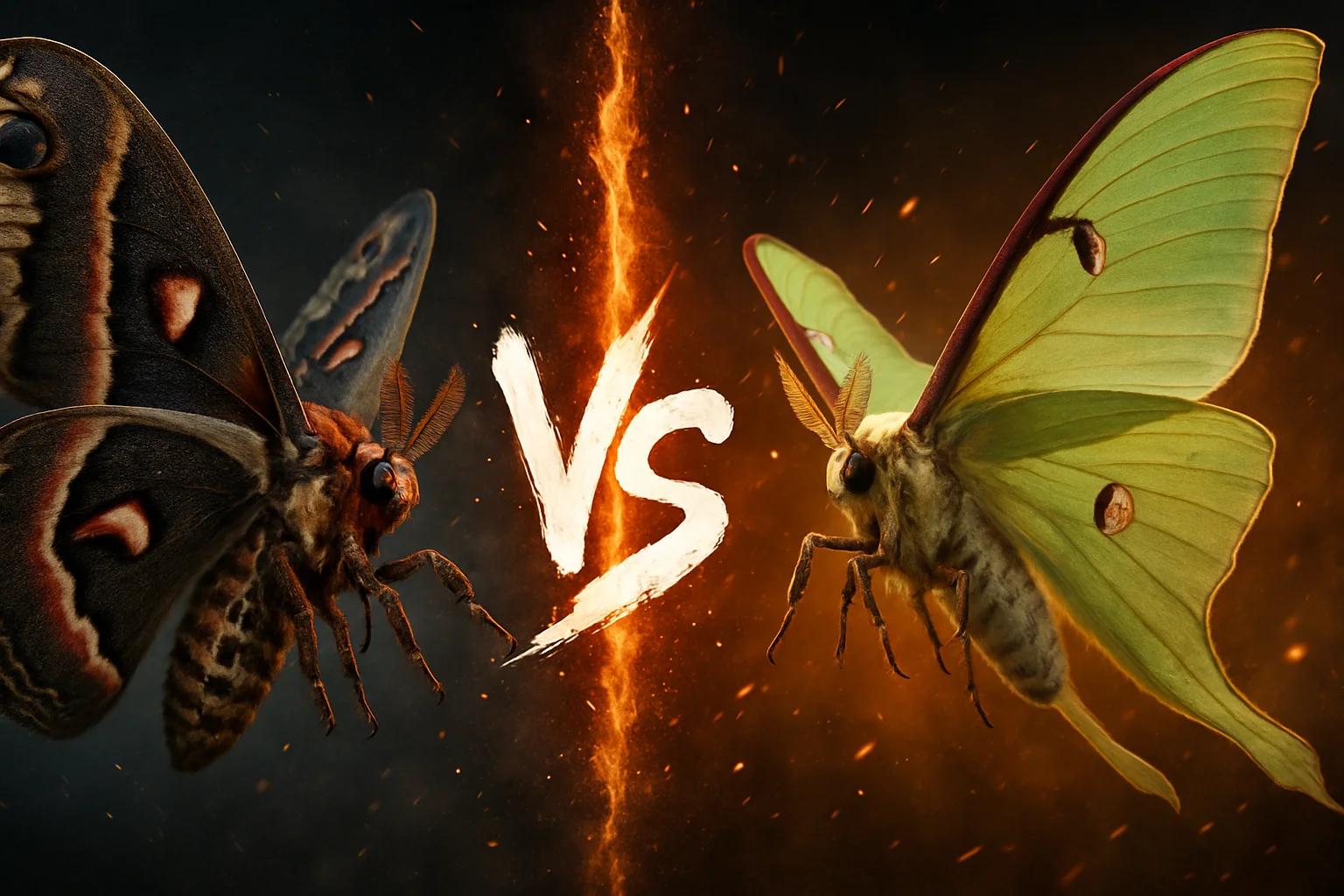
Cecropia Moth vs Luna Moth: Who Actually Wins?
The Cecropia Moth wins this matchup. As North America's largest native moth, with wingspans that can reach about 15 cm (roughly 6 inches) and a heavier, furrier body, Hyalophora cecropia brings more mass, sturdier wing structure and more bulk to any physical contest than the Luna Moth. Neither species can feed as an adult, because both have reduced, non-functional mouthparts, and neither is built to fight, so 'winning' really means displacing, outlasting or out-muscling the other in jostling contact. Actias luna is lighter and has fragile, trailing hindwing tails. Those tails are a brilliant anti-bat decoy, but they are a liability in physical contact. The cecropia's larger frame and robust wings give it the edge in nearly every realistic frame.
Read comparison
Water Monitor vs Polyphemus Moth: Who Actually Wins?
In the contest between the Water Monitor and the Polyphemus Moth, the Water Monitor decisively takes the lead due to its superior size, dominance, and predatory skills. While the Polyphemus Moth has its own unique adaptations, it simply cannot match the Water Monitor's physical prowess and ecological role as an apex predator.
Read comparison
Discussion
What do you think?
Share your reasoning with other readers. Be civil and stick to the animals.
Sign in to join the discussion.
Sign inNo comments yet. Start the conversation.