

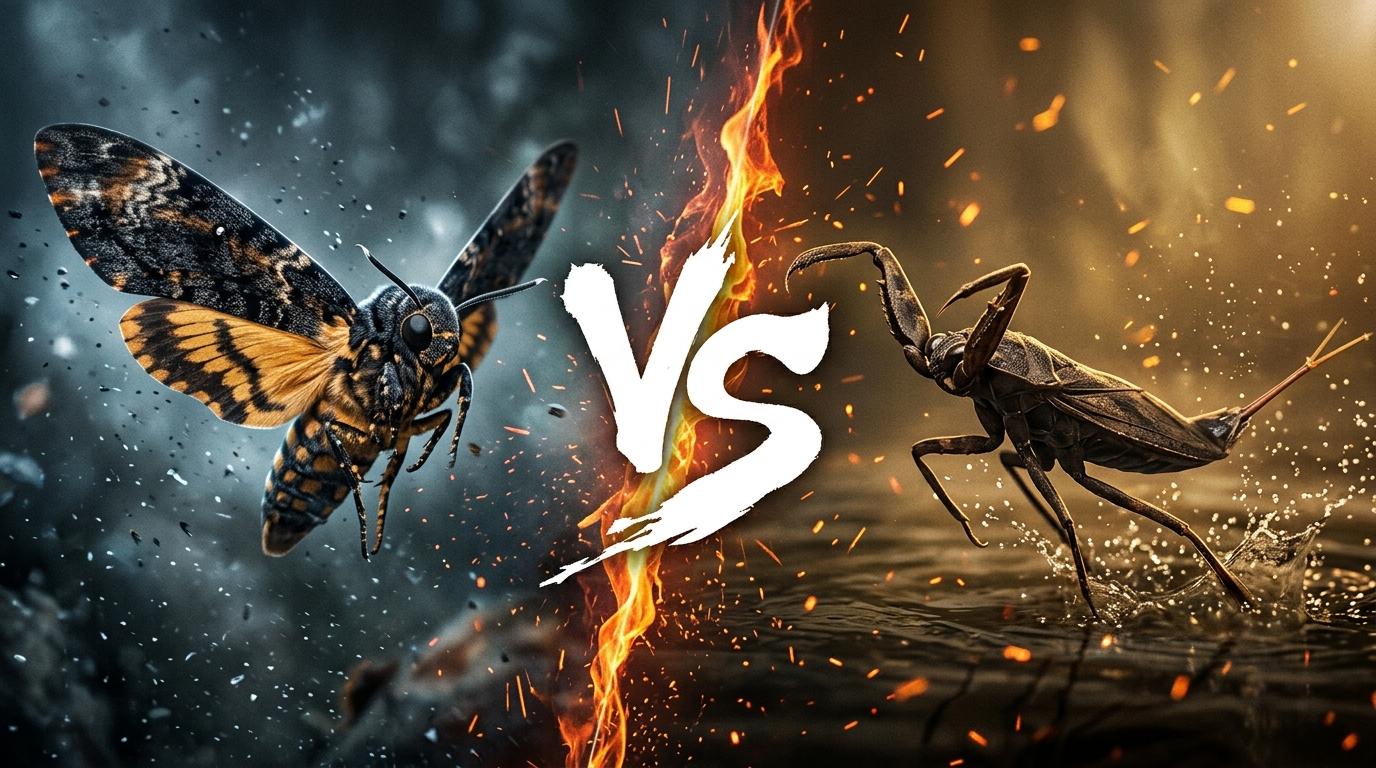
Death's-head Hawkmoth vs Water Scorpion: Who Actually Wins?
Death's-head Hawkmoth vs Water Scorpion: a biology-first look at size, armor, raptorial grip and habitat to settle who would win between Europe's largest hawkmoth and a pond-bottom ambush bug.
Death's-head Hawkmoth vs Water Scorpion
Matchup winner
Death's-head Hawkmoth
Quick verdict
Start with the direct answer, then use the structured comparison below to see what changes the outcome.
The Death's-head Hawkmoth wins overall. With a wingspan of roughly 9–13 cm and a heavy, armored body several times the mass of a 2 cm Water Scorpion, the moth simply outclasses Nepa cinerea in size, speed and escape options. It is not a predator, so it would never "beat" the bug in a hunting sense. But the Water Scorpion's raptorial forelegs and piercing beak are built for tadpoles, small fish and aquatic insects, not for subduing a thick-bodied, scale-covered, flight-capable moth that can squeak, thrash and leave. On land or in the air, the moth controls the encounter. Only in a submerged ambush does the little bug get a real chance.
Read the full explanation
Winner: Death's-head Hawkmoth. Its mass, robust body and strong flight dominate a 2 cm pond bug.
Neither animal hunts the other. The moth's advantage is survival and control, not killing.
The Water Scorpion is only dangerous in water, where its grasping forelegs and venomous saliva work best.
Out of water, the Water Scorpion is slow, clumsy and rarely flies.
Reader vote
Who do you think wins?
Pick a side — no account needed. Results update live.
No votes yet — be the first to call it.
Editorial note
Why people disagree
"Scorpion" sounds lethal. Nepa cinerea is actually a true bug with no stinger, and its rear tail is just a breathing snorkel.
Raw mass & frame
At insect scale, a size gap this large is nearly decisive. The bug cannot pin or envelop a body this big.
Mobility & escape
The moth can disengage whenever it wants. The bug can only wait.
Ambush control
The bug's one real edge is a surprise grab at the water's edge.
Read the full explanation +
The moth looks spooky but is harmless. Its skull marking and squeak are bluff, not weaponry.
Some readers score a fight by who can inflict damage. Others score it by who controls the encounter, and that second view clearly favors the moth.
Comparison FAQ
Short, direct answers to the next questions readers usually ask after the headline verdict.
Would a Death's-head Hawkmoth beat a Water Scorpion?+
Yes, in most realistic settings. It is far larger, tougher and able to fly away. The Water Scorpion only has a real chance if the moth is trapped in water.
Which is stronger, the Death's-head Hawkmoth or the Water Scorpion?+
The hawkmoth. Its body mass and flight muscles dwarf those of the 2 cm Water Scorpion, even though the bug has the better grasping forelegs for its size.
Why is the Water Scorpion still dangerous even though it loses?+
It is a true ambush predator. Its raptorial forelegs and piercing beak inject digestive saliva, and it can give humans a painful jab. Anything struggling in its pond is at real risk.
Does a Water Scorpion sting?+
No. Despite the name, its tail is a breathing siphon. It bites with a piercing beak instead.
Is the Death's-head Hawkmoth dangerous?+
No. It is harmless to people. Its squeak and skull marking are defensive bluffs.
Head-to-head species stats
These are the same core AnimalDex stat dimensions used on the dedicated animal pages, pulled side by side so the matchup is faster to scan.
Death's-head Hawkmoth
Tier DWater Scorpion
Tier BTrait-by-trait comparison
Only the categories that matter to this matchup are included. The goal is not filler stats, but the real design differences that change the result.
Heavy-bodied, ~9–13 cm wingspan
Raw mass & frame
Death's-head Hawkmoth
Flat, ~2 cm body
Raw mass & frame
Death's-head Hawkmoth
Fast, long-range migratory flier
Mobility & escape
Death's-head Hawkmoth
Slow walker and poor swimmer, rarely flies
Mobility & escape
Death's-head Hawkmoth
None, it is a nectar and honey feeder
Ambush control
Water Scorpion
Raptorial forelegs, camouflaged sit-and-wait style
Ambush control
Water Scorpion
Short stiff proboscis, kicking legs
Offensive tools
Water Scorpion
Piercing rostrum with digestive saliva
Offensive tools
Water Scorpion
Dense scales, tough thorax built to endure bee stings
Close-range durability
Death's-head Hawkmoth
Leathery but small exoskeleton
Close-range durability
Death's-head Hawkmoth
Loud squeak, skull pattern, flashing yellow abdomen
Bluff & deterrence
Death's-head Hawkmoth
Plays dead (thanatosis)
Bluff & deterrence
Death's-head Hawkmoth
How the verdict forms
Verdict timeline
01 · Raw mass & frame
Death's-head Hawkmoth
02 · Mobility & escape
Death's-head Hawkmoth
03 · Ambush control
Water Scorpion
04 · Offensive tools
Water Scorpion
05 · Close-range durability
Death's-head Hawkmoth
06 · Bluff & deterrence
Death's-head Hawkmoth
Change the conditions
Scenario breakdown
This is where shallow battle content usually fails. Terrain, spacing, timing, and engagement style can change the answer.
Scenario lean
Death's-head Hawkmoth
Verdict confidence
82%
Moth by a wide margin.
Out of water, Nepa cinerea is slow and exposed. The moth's size, kicking legs and instant flight make any grab attempt futile. Its role here is a simple loss of nothing.
AnimalDex field profiles
Explore these animals
Death's-head Hawkmoth
Acherontia atropos
woodland edge, scrub, and cultivated landscape
Water Scorpion
Nepa cinerea
pond, ditch, and quiet wetland
Systems Intelligence & Hidden Purpose
See the animals behind this comparison as engineered biological systems: what each one is built to do, where it gains leverage, and why the matchup changes by scenario.
Specialized Hardware
skull-like thorax marking, powerful night flight, and deep humming wingbeat give the Death's-head Hawkmoth a body plan tuned for its niche.
Systems Script
Death's-head Hawkmoths operate through woodland edge, scrub, and cultivated landscape. Their design links movement, feeding, shelter, and timing into one workable survival system.
Strategic Insight
Dense environments reward precision, patience, and the ability to read layered cover.
Specialized Hardware
raptorial forelegs, breathing tail siphon, and still-water ambush behavior give the Water Scorpion a body plan tuned for its niche.
Systems Script
Water Scorpions operate through pond, ditch, and quiet wetland. Their design links movement, feeding, shelter, and timing into one workable survival system.
Strategic Insight
Where water controls movement, position and timing often matter more than speed.
Final take
The Death's-head Hawkmoth is the clear overall winner. This is a story of scale and mobility beating a specialist weapon. The Water Scorpion is a capable ambush predator inside a narrow window: still water, small prey, and a target that comes to it.
Read the full explanation
Take away the water and give it a heavyweight, fast-flying opponent, and its toolkit runs out of answers. The moth wins three of the four scenarios. The only exception is the one where it has already lost its wings to the pond.
Collect both animals in AnimalDex
Track the species behind this matchup, compare their real traits, and build the rivalry into your AnimalDex collection.
Related comparisons
Continue with nearby matchups to compare more real-world animal traits without dropping into junky who-wins filler.
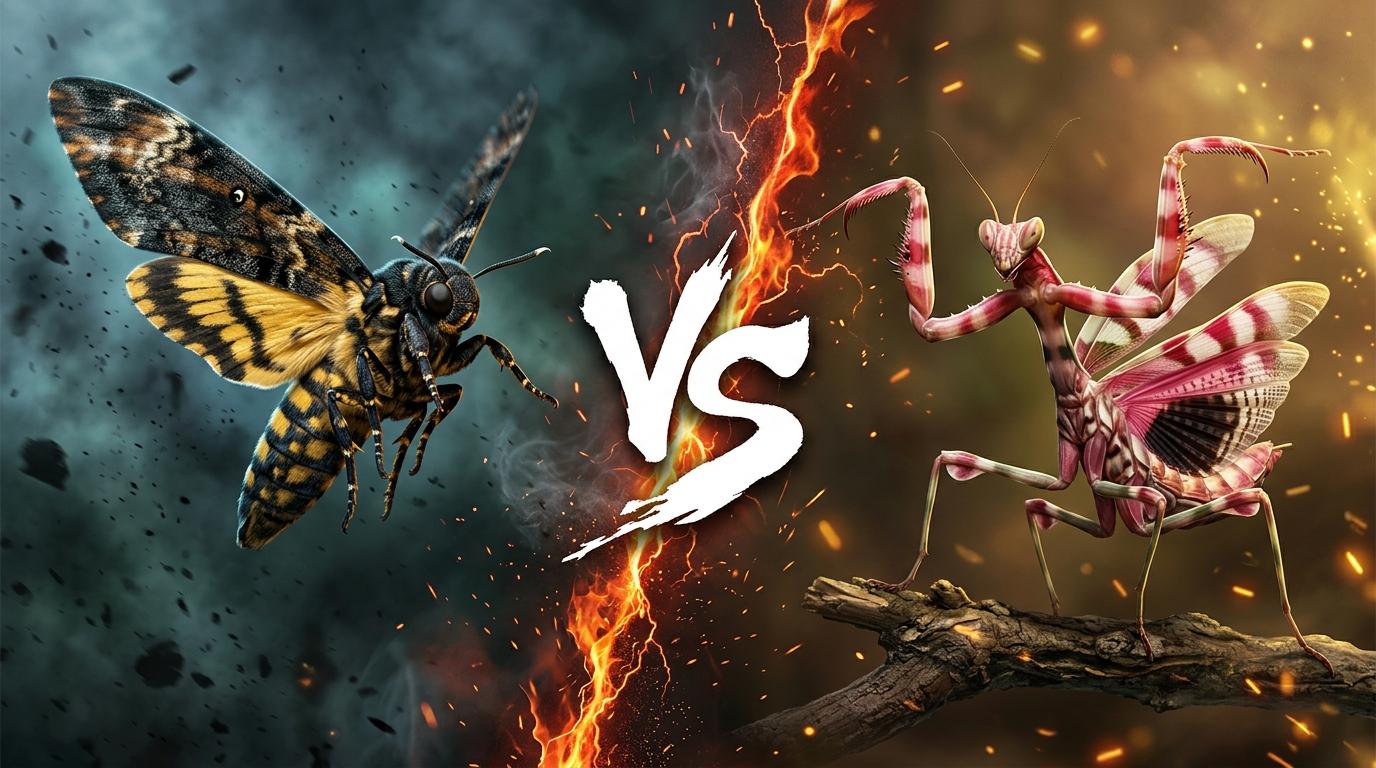
Death's-head Hawkmoth vs Devil's Flower Mantis: Who Actually Wins?
The Devil's Flower Mantis wins. It is a specialist predator built to catch flying insects. Its spined raptorial forelegs strike in a fraction of a second, its binocular vision judges distance precisely, and it hunts by sitting still until prey comes close. That is the exact setup in which a moth gets caught. The Death's-head Hawkmoth is one of the toughest moths alive. It has a heavy, scale-armored body, a thick cuticle that resists bee stings, a startling squeak, and fast, powerful flight. But it has no weapons at all. It feeds and fights by avoiding trouble, not by fighting back. If the moth stays airborne and keeps its distance, it simply leaves. Once it is within the mantis's strike range, its bulk and armor only slow the mantis down. They do not stop it. Mantids readily take large moths, and Idolomantis is big enough to handle one.
Read comparison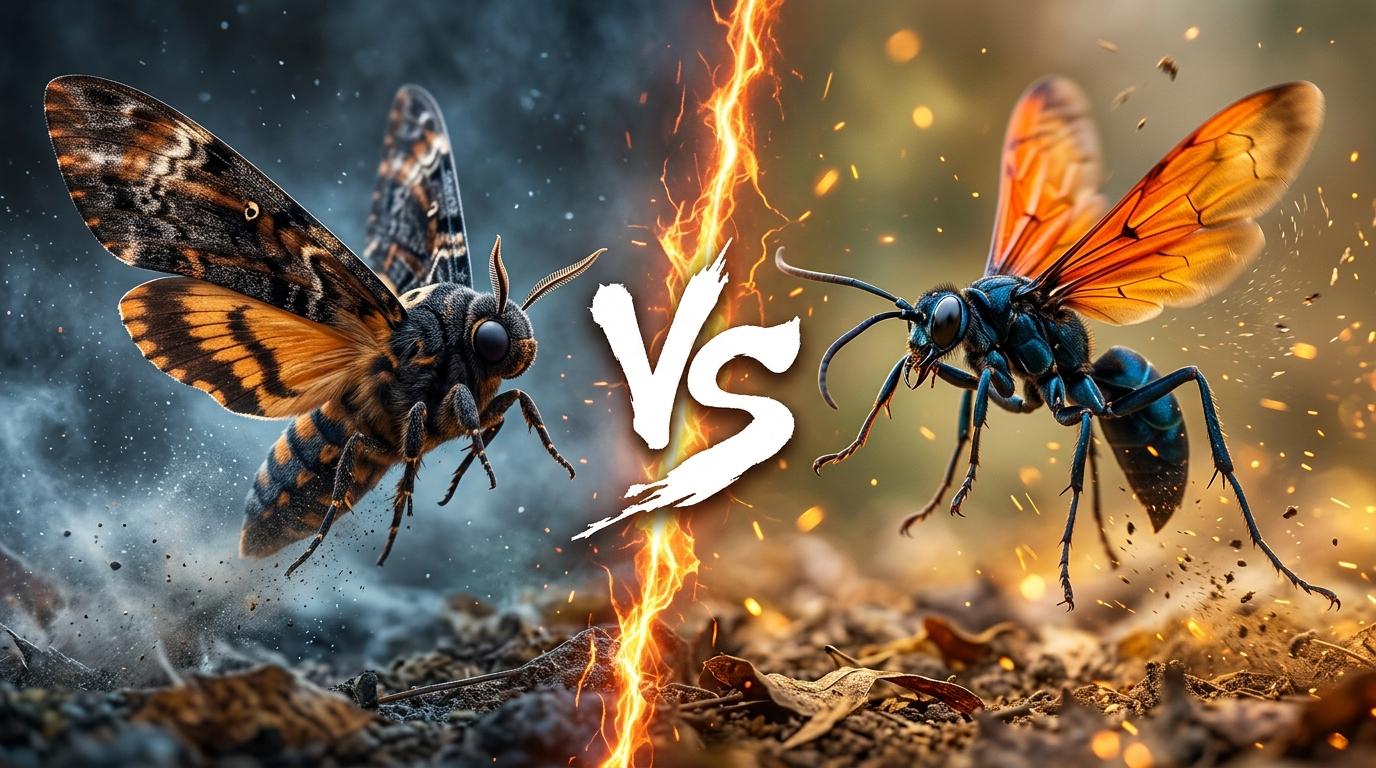
Death's-head Hawkmoth vs Tarantula Hawk Wasp: Who Actually Wins?
The Tarantula Hawk Wasp wins, and it isn't especially close in a forced fight. Pepsis grossa is a dedicated predator-grade insect. It carries a long sting, reportedly among the most painful insect stings known, along with strong mandibles, a hard warning-colored exoskeleton, and a hunting routine built around subduing tarantulas that outweigh it many times over. The Death's-head Hawkmoth is a remarkable animal, with a big body, powerful flight, a bee-scent disguise, and a squeak that startles attackers, but its entire kit is built for raiding, deceiving, and escaping rather than fighting. It has no sting and no real biting weapon, and its stout proboscis is a feeding tool. If the two lock up, the wasp's weapons decide it. The moth's best result is never letting the fight start.
Read comparison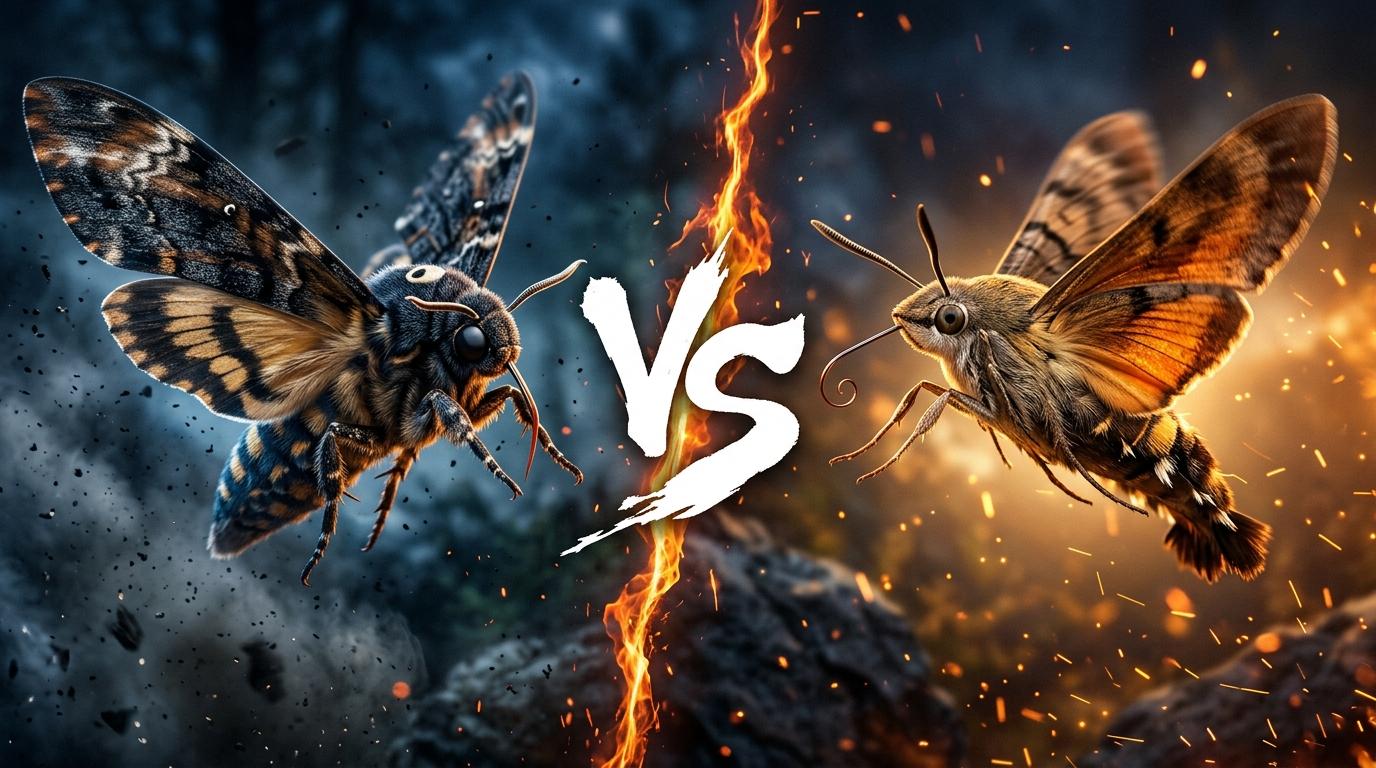
Death's-head Hawkmoth vs Hummingbird Hawk-Moth: Who Actually Wins?
The Death's-head Hawkmoth wins, and it is not especially close in a physical contest. It is Europe's heaviest moth, with a wingspan of roughly 9–13 cm and a thick, armored body. The Hummingbird Hawk-Moth is a 4–4.5 cm daytime hoverer built for precision rather than contact. When two insects of such different mass collide, push, or compete over a food source they can't simply hover away from, weight and toughness settle it. The Death's-head also has an unusual survival kit: a squeak it can produce, a short, stout proboscis able to pierce honeycomb cells, and chemical camouflage that lets it raid beehives. The Hummingbird Hawk-Moth's real edge is hover control and fast, darting flight. That lets it refuse a fight, but it gives it no way to win one.
Read comparison
Discussion
What do you think?
Share your reasoning with other readers. Be civil and stick to the animals.
Sign in to join the discussion.
Sign inNo comments yet. Start the conversation.