

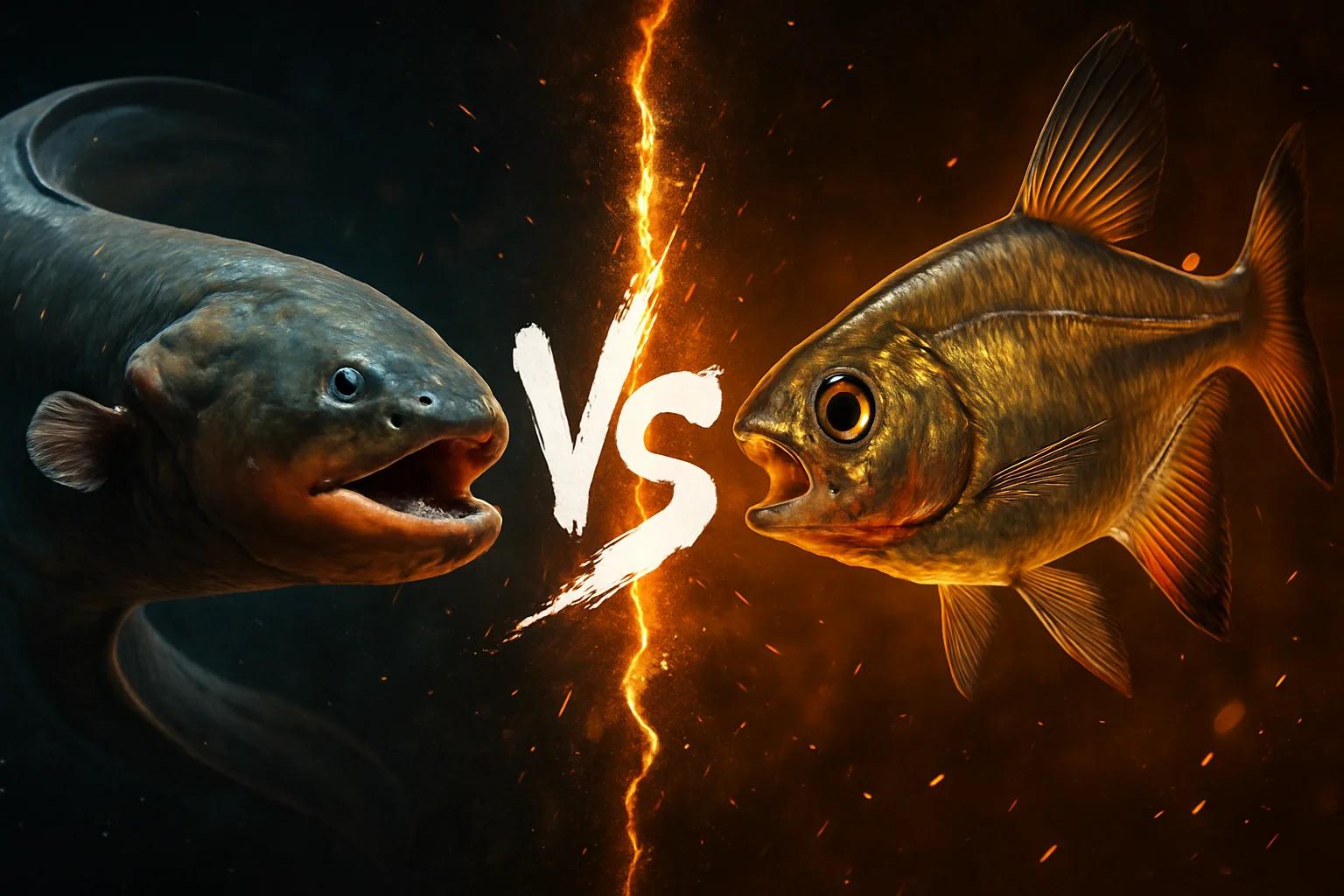
Electric Eel vs X-ray Tetra: Who Actually Wins?
Electric eel vs X-ray tetra: a biology-first look at size, shocks, sensing and schooling, and why the eel wins this Amazon matchup decisively.
Electric Eel vs X-ray Tetra
Matchup winner
Electric Eel
Quick verdict
Start with the direct answer, then use the structured comparison below to see what changes the outcome.
The electric eel wins, and it is not close. Electrophorus electricus can grow past 2 meters and discharge bursts of up to roughly 600–860 volts depending on species. It also uses weak electric pulses to sense prey in murky water. The X-ray tetra is a 4–5 cm schooling fish whose best tools are transparency, vigilance and group escape. In any direct encounter, the eel's high-voltage volleys can make small fish twitch and freeze, revealing and stunning them before a suction strike. The tetra's real win condition is not winning at all. It survives by never being singled out.
Read the full explanation
Electric eel wins overwhelmingly: it is hundreds of times heavier and armed with stunning high-voltage discharges.
The eel's electroreception defeats the tetra's visual camouflage in dark, muddy water.
The X-ray tetra survives through schooling, speed bursts and partial transparency, not through combat.
The tetra stays 'dangerous' only as a lesson in how numbers and alertness frustrate predators.
Reader vote
Who do you think wins?
Pick a side — no account needed. Results update live.
No votes yet — be the first to call it.
Editorial note
Why people disagree
Some readers assume a small, quick fish can simply dodge an eel. But an electric discharge travels through water far faster than any fin can move.
Explosive power
The eel's power can reach the tetra at a distance and disables it before the tetra can use its speed.
Sensory control in murky water
The eel 'sees' the tetra electrically, so the tetra's transparency counts for little.
Size and mass
The tetra fits in a single gulp. The eel needs only one successful strike.
Read the full explanation +
Electric eels are often mislabeled as true eels. They are actually knifefish, which leads people to underestimate how specialized their hunting system is.
Schooling looks like a defense that should work, and it often does in the wild. But schooling protects the group, not every individual in a head-to-head frame.
Comparison FAQ
Short, direct answers to the next questions readers usually ask after the headline verdict.
Would an electric eel beat an X-ray tetra?+
Yes, decisively. One discharge can stun the tetra, and the eel can swallow it whole.
Which is stronger, an electric eel or an X-ray tetra?+
The electric eel by a huge margin. It can weigh around 20 kg and produce hundreds of volts. The tetra weighs only a few grams.
Can an X-ray tetra escape an electric eel?+
Sometimes. In a large school with open water and early warning, many tetras escape. A lone tetra at close range rarely does.
Why is the X-ray tetra still considered 'dangerous' or successful?+
Not because it can hurt the eel. Its schooling, near-transparency and vigilance make it hard to target, which frustrates predators and keeps its numbers high.
Do electric eels actually eat tetras?+
Electric eels eat fish, and small characins like tetras are plausible prey. They are not a documented staple, though, and adult eels usually take larger fish.
Head-to-head species stats
These are the same core AnimalDex stat dimensions used on the dedicated animal pages, pulled side by side so the matchup is faster to scan.
Electric Eel
Tier CX-ray Tetra
Tier CTrait-by-trait comparison
Only the categories that matter to this matchup are included. The goal is not filler stats, but the real design differences that change the result.
High-voltage discharges of several hundred volts
Explosive power
Electric Eel
Brief fin-powered escape bursts
Explosive power
Electric Eel
Active electrolocation plus lateral line
Sensory control in murky water
Electric Eel
Vision and lateral line tuned for schooling
Sensory control in murky water
Electric Eel
Up to about 2.5 m and around 20 kg
Size and mass
Electric Eel
About 4–5 cm and a few grams
Size and mass
Electric Eel
Lurks in silt and roots; slow cruiser
Evasion and concealment
X-ray Tetra
Semi-transparent body, quick darting, school confusion
Evasion and concealment
X-ray Tetra
Thick, mucus-coated body; very tolerant of low oxygen
Close-range durability
Electric Eel
Fragile, tiny frame
Close-range durability
Electric Eel
Mostly solitary; occasional group hunts reported
Group leverage
X-ray Tetra
Shoals that dilute risk and spread vigilance
Group leverage
X-ray Tetra
How the verdict forms
Verdict timeline
01 · Explosive power
Electric Eel
02 · Sensory control in murky water
Electric Eel
03 · Size and mass
Electric Eel
04 · Evasion and concealment
X-ray Tetra
05 · Close-range durability
Electric Eel
06 · Group leverage
X-ray Tetra
Change the conditions
Scenario breakdown
This is where shallow battle content usually fails. Terrain, spacing, timing, and engagement style can change the answer.
Scenario lean
Electric Eel
Verdict confidence
82%
Eel wins quickly.
Among tangled roots and silt, vision fails but electrolocation does not. The eel tracks the tetra's body field, then fires a volley. The pulses trigger the tetra's motor nerves, so it twitches and gives away its position or stalls outright. A suction gulp ends the encounter. Cover hides the tetra from eyes, not from electric fields.
AnimalDex field profiles
Explore these animals
Electric Eel
Electrophorus electricus
slow river, floodplain, and muddy tropical freshwater
X-ray Tetra
Pristella maxillaris
slow river, floodplain pool, and planted freshwater habitat
Systems Intelligence & Hidden Purpose
See the animals behind this comparison as engineered biological systems: what each one is built to do, where it gains leverage, and why the matchup changes by scenario.
Specialized Hardware
electrical discharge system, air-breathing freshwater life, and murky-water hunting give the Electric Eel a body plan tuned for its niche.
Systems Script
Electric Eels operate through slow river, floodplain, and muddy tropical freshwater Their design links movement, shelter, and feeding into one workable survival system.
Strategic Insight
The best tool sometimes solves detection and action at once.
Specialized Hardware
semi-transparent silver body, yellow-and-black fin tips, and tight schooling freshwater movement give the X-ray Tetra a body plan tuned for its niche.
Systems Script
X-ray Tetras operate through slow river, floodplain pool, and planted freshwater habitat. Their design links movement, feeding, shelter, and timing into one workable survival system.
Strategic Insight
Where water controls movement, position and timing often matter more than speed.
Final take
The electric eel is the clear winner. It combines mass, an electric weapon that works at a distance, and a sensory system that cancels the tetra's main disguise. In any one-on-one frame, the tetra's survival depends entirely on never being detected, and electrolocation makes that nearly impossible at close range.
Read the full explanation
The X-ray tetra still deserves respect as a survival specialist. Its strategy was never to fight. Transparency, alertness and shoaling keep its population thriving in the same rivers as one of the most shocking predators on Earth. The eel wins the duel, and the tetra wins by not offering one.
Collect both animals in AnimalDex
Track the species behind this matchup, compare their real traits, and build the rivalry into your AnimalDex collection.
Related comparisons
Continue with nearby matchups to compare more real-world animal traits without dropping into junky who-wins filler.
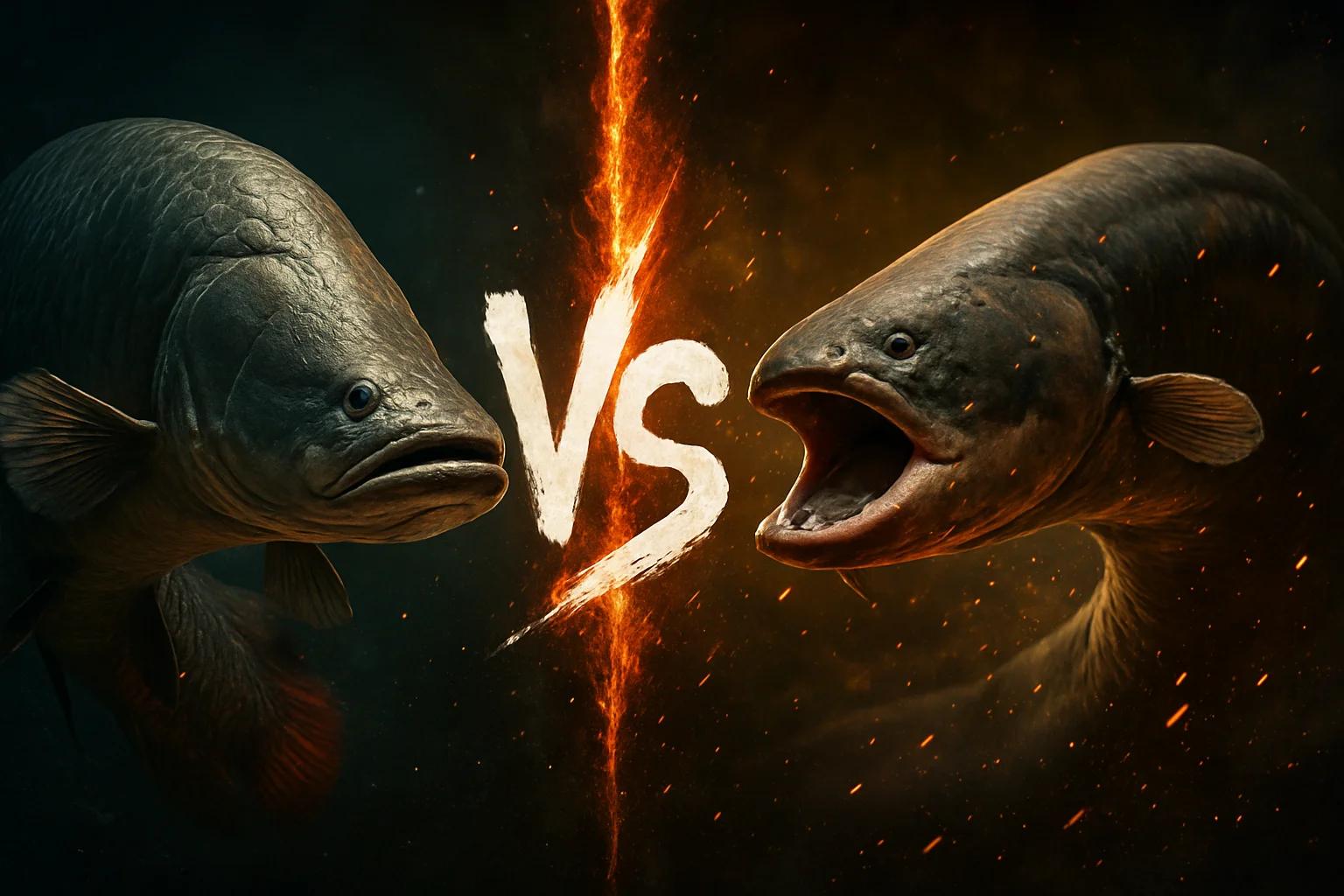
Arapaima vs Electric Eel: Who Actually Wins?
The electric eel wins. The arapaima is larger, more dominant, and protected by some of the toughest scales in freshwater, but those scales are built to stop piranha teeth, not current. Electrophorus electricus can release high-voltage pulses of roughly 600 volts or more through the surrounding water, and water carries the shock straight into a big fish's nervous system and muscles. The arapaima's size works against it here. Larger bodies are bigger targets and harder to pull away from the discharge zone. The eel can also curl its body to concentrate the shock. The arapaima only wins if it lands a decisive, crushing bite before the eel fires. Since the eel doesn't need to touch anything to strike, that window is narrow.
Read comparison
Electric Eel vs Silver Arowana: Who Actually Wins?
The electric eel wins this Amazon matchup, and it isn't especially close. Both fish can reach well over a meter, but the eel brings a weapon the arowana has no answer for. It can fire high-voltage discharges of up to roughly 600–860 volts in Electrophorus, and they can stun a fish-sized target almost instantly without any physical contact. The silver arowana is faster, more agile near the surface, and a superb ambush jumper. Still, its bony, mid-bodied frame offers no insulation, and its main escape route of leaping or darting only works if it isn't already within the eel's electric field. In murky, slow, oxygen-poor water where both species live, the eel's electroreception lets it sense the arowana long before it is seen. Its discharges end any encounter quickly. The arowana's realistic best outcome is avoidance, not victory.
Read comparison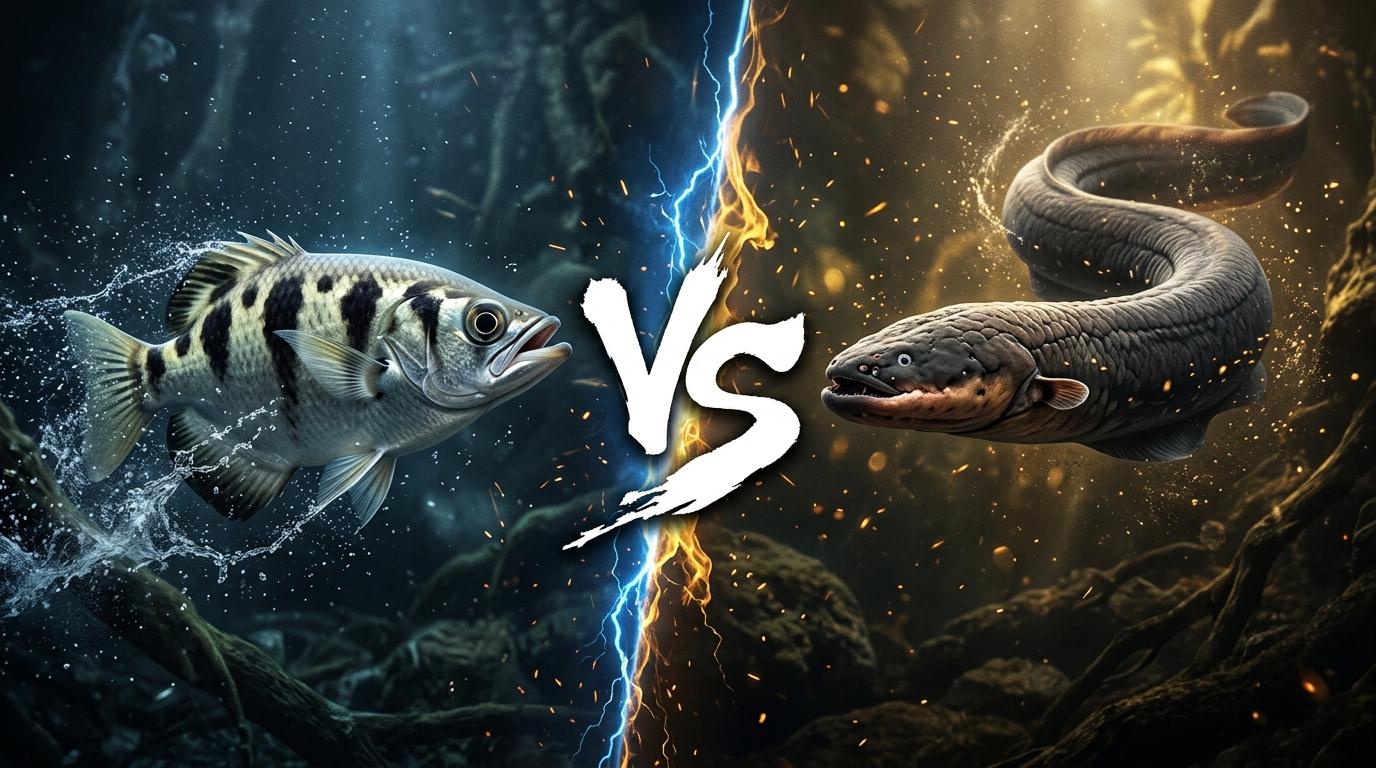
Archerfish vs Electric Eel: Who Actually Wins?
The electric eel wins, and it is not close. An adult Electrophorus can exceed 2 meters and fire discharges of several hundred volts, up to roughly 860 V in the most powerful species, through the water around it. A banded archerfish is a palm-sized, 20–30 cm brackish-water specialist whose famous weapon is a precision water jet built to knock insects off leaves above the surface. That jet is useless underwater against a submerged predator. The eel also carries a low-voltage electrolocation system that finds prey in murky water, plus high-voltage volleys that cause involuntary muscle spasms and immobilize fish nearby. Any encounter in shared water ends with the archerfish stunned and swallowed. The only thing that would spare it is the real-world fact that the two species rarely meet: archerfish live in Indo-Pacific mangroves and electric eels in South American freshwater.
Read comparison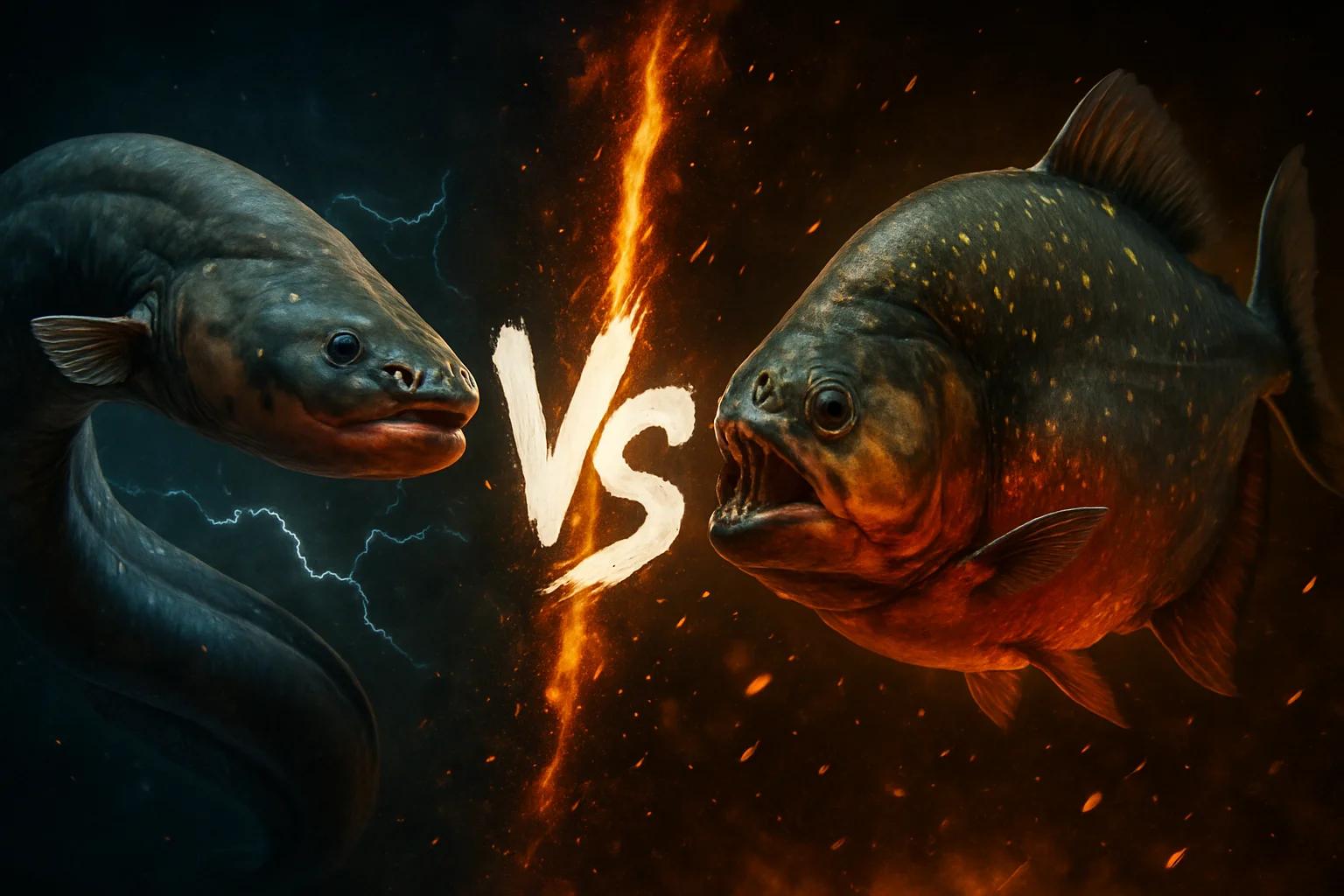
Electric Eel vs Red-bellied Piranha: Who Actually Wins?
The electric eel wins, and it is not especially close in a one-on-one. Adult Electrophorus electricus commonly reach 1.5–2 m and can discharge bursts of up to roughly 600–860 volts depending on species and size. A single red-bellied piranha is about 25–33 cm long. It carries a famously powerful bite for its size, but it has to make physical contact to use it. The eel never needs to touch anything. Its high-voltage pulses travel through the water and can cause involuntary muscle spasms and temporary paralysis in nearby fish, and the eel uses low-voltage electrolocation to track prey in murky water. A piranha that closes in gets shocked before it can bite. The piranha's real threat is its numbers. A large shoal raises the risk to a weakened or exposed eel, and some of the oldest, most dramatic accounts of piranhas swarming bigger animals involve exactly that scenario. Even so, the eel's discharges hit everything within range, which blunts a group attack too.
Read comparison
Discussion
What do you think?
Share your reasoning with other readers. Be civil and stick to the animals.
Sign in to join the discussion.
Sign inNo comments yet. Start the conversation.