

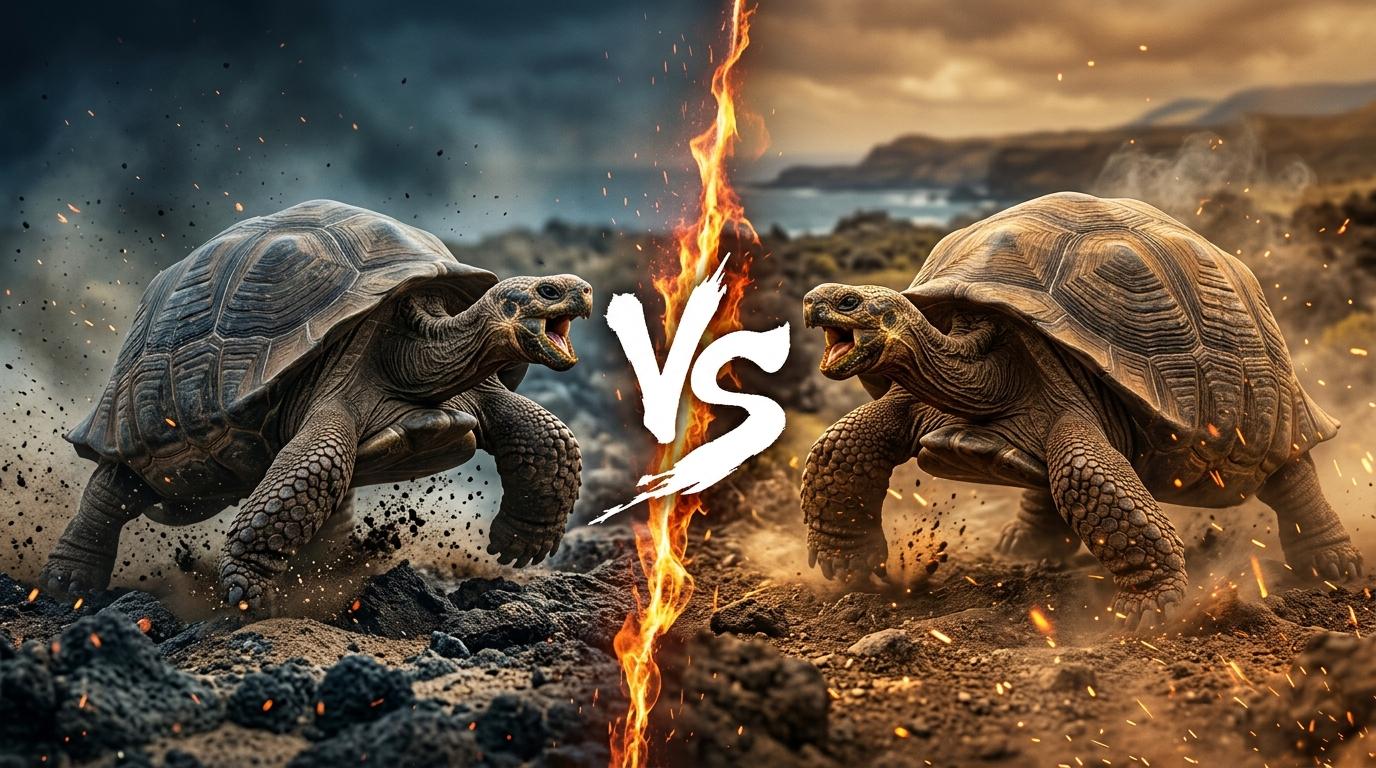
Galápagos Tortoise vs Giant Tortoise: Who Actually Wins?
Galápagos tortoise vs giant tortoise: a biology-first look at shell size, shoving power, and ritual dominance contests, and why the broader giant tortoise group gets the edge.
Galápagos Tortoise vs Giant Tortoise
Matchup winner
Giant Tortoise
Quick verdict
Start with the direct answer, then use the structured comparison below to see what changes the outcome.
The Giant Tortoise wins, but this matchup comes with a twist: the Galápagos tortoise is itself a giant tortoise. 'Giant Tortoise' here covers the whole heavyweight group, including the Chelonoidis species of the Galápagos and the Aldabra giant tortoise (Aldabrachelys gigantea). This page compares a typical Galápagos tortoise with the strongest contender that group can field. In the AnimalDex profile, the giant tortoise group scores higher on dominance (85 vs 54), size (80 vs 58), and speed (40 vs 9). Tortoise contests are not brawls. They are slow rituals of rising tall, gaping, and shoving, decided by height, mass, and footing. A group that can always send its biggest, most assertive male will usually out-reach and out-push a single average Galápagos individual. The upset path is real, though. A large domed Galápagos male is among the heaviest tortoises alive and can match anything in the group.
Read the full explanation
Overall winner: Giant Tortoise (the group), at modest confidence.
Tortoise 'fights' are dominance contests: the taller neck and the heavier shove usually win.
The giant tortoise group includes the biggest Galápagos males, so its best fighter is at least as big as any Galápagos rival.
A large domed Galápagos male is the one real upset threat.
Reader vote
Who do you think wins?
Pick a side — no account needed. Results update live.
No votes yet — be the first to call it.
Editorial note
Why people disagree
Many readers don't realize the Galápagos tortoise is a giant tortoise. The comparison is really one species against the whole group's best.
Shell-and-body mass
Mass anchors a shoving contest. The side that can field its heaviest individual sets the ceiling.
Height display reach
In ritual contests, the tortoise that rises higher often wins without any contact.
Ramming and shoving power
When display doesn't settle it, the contest turns into a slow-motion pushing match.
Read the full explanation +
The largest Galápagos males can outweigh Aldabra tortoises, so fans of the Galápagos side say 'giant tortoise' undersells them.
There is no real kill outcome. 'Winning' means making the rival lower its head and walk away, which some readers find anticlimactic.
Comparison FAQ
Short, direct answers to the next questions readers usually ask after the headline verdict.
Would a Galápagos tortoise beat a giant tortoise?+
Usually not. The giant tortoise group can field a larger, more dominant individual, which tends to win the height display and the shoving match. A large Galápagos male can still win.
Which is stronger, the Galápagos tortoise or the giant tortoise?+
The group's top individuals are stronger in shoving power and dominance. Individually, the biggest Galápagos males rank among the strongest tortoises alive.
Is the Galápagos tortoise a giant tortoise?+
Yes. Galápagos tortoises are giant tortoises, so this page compares one species with the whole group's strongest contender, which includes Aldabra giant tortoises.
How do giant tortoises fight?+
They face off, stretch their necks upward, and open their mouths. The taller animal often wins on the spot. If not, they ram and shove until one retreats.
Why does the losing tortoise stay dangerous?+
Its armor means it is rarely hurt. A braced, heavy tortoise can still shove hard enough to throw a rival off balance or tip it over on rough ground, and that can be serious.
Head-to-head species stats
These are the same core AnimalDex stat dimensions used on the dedicated animal pages, pulled side by side so the matchup is faster to scan.
Galápagos Tortoise
Tier CGiant Tortoise
Tier ATrait-by-trait comparison
Only the categories that matter to this matchup are included. The goal is not filler stats, but the real design differences that change the result.
Heavy; large males are among the biggest of all tortoises
Shell-and-body mass
Giant Tortoise
Group's top end, from heavy domed males to robust Aldabra males
Shell-and-body mass
Giant Tortoise
Strong; saddleback forms lift the neck high
Height display reach
Giant Tortoise
Can field saddleback reach or a tall Aldabra posture
Height display reach
Giant Tortoise
Solid, slow, steady push
Ramming and shoving power
Giant Tortoise
Higher dominance profile, more assertive pushing
Ramming and shoving power
Giant Tortoise
Thick armored carapace; can retract
Close-range durability
Galápagos Tortoise
Equally armored; broad, sturdy shell
Close-range durability
Galápagos Tortoise
Elite; can survive long periods without food or water
Low-energy staying power
Galápagos Tortoise
Also elite across the group
Low-energy staying power
Galápagos Tortoise
How the verdict forms
Verdict timeline
01 · Shell-and-body mass
Giant Tortoise
02 · Height display reach
Giant Tortoise
03 · Ramming and shoving power
Giant Tortoise
04 · Close-range durability
Galápagos Tortoise
05 · Low-energy staying power
Galápagos Tortoise
Change the conditions
Scenario breakdown
This is where shallow battle content usually fails. Terrain, spacing, timing, and engagement style can change the answer.
Scenario lean
Galápagos Tortoise
Verdict confidence
82%
Brush favors the stubborn, well-placed Galápagos tortoise.
Dense scrub limits approach angles and footing. A Galápagos tortoise wedged into vegetation is hard to shove or tip. Display height matters less when necks are screened by branches, so the steadier, braced animal holds its ground.
AnimalDex field profiles
Explore these animals
Galápagos Tortoise
—
Habitat details are not published on a dedicated AnimalDex species page yet.
Species guide coming soon.
Giant Tortoise
Chelonoidis spp. and Aldabrachelys gigantea
island scrub, grassland, dry lowland, and coastal woodland
Systems Intelligence & Hidden Purpose
See the animals behind this comparison as engineered biological systems: what each one is built to do, where it gains leverage, and why the matchup changes by scenario.
Specialized Hardware
Domed or saddleback carapace adapted to island vegetation, with a long reaching neck, powerful columnar legs, and slow metabolism that allows long fasts.
Systems Script
Disperses seeds over long distances, opens trails through scrub, and shapes plant communities across the Galápagos islands.
Strategic Insight
Slow, consistent work done over many decades can reshape an entire landscape.
Specialized Hardware
A range of massive armored builds across the group, including Aldabra's broad shell, combined with strong pushing legs and assertive dominance displays.
Systems Script
Grazes and browses heavily enough to maintain open 'tortoise turf,' knock back shrubs, and recycle nutrients on isolated islands.
Strategic Insight
Being big and persistent lets an animal set the rules of its environment without needing speed.
Final take
The Giant Tortoise takes the overall win, mainly because the matchup pits one species against the best its whole group can offer. Since the group includes the heaviest Galápagos males and the sturdy Aldabra tortoise, its champion matches or exceeds an average Galápagos tortoise in mass and reach. Mass and reach are what decide tortoise dominance contests.
Read the full explanation
The Galápagos tortoise is no pushover. Its armor, patience, and high-reaching saddleback forms make it almost impossible to beat decisively, and a big domed male can turn this contest into a coin flip. These animals don't destroy each other. They settle rank, and then one of them walks slowly away.
Collect both animals in AnimalDex
Track the species behind this matchup, compare their real traits, and build the rivalry into your AnimalDex collection.
Related comparisons
Continue with nearby matchups to compare more real-world animal traits without dropping into junky who-wins filler.
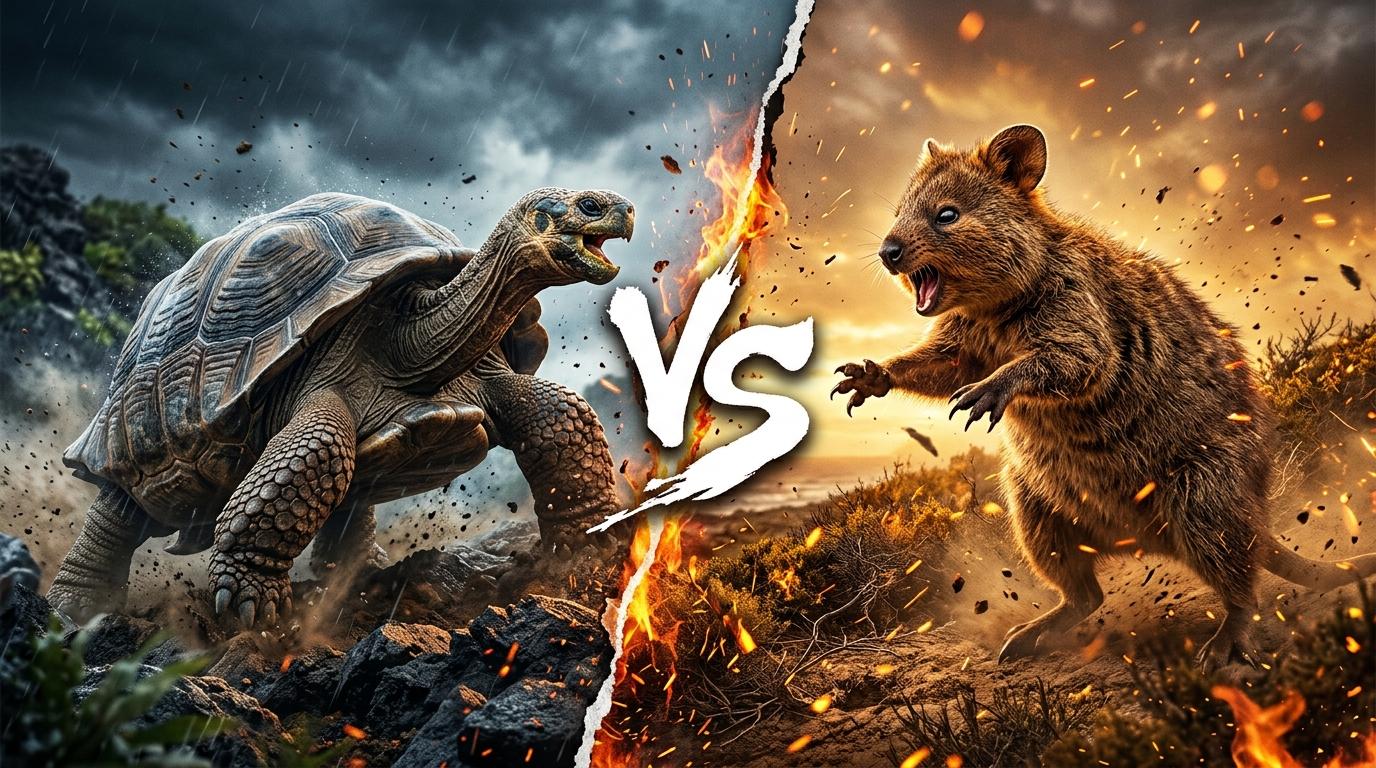
Giant Tortoise vs Quokka: Who Actually Wins?
The giant tortoise wins, and it is not close in any contact scenario. A Galápagos or Aldabra giant tortoise can top 200–300 kg behind a domed bony carapace. A quokka weighs about 2.5–5 kg and has no weapon that can get through that shell. The quokka's only real tools are speed, hopping agility and the instinct to bolt, so it can avoid losing but cannot win. When the two meet over food, a path or shade, the tortoise simply walks forward. Its sheer bulk, its armor and its habit of shoving rivals settle the matter without any need for aggression.
Read comparison
Boelen's Python vs Galápagos Tortoise: Who Actually Wins?
The Galápagos Tortoise wins, and it is not especially close. A Boelen's Python is a strong, glossy-black highland constrictor from New Guinea that can reach roughly 2.5 meters, but its whole kill system depends on wrapping prey, restricting circulation and breathing, and swallowing it whole. A Galápagos Tortoise can exceed 250 kg and is sealed inside a domed bony shell, so that system has nothing to work on. The python cannot meaningfully squeeze a shell, cannot pin an animal that outweighs it many times over, and cannot swallow something the size of a small armchair. The tortoise has no real hunting weapons either, but it does not need them. Its armor, mass, and patience make it untouchable here. In a contest of control and survival, the reptile that cannot be hurt beats the reptile that cannot finish.
Read comparison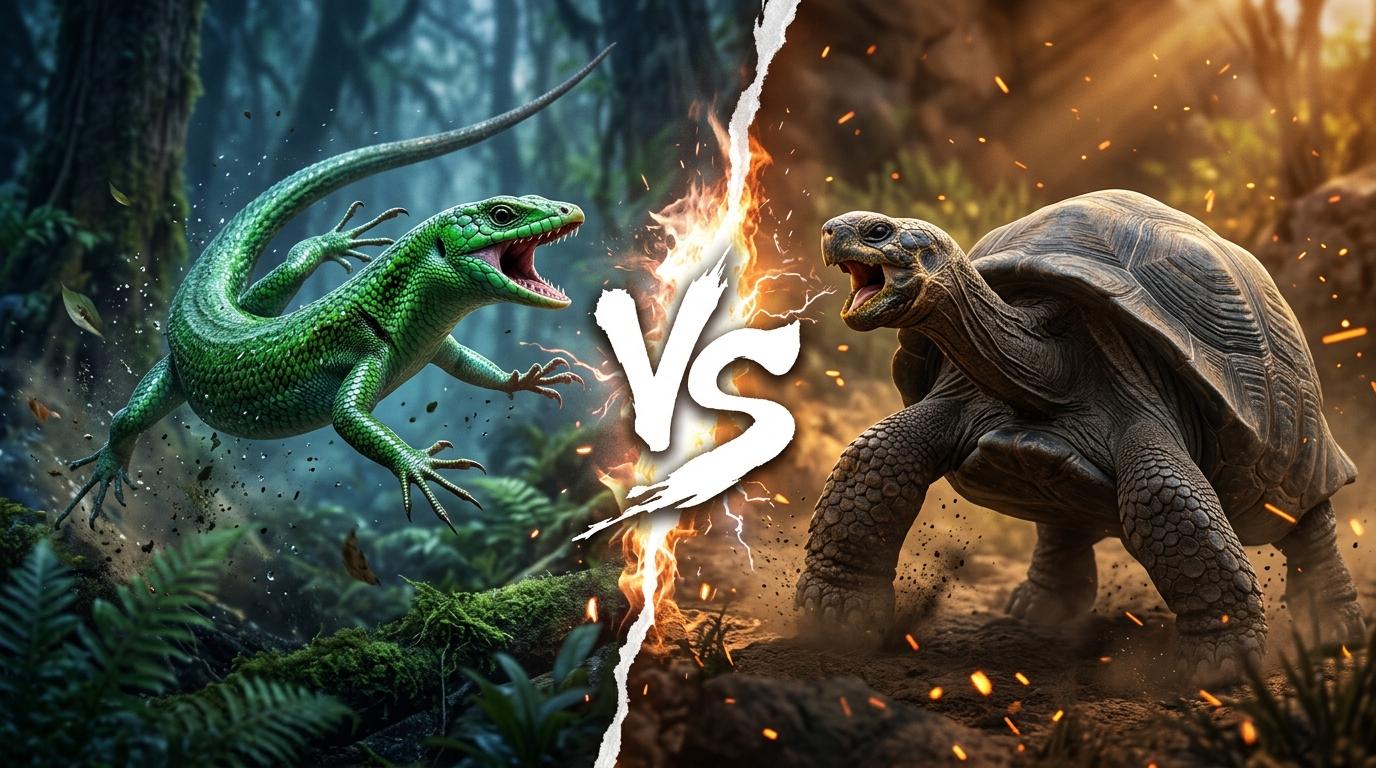
Emerald Tree Skink vs Giant Tortoise: Who Actually Wins?
The giant tortoise wins, and it is not close. A Galápagos or Aldabra giant tortoise can weigh 150–300+ kg and carries a fused bony shell, while the emerald tree skink is a slender arboreal lizard around 20–25 cm long, most of it tail, weighing a few dozen grams. The skink's bite cannot damage tortoise armor, and the tortoise's sheer mass, crushing beak, and pushing power can injure the skink by accident. The skink's real strength is not fighting at all. It is a fast, agile climber that would simply leave. In any frame where the two are forced to contest space, the tortoise holds the ground. In any frame where escape is allowed, the skink survives but does not win.
Read comparison
Discussion
What do you think?
Share your reasoning with other readers. Be civil and stick to the animals.
Sign in to join the discussion.
Sign inNo comments yet. Start the conversation.