


Gopher Tortoise vs Ornate Box Turtle: Who Actually Wins?
Gopher tortoise vs ornate box turtle: a biology-first breakdown of size, shell armor, shoving power, burrowing and behavior to decide who wins.
Gopher Tortoise vs Ornate Box Turtle
Matchup winner
Gopher Tortoise
Quick verdict
Start with the direct answer, then use the structured comparison below to see what changes the outcome.
The gopher tortoise wins this clash. Adults run about 23–28 cm in shell length and often weigh 3–4+ kg. A large ornate box turtle is around 10–15 cm and well under 1 kg. That gap decides almost everything. Gopher tortoises are built for shoving. Their front limbs are flattened and shovel-like, and males carry a forked gular projection under the chin that they use to ram and flip rivals. The ornate box turtle is quicker and more willing to bite. Its trump card is total retreat: a hinged plastron lets it seal itself shut like a locked box. That makes it nearly impossible for the tortoise to hurt it, but it cannot push back. In any contest over space, a burrow, or a food patch, the tortoise simply bulldozes, tips, or displaces the smaller turtle. The box turtle's realistic best outcome is to survive intact, not to win.
Read the full explanation
Gopher Tortoise wins, mainly because it has several times the body mass and is built for ramming.
Male gopher tortoises use a gular 'battering ram' to shove and overturn rivals, and the box turtle has no equivalent tool.
The ornate box turtle can close its hinged shell completely, so it survives almost every encounter but rarely controls one.
The box turtle is slightly faster and more aggressive with its beak, which matters only in brief, open-ground scuffles.
Reader vote
Who do you think wins?
Pick a side — no account needed. Results update live.
No votes yet — be the first to call it.
Editorial note
Why people disagree
Some readers count 'can't be hurt' as winning. The box turtle's sealed shell is superb defense, but defense alone doesn't take territory.
Body mass & frame
In shell-to-shell shoving contests, the heavier animal almost always controls position.
Ramming leverage
Flipping or pushing an opponent is how tortoises actually win disputes.
Lockdown defense
The box turtle is extraordinarily hard to injure, which is why it rarely loses badly.
Read the full explanation +
Box turtles are the scrappier biters, and that feisty temperament looks more dominant than it really is against a 4 kg opponent.
Both are slow, armored reptiles, so people assume a stalemate. In practice, mass and shoving leverage settle reptile disputes.
Comparison FAQ
Short, direct answers to the next questions readers usually ask after the headline verdict.
Would a gopher tortoise beat an ornate box turtle in a fight?+
Yes. The gopher tortoise would push, ram, or flip the much smaller box turtle and control the space. Serious injury is unlikely because the box turtle seals itself inside its shell.
Which is stronger, a gopher tortoise or an ornate box turtle?+
The gopher tortoise is far stronger. Its weight and digging forelimbs give it shoving power the box turtle can't match.
Why is the ornate box turtle still dangerous or hard to beat?+
Its hinged plastron closes completely, which makes it nearly impervious to the tortoise. It's also quicker and willing to bite with a sharp beak, and that lets it harass the tortoise, escape, or win races to food.
Do they live in the same habitat?+
Mostly not. Gopher tortoises live in the sandy longleaf pine regions of the southeastern US. Ornate box turtles live in the Great Plains and prairies. Wild encounters are rare to nonexistent.
Is either animal aggressive?+
Male gopher tortoises ram each other during breeding season. Ornate box turtles are generally more snappy, but neither seeks fights with other species.
Head-to-head species stats
These are the same core AnimalDex stat dimensions used on the dedicated animal pages, pulled side by side so the matchup is faster to scan.
Gopher Tortoise
Tier COrnate Box Turtle
Tier BTrait-by-trait comparison
Only the categories that matter to this matchup are included. The goal is not filler stats, but the real design differences that change the result.
3–4+ kg, domed shell up to ~28+ cm
Body mass & frame
Gopher Tortoise
Under 1 kg, shell ~10–15 cm
Body mass & frame
Gopher Tortoise
Forked gular projection, powerful forelimbs
Ramming leverage
Gopher Tortoise
No ramming tool, light frame
Ramming leverage
Gopher Tortoise
Thick shell, but no hinge; limbs tuck behind scaled forelegs
Lockdown defense
Ornate Box Turtle
Hinged plastron seals the shell completely
Lockdown defense
Ornate Box Turtle
Steady, plodding bulldozer
Burst mobility
Ornate Box Turtle
Noticeably quicker, more agile walker
Burst mobility
Ornate Box Turtle
Generally docile, avoids biting
Bite & temperament
Ornate Box Turtle
Feisty, will snap with a sharp beak
Bite & temperament
Ornate Box Turtle
Digs burrows up to ~10 m long, defends them
Ground & burrow control
Gopher Tortoise
Shallow burrower, often borrows existing holes
Ground & burrow control
Gopher Tortoise
How the verdict forms
Verdict timeline
01 · Body mass & frame
Gopher Tortoise
02 · Ramming leverage
Gopher Tortoise
03 · Lockdown defense
Ornate Box Turtle
04 · Burst mobility
Ornate Box Turtle
05 · Bite & temperament
Ornate Box Turtle
06 · Ground & burrow control
Gopher Tortoise
Change the conditions
Scenario breakdown
This is where shallow battle content usually fails. Terrain, spacing, timing, and engagement style can change the answer.
Scenario lean
Gopher Tortoise
Verdict confidence
82%
The tortoise pushes the box turtle out of the shelter spot.
In tight cover, maneuvering room disappears, which cancels the box turtle's agility. The tortoise's broad, heavy shell and shovel forelimbs let it wedge forward and displace whatever occupies the spot. The box turtle closes up and gets nudged aside.
AnimalDex field profiles
Explore these animals
Gopher Tortoise
Gopherus polyphemus
pine flatwood, scrub, and sandy longleaf habitat
Ornate Box Turtle
Terrapene ornata
prairie, scrub, and sandy grassland
Systems Intelligence & Hidden Purpose
See the animals behind this comparison as engineered biological systems: what each one is built to do, where it gains leverage, and why the matchup changes by scenario.
Specialized Hardware
shovel-like forelimbs, deep burrow-building shell body, and dry sandy-ground grazing give the Gopher Tortoise a body plan tuned for its niche.
Systems Script
Gopher Tortoises operate through pine flatwood, scrub, and sandy longleaf habitat. Their design links movement, feeding, shelter, and timing into one workable survival system.
Strategic Insight
Good design turns a difficult habitat into usable ground.
Specialized Hardware
hinged domed shell, yellow starburst markings, and dry grassland wandering give the Ornate Box Turtle a body plan tuned for its niche.
Systems Script
Ornate Box Turtles operate through prairie, scrub, and sandy grassland. Their design links movement, feeding, shelter, and timing into one workable survival system.
Strategic Insight
Open landscapes reward early detection, clean movement, and fast decisions once the space opens up.
Final take
Overall, the Gopher Tortoise wins. This is a contest between two armored reptiles, and among armored reptiles disputes are settled by mass and leverage. The tortoise has several times the weight, a purpose-built ramming projection, and forelimbs that move sand for a living.
Read the full explanation
The Ornate Box Turtle still earns respect. Its hinged shell is one of the best defensive designs in North American reptiles, so the tortoise can beat it without truly harming it. It wins races for food and survives almost anything. It just can't hold ground against a living bulldozer.
Collect both animals in AnimalDex
Track the species behind this matchup, compare their real traits, and build the rivalry into your AnimalDex collection.
Related comparisons
Continue with nearby matchups to compare more real-world animal traits without dropping into junky who-wins filler.
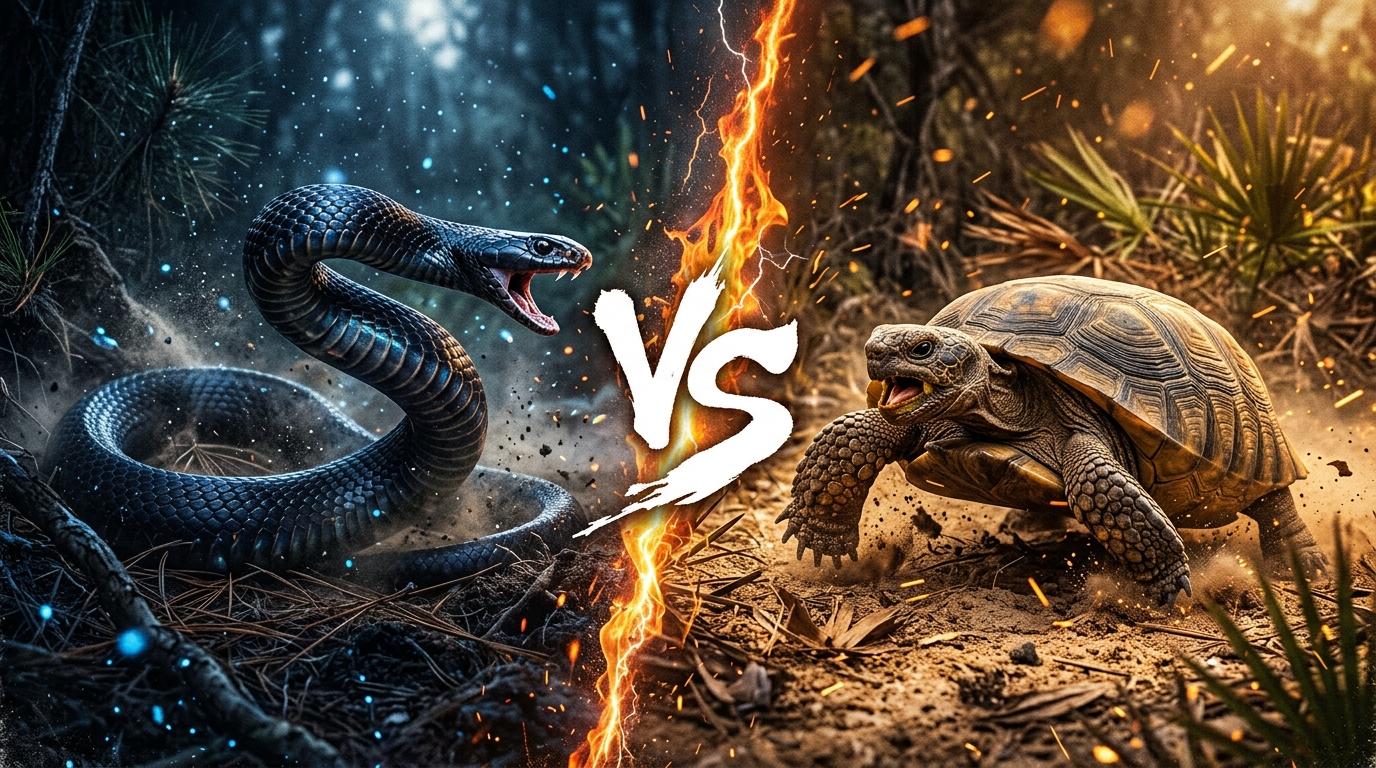
Eastern Indigo Snake vs Gopher Tortoise: Who Actually Wins?
The gopher tortoise wins this matchup. The eastern indigo snake is faster, longer, and a bold predator that overpowers rattlesnakes with sheer jaw pressure and body weight. But it has no venom, does not truly constrict, and has no way to break or pry open the high-domed shell of an adult tortoise. A grown gopher tortoise only has to pull in its head, fold its armored, shovel-like forelimbs across the opening, and wait. The snake gets nothing for its effort and eventually leaves. The snake's real edge exists only against hatchlings and very small juveniles, which indigos do occasionally eat. In any fair adult-versus-adult encounter, the tortoise's defense goes unanswered. In practice, the snake usually ends up as a tenant in the tortoise's burrow, not its conqueror.
Read comparison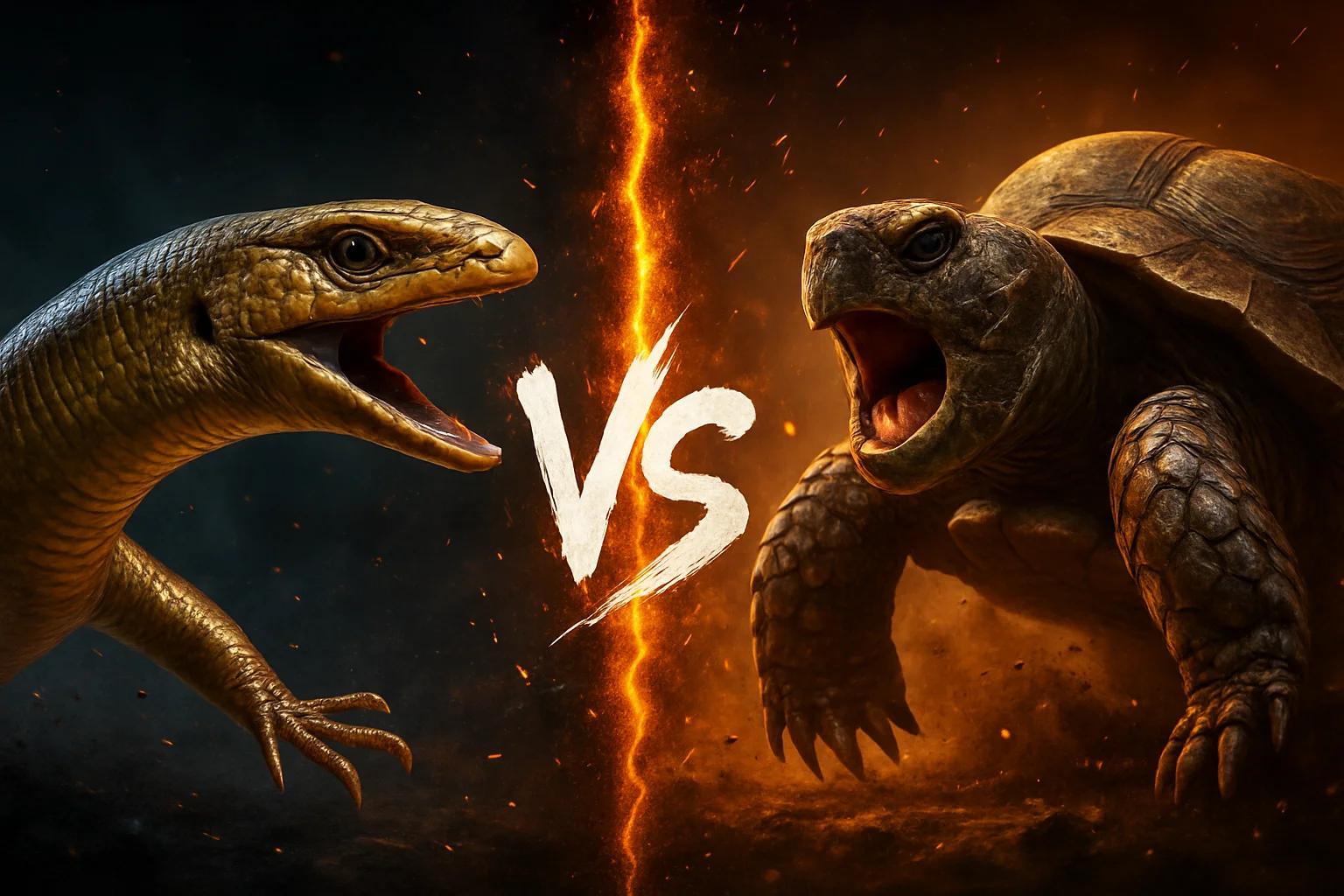
Eastern Glass Lizard vs Gopher Tortoise: Who Actually Wins?
The Gopher Tortoise wins this matchup clearly. The Eastern Glass Lizard is longer, up to about a meter, but roughly two-thirds of that length is a fragile, detachable tail. Its jaws are built for insects, spiders, snails and eggs, so they have nothing that can get through a domed shell. A grown gopher tortoise weighs several kilograms of bone-plated mass. Males fight rivals by ramming and flipping them with a forked throat plate called the gular scute, and the species controls burrows that can run more than 10 meters underground. The lizard can't injure the tortoise in any meaningful way. The tortoise can shove, pin and outlast the lizard, and it owns the ground they would contest. The glass lizard's real strength is escape, not combat. It 'wins' only by leaving, and in a battle frame leaving isn't winning.
Read comparison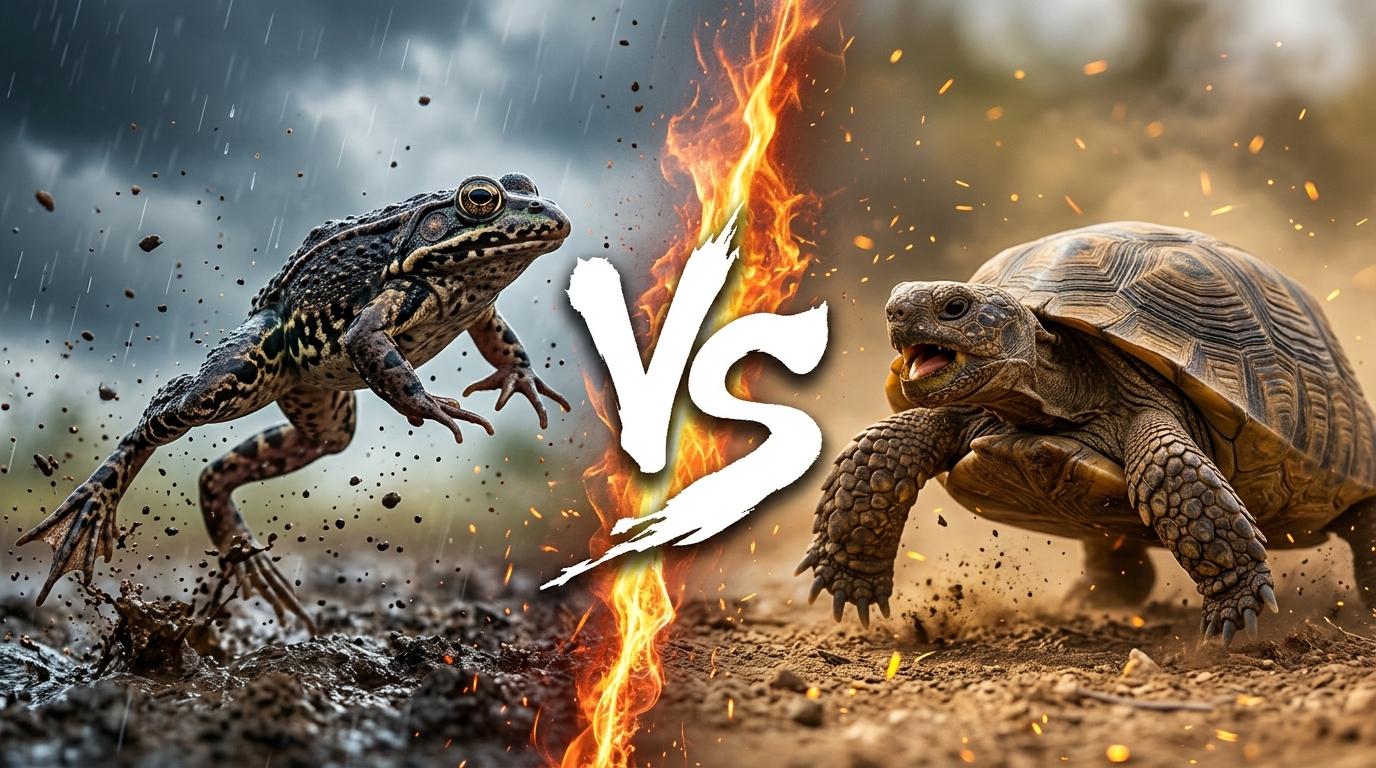
Dusky Gopher Frog vs Gopher Tortoise: Who Actually Wins?
The gopher tortoise wins clearly. An adult weighs roughly 4 to 9 kg and carries a domed bony shell, while an adult dusky gopher frog weighs well under 100 grams. The frog has no claws, no real bite, and its best defenses are bitter, irritating skin secretions and covering its eyes with its forelimbs, which deter predators but do nothing against a tortoise that simply isn't trying to eat it. The tortoise wins any direct contest through sheer mass, armor, and shovel-like forelimbs, and it has outlasted almost everything in the longleaf pine ecosystem. The twist is that these two are not enemies at all. The frog often depends on gopher tortoise burrows for shelter, so the 'fight' is really a tenant meeting its landlord.
Read comparison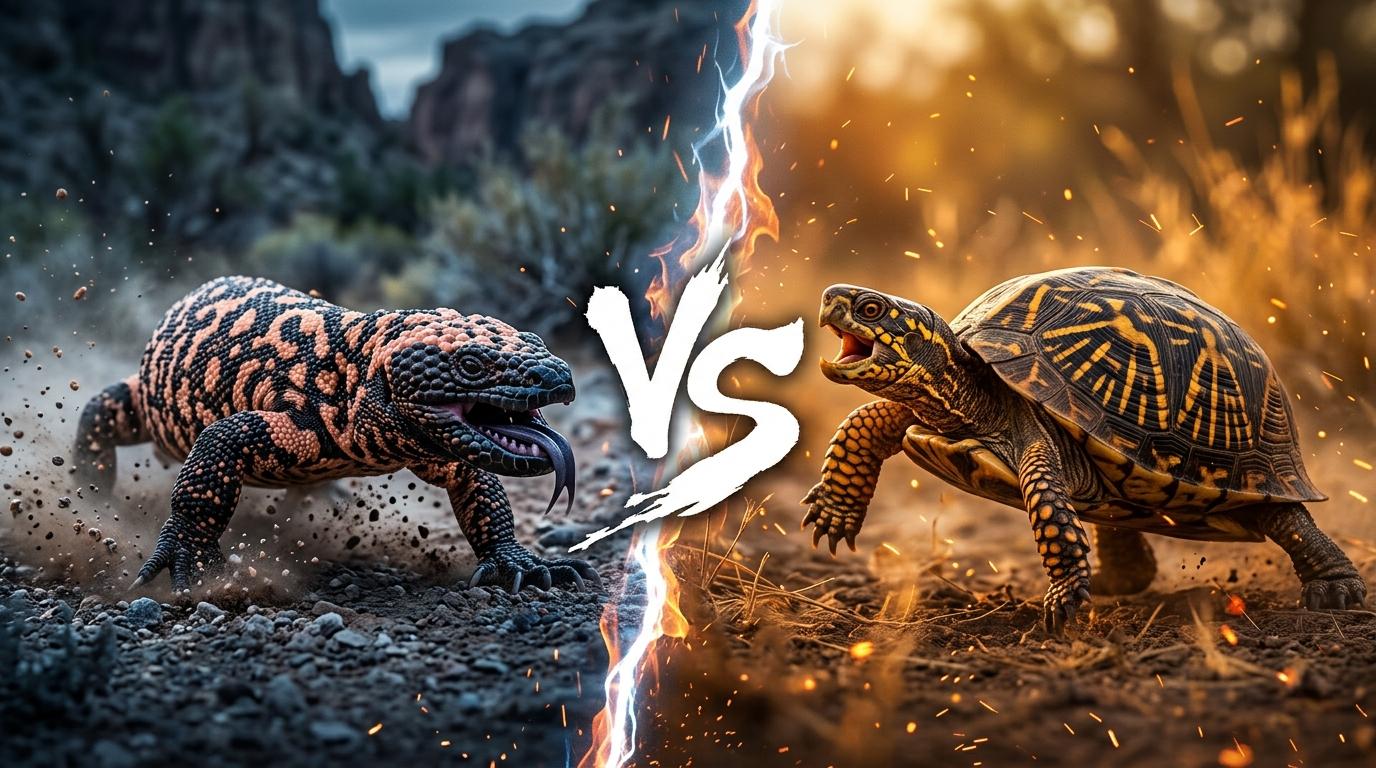
Gila Monster vs Ornate Box Turtle: Who Actually Wins?
The Gila monster wins this matchup. It is roughly three to four times heavier than an ornate box turtle, has a crushing, locking bite backed by neurotoxic venom, and is a known predator of reptile eggs and small vertebrates. The ornate box turtle's best weapon is not offense at all. Its hinged plastron lets it seal itself almost completely inside its shell, so the Gila monster's realistic victory is control and domination of the encounter rather than a quick kill. If the turtle closes up in time, the lizard usually gives up and walks off. If it is caught exposed, or if the contest is over food, shelter, or a nest, the heavier, venom-armed lizard holds the clear edge.
Read comparison
Discussion
What do you think?
Share your reasoning with other readers. Be civil and stick to the animals.
Sign in to join the discussion.
Sign inNo comments yet. Start the conversation.