

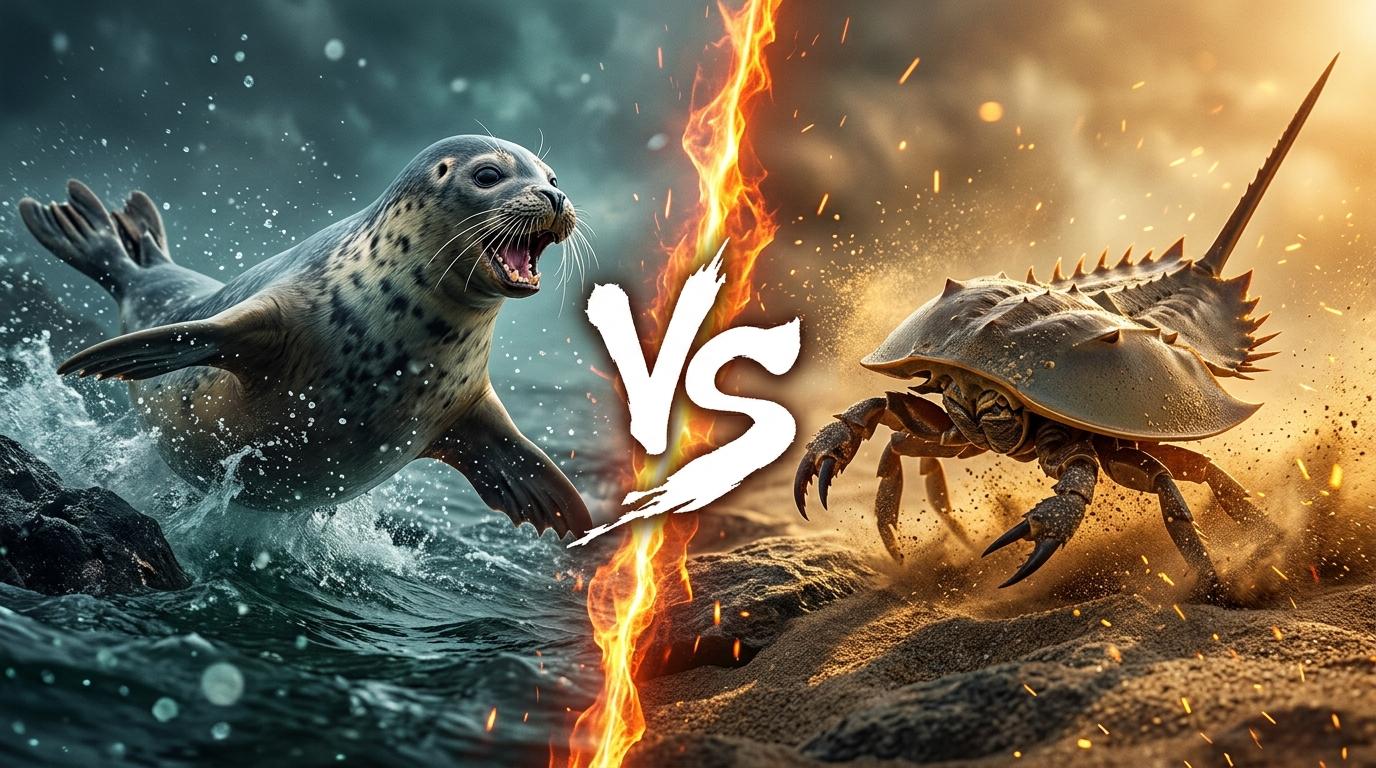
Harbor Seal vs Horseshoe Crab: Who Actually Wins?
Harbor seal vs horseshoe crab: a biology-first breakdown of power, armor, speed and behavior to see who wins and why the crab is still no pushover.
Harbor Seal vs Horseshoe Crab
Matchup winner
Harbor Seal
Quick verdict
Start with the direct answer, then use the structured comparison below to see what changes the outcome.
The harbor seal wins clearly. At roughly 55–130 kg against a 1–5 kg horseshoe crab, the seal brings more mass, far more speed and agility, a bite built to grip slippery prey, and a mammal brain that can test, retreat and try again. The horseshoe crab is not built for combat at all. It is a slow, armored bottom-dweller whose domed carapace and spiked tail are defensive tools, not weapons. The crab's best move is to clamp down and wait, and that can frustrate a seal. But a seal controls whether contact happens at all, and it can flip or nose the crab and expose its softer underside. Harbor seals rarely bother eating adult horseshoe crabs because the meat return is poor, but in a forced confrontation the outcome is not close.
Read the full explanation
Harbor seal wins: roughly 20–50x heavier, much faster, and smarter.
The horseshoe crab has no real offensive weapon. Its tail (telson) is used for steering and flipping itself upright, not stabbing.
The crab's armor buys time, not victory.
A seal could easily ignore the crab. That choice is itself a form of dominance.
Reader vote
Who do you think wins?
Pick a side — no account needed. Results update live.
No votes yet — be the first to call it.
Editorial note
Why people disagree
The crab's tank-like shell and sharp-looking tail make people overrate its fighting ability.
Explosive power
The seal starts and ends every engagement on its own terms.
Mass advantage
The size gap is too large for armor to make up for.
Close-range durability
This is the crab's only real edge. It survives poking but not being flipped and pried at.
Read the full explanation +
Seals usually skip adult horseshoe crabs, so some readers assume the crab is too tough to beat. The real reason is poor caloric payoff.
The crab's 450-million-year lineage reads as invincibility, but staying around that long reflects a durable lifestyle, not fighting strength.
Comparison FAQ
Short, direct answers to the next questions readers usually ask after the headline verdict.
Would a harbor seal beat a horseshoe crab in a fight?+
Yes, easily. The seal's size, speed and bite overwhelm a crab that has no real offensive weapon.
Which is stronger, a harbor seal or a horseshoe crab?+
The harbor seal, by a huge margin. It is dozens of times heavier and far more muscular.
Can a horseshoe crab's tail hurt a seal?+
Not really. The tail (telson) is used for steering and flipping upright. At most it can scratch or poke.
Why is the horseshoe crab still hard to deal with?+
Its domed shell protects its top side, its edges are spiny, and it can wedge into the sand. That makes it a frustrating target that offers little reward.
Do harbor seals eat horseshoe crabs?+
Rarely, and only when the opportunity comes up. They mostly eat fish, squid and other more energy-rich prey.
Head-to-head species stats
These are the same core AnimalDex stat dimensions used on the dedicated animal pages, pulled side by side so the matchup is faster to scan.
Harbor Seal
Tier CHorseshoe Crab
Tier DTrait-by-trait comparison
Only the categories that matter to this matchup are included. The goal is not filler stats, but the real design differences that change the result.
Fast underwater bursts, strong neck lunge
Explosive power
Harbor Seal
Negligible; slow crawling and weak swimming
Explosive power
Harbor Seal
55–130 kg of muscle and blubber
Mass advantage
Harbor Seal
1–5 kg, mostly shell
Mass advantage
Harbor Seal
Thick blubber, flexible hide
Close-range durability
Horseshoe Crab
Hard domed carapace, protected top side
Close-range durability
Horseshoe Crab
Sharp conical teeth, gripping jaws
Weapon quality
Harbor Seal
No bite; pincers made for food handling; tail used for steering
Weapon quality
Harbor Seal
Curious, adaptive, can disengage and retry
Tactical flexibility
Harbor Seal
Fixed defensive routine
Tactical flexibility
Harbor Seal
Agile in water, clumsy on land
Recovery from bad positions
Harbor Seal
Uses its tail to flip upright, but slowly
Recovery from bad positions
Harbor Seal
How the verdict forms
Verdict timeline
01 · Explosive power
Harbor Seal
02 · Mass advantage
Harbor Seal
03 · Close-range durability
Horseshoe Crab
04 · Weapon quality
Harbor Seal
05 · Tactical flexibility
Harbor Seal
06 · Recovery from bad positions
Harbor Seal
Change the conditions
Scenario breakdown
This is where shallow battle content usually fails. Terrain, spacing, timing, and engagement style can change the answer.
Scenario lean
Harbor Seal
Verdict confidence
82%
Seal wins, but takes longer.
Plants and rocks let the crab wedge itself in with its shell facing up, protecting its underside. The seal can still find it by feel with its sensitive whiskers and pull it free with its jaws. Cover slows the seal down but doesn't change the result.
AnimalDex field profiles
Explore these animals
Harbor Seal
Phoca vitulina
Coastal waters, estuaries, sandbars, rocky shores, and tidal flats.
Horseshoe Crab
Limulus polyphemus
Shallow coastal water, sandy or muddy seafloor, and tidal beaches.
Systems Intelligence & Hidden Purpose
See the animals behind this comparison as engineered biological systems: what each one is built to do, where it gains leverage, and why the matchup changes by scenario.
Specialized Hardware
Rounded head with large dark eyes, spotted gray or brown coat, and short flippers and smooth swimming body give the Harbor Seal a body plan tuned for its niche.
Systems Script
Harbor Seals operate in coastal waters, estuaries, sandbars, rocky shores, and tidal flats. Their design helps them match food access, shelter, and timing inside that environment.
Strategic Insight
Good systems know when to be still and when to move.
Specialized Hardware
Helmet-shaped hard shell, long pointed tail spine, and many legs hidden beneath the body give the Horseshoe Crab a body plan tuned for its niche.
Systems Script
Horseshoe Crabs operate in shallow coastal water, sandy or muddy seafloor, and tidal beaches. Their design helps them match food access, shelter, and timing inside that environment.
Strategic Insight
A design can last for ages when it fits one job exceptionally well.
Final take
The harbor seal wins this matchup decisively. It has every offensive advantage: mass, speed, a working bite, and the intelligence to deal with a puzzle-like defense. The horseshoe crab was never built to win fights. It was built to outlast them.
Read the full explanation
That's the real lesson here. The crab's strategy is to be too much trouble to bother with. Against a predator that can choose to commit, though, being troublesome only delays the outcome. The seal wins, and the crab survives in the real world mostly because seals have better things to eat.
Collect both animals in AnimalDex
Track the species behind this matchup, compare their real traits, and build the rivalry into your AnimalDex collection.
Related comparisons
Continue with nearby matchups to compare more real-world animal traits without dropping into junky who-wins filler.
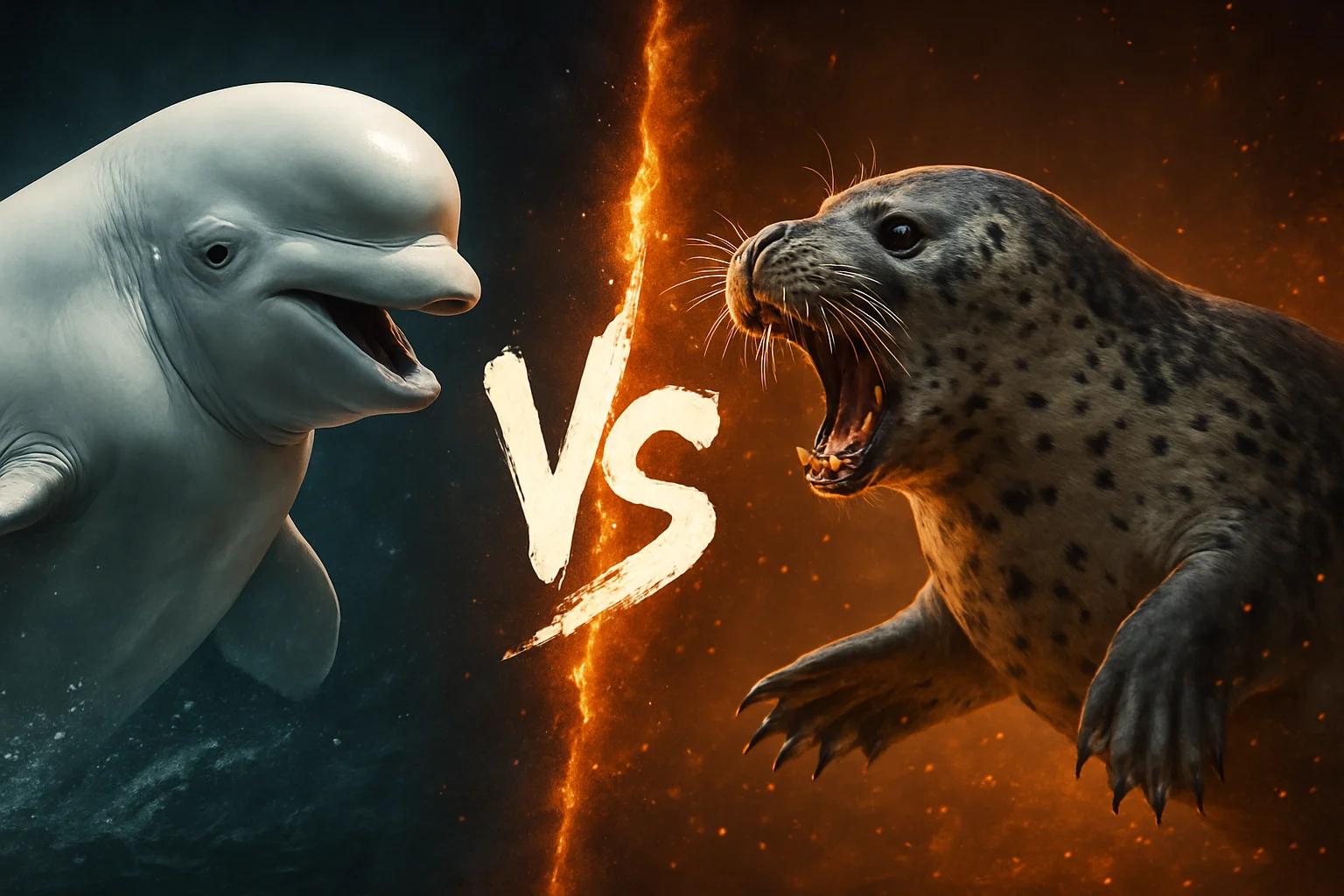
Beluga Whale vs Harbor Seal: Who Actually Wins?
The beluga whale wins this matchup clearly. An adult beluga runs roughly 3.5–5.5 m and 700–1,600 kg. A large harbor seal is about 1.5–1.9 m and 50–170 kg. That puts the whale at five to ten times the seal's mass, which in water translates directly into ramming force, momentum and the ability to shrug off bites. Belugas also bring 30–40 peg-like teeth, a flexible unfused neck for close-quarters head swings, and echolocation that tracks a target in murky or ice-covered water. They are highly social, so a fight rarely stays one-on-one. The harbor seal is quick, agile and armed with a sharp carnivore bite, but its toolkit is built for catching fish and escaping danger, not for subduing a toothed whale several times its size. In reality the two usually ignore each other. Belugas eat fish, squid and invertebrates, not seals. In a forced confrontation, though, mass and sensory control decide it, and the seal's best result is a clean escape.
Read comparison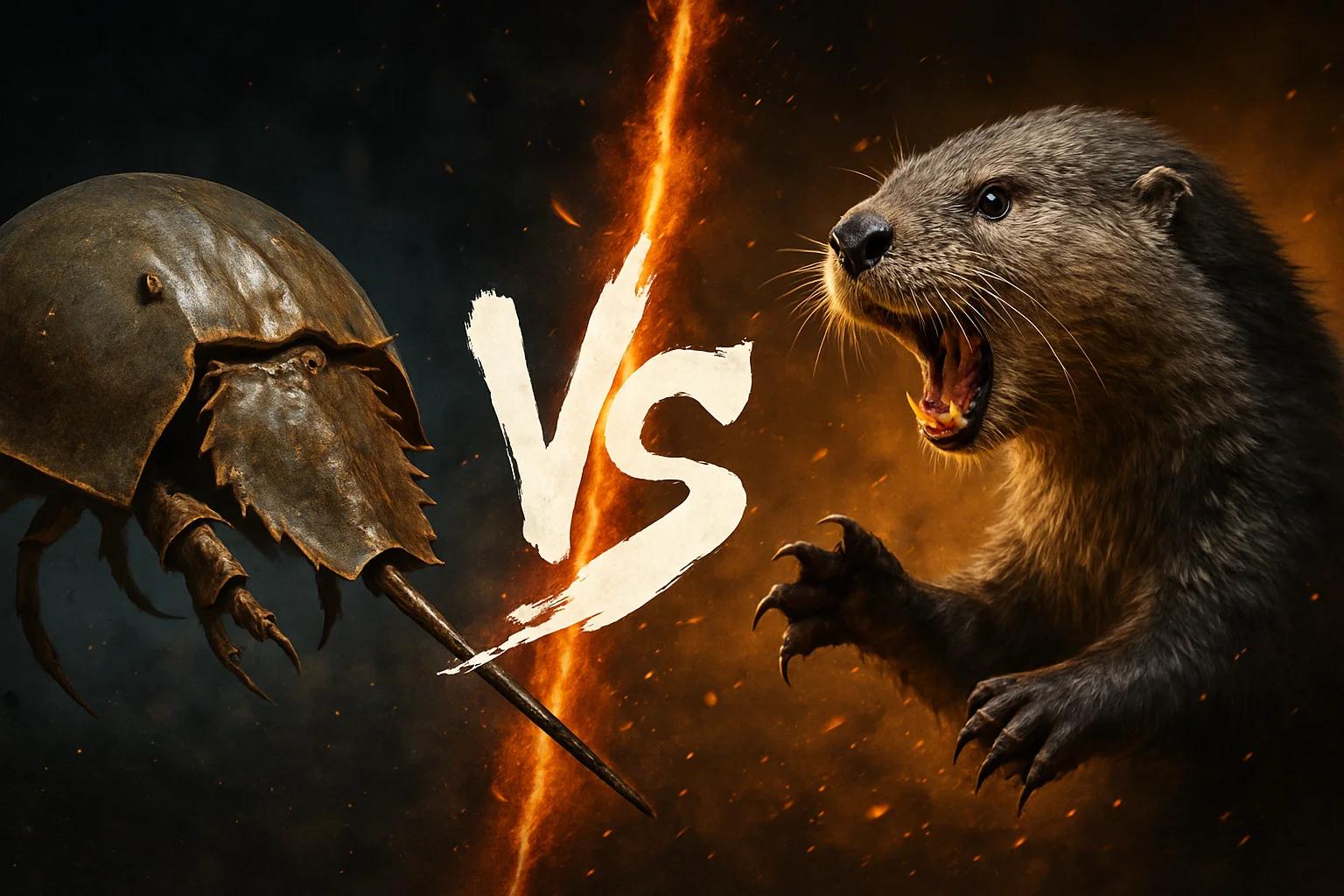
Horseshoe Crab vs Sea Otter: Who Actually Wins?
The sea otter wins, and it isn't close. This matchup pits a 450-million-year-old armored bottom-dweller against one of the ocean's most skilled shell-breakers. Sea otters (Enhydra lutris) make their living opening hard-shelled prey such as crabs, urchins, clams, and abalone. They use dexterous forepaws, crushing molars, and sometimes rocks as anvils or hammers. The horseshoe crab (Limulus polyphemus) has a tough domed carapace and a spiky edge. But it has no venom, no pinching claws strong enough to hurt a mammal, and a tail spine (telson) used mainly to steer and to flip itself upright, not to stab. Armor buys time, and the otter has plenty of time, problem-solving ability, and a jaw built for exactly this job. One caveat: the two never meet in the wild. Horseshoe crabs live on the Atlantic coast of North America, and sea otters live in the North Pacific. So this is a hypothetical matchup based on body design and behavior.
Read comparison
Discussion
What do you think?
Share your reasoning with other readers. Be civil and stick to the animals.
Sign in to join the discussion.
Sign inNo comments yet. Start the conversation.