

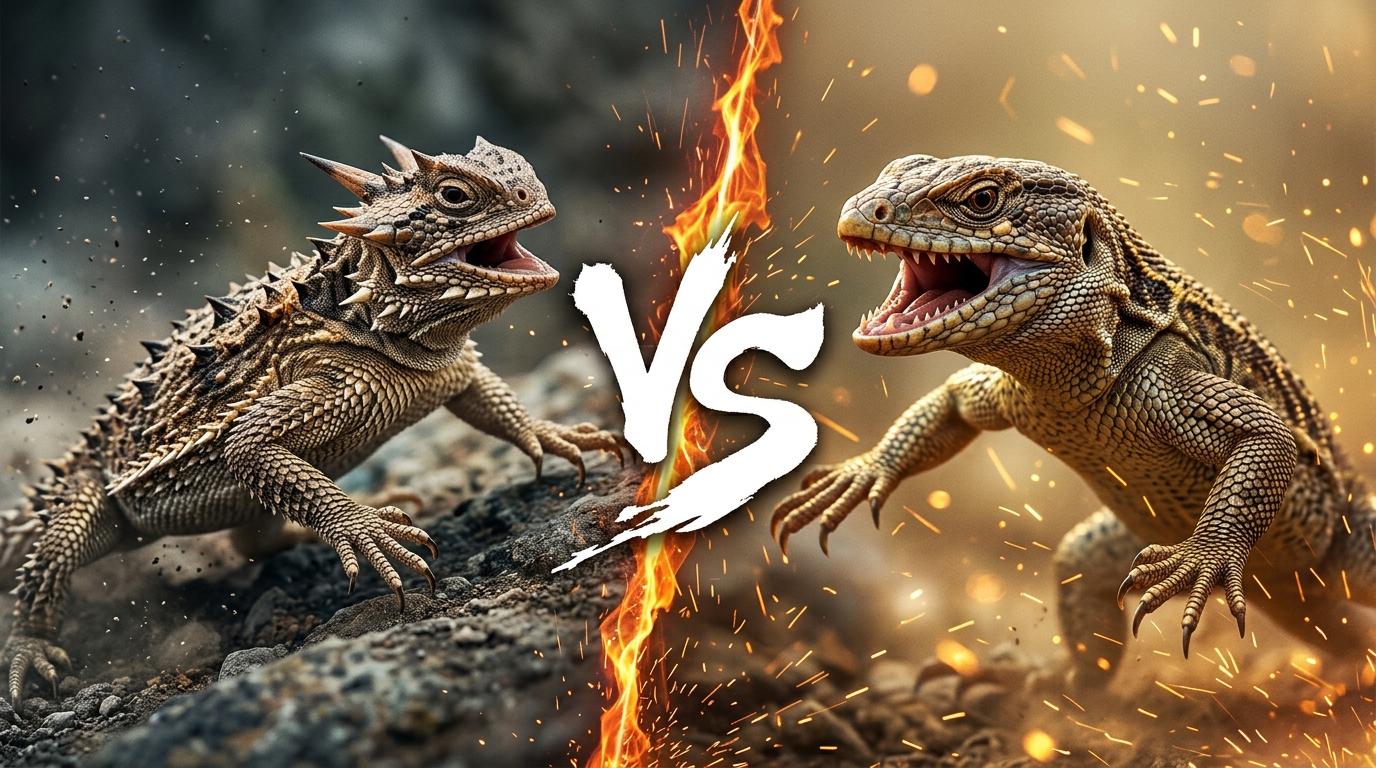
Horned Lizard vs Lizard: Who Actually Wins?
Horned lizard vs a typical small lizard: armor, spines, and blood-squirting defense against speed and agility. See who wins, scenario by scenario.
Horned Lizard vs Lizard
Matchup winner
Horned Lizard
Quick verdict
Start with the direct answer, then use the structured comparison below to see what changes the outcome.
The Texas horned lizard wins this matchup. It is broader, heavier-bodied, and covered in a crown of cranial horns and spiky scales. A small generic lizard, such as a fence lizard, anole, or skink, has no realistic way to bite through that armor or overpower it. The ordinary lizard is quicker and more agile. Its best move is to disengage, not to win. In any contest decided by contact, posture, or holding ground, the horned lizard's defensive build turns the encounter into a stalemate the smaller lizard eventually abandons. That is why the horned lizard takes the overall verdict.
Read the full explanation
Horned lizard wins overall because of its armor, horns, and much larger body mass.
A typical small lizard is faster and more agile, but it lacks the bite force to threaten a spiked, flattened opponent.
Neither animal is a dedicated lizard-killer, so most real encounters end with the smaller lizard retreating.
The only realistic way for the generic lizard to 'win' is to escape quickly into cover.
Reader vote
Who do you think wins?
Pick a side — no account needed. Results update live.
No votes yet — be the first to call it.
Editorial note
Why people disagree
'Lizard' covers thousands of species, and fans picture monitors or iguanas instead of the small, typical lizard this matchup assumes.
Armored durability
A small lizard's bite has nowhere vulnerable to land on a horned lizard. The reverse is not true.
Body mass and posture
Puffing up and flattening makes the horned lizard look and feel far larger than a rival.
Burst speed and agility
Speed lets the smaller lizard choose whether a fight happens at all.
Read the full explanation +
The horned lizard's famous blood-squirting defense targets canids and cats, not other reptiles, so people overrate it as a weapon here.
Speed looks decisive on paper, but in a lizard contest, armor and body size usually decide who holds the spot.
Comparison FAQ
Short, direct answers to the next questions readers usually ask after the headline verdict.
Would a horned lizard beat a regular lizard in a fight?+
Yes. Against a typical small lizard, the horned lizard's armor and size let it win or hold ground in almost any direct encounter.
Which is stronger, a horned lizard or a lizard?+
The horned lizard. It is heavier and more robust, and it is far better protected than a typical small lizard.
Does the horned lizard squirt blood at other lizards?+
Rarely, if ever. The blood-squirting defense mainly deters dogs, coyotes, and foxes. Against reptiles it relies on spikes and posture.
Why is the regular lizard still dangerous in this matchup?+
Its speed, climbing, and tail autotomy make it very hard to pin or finish. It can deliver quick nips and escape before any decisive contact.
Would a monitor lizard beat a horned lizard?+
Yes, but that is a different matchup. This page compares the horned lizard with a typical small lizard, not large predators like monitors.
Head-to-head species stats
These are the same core AnimalDex stat dimensions used on the dedicated animal pages, pulled side by side so the matchup is faster to scan.
Horned Lizard
Tier CLizard
Tier CTrait-by-trait comparison
Only the categories that matter to this matchup are included. The goal is not filler stats, but the real design differences that change the result.
Spiked scales and a cranial horn crown
Armored durability
Horned Lizard
Smooth or lightly keeled scales
Armored durability
Horned Lizard
Wide, flattened, tank-like frame
Body mass and posture
Horned Lizard
Slim, lightweight build
Body mass and posture
Horned Lizard
Slow sprinter that relies on camouflage
Burst speed and agility
Lizard
Quick darts and climbing ability
Burst speed and agility
Lizard
Head-jabs with horns and a firm bite
Offensive threat
Horned Lizard
Small, quick nips
Offensive threat
Horned Lizard
Stillness, camouflage, and burrowing
Escape options
Lizard
Sprinting, climbing, and tail autotomy
Escape options
Lizard
How the verdict forms
Verdict timeline
01 · Armored durability
Horned Lizard
02 · Body mass and posture
Horned Lizard
03 · Burst speed and agility
Lizard
04 · Offensive threat
Horned Lizard
05 · Escape options
Lizard
Change the conditions
Scenario breakdown
This is where shallow battle content usually fails. Terrain, spacing, timing, and engagement style can change the answer.
Scenario lean
Lizard
Verdict confidence
82%
The smaller lizard slips away and keeps its options.
In rocks or brush, the agile lizard can climb, wedge into cracks, and disappear before contact matters. The horned lizard is not built to chase. Here the smaller lizard 'wins' only in the sense that it survives and keeps its spot.
AnimalDex field profiles
Explore these animals
Horned Lizard
Phrynosoma cornutum
desert, scrub, dry grassland, and sandy open ground
Lizard
Lacertilia
desert, forest, scrub, grassland, rock face, and urban wall
Systems Intelligence & Hidden Purpose
See the animals behind this comparison as engineered biological systems: what each one is built to do, where it gains leverage, and why the matchup changes by scenario.
Specialized Hardware
spiny flat body, ant-focused diet, and desert camouflage give the Horned Lizard a body plan tuned for its niche.
Systems Script
Horned Lizards operate through desert, scrub, dry grassland, and sandy open ground Their design links movement, shelter, and feeding into one workable survival system.
Strategic Insight
Flattening the profile can reduce both visibility and vulnerability.
Final take
The horned lizard wins this battle because its whole body is a defensive system: horns, spikes, a flattened profile, and enough mass to make a small lizard rethink the encounter. In a reptile-on-reptile contest, that durability matters more than raw speed.
Read the full explanation
The typical lizard is not helpless. Its quickness, climbing ability, and detachable tail make it an expert at avoiding losing outcomes. But avoiding a loss is different from winning, and whenever ground has to be held, the horned lizard comes out on top.
Collect both animals in AnimalDex
Track the species behind this matchup, compare their real traits, and build the rivalry into your AnimalDex collection.
Related comparisons
Continue with nearby matchups to compare more real-world animal traits without dropping into junky who-wins filler.
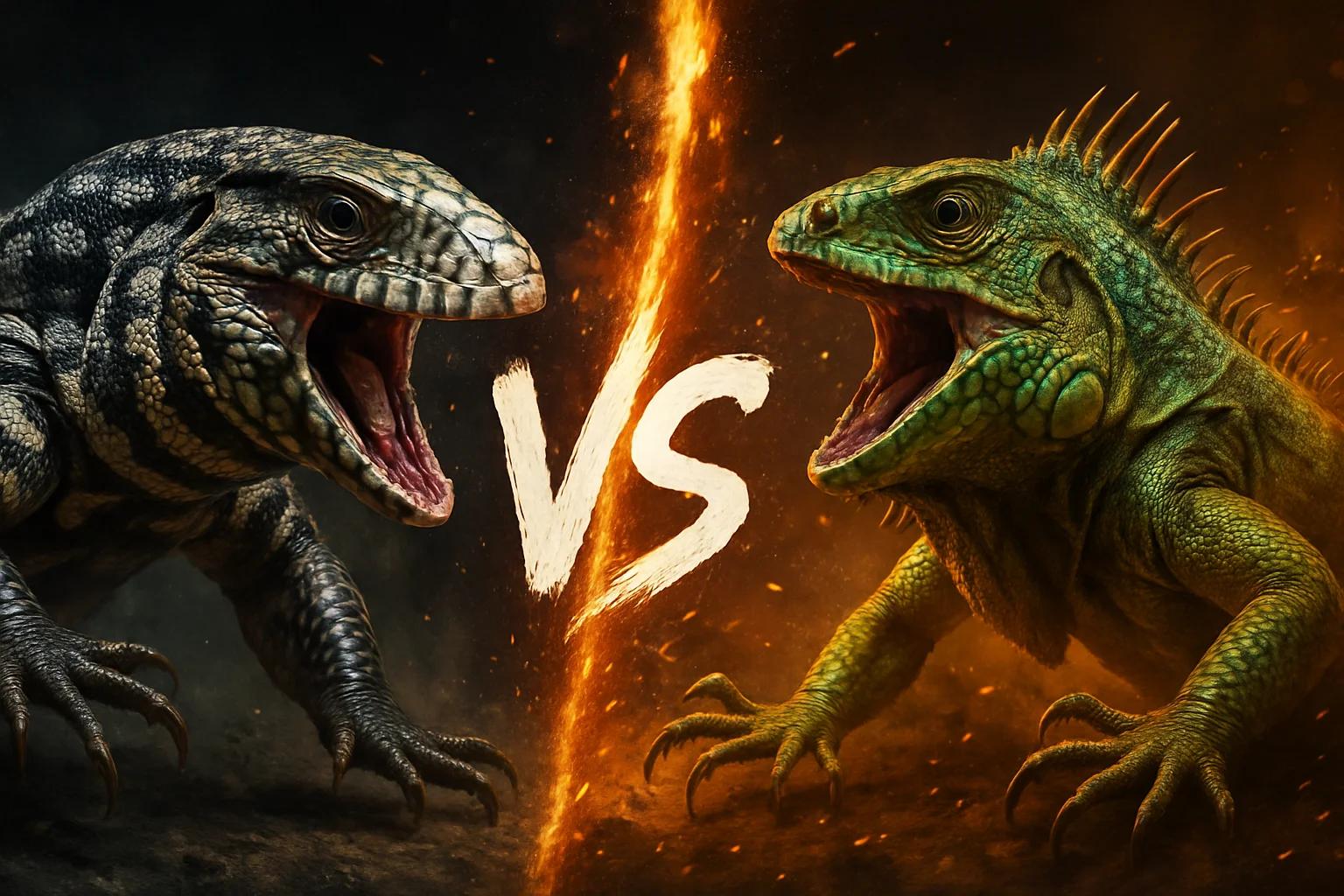
Argentine Black and White Tegu vs Lizard: Who Actually Wins?
The Argentine Black and White Tegu wins clearly. Salvator merianae is one of the largest lizards in the Americas. Adults commonly reach 1 to 1.4 meters and several kilograms, with heavy jaw muscles, a thick neck and a whip-like tail. A typical lizard, meaning the generic small anole, skink or wall-lizard body plan most people picture, weighs a few grams to a few hundred grams. It survives by fleeing, not fighting. Tegus are active-foraging omnivores that routinely eat eggs, invertebrates and small vertebrates, smaller lizards included. That makes this less a duel between equals and more a predator meeting a prey-sized animal. The small lizard's real weapons are speed bursts, cover use and tail autotomy, which can buy an escape but cannot reverse a fight once the tegu closes and bites.
Read comparison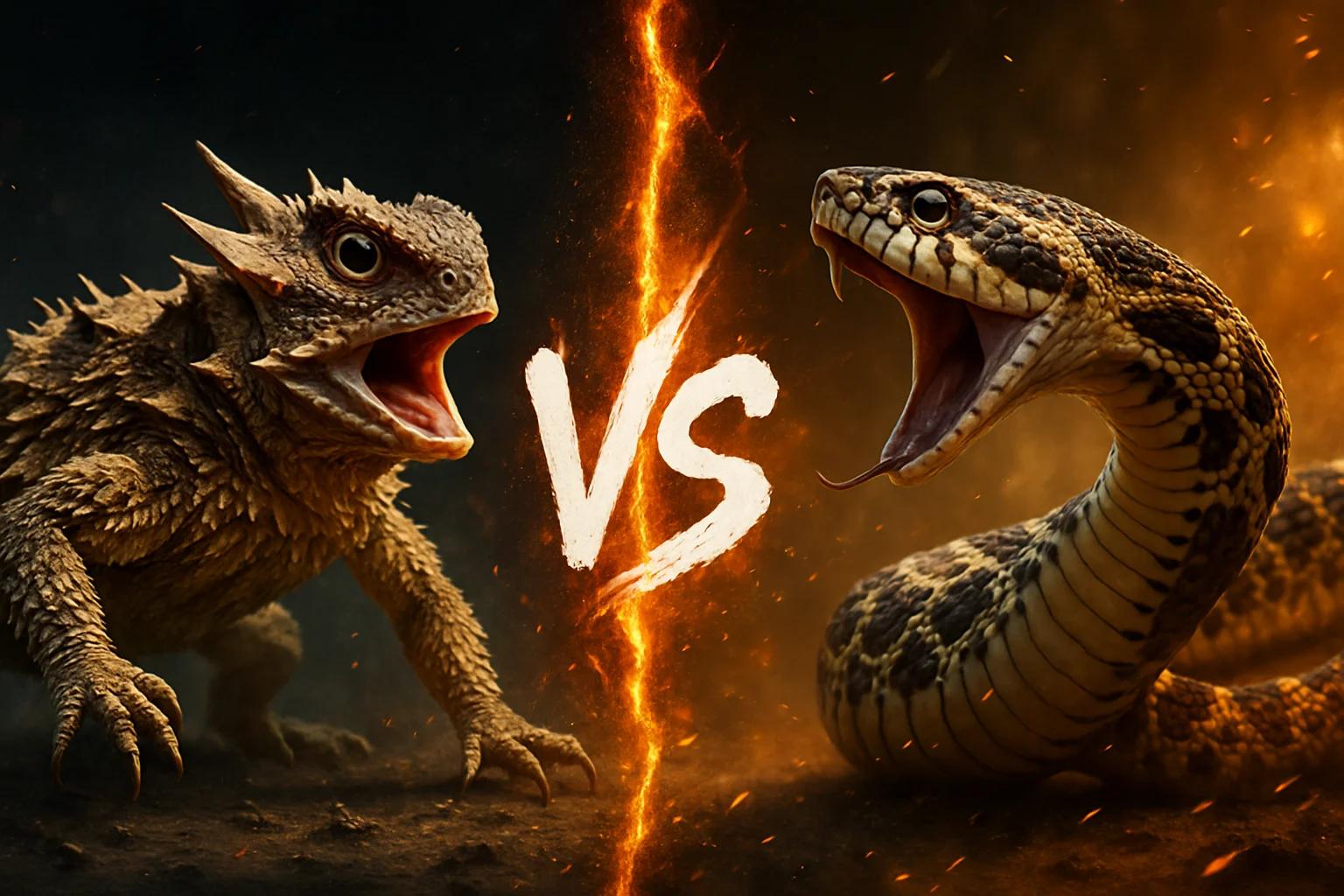
Horned Lizard vs Western Hognose Snake: Who Actually Wins?
The Texas horned lizard wins this matchup. The western hognose snake is longer and is a real predator, with an upturned digging snout, mild rear-fang saliva, and a gape built for swallowing toads. But a hognose can only win by swallowing its opponent, and the horned lizard is built to make that dangerous. Its crown of rigid cranial horns, its flattened, spike-fringed body, and its habit of tilting its head down and puffing up all make it a poor and risky meal for a gape-limited snake. Snakes have died from horns piercing the throat or gut wall during swallowing. The hognose's dramatic bluff of hissing, cobra-like hooding, and playing dead does not deter a lizard that never wanted the fight. The horned lizard wins by being nearly impossible to eat, not by killing anything.
Read comparison
Discussion
What do you think?
Share your reasoning with other readers. Be civil and stick to the animals.
Sign in to join the discussion.
Sign inNo comments yet. Start the conversation.