

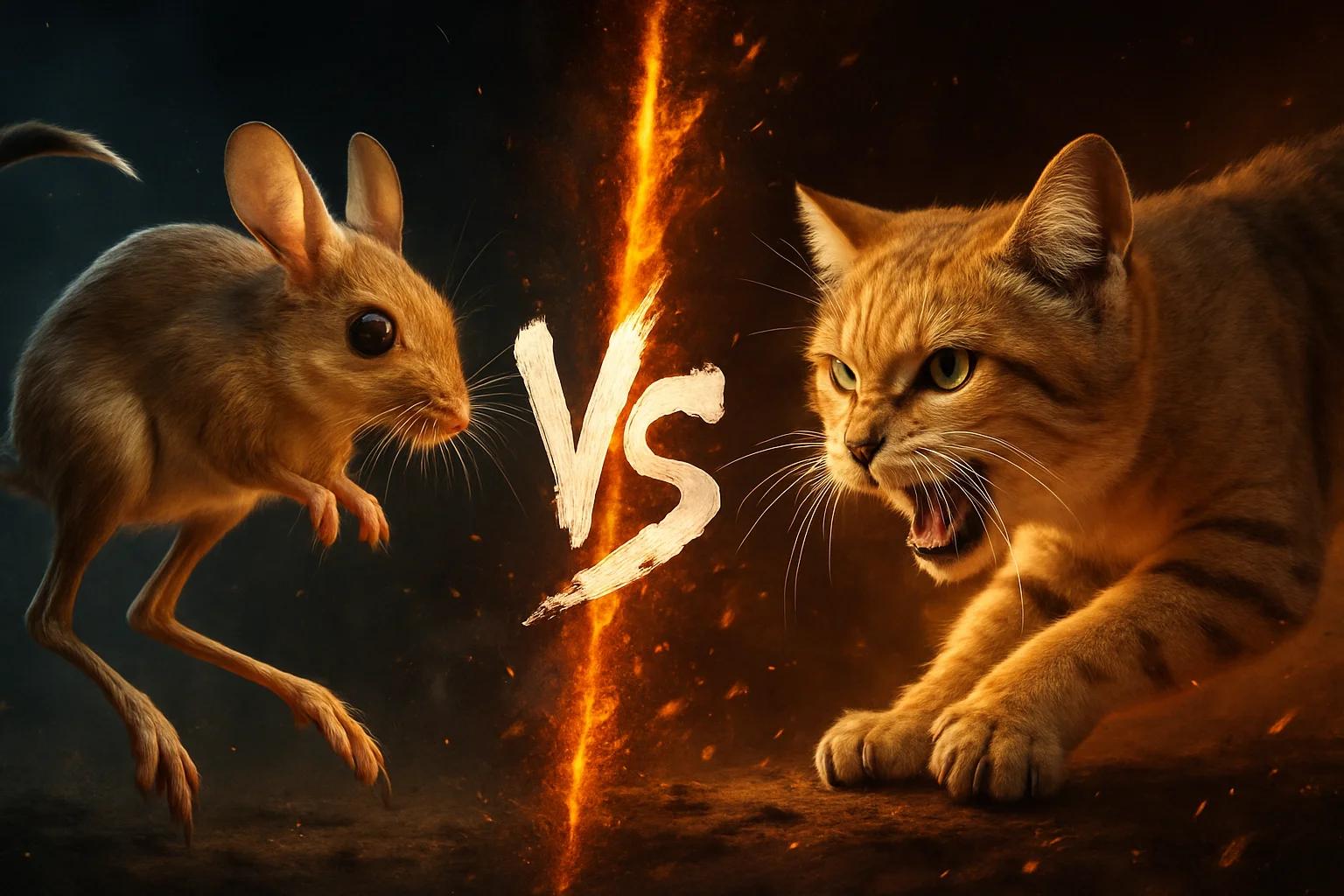
Lesser Egyptian Jerboa vs Sand Cat: Who Actually Wins?
Jerboa vs sand cat: a biology-first breakdown of the desert's classic predator-prey matchup. See who wins, why the jerboa still escapes, and how each animal survives the Sahara.
Jerboa vs Sand Cat
Matchup winner
Sand Cat
Quick verdict
Start with the direct answer, then use the structured comparison below to see what changes the outcome.
The sand cat wins this matchup clearly. At roughly 2–3.5 kg it outweighs a 50–70 g lesser Egyptian jerboa by about fifty to one. It hunts at night, the same hours the jerboa forages, and its hearing is tuned to pick up the faint rustle of small rodents on and under the sand. Jerboas and gerbils are core items in its diet, so this is a predator meeting its prey, not a fight between rivals. The jerboa's real defense is not combat. It escapes. Long hind legs launch it into zigzag hops, and a deep burrow plugged with sand gives it shelter. In open ground, a jerboa that detects the cat early has a real chance to bounce away. Once the cat closes to striking range, though, the jerboa has no meaningful way to fight back.
Read the full explanation
Sand cat wins: it outweighs the jerboa about 50:1 and hunts rodents like it for a living.
The jerboa never wins by fighting. It wins by escaping, through erratic hops and sealed burrows.
Early detection decides most encounters. If the cat closes the gap quietly, the jerboa is lost.
Confidence is high, but many real hunts still fail because jerboas are hard to catch.
Reader vote
Who do you think wins?
Pick a side — no account needed. Results update live.
No votes yet — be the first to call it.
Editorial note
Why people disagree
Jerboa escape videos make the rodent look unbeatable, but a failed hunt is not a fight the jerboa won.
Explosive power
The jerboa's launch is built for escape and gives it its best chance of surviving the first strike.
Ambush control
The cat controls when and where contact happens, which decides most predator-prey encounters.
Close-range durability
Once claws connect, the jerboa has no way to absorb or survive damage.
Read the full explanation +
People confuse 'hard to catch' with 'dangerous to fight.' The jerboa is the first and not the second.
The sand cat's kitten-like face hides a specialized, persistent small-prey hunter that can dig rodents out of their burrows.
Comparison FAQ
Short, direct answers to the next questions readers usually ask after the headline verdict.
Would a sand cat beat a jerboa?+
Yes, decisively. A jerboa is natural prey for the sand cat and cannot win a physical fight against it.
Which is stronger, a jerboa or a sand cat?+
The sand cat, by an enormous margin. It is roughly 50 times heavier and has claws and a killing bite. The jerboa's power is concentrated in its legs, which it uses for jumping away.
Why does the jerboa still escape so often?+
It detects threats early with sensitive hearing, then flees in unpredictable zigzag leaps that make the cat's pounce miss. It also retreats into plugged burrows.
Is the jerboa dangerous to the sand cat at all?+
Only slightly. A cornered rodent can bite, but the jerboa's real danger is to the cat's energy budget. Every failed hunt costs the cat time and calories in a harsh desert.
Do sand cats and jerboas live in the same places?+
Yes. Both live in the sandy deserts of North Africa and the Middle East and are active at night, so their paths regularly cross.
Head-to-head species stats
These are the same core AnimalDex stat dimensions used on the dedicated animal pages, pulled side by side so the matchup is faster to scan.
Jerboa
Tier CSand Cat
Tier BTrait-by-trait comparison
Only the categories that matter to this matchup are included. The goal is not filler stats, but the real design differences that change the result.
Spring-loaded hind legs, multi-meter bounds
Explosive power
Jerboa
Short, fast pounce from a crouch
Explosive power
Jerboa
Vigilant forager, sensitive hearing
Ambush control
Sand Cat
Silent stalking, low profile, acute hearing
Ambush control
Sand Cat
Fragile 50–70 g frame
Close-range durability
Sand Cat
Compact, muscular 2–3.5 kg body
Close-range durability
Sand Cat
Tiny incisors, no real weaponry
Lethal tools
Sand Cat
Retractile claws, killing bite to the neck
Lethal tools
Sand Cat
Unpredictable zigzag hops, abrupt direction changes
Evasion geometry
Jerboa
Agile, but must commit to each pounce
Evasion geometry
Jerboa
Gets water from food, shelters in a sealed burrow
Desert endurance
Sand Cat
Gets water from prey, furred soles, can travel kilometers a night
Desert endurance
Sand Cat
How the verdict forms
Verdict timeline
01 · Explosive power
Jerboa
02 · Ambush control
Sand Cat
03 · Close-range durability
Sand Cat
04 · Lethal tools
Sand Cat
05 · Evasion geometry
Jerboa
06 · Desert endurance
Sand Cat
Change the conditions
Scenario breakdown
This is where shallow battle content usually fails. Terrain, spacing, timing, and engagement style can change the answer.
Scenario lean
Sand Cat
Verdict confidence
82%
Sand cat, if it closes undetected
Flat sand gives the jerboa nothing to hide behind. If the cat stalks within pouncing range, its acceleration and claws decide things in seconds. If the jerboa hears it first, a burst of zigzag hops may save it, but the cat sets the terms of the encounter.
AnimalDex field profiles
Explore these animals
Jerboa
Jaculus jaculus
sand desert, semi-arid steppe, and rocky plain
Sand Cat
Felis margarita
sand desert, stony plain, and arid scrub
Systems Intelligence & Hidden Purpose
See the animals behind this comparison as engineered biological systems: what each one is built to do, where it gains leverage, and why the matchup changes by scenario.
Specialized Hardware
very long springing hind legs, long tufted balancing tail, and night desert hopping give the Jerboa a body plan tuned for its niche.
Systems Script
Jerboas operate through sand desert, semi-arid steppe, and rocky plain. Their design links movement, feeding, shelter, and timing into one workable survival system.
Strategic Insight
Harsh places reward efficiency, timing, and bodies that waste very little.
Specialized Hardware
furred foot pads, broad low-set ears, and desert-night hunting give the Sand Cat a body plan tuned for its niche.
Systems Script
Sand Cats operate through sand desert, stony plain, and arid scrub. Their design links movement, feeding, shelter, and timing into one workable survival system.
Strategic Insight
Harsh places reward efficiency, timing, and bodies that waste very little.
Final take
The sand cat is the clear winner. It is about fifty times heavier, armed with claws and a killing bite, and evolved specifically to hunt small desert rodents at night. In any contact encounter, the jerboa loses.
Read the full explanation
The jerboa's whole strategy is to make contact never happen. Through vigilance, explosive bipedal hops, and burrows sealed against the heat and against predators, it wins often enough to stay common. In this predator-prey matchup, the jerboa scores its points through hunts that fail.
Collect both animals in AnimalDex
Track the species behind this matchup, compare their real traits, and build the rivalry into your AnimalDex collection.
Related comparisons
Continue with nearby matchups to compare more real-world animal traits without dropping into junky who-wins filler.
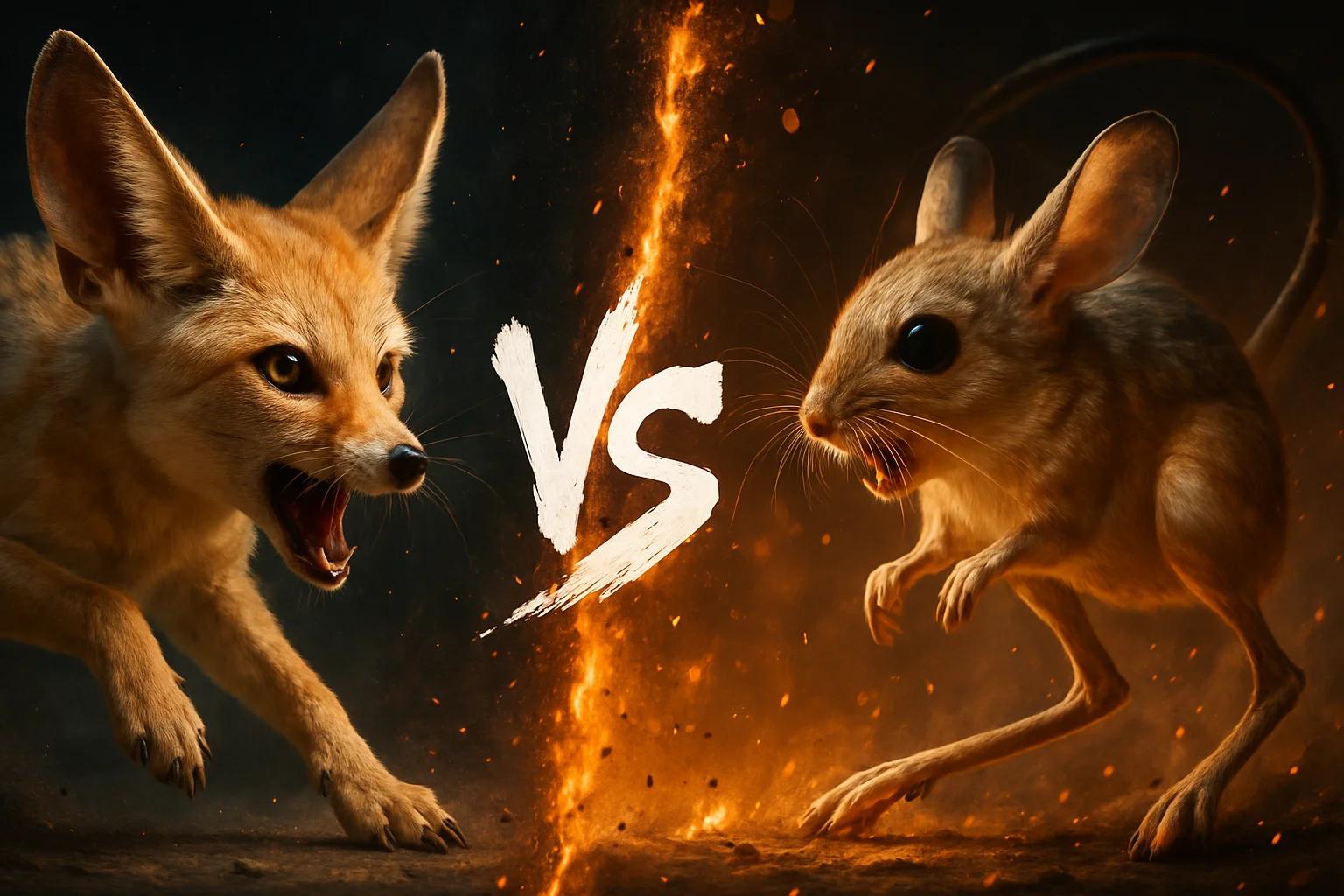
Fennec Fox vs Lesser Egyptian Jerboa: Who Actually Wins?
The fennec fox wins clearly. This isn't a matchup between equals. It's a desert predator against one of its natural prey species. A fennec weighs roughly 1–1.5 kg, about ten times the 50–70 g lesser Egyptian jerboa. It has sharp canines, a quick killing bite, and enormous ears that can hear small animals moving on or under the sand. Once the fox makes contact, the jerboa has no real way to fight back. The jerboa wins by not being caught. Its long hind legs launch erratic, zigzag bounds that can top 20 km/h in short bursts, it forages mostly in darkness, and it seals itself inside burrows during the day. So the fox wins the fight, and the jerboa wins plenty of chases.
Read comparison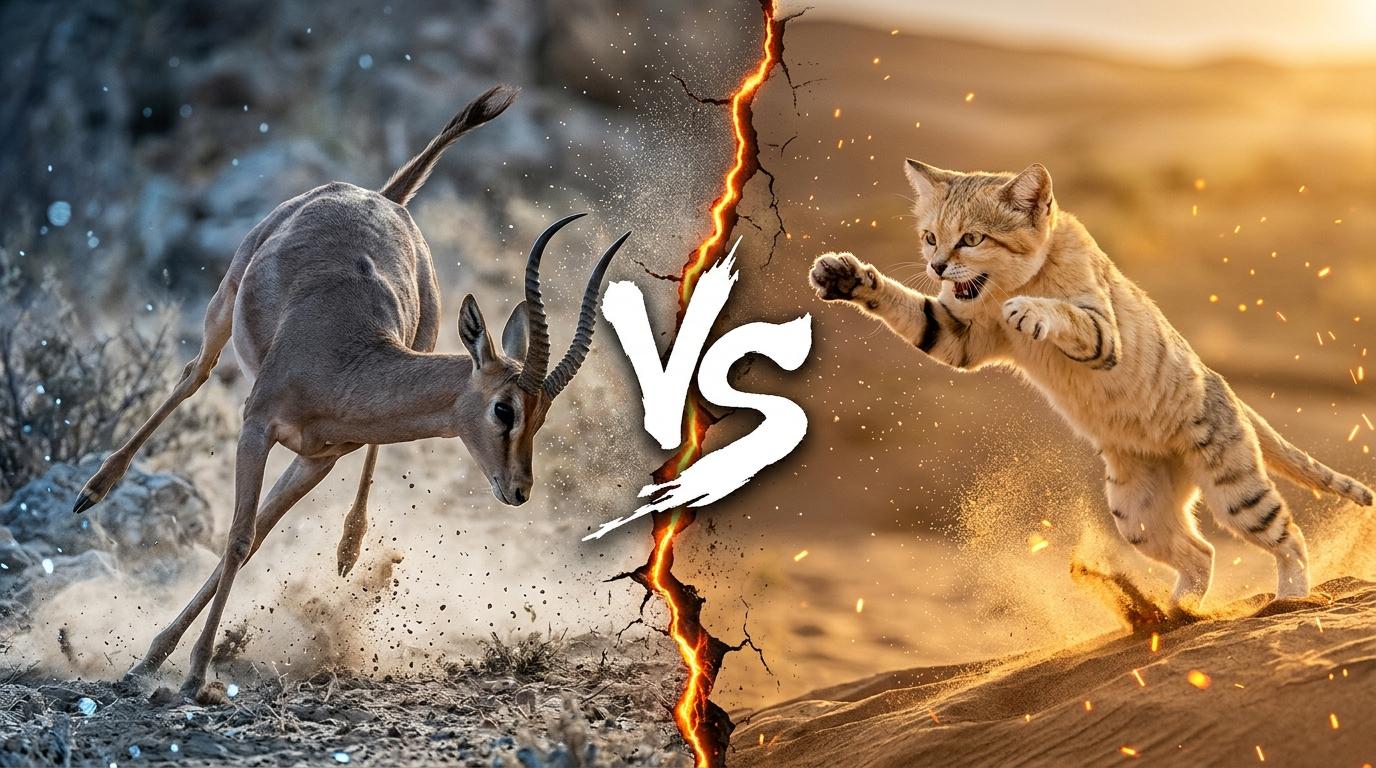
Dibatag vs Sand Cat: Who Actually Wins?
The dibatag wins, and it is not especially close. An adult dibatag (Ammodorcas clarkei) weighs roughly 20–35 kg, about ten times the mass of a sand cat (Felis margarita) at around 1.5–3.4 kg. Males carry short, forward-curving horns, and every dibatag can deliver sharp hoof strikes from long, slender legs. The sand cat is a superb predator of gerbils, jerboas, birds, and venomous snakes, with fast reflexes, real claws, and remarkable desert endurance. But its whole hunting toolkit is scaled for prey that weighs grams, not tens of kilograms. In a forced confrontation, the antelope's mass, reach, and kicking power outclass anything the cat can deliver. The realistic outcome is that the cat disengages and the dibatag walks away. The cat's best result is escape, not victory.
Read comparison
Discussion
What do you think?
Share your reasoning with other readers. Be civil and stick to the animals.
Sign in to join the discussion.
Sign inNo comments yet. Start the conversation.