

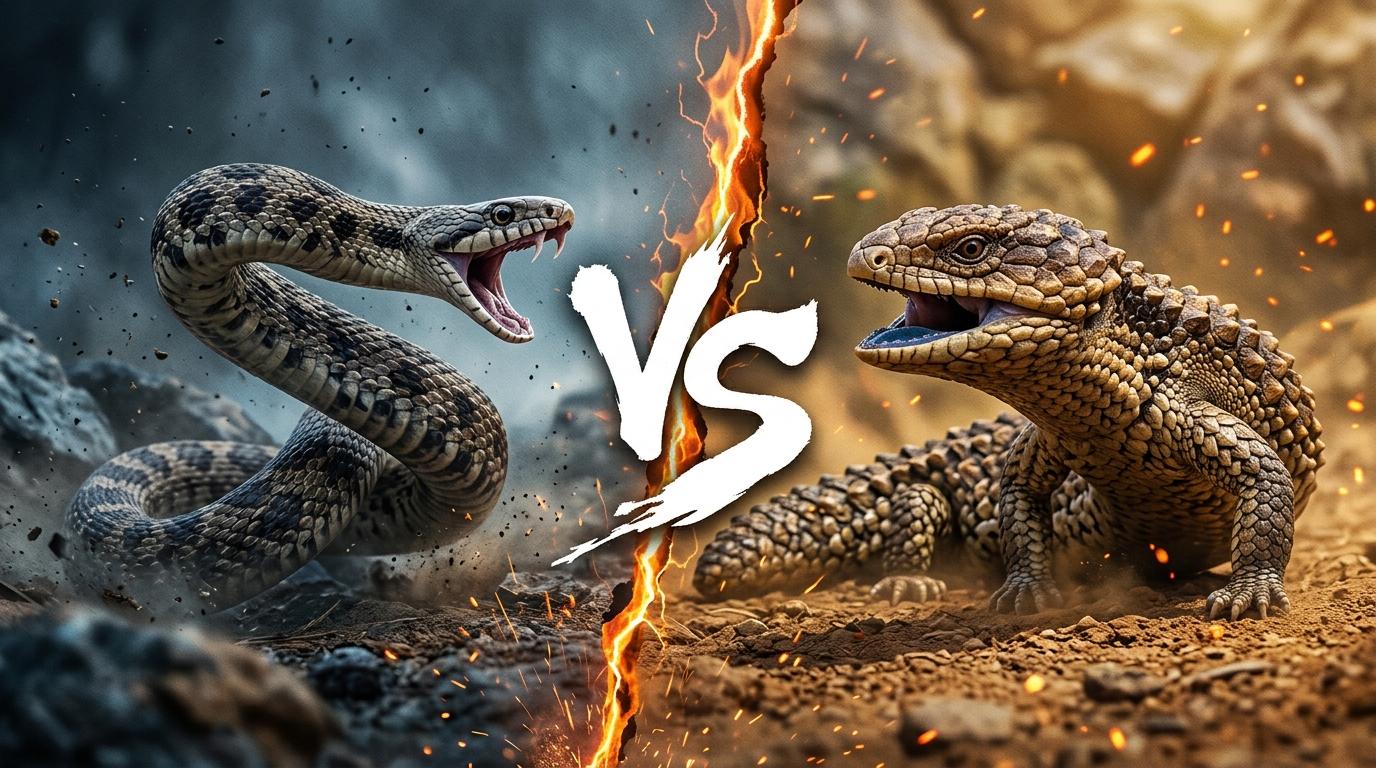
Korean Rat Snake vs Shingleback Skink: Who Actually Wins?
Korean rat snake vs shingleback skink: a biology-first breakdown of size, constriction, armor and bite to see who wins this cross-continent reptile matchup.
Korean Rat Snake vs Shingleback Skink
Matchup winner
Korean Rat Snake
Quick verdict
Start with the direct answer, then use the structured comparison below to see what changes the outcome.
The Korean Rat Snake wins this matchup, but not easily. Elaphe anomala is one of East Asia's largest rat snakes, often 1.5–2 m long. It is a muscular, fast-striking constrictor that can coil, pin and outlast an opponent. The shingleback skink (Tiliqua rugosa) is a squat, heavily scaled Australian lizard built like a pinecone with a crushing bite. It is a fortress, not a hunter. Its armor and clamping jaws make it a miserable thing to subdue, and an adult is too bulky for the snake to swallow. Even so, the snake has the reach, speed, coil control and stamina to dictate the encounter. Over most contexts it pins, out-maneuvers or simply wins the space. The skink's best outcome is a painful standoff, not a victory.
Read the full explanation
Winner: Korean Rat Snake, thanks to length, speed and constriction control.
The shingleback's armor and crushing bite make it very hard to finish off.
An adult skink is too bulky to swallow, so 'winning' means controlling or driving it off.
In tight cover, the skink's clamp-and-hold defense can force a draw-like standoff.
Reader vote
Who do you think wins?
Pick a side — no account needed. Results update live.
No votes yet — be the first to call it.
Editorial note
Why people disagree
Armor vs. coils: some argue constriction barely works on a rigid, osteoderm-plated body, while others say the snake's muscle and stamina still win the grind.
Size and reach
Reach lets the snake choose angles and wrap the skink before it can turn its head to bite.
Strike and maneuver speed
The snake controls tempo and can disengage or re-engage at will.
Close-range durability
The skink can absorb punishment that would injure softer prey, which stretches any fight out.
Read the full explanation +
Bite force headlines: the shingleback's clamping bite is famously painful, and people overrate how much one bite changes a coiled snake's control.
Mismatched worlds: these species never meet in the wild (Korea vs. Australia), so every outcome is inferred from anatomy rather than observed behavior.
Comparison FAQ
Short, direct answers to the next questions readers usually ask after the headline verdict.
Would a Korean rat snake beat a shingleback skink?+
Yes, in most scenarios. The rat snake's length, speed and constriction let it control and pin the skink. An adult shingleback is too bulky to swallow easily, though.
Which is stronger, a Korean rat snake or a shingleback skink?+
The rat snake has more total muscular strength through its long constricting body. The skink has stronger jaws relative to its size and a much tougher, armored build.
Why is the shingleback skink still dangerous in this fight?+
Its crushing bite can lock on and cause real injury. Its bony armor resists coils. Its blue-tongue display and decoy tail can confuse an attacker long enough to escape or hold its ground.
Do Korean rat snakes and shingleback skinks ever meet in the wild?+
No. The Korean rat snake lives in Korea, northeast China and the Russian Far East. The shingleback is native to southern and western Australia.
Is either animal venomous?+
Neither. The rat snake is a non-venomous constrictor, and the shingleback relies on bite force and armor rather than venom.
Head-to-head species stats
These are the same core AnimalDex stat dimensions used on the dedicated animal pages, pulled side by side so the matchup is faster to scan.
Korean Rat Snake
Tier CShingleback Skink
Tier CTrait-by-trait comparison
Only the categories that matter to this matchup are included. The goal is not filler stats, but the real design differences that change the result.
1.5–2 m long, flexible body
Size and reach
Korean Rat Snake
30–40 cm, stout and short-limbed
Size and reach
Korean Rat Snake
Quick strikes, agile climber
Strike and maneuver speed
Korean Rat Snake
Slow, deliberate waddle
Strike and maneuver speed
Korean Rat Snake
Smooth scales, vulnerable to bites
Close-range durability
Shingleback Skink
Bony osteoderm armor, rigid body
Close-range durability
Shingleback Skink
Non-venomous grip bite
Bite threat
Shingleback Skink
Powerful crushing clamp that hangs on
Bite threat
Shingleback Skink
Constriction coils, sustained squeeze
Grappling control
Korean Rat Snake
Brace-and-hold, limited mobility
Grappling control
Korean Rat Snake
Hissing, tail vibration
Defensive display
Shingleback Skink
Gaping blue tongue, decoy tail
Defensive display
Shingleback Skink
How the verdict forms
Verdict timeline
01 · Size and reach
Korean Rat Snake
02 · Strike and maneuver speed
Korean Rat Snake
03 · Close-range durability
Shingleback Skink
04 · Bite threat
Shingleback Skink
05 · Grappling control
Korean Rat Snake
06 · Defensive display
Shingleback Skink
Change the conditions
Scenario breakdown
This is where shallow battle content usually fails. Terrain, spacing, timing, and engagement style can change the answer.
Scenario lean
Shingleback Skink
Verdict confidence
82%
Skink forces a costly stalemate.
In leaf litter or rock crevices, the snake can't fully deploy its coils. The skink can wedge its armored body in place and present its jaws. Restricted space cancels the snake's reach advantage and rewards the skink's fortress strategy. The snake usually disengages, which counts as a defensive win for the skink.
AnimalDex field profiles
Explore these animals
Korean Rat Snake
Elaphe anomala
woodland edge, rocky coastal scrub, and low mountain trail
Shingleback Skink
Tiliqua rugosa
dry scrub, open woodland, and arid grass edge
Systems Intelligence & Hidden Purpose
See the animals behind this comparison as engineered biological systems: what each one is built to do, where it gains leverage, and why the matchup changes by scenario.
Specialized Hardware
short stump tail, pinecone-like heavy scales, and slow bluffing movement give the Shingleback Skink a body plan tuned for its niche.
Systems Script
Shingleback Skinks operate through dry scrub, open woodland, and arid grass edge. Their design links movement, feeding, shelter, and timing into one workable survival system.
Strategic Insight
Harsh places reward efficiency, timing, and bodies that waste very little.
Final take
The Korean Rat Snake is the overall winner because it brings the tools that decide reptile confrontations: reach, speed and grappling control. It can choose when and how the fight happens, and in most settings that is enough.
Read the full explanation
The shingleback skink is no pushover. It is one of the best-defended lizards of its size, and its armor and bite can turn any careless attack into a painful lesson. If it gets a wedged position and a locked jaw, the snake will often decide the effort isn't worth it. Overall, though, the mobile constrictor beats the slow fortress.
Collect both animals in AnimalDex
Track the species behind this matchup, compare their real traits, and build the rivalry into your AnimalDex collection.
Related comparisons
Continue with nearby matchups to compare more real-world animal traits without dropping into junky who-wins filler.
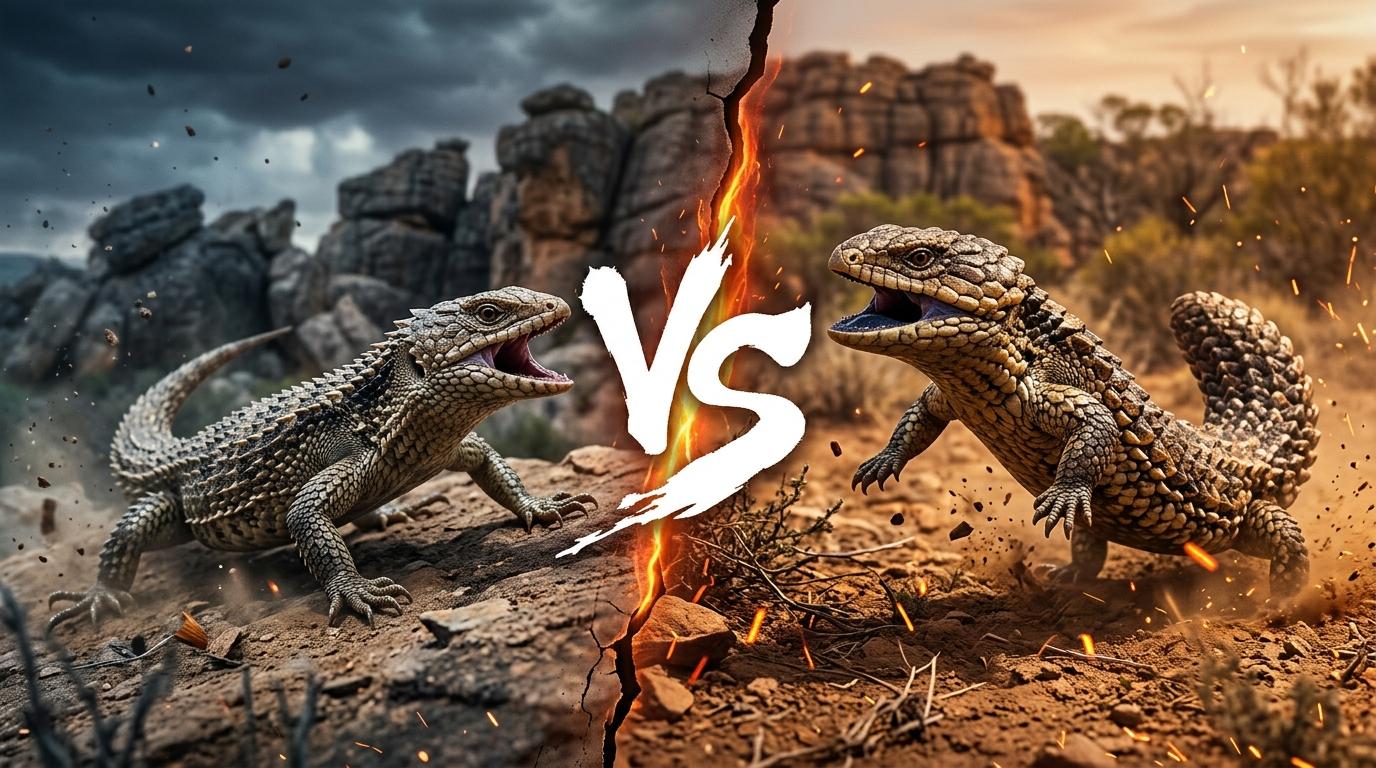
Gidgee Skink vs Shingleback Skink: Who Actually Wins?
The Gidgee Skink (Egernia stokesii) takes this matchup, but only narrowly. The Shingleback (Tiliqua rugosa) is the heavier, bulkier lizard, with a strong crushing bite and pinecone-like armor. What tips the contest is how the Gidgee fights. It moves faster and reacts quicker, and every keeled scale and its short, flattened tail carry stiff spines. It is also built around crevice warfare: it wedges into rock and inflates its body until it is almost impossible to extract or bite cleanly. A Shingleback relies on slow, steady deterrence, gaping its blue tongue and clamping when something gets close. That works superbly against predators that hesitate. It works less well against a nimble, spiny rival that can pick its moment, reach shelter, and refuse to give up a clean grip. In most realistic contexts the Gidgee controls when and where contact happens, and in a skink-scale dispute that is usually the whole fight.
Read comparison
Discussion
What do you think?
Share your reasoning with other readers. Be civil and stick to the animals.
Sign in to join the discussion.
Sign inNo comments yet. Start the conversation.