

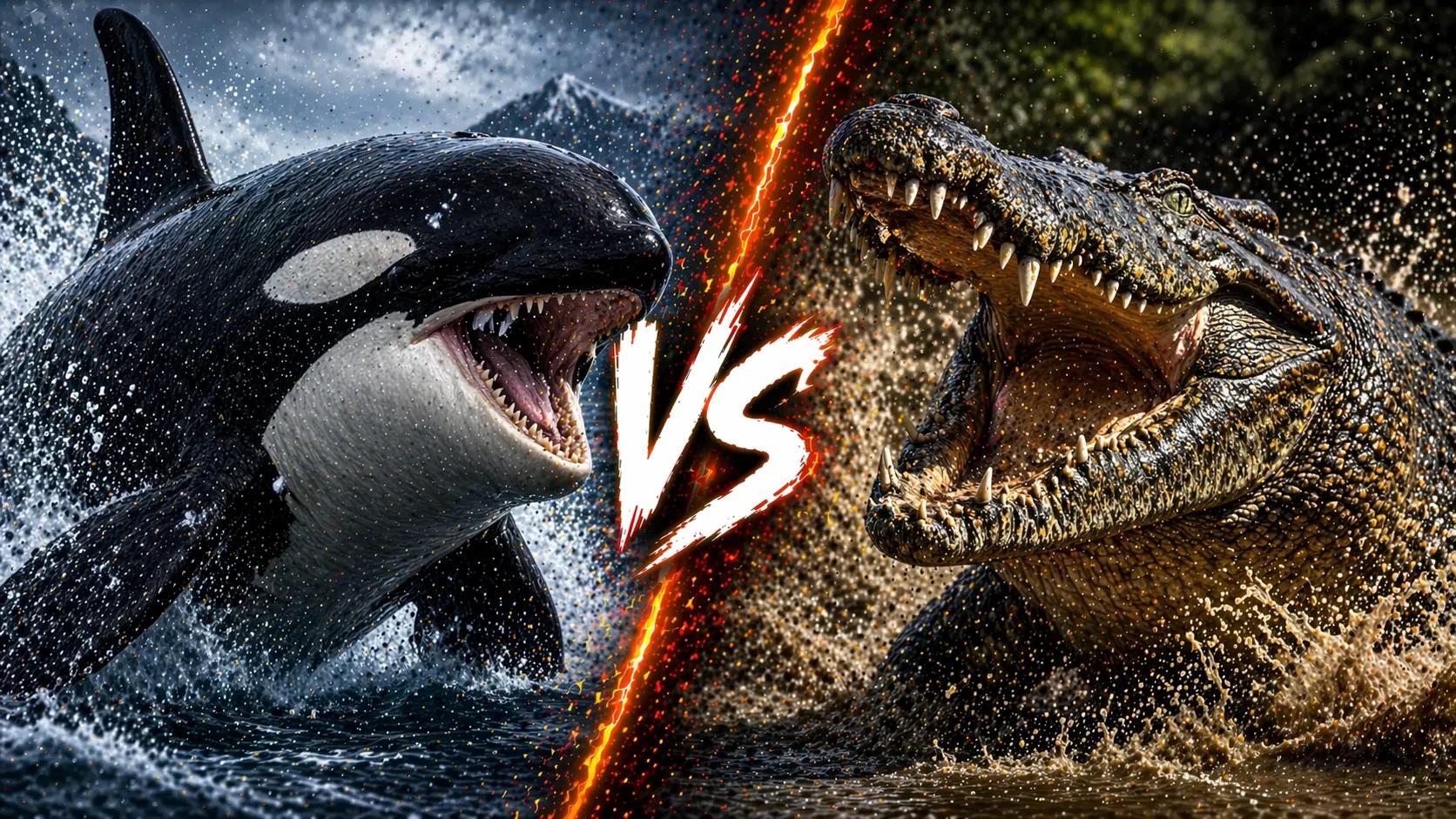
Orca vs Crocodile: Which Predator Has the Edge?
A grounded orca vs crocodile comparison covering size, water control, and why coastal ambush is not the same as open-water authority.
Orca vs Crocodile
Matchup winner
Orca
Quick verdict
Start with the direct answer, then use the structured comparison below to see what changes the outcome.
Orca gets the overwhelming overall edge in true open water through size, intelligence, and sustained aquatic control. Crocodile only improves if the clash compresses into a shoreline ambush problem.
Read the full explanation
The crocodile is dangerous at the edge. The orca is dangerous across the whole water column.
Reader vote
Who do you think wins?
Pick a side — no account needed. Results update live.
No votes yet — be the first to call it.
Editorial note
Why people disagree
It is a sharp contrast between an ambush-edge reptile and a socially intelligent marine apex predator.
Scale and force
The size gap is severe once the fight becomes broadly aquatic.
Water control
Orca owns the broader water map.
Terrain dependence
Crocodile only gets close when the arena narrows sharply.
Comparison FAQ
Short, direct answers to the next questions readers usually ask after the headline verdict.
Who wins, orca or crocodile?+
Orca gets the overwhelming overall edge in true open water through size, intelligence, and sustained aquatic control. Crocodile only improves if the clash compresses into a shoreline ambush problem.
Why does this matchup stay interesting?+
Crocodile remains dangerous in the exact right ambush geometry. Orca still gets the clean overall answer because the total aquatic-control gap is too large.
Head-to-head species stats
These are the same core AnimalDex stat dimensions used on the dedicated animal pages, pulled side by side so the matchup is faster to scan.
Orca
Tier BCrocodile
Tier CTrait-by-trait comparison
Only the categories that matter to this matchup are included. The goal is not filler stats, but the real design differences that change the result.
Far larger marine predator with huge momentum
Scale and force
Orca
Heavy ambush reptile built for edge traps
Scale and force
Orca
Can pressure, turn, and reset in open water
Water control
Orca
Best when depth and shoreline limit the arena
Water control
Orca
Dangerous across a wider marine range
Terrain dependence
Orca
Needs stronger positional help from the environment
Terrain dependence
Orca
How the verdict forms
Verdict timeline
01 · Scale and force
Orca
02 · Water control
Orca
03 · Terrain dependence
Orca
Change the conditions
Scenario breakdown
This is where shallow battle content usually fails. Terrain, spacing, timing, and engagement style can change the answer.
Scenario lean
Orca
Verdict confidence
82%
Orca clearly
This is the least favorable version of the fight for the crocodile.
AnimalDex field profiles
Explore these animals
Orca
Orcinus orca
Coastal seas, open ocean, cold water systems, and productive marine food webs.
Crocodile
Crocodylidae
Rivers, estuaries, mangroves, floodplains, swamps, and shorelines with reliable basking and ambush cover.
Systems Intelligence & Hidden Purpose
See the animals behind this comparison as engineered biological systems: what each one is built to do, where it gains leverage, and why the matchup changes by scenario.
Specialized Hardware
Bold black-and-white body pattern, tall dorsal fin, especially in males, and strong streamlined swimming body give the Orca a body plan tuned for its niche.
Systems Script
Orcas operate in coastal seas, open ocean, cold water systems, and productive marine food webs. Their design helps them match food access, shelter, and timing inside that environment.
Strategic Insight
Shared intelligence lets a group attempt things no single body could solve alone.
Specialized Hardware
Pressure-sensitive receptors around the jaws, eyes and nostrils mounted high on the skull, and a tail built for explosive propulsion make crocodiles effective ambush hardware at the land-water edge.
Systems Script
Crocodiles control chokepoints where rivers, wetlands, and shorelines concentrate traffic. They regulate prey behavior, move nutrients through kills and carcasses, and add caution to landscapes that would otherwise become too predictable.
Strategic Insight
You do not need to dominate every square meter. Control the bottlenecks and the rest of the map starts behaving differently.
Final take
Crocodile remains dangerous in the exact right ambush geometry. Orca still gets the clean overall answer because the total aquatic-control gap is too large.
Collect both animals in AnimalDex
Track the species behind this matchup, compare their real traits, and build the rivalry into your AnimalDex collection.
Related comparisons
Continue with nearby matchups to compare more real-world animal traits without dropping into junky who-wins filler.
Orca vs Great White Shark: Who Has the Ocean Edge?
Orca usually has the edge. Size, intelligence, social coordination, and attack control make it the more complete apex system against a great white shark.
Read comparison
Crocodile vs Shark: Who Wins Where Water Meets Shore?
Great white shark has the edge in open ocean. Crocodile becomes more dangerous the closer the matchup gets to shallow water, shoreline bottlenecks, and ambush-heavy edge habitat.
Read comparison
Discussion
What do you think?
Share your reasoning with other readers. Be civil and stick to the animals.
Sign in to join the discussion.
Sign inNo comments yet. Start the conversation.