

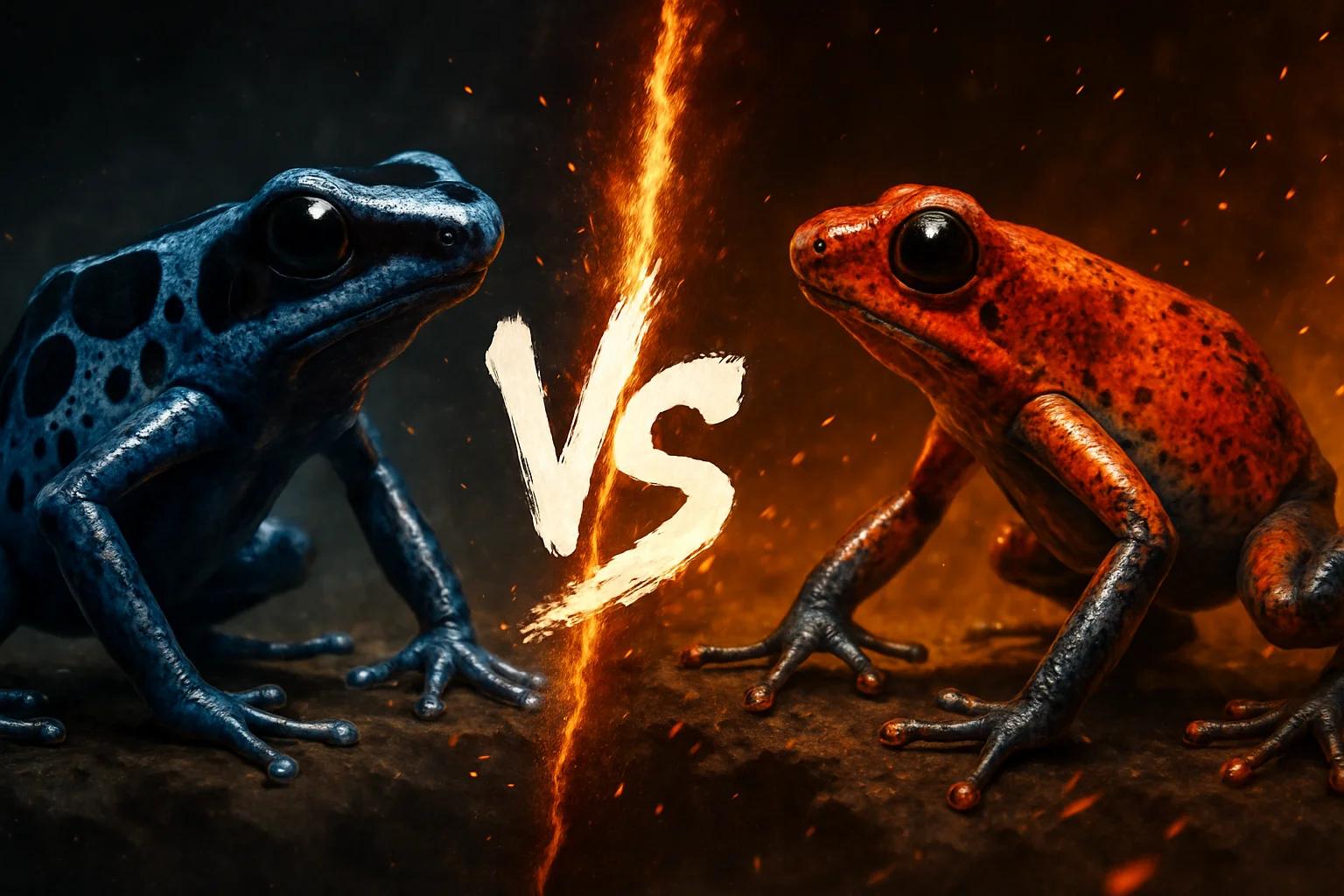
Poison Dart Frog vs Strawberry Poison Dart Frog: Who Actually Wins?
Poison dart frog vs strawberry poison dart frog: who would win? A biology-first breakdown of size, toxins, territorial wrestling, and why the bigger dart frogs usually come out on top.
Poison Dart Frog vs Strawberry Poison Dart Frog
Matchup winner
Poison Dart Frog
Quick verdict
Start with the direct answer, then use the structured comparison below to see what changes the outcome.
The Poison Dart Frog wins overall, with moderate confidence. There is a catch: 'poison dart frog' is the whole family Dendrobatidae, and the strawberry poison dart frog (Oophaga pumilio) is one member of it. So this matchup really pits the family's typical heavyweights against one small specialist. Frogs like the dyeing dart frog (Dendrobates tinctorius) and the golden poison frog (Phyllobates terribilis) commonly reach about 4–5 cm. The strawberry frog usually measures around 2 cm. Dart frogs settle disputes by wrestling and pinning, not by poisoning each other. They carry their own skin toxins and show at least some resistance to them. In a pushing, grappling contest between thumbnail-sized animals, doubling the body length is decisive. The strawberry frog makes up for its size with ferocious territoriality and stubborn home-turf defense. That makes it the likelier winner over a defended perch, but not in an even meeting.
Read the full explanation
Poison Dart Frog wins: typical family members are roughly twice the strawberry frog's length and several times its mass.
Toxins don't decide this fight. Dart frogs wrestle, and they are at least partly resistant to their own alkaloids.
The strawberry frog's edge is attitude: males hold calling perches and grapple intruders hard.
On its own defended territory, the strawberry frog can win.
Reader vote
Who do you think wins?
Pick a side — no account needed. Results update live.
No votes yet — be the first to call it.
Editorial note
Why people disagree
'Poison dart frog' is a family, not one species. The answer shifts depending on whether you picture a 5 cm dyeing dart frog or a tiny Ranitomeya.
Grappling mass
Dart frog fights are pinning contests, so the heavier frog usually ends on top.
Chemical armor
Both frogs are deadly to predators. Golden poison frogs sit at the extreme top of vertebrate toxicity, but neither frog's poison wins the wrestling match.
Territorial aggression
Motivation matters in small-animal disputes. Residents often beat larger visitors.
Read the full explanation +
People assume the more toxic frog wins. But batrachotoxins and pumiliotoxins evolved to stop predators, not to beat rival frogs.
Strawberry frogs are famous for territorial combat, so some readers rate fighting spirit above raw size.
Comparison FAQ
Short, direct answers to the next questions readers usually ask after the headline verdict.
Would a poison dart frog beat a strawberry poison dart frog?+
Usually yes. Typical larger dart frogs are about twice the strawberry frog's length and win wrestling bouts by pinning it.
Which frog is stronger?+
The larger dart frog species are stronger simply because they have more body mass and limb leverage.
Would they poison each other?+
Not meaningfully. Their toxins work as predator defense, and dart frogs show at least partial resistance to their own alkaloids.
Why is the strawberry frog still dangerous?+
Its skin carries potent pumiliotoxins that can sicken or kill predators. It is also highly territorial and will fight hard on home ground.
Is the strawberry poison dart frog a type of poison dart frog?+
Yes. Oophaga pumilio belongs to the family Dendrobatidae, so this matchup compares one species with the family's typical larger members.
Head-to-head species stats
These are the same core AnimalDex stat dimensions used on the dedicated animal pages, pulled side by side so the matchup is faster to scan.
Poison Dart Frog
Tier DStrawberry Poison Dart Frog
Tier DTrait-by-trait comparison
Only the categories that matter to this matchup are included. The goal is not filler stats, but the real design differences that change the result.
Larger species around 4–5 cm
Grappling mass
Poison Dart Frog
About 1.7–2.4 cm
Grappling mass
Poison Dart Frog
Includes batrachotoxin carriers, among the most toxic animals known
Chemical armor
Poison Dart Frog
Potent pumiliotoxins sourced from mites and ants
Chemical armor
Poison Dart Frog
Varies widely by species
Territorial aggression
Strawberry Poison Dart Frog
Males defend calling perches and wrestle intruders
Territorial aggression
Strawberry Poison Dart Frog
Agile leaf-litter hoppers
Hop-and-reposition speed
Poison Dart Frog
Deliberate, short-hop forager
Hop-and-reposition speed
Poison Dart Frog
Tadpole transport common across the family
Parental endurance
Strawberry Poison Dart Frog
Mothers carry tadpoles to bromeliads and feed them unfertilized eggs
Parental endurance
Strawberry Poison Dart Frog
How the verdict forms
Verdict timeline
01 · Grappling mass
Poison Dart Frog
02 · Chemical armor
Poison Dart Frog
03 · Territorial aggression
Strawberry Poison Dart Frog
04 · Hop-and-reposition speed
Poison Dart Frog
05 · Parental endurance
Strawberry Poison Dart Frog
Change the conditions
Scenario breakdown
This is where shallow battle content usually fails. Terrain, spacing, timing, and engagement style can change the answer.
Scenario lean
Poison Dart Frog
Verdict confidence
82%
Size wins the grapple.
In neutral, cluttered litter, neither frog has a home advantage. The match becomes a wrestling bout in which body length and mass decide who pins whom. A representative dart frog at 4–5 cm simply outleverages a 2 cm strawberry frog.
AnimalDex field profiles
Explore these animals
Poison Dart Frog
Dendrobatidae
Humid tropical forest, leaf litter, mossy ground, and stream-edge microhabitats.
Strawberry Poison Dart Frog
Oophaga pumilio
rainforest floor, leaf litter, and humid tropical understory
Systems Intelligence & Hidden Purpose
See the animals behind this comparison as engineered biological systems: what each one is built to do, where it gains leverage, and why the matchup changes by scenario.
Specialized Hardware
Skin alkaloid defenses, bright warning coloration, and precise moisture dependence make poison dart frogs compact hardware for high-risk tropical floor systems.
Systems Script
They help regulate small invertebrate populations while translating chemical defense into a public signal. Their whole design says the strongest deterrent is one your environment can recognize instantly.
Strategic Insight
If you must defend a small footprint, make the cost of testing you obvious.
Specialized Hardware
bright red or orange warning colors, tiny tropical body, and careful parental transport of tadpoles give the Strawberry Poison Dart Frog a body plan tuned for its niche.
Systems Script
Strawberry Poison Dart Frogs operate through rainforest floor, leaf litter, and humid tropical understory Their design links movement, shelter, and feeding into one workable survival system.
Strategic Insight
A system can invest heavily in a small number of vulnerable outcomes.
Final take
The Poison Dart Frog takes this matchup because dart frog fights are physics, not chemistry. Wrestling rewards mass, and the family's typical species heavily outweigh the strawberry frog.
Read the full explanation
The strawberry poison dart frog is still no pushover. It is one of the most territorial frogs in the tropics, and on its own perch or near its bromeliad nursery it can drive off bigger rivals.
Both frogs share one unbeatable trait: no sensible predator wants to swallow either of them.
Collect both animals in AnimalDex
Track the species behind this matchup, compare their real traits, and build the rivalry into your AnimalDex collection.
Related comparisons
Continue with nearby matchups to compare more real-world animal traits without dropping into junky who-wins filler.
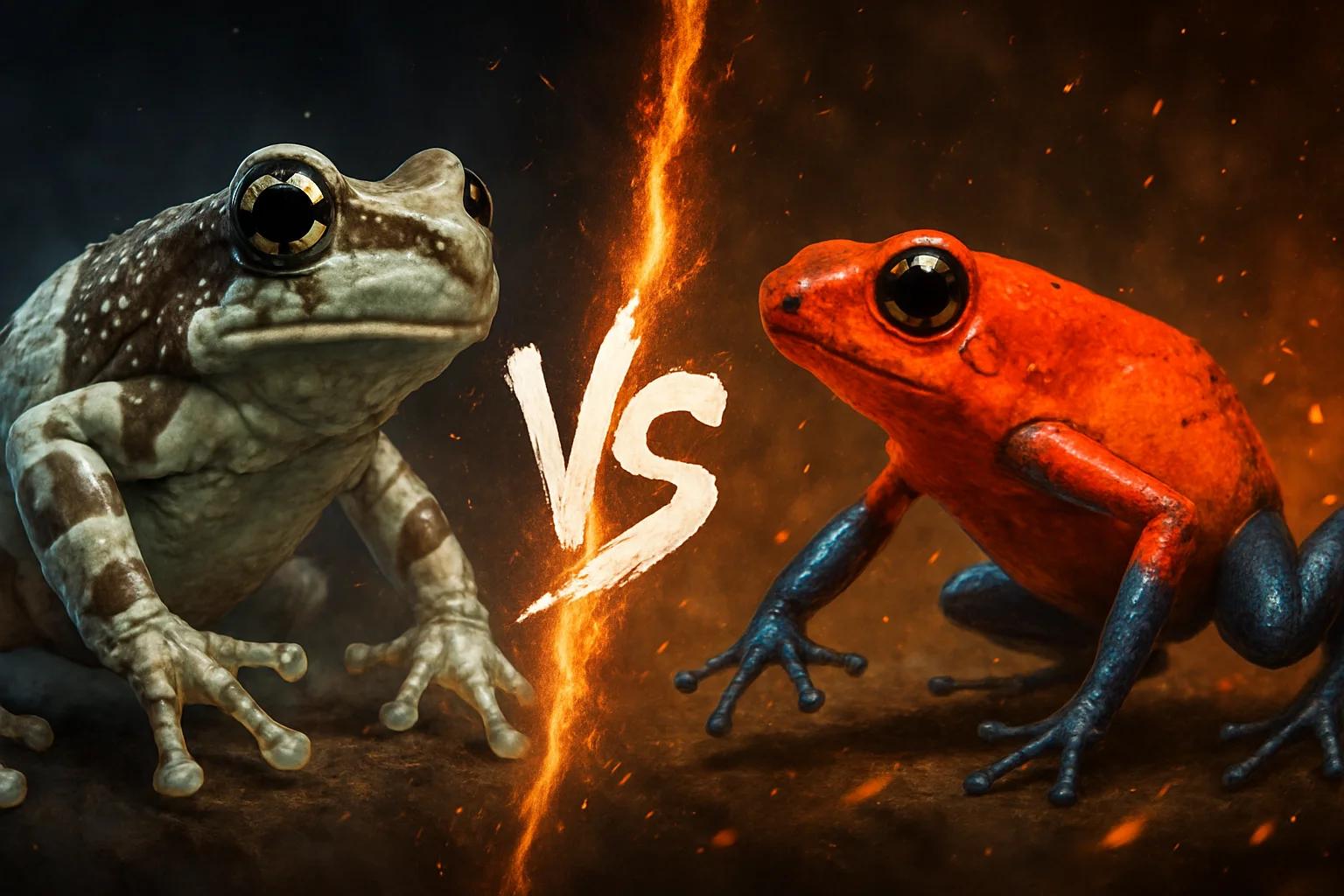
Amazon Milk Frog vs Strawberry Poison Dart Frog: Who Actually Wins?
The Amazon milk frog wins this matchup on size and leverage, but not by fighting. It is an adult treefrog roughly 6–10 cm long, while the strawberry poison dart frog tops out around 2 cm. That size gap gives the milk frog more reach, more mass and a gape large enough to engulf a frog its rival's size. The milk frog also has its own sticky, milky skin secretion that deters handlers. The strawberry dart frog's alkaloid toxins are far more potent and have real deterrent value. Still, those toxins are a defense that punishes a predator only after contact, not a weapon that wins a confrontation. In any realistic encounter, the bigger, stronger and more agile milk frog controls the space. The tiny dart frog's best outcome is being left alone, and that is exactly what its warning colors are built to achieve.
Read comparison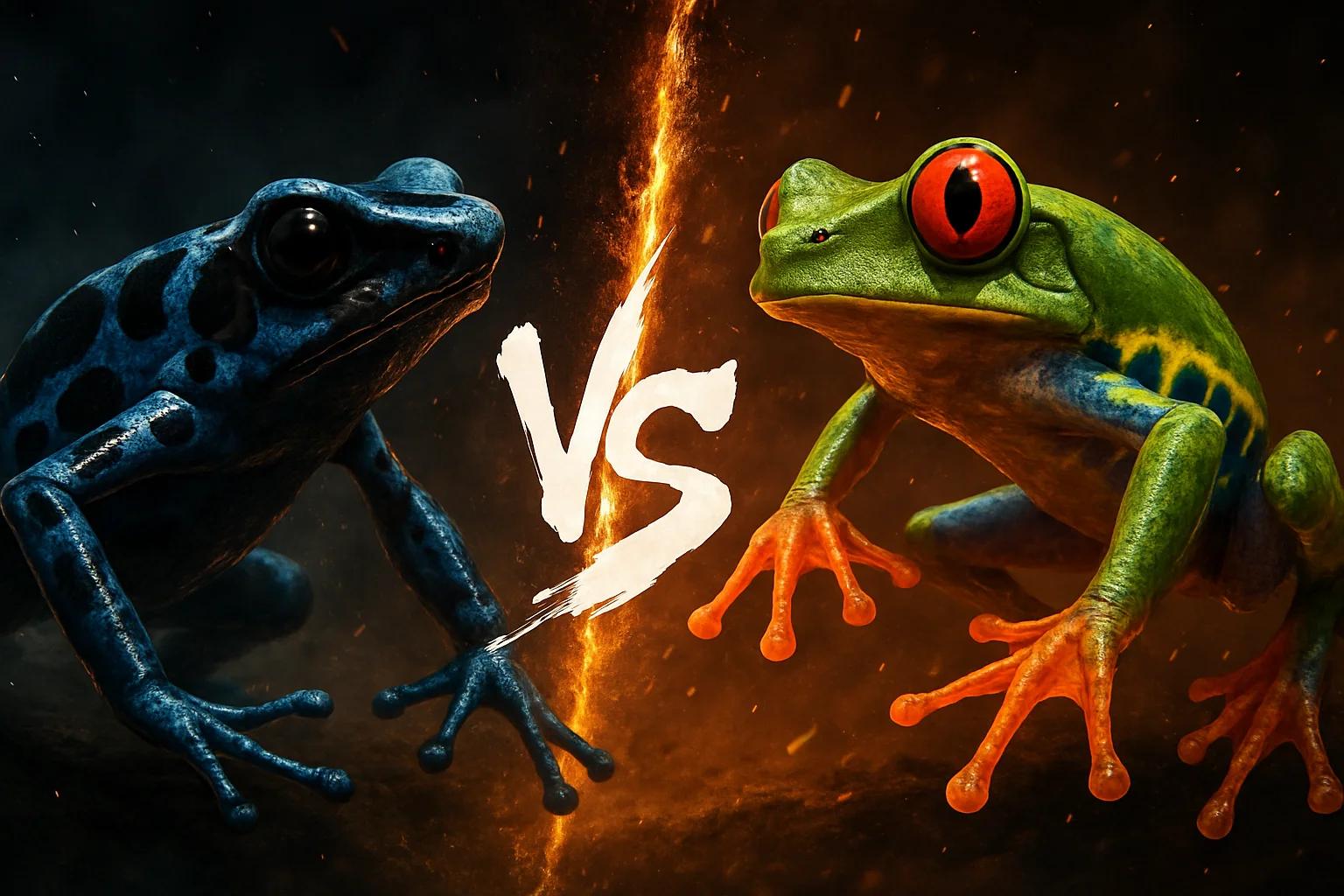
Poison Dart Frog vs Red-eyed Tree Frog: Who Actually Wins?
The poison dart frog wins this matchup. The red-eyed tree frog is longer and leggier, but neither frog is built to fight, so the deciding factor is chemistry. Many dart frogs carry potent alkaloid skin toxins, and the most toxic, like Phyllobates terribilis, rank among the most poisonous animals known. The red-eyed tree frog's defense is mostly a startle trick: it flashes its red eyes and bright flanks to buy a split second for escape. Its skin peptides are mild by comparison. In any contact-based contest, the frog whose skin punishes touch holds the decisive edge. Dart frogs are also boldly active by day, defend territories, and will wrestle rivals of their own species, while the red-eyed tree frog is a nocturnal escape artist that avoids confrontation.
Read comparison
Discussion
What do you think?
Share your reasoning with other readers. Be civil and stick to the animals.
Sign in to join the discussion.
Sign inNo comments yet. Start the conversation.