

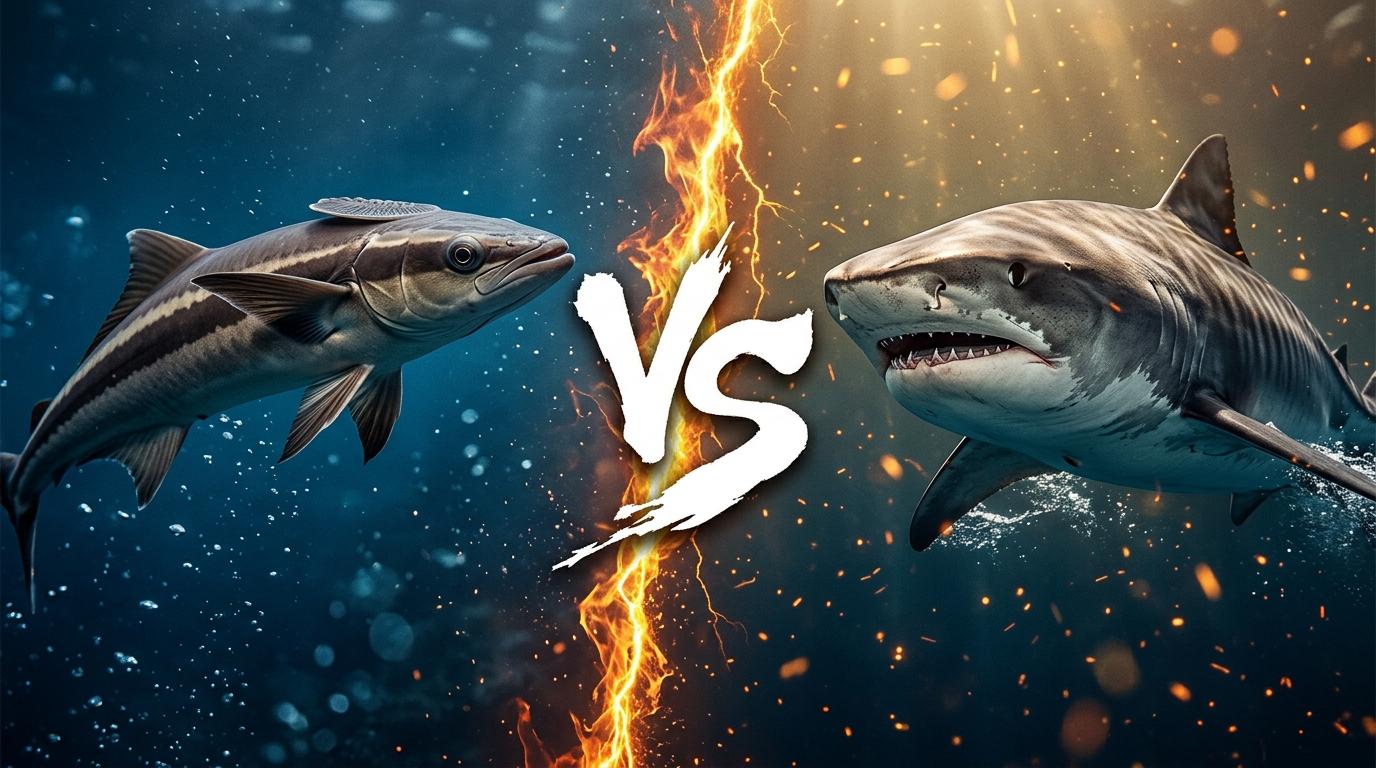
Live Sharksucker vs Tiger Shark: Who Actually Wins?
Live sharksucker vs tiger shark: who would win? A biology-first breakdown of size, bite, speed and survival tactics, with a clear verdict on why the tiger shark wins and how the sharksucker survives anyway.
Remora vs Tiger Shark
Matchup winner
Tiger Shark
Quick verdict
Start with the direct answer, then use the structured comparison below to see what changes the outcome.
The tiger shark wins decisively. A big Galeocerdo cuvier can exceed 4–5 m and several hundred kilograms. It carries serrated, cockscomb-shaped teeth built to saw through sea turtle shells, and its generalist appetite treats almost anything as potential food. The live sharksucker (Echeneis naucrates) tops out around 1 m. It is slender and has no meaningful weapon. Its signature hardware is a suction disc evolved from the dorsal fin, which lets it ride larger animals rather than fight them. In any real confrontation the sharksucker's best outcome is not losing: staying close, staying small, and staying out of the bite arc. Biology built one of these animals to dominate and the other to hitchhike, so the matchup is a mismatch on paper and in the water.
Read the full explanation
Tiger shark wins: it has roughly 5x the length, vastly more mass, and a turtle-cracking bite.
The sharksucker has no offensive weapon. Its disc is for attachment, not combat.
The sharksucker's real strategy is proximity. Riding a shark keeps it fed and protected.
The only 'win' for the sharksucker is avoidance, which it is very good at.
Reader vote
Who do you think wins?
Pick a side — no account needed. Results update live.
No votes yet — be the first to call it.
Editorial note
Why people disagree
Remoras are often seen clinging to big sharks unharmed, which makes some readers think they are immune or somehow 'winning' the relationship.
Explosive power
Mass times acceleration decides impact, and the tiger shark brings far more of both.
Bite weaponry
Only one animal here can inflict a fight-ending wound.
Close-range durability
Durability lets the tiger shark take risks the sharksucker can't survive.
Read the full explanation +
The relationship is largely commensal and sometimes mildly parasitic or cleaning-oriented, so 'battle' framing feels odd. Even so, the size and weapon gap settles any direct contest.
Sharksuckers are nimble free-swimmers compared to many remoras, so people overrate how hard they would be to catch in open water.
Comparison FAQ
Short, direct answers to the next questions readers usually ask after the headline verdict.
Would a live sharksucker beat a tiger shark?+
No. The tiger shark wins easily because of its overwhelming size advantage and a bite designed to crack sea turtle shells.
Which is stronger, a remora or a tiger shark?+
The tiger shark, by a vast margin. The sharksucker's grip strength sits in its suction disc, which is built for clinging rather than fighting.
Why don't tiger sharks eat the remoras on their bodies?+
Attached remoras sit outside the shark's bite range. They also cost the shark little and may help remove parasites, so the shark tolerates them.
Why does the sharksucker stay hard to beat even though it loses?+
It is quick, small and agile in cover, and it can latch onto the shark itself. That makes it frustrating to catch even though it can never win a fight.
Is a tiger shark dangerous to humans?+
Yes. Tiger sharks are among the species most often involved in serious bites, though incidents remain rare.
Head-to-head species stats
These are the same core AnimalDex stat dimensions used on the dedicated animal pages, pulled side by side so the matchup is faster to scan.
Remora
Tier CTiger Shark
Tier CTrait-by-trait comparison
Only the categories that matter to this matchup are included. The goal is not filler stats, but the real design differences that change the result.
Short darting bursts from a slim body
Explosive power
Tiger Shark
Powerful tail-driven lunges from a heavy frame
Explosive power
Tiger Shark
Small jaws with fine teeth for scraps and small prey
Bite weaponry
Tiger Shark
Serrated cockscomb teeth that saw through turtle shells
Bite weaponry
Tiger Shark
Light build with little protective bulk
Close-range durability
Tiger Shark
Thick body and tough skin, able to absorb struggling prey
Close-range durability
Tiger Shark
Suction disc lets it latch onto hosts and hide in their blind spots
Evasion and hitchhiking
Remora
No need to evade, so it relies on presence and size
Evasion and hitchhiking
Remora
Low; it survives through association
Ecological dominance
Tiger Shark
Apex-level generalist predator
Ecological dominance
Tiger Shark
How the verdict forms
Verdict timeline
01 · Explosive power
Tiger Shark
02 · Bite weaponry
Tiger Shark
03 · Close-range durability
Tiger Shark
04 · Evasion and hitchhiking
Remora
05 · Ecological dominance
Tiger Shark
Change the conditions
Scenario breakdown
This is where shallow battle content usually fails. Terrain, spacing, timing, and engagement style can change the answer.
Scenario lean
Tiger Shark
Verdict confidence
82%
Tiger shark wins if it commits.
In open water the sharksucker can dart and turn, but it has nowhere to hide. The tiger shark's larger body gives it sustained cruising power and a huge strike envelope. The sharksucker might escape a half-hearted pass. A determined tiger shark closes the gap.
AnimalDex field profiles
Explore these animals
Remora
Echeneis naucrates
open ocean, reef edge, and large-animal marine routes
Tiger Shark
Galeocerdo cuvier
coastal sea, reef edge, and open warm ocean
Systems Intelligence & Hidden Purpose
See the animals behind this comparison as engineered biological systems: what each one is built to do, where it gains leverage, and why the matchup changes by scenario.
Specialized Hardware
suction-disc head, hitchhiking travel on larger animals, and mobile scavenging and feeding give the Remora a body plan tuned for its niche.
Systems Script
Remoras operate through open ocean, reef edge, and large-animal marine routes Their design links movement, shelter, and feeding into one workable survival system.
Strategic Insight
Leverage often matters more than scale.
Specialized Hardware
dark body stripes, broad powerful head, and highly opportunistic feeding give the Tiger Shark a body plan tuned for its niche.
Systems Script
Tiger Sharks operate through coastal sea, reef edge, and open warm ocean Their design links movement, shelter, feeding, and survival into one workable system.
Strategic Insight
A flexible hunter can keep working when one option disappears.
Final take
The tiger shark is the clear winner. Its size, serrated teeth, durable body and apex appetite make any direct contest one-sided.
Read the full explanation
The sharksucker's evolutionary genius lies elsewhere. Instead of competing with giants, it attaches to them, turning a predator's power into transport, protection and leftovers. In nature, that strategy is why these two are usually companions rather than combatants.
Collect both animals in AnimalDex
Track the species behind this matchup, compare their real traits, and build the rivalry into your AnimalDex collection.
Related comparisons
Continue with nearby matchups to compare more real-world animal traits without dropping into junky who-wins filler.
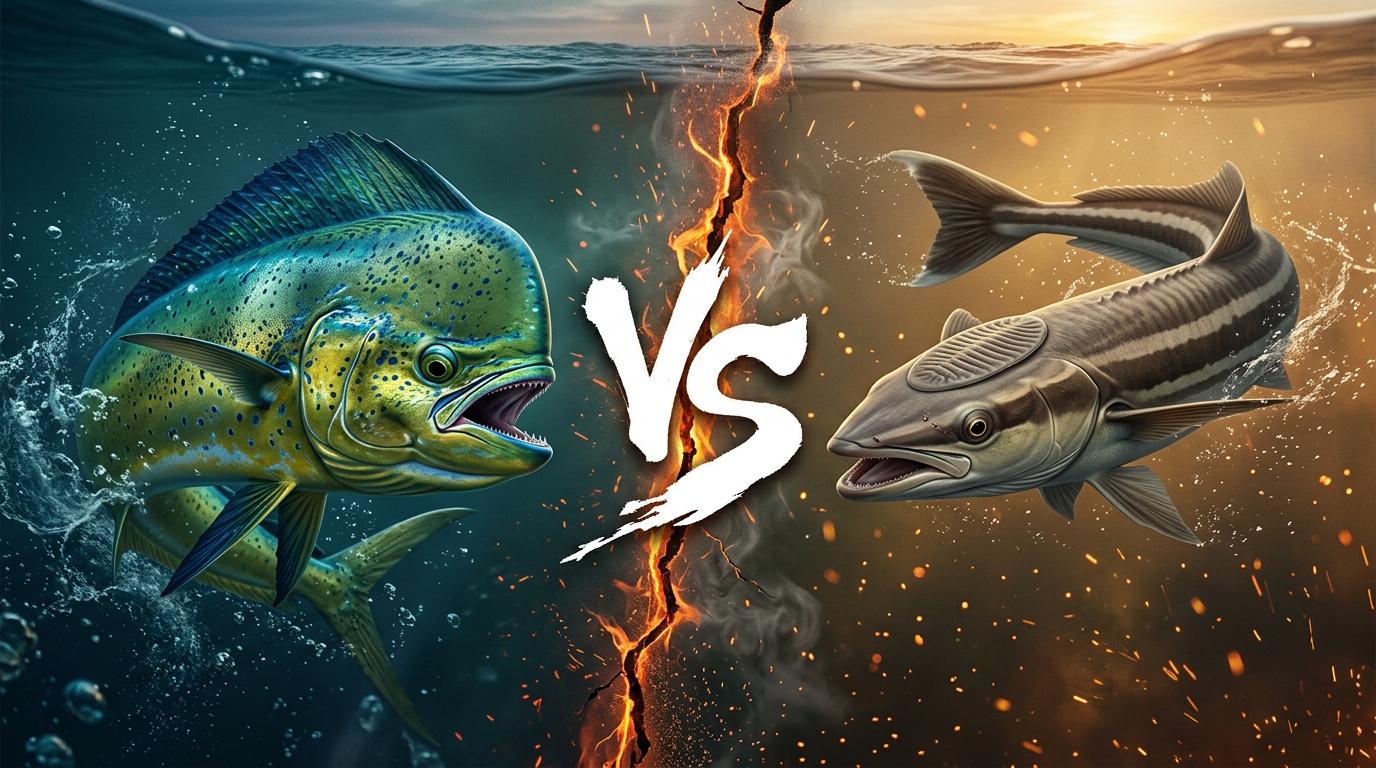
Mahi-mahi vs Live Sharksucker: Who Actually Wins?
The mahi-mahi wins clearly. This is a blue-water sprinter built to hunt fast prey, facing a hitchhiker built to save energy. Mahi-mahi can top 1 meter and 10+ kg and are among the fastest fish in the sea. They pair a deep, muscular body with a big mouth lined with fine teeth, and they hunt flying fish and squid by the school. The live sharksucker is longer than many people expect, sometimes approaching 1 meter. But it is slender, and its signature weapon is a suction disc on its head, made for riding sharks, turtles, and rays rather than fighting. Away from a host, the sharksucker has no speed edge, no armor, and no real offense. Its best plays are refusing the fight or clinging to something bigger. In open water the mahi-mahi controls tempo, angle, and finish.
Read comparison
Discussion
What do you think?
Share your reasoning with other readers. Be civil and stick to the animals.
Sign in to join the discussion.
Sign inNo comments yet. Start the conversation.