

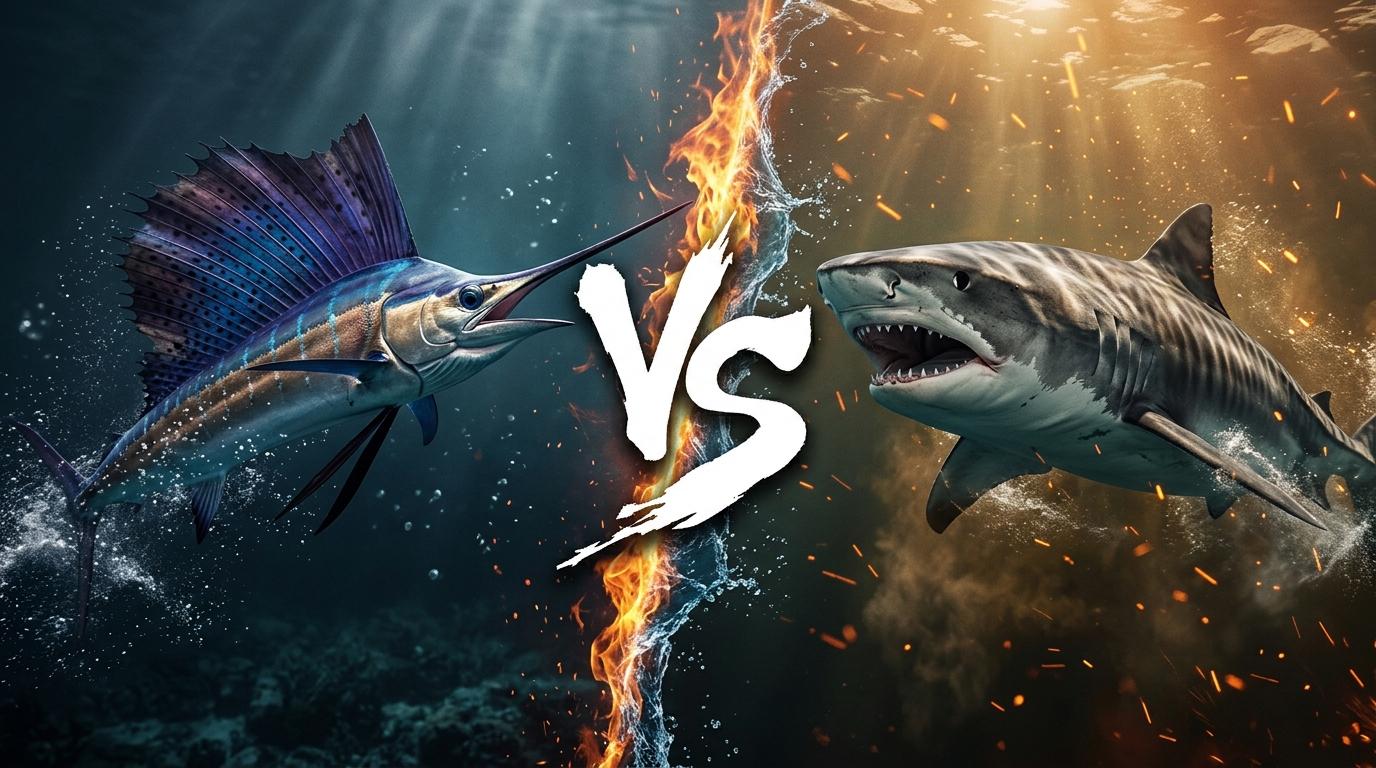
Sailfish vs Tiger Shark: Who Actually Wins?
Sailfish vs tiger shark: who would win? A biology-first breakdown of speed, size, bite, bill and real ocean scenarios, and why the tiger shark takes it.
Sailfish vs Tiger Shark
Matchup winner
Tiger Shark
Quick verdict
Start with the direct answer, then use the structured comparison below to see what changes the outcome.
The tiger shark wins, and it isn't especially close. A big adult tiger shark is commonly 3.5–4.5 m long and several hundred kilograms, often five or more times the mass of a large sailfish. It carries a broad, serrated bite built to saw through sea turtle shells. The sailfish is a sprint-and-slash specialist: a slender, lightly built hunter whose bill is designed to stun small schooling fish, not to injure an armored, thick-skinned predator. The sailfish's real edge is acceleration and maneuverability, which means it is far better at escaping a tiger shark than at beating one. In any frame where they actually make contact, mass, bite mechanics and durability decide it for the shark.
Read the full explanation
Tiger shark wins any real confrontation. It has far more mass and a turtle-cracking serrated bite.
The sailfish's bill is a fish-stunning tool, not a weapon that can stop a shark.
The sailfish's best outcome is a clean escape through superior burst speed and agility.
An ambush from below is the tiger shark's ideal frame, and it fits how the shark actually hunts.
Reader vote
Who do you think wins?
Pick a side — no account needed. Results update live.
No votes yet — be the first to call it.
Editorial note
Why people disagree
Viral claims of 110 km/h sailfish speed make it sound untouchable. Research suggests realistic hunting bursts are far lower, though still quicker and more agile than a tiger shark.
Raw mass and frame
In water, mass resists impact and powers the shake-and-saw feeding motion. The size gap here is huge.
Explosive acceleration
This is the sailfish's only decisive asset. It controls whether a fight ever happens.
Turning agility
Agility lets the sailfish dodge a lunge, but not punish one.
Read the full explanation +
The bill looks like a sword, so people imagine it as a lance. In reality it slashes sideways at sardines and is fragile against heavy, armored targets.
'Winning' gets confused with 'surviving'. The sailfish usually avoids losing by leaving, which is not the same as beating the shark.
Comparison FAQ
Short, direct answers to the next questions readers usually ask after the headline verdict.
Would a sailfish beat a tiger shark?+
No. In a real fight the tiger shark wins. Its size, serrated bite and tough skin outclass the sailfish's slashing bill.
Which is stronger, a sailfish or a tiger shark?+
The tiger shark, by a wide margin. Adults can weigh several hundred kilograms and have bites strong enough to crack sea turtle shells.
Is a sailfish faster than a tiger shark?+
Yes. Sailfish accelerate and maneuver far better, even if the viral 110 km/h figure is likely an overestimate.
Can a sailfish's bill hurt a shark?+
It can cause minor cuts, but it is built to stun small fish and can break. It is very unlikely to stop a large tiger shark.
Why is the sailfish still dangerous even though it loses?+
Its explosive speed and sharp bill make it hard to catch and capable of wounding careless attackers, including humans who handle hooked fish. A shark that lunges and misses has wasted energy, while the sailfish is gone.
Do tiger sharks eat billfish?+
Tiger sharks are extreme generalists that take large fish opportunistically, so a weakened or ambushed billfish fits their menu.
Head-to-head species stats
These are the same core AnimalDex stat dimensions used on the dedicated animal pages, pulled side by side so the matchup is faster to scan.
Sailfish
Tier BTiger Shark
Tier CTrait-by-trait comparison
Only the categories that matter to this matchup are included. The goal is not filler stats, but the real design differences that change the result.
Slender, typically under ~90 kg
Raw mass and frame
Tiger Shark
Bulky, often 400 kg+
Raw mass and frame
Tiger Shark
Elite sprinter, folds fins for hydrodynamic bursts
Explosive acceleration
Sailfish
Slow cruiser with short lunges
Explosive acceleration
Sailfish
Uses its sail as a rudder for tight turns
Turning agility
Sailfish
Broad turning radius
Turning agility
Sailfish
Bill for slashing small fish
Kill hardware
Tiger Shark
Serrated, cockscomb-shaped teeth
Kill hardware
Tiger Shark
Thin-bodied, bill can snap
Close-range durability
Tiger Shark
Thick denticle-armored skin, heavy musculature
Close-range durability
Tiger Shark
Open-water pack hunter
Ambush control
Tiger Shark
Stealthy approach from below and behind
Ambush control
Tiger Shark
How the verdict forms
Verdict timeline
01 · Raw mass and frame
Tiger Shark
02 · Explosive acceleration
Sailfish
03 · Turning agility
Sailfish
04 · Kill hardware
Tiger Shark
05 · Close-range durability
Tiger Shark
06 · Ambush control
Tiger Shark
Change the conditions
Scenario breakdown
This is where shallow battle content usually fails. Terrain, spacing, timing, and engagement style can change the answer.
Scenario lean
Sailfish
Verdict confidence
82%
Sailfish escapes.
If the sailfish sees the shark coming in clear blue water, its acceleration and tight turning leave the tiger shark behind. This is a survival win, not a combat win. Nothing is damaged, and the sailfish simply refuses the fight.
AnimalDex field profiles
Explore these animals
Sailfish
Istiophorus platypterus
warm ocean surface waters and offshore pelagic zones
Tiger Shark
Galeocerdo cuvier
coastal sea, reef edge, and open warm ocean
Systems Intelligence & Hidden Purpose
See the animals behind this comparison as engineered biological systems: what each one is built to do, where it gains leverage, and why the matchup changes by scenario.
Specialized Hardware
towering dorsal sail, high-speed open-water pursuit, and bill used in coordinated feeding give the Sailfish a body plan tuned for its niche.
Systems Script
Sailfishs operate through warm ocean surface waters and offshore pelagic zones Their design links movement, shelter, and feeding into one workable survival system.
Strategic Insight
At high speed, even small design advantages compound quickly.
Specialized Hardware
dark body stripes, broad powerful head, and highly opportunistic feeding give the Tiger Shark a body plan tuned for its niche.
Systems Script
Tiger Sharks operate through coastal sea, reef edge, and open warm ocean Their design links movement, shelter, feeding, and survival into one workable system.
Strategic Insight
A flexible hunter can keep working when one option disappears.
Final take
The tiger shark is the overall winner. It brings the mass, the bite and the armored body that decide any real fight. The sailfish is one of the ocean's most refined speed hunters, but its whole design is about finesse against small prey.
Read the full explanation
Treat the sailfish's 'win' condition as escape, not victory. In a sport where outrunning counts, it shines. In a contest of who walks away with the other as a meal, the tiger shark wins most of the time.
Collect both animals in AnimalDex
Track the species behind this matchup, compare their real traits, and build the rivalry into your AnimalDex collection.
Related comparisons
Continue with nearby matchups to compare more real-world animal traits without dropping into junky who-wins filler.
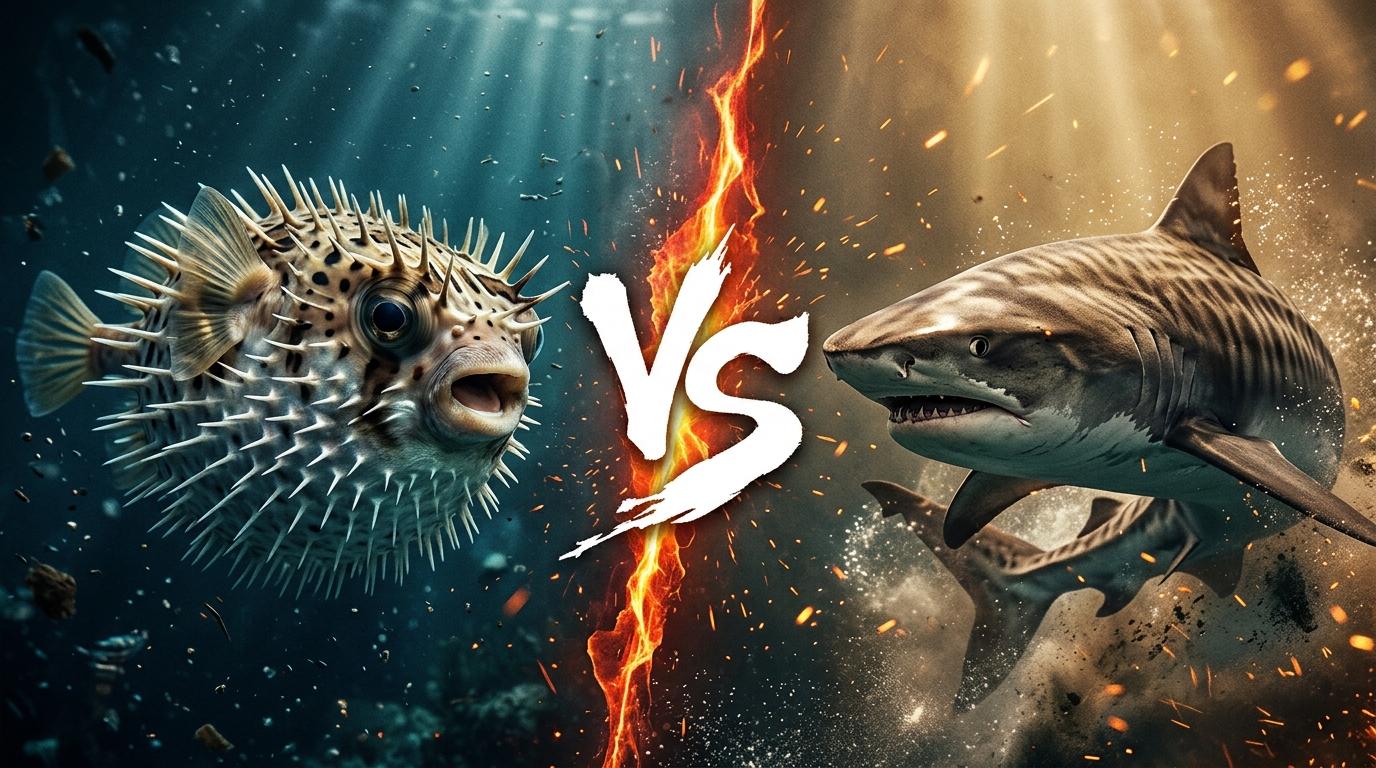
Spot-fin Porcupinefish vs Tiger Shark: Who Actually Wins?
The tiger shark wins clearly. A mature Galeocerdo cuvier can exceed 4 meters and several hundred kilograms. Its serrated, can-opener teeth evolved to saw through sea turtle shells. Few sharks are more willing to eat difficult, armored, or awkward prey. The spot-fin porcupinefish runs on a passive defense system: it gulps water to swell into a spiked ball and carries tetrodotoxin in its tissues. That combination deters most mid-sized predators and can kill a careless one. Against a tiger shark, though, inflation mostly turns the fish into a bigger, slower target, and the shark's jaws are built for exactly that kind of problem. The porcupinefish's real weapon is the toxin it delivers after being eaten. That is a cost to the predator, not a victory for the prey.
Read comparison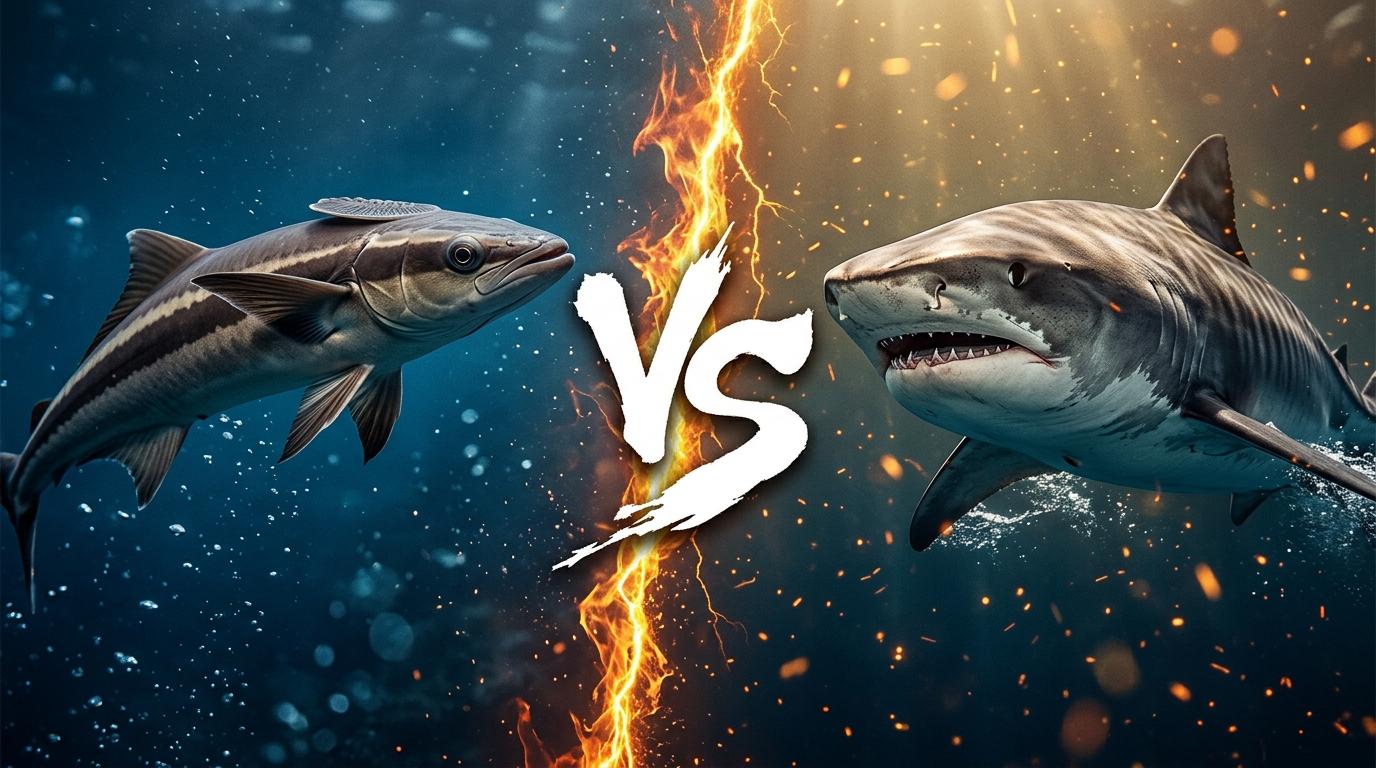
Live Sharksucker vs Tiger Shark: Who Actually Wins?
The tiger shark wins decisively. A big Galeocerdo cuvier can exceed 4–5 m and several hundred kilograms. It carries serrated, cockscomb-shaped teeth built to saw through sea turtle shells, and its generalist appetite treats almost anything as potential food. The live sharksucker (Echeneis naucrates) tops out around 1 m. It is slender and has no meaningful weapon. Its signature hardware is a suction disc evolved from the dorsal fin, which lets it ride larger animals rather than fight them. In any real confrontation the sharksucker's best outcome is not losing: staying close, staying small, and staying out of the bite arc. Biology built one of these animals to dominate and the other to hitchhike, so the matchup is a mismatch on paper and in the water.
Read comparison
Discussion
What do you think?
Share your reasoning with other readers. Be civil and stick to the animals.
Sign in to join the discussion.
Sign inNo comments yet. Start the conversation.