


Western Honey Bee vs Hummingbird Hawk-Moth: Who Actually Wins?
Honey bee vs hummingbird hawk-moth: a biology-first look at stingers, speed, hovering and flower fights, and which insect comes out on top.
Western Honey Bee vs Hummingbird Hawk-Moth
Matchup winner
Western Honey Bee
Quick verdict
Start with the direct answer, then use the structured comparison below to see what changes the outcome.
The Western Honey Bee wins. The hummingbird hawk-moth is bigger, faster and one of the most gifted hoverers in the insect world, but it has no weapon. It cannot sting or bite. Its long proboscis is a drinking straw, not a blade. A worker honey bee carries a venom-loaded, barbed stinger, strong mandibles, and an alarm-pheromone system that can pull nestmates into a defense. If the two actually make contact, only one of them can do real harm. The moth's real strength is avoidance: it can feed from a distance, accelerate away, and simply refuse the fight. That keeps it safe, but it does not win anything. In any frame where contact happens or a resource is defended, the bee holds the decisive tool.
Read the full explanation
Winner: Western Honey Bee. It has a venomous stinger, and the moth has no weapon at all.
The hawk-moth is roughly twice the bee's size and much faster, but size without offense rarely settles insect conflicts.
The moth's best move is to leave. Its speed and hovering let it dodge most encounters.
Near a hive, the bee's colony defense makes the gap even wider.
Reader vote
Who do you think wins?
Pick a side — no account needed. Results update live.
No votes yet — be the first to call it.
Editorial note
Why people disagree
The moth looks impressive. It is larger, hums audibly and hovers like a tiny bird, so people assume it would dominate a smaller insect.
Built-in weaponry
This is the whole matchup. Only the bee can deliver an injury.
Flight speed and acceleration
Speed gives the moth control over whether contact happens at all.
Hover precision
The moth can drink while keeping its distance from flowers and rivals.
Read the full explanation +
Speed gets overrated. Being the faster flier helps you escape, but it doesn't help you win if you can't inflict damage.
In real life the two almost never fight. They share flowers peacefully, so 'who wins' depends on forcing contact that the moth would normally avoid.
Comparison FAQ
Short, direct answers to the next questions readers usually ask after the headline verdict.
Would a honey bee beat a hummingbird hawk-moth?+
Yes. If they actually make contact, the bee's stinger decides the fight, because the moth has no way to strike back.
Which is stronger, the bee or the hawk-moth?+
The moth is larger and the more powerful flier. The bee is far stronger in a fight because it has venom and a sturdy, compact body built for grappling.
Can a hummingbird hawk-moth sting?+
No. It is completely harmless to people and to other insects. Its proboscis is only used for drinking nectar.
Why is the hawk-moth still hard to beat?+
Its speed and hovering skill let it avoid nearly every confrontation. A bee can't sting something it can't catch.
Do they fight in the wild?+
Rarely. They usually share flowers, and any brief clash typically ends with the moth moving on.
Head-to-head species stats
These are the same core AnimalDex stat dimensions used on the dedicated animal pages, pulled side by side so the matchup is faster to scan.
Western Honey Bee
Tier CHummingbird Hawk-Moth
Tier CTrait-by-trait comparison
Only the categories that matter to this matchup are included. The goal is not filler stats, but the real design differences that change the result.
Barbed venom stinger plus mandibles
Built-in weaponry
Western Honey Bee
None. Its proboscis is for drinking only
Built-in weaponry
Western Honey Bee
Steady forager, roughly 25 km/h
Flight speed and acceleration
Hummingbird Hawk-Moth
Rapid darting flier with explosive bursts
Flight speed and acceleration
Hummingbird Hawk-Moth
Lands to feed and hovers adequately
Hover precision
Hummingbird Hawk-Moth
Elite hovering. It feeds mid-air with its proboscis extended
Hover precision
Hummingbird Hawk-Moth
About 12–15 mm long, light build
Body mass
Hummingbird Hawk-Moth
About 4–4.5 cm wingspan, stout body
Body mass
Hummingbird Hawk-Moth
Alarm pheromones can recruit nestmates
Social backup
Western Honey Bee
Solitary
Social backup
Western Honey Bee
Armored, compact, grapples well
Close-range durability
Western Honey Bee
Loose scales and soft body
Close-range durability
Western Honey Bee
How the verdict forms
Verdict timeline
01 · Built-in weaponry
Western Honey Bee
02 · Flight speed and acceleration
Hummingbird Hawk-Moth
03 · Hover precision
Hummingbird Hawk-Moth
04 · Body mass
Hummingbird Hawk-Moth
05 · Social backup
Western Honey Bee
06 · Close-range durability
Western Honey Bee
Change the conditions
Scenario breakdown
This is where shallow battle content usually fails. Terrain, spacing, timing, and engagement style can change the answer.
Scenario lean
Western Honey Bee
Verdict confidence
82%
The bee wins decisively.
Once the two are locked together, the moth has nothing to fight with. The bee can grip with its mandibles, curl its abdomen and sting into the moth's softer body. Venom matters far more than size here.
AnimalDex field profiles
Explore these animals
Western Honey Bee
—
Habitat details are not published on a dedicated AnimalDex species page yet.
Species guide coming soon.
Hummingbird Hawk-Moth
Macroglossum stellatarum
garden, meadow, and flower-rich woodland edge
Systems Intelligence & Hidden Purpose
See the animals behind this comparison as engineered biological systems: what each one is built to do, where it gains leverage, and why the matchup changes by scenario.
Specialized Hardware
hovering nectar-feeding flight, long thin proboscis, and fast darting daytime movement give the Hummingbird Hawk-Moth a body plan tuned for its niche.
Systems Script
Hummingbird Hawk-Moths operate through garden, meadow, and flower-rich woodland edge. Their design links movement, feeding, shelter, and timing into one workable survival system.
Strategic Insight
Dense environments reward precision, patience, and the ability to read layered cover.
Final take
The hummingbird hawk-moth is a masterpiece of flight engineering, but it was built to escape trouble, not to fight. The honey bee was built to defend, and it carries the weapon to do it.
Read the full explanation
The bee wins every scenario where contact or territory matters. The moth wins only by avoiding the fight entirely. Overall winner: Western Honey Bee.
Collect both animals in AnimalDex
Track the species behind this matchup, compare their real traits, and build the rivalry into your AnimalDex collection.
Related comparisons
Continue with nearby matchups to compare more real-world animal traits without dropping into junky who-wins filler.
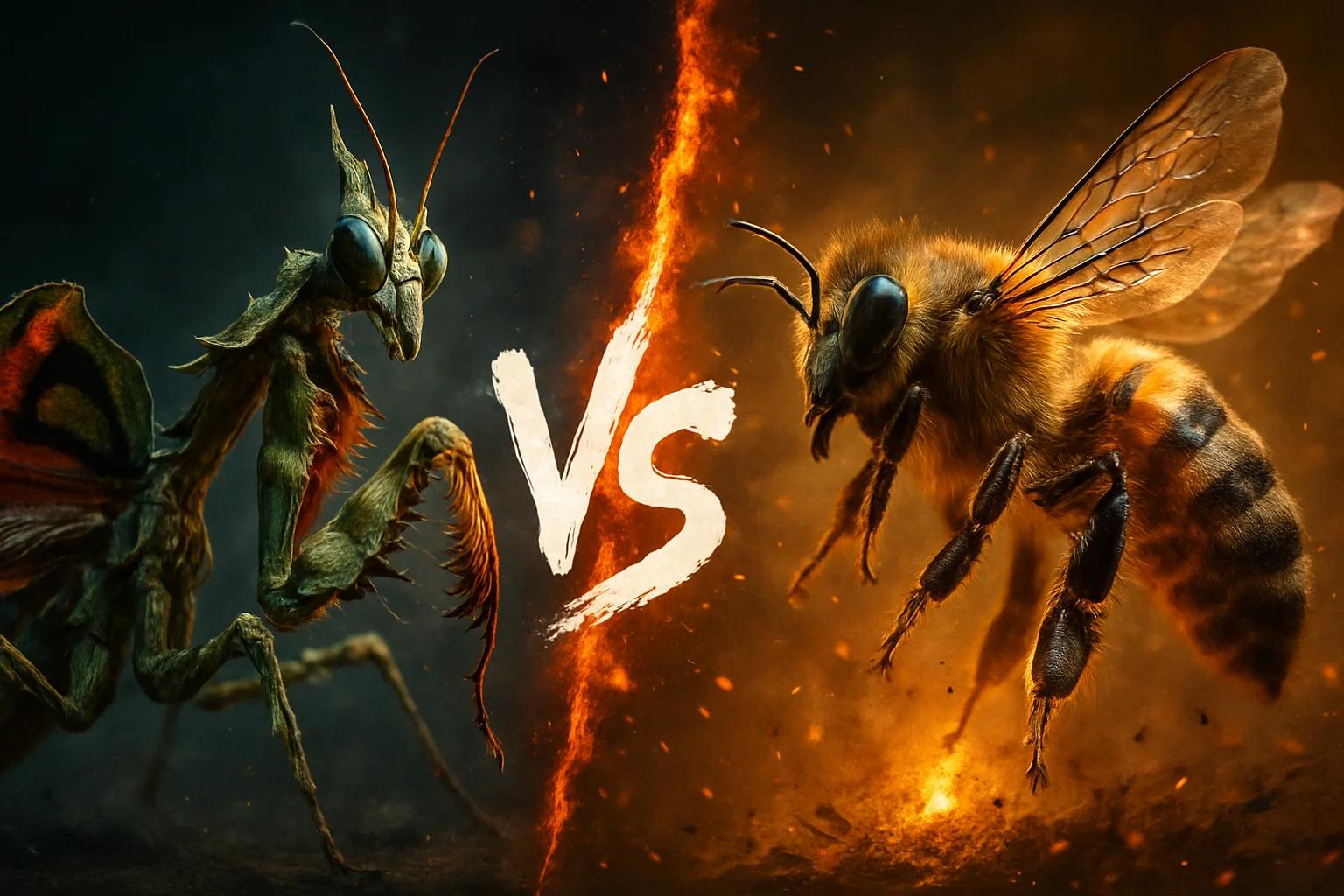
Devil's Flower Mantis vs Western Honey Bee: Who Actually Wins?
The Devil's flower mantis wins a one-on-one encounter. At roughly 10–13 cm, it is many times longer and heavier than a 12–15 mm worker honey bee. Its raptorial forelegs are spiked capture tools built specifically to snatch flying insects, and mantids routinely eat bees at flowers in the wild. The honey bee's sting is barbed and evolved to work against vertebrate skin, not to punch reliably through the joints of a large, armored insect. The bee is faster in the air and can gang up as a colony, but in a single duel the mantis has the reach, grip, and ambush timing to end it in one strike.
Read comparison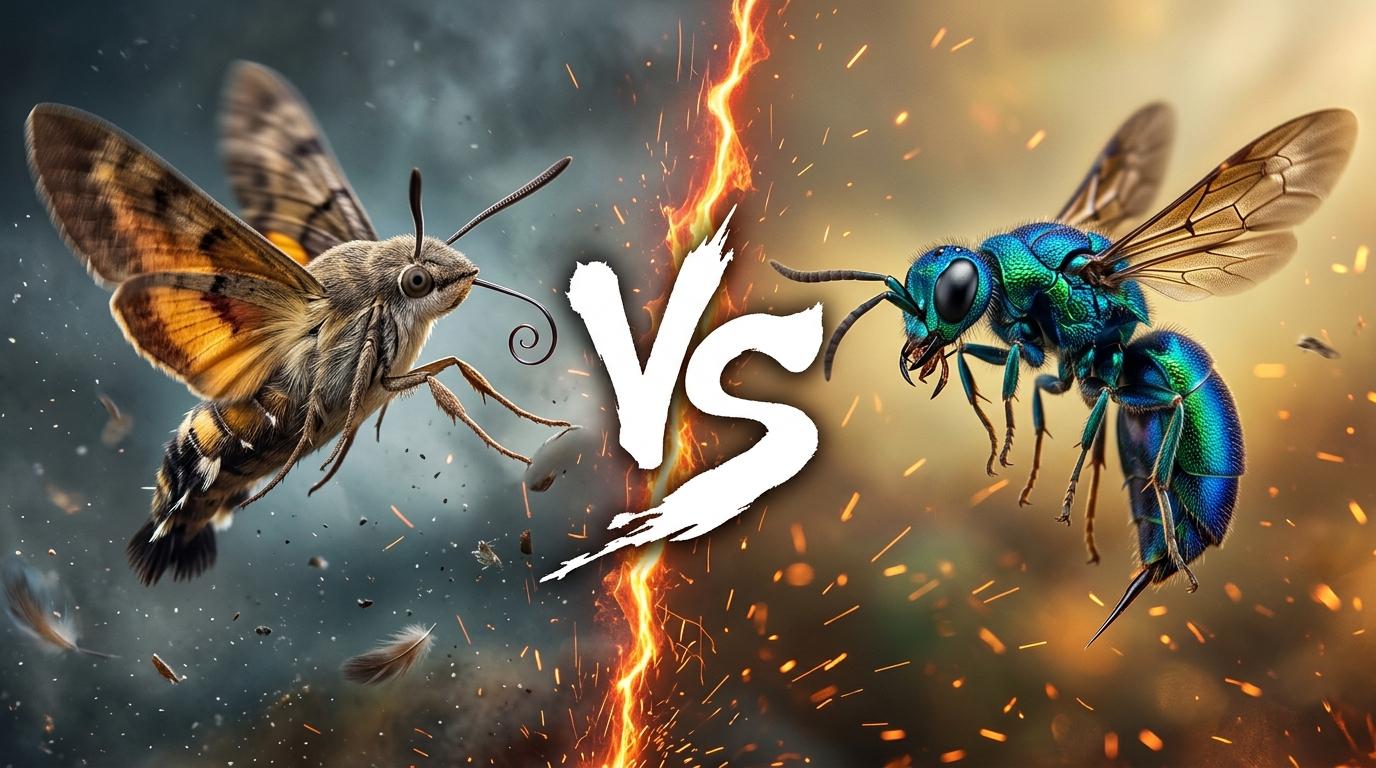
Hummingbird Hawk-Moth vs Cuckoo Wasp: Who Actually Wins?
The cuckoo wasp wins a forced confrontation, though not by much. The hummingbird hawk-moth is bigger, faster, and a far better flier, but it has no weapons. Its long proboscis is a drinking straw, its body is soft, and its wings are thin membranes covered in scales. The cuckoo wasp is small, but its body is built for conflict. Its pitted, metallic cuticle is unusually thick. A concave underside lets it curl into a near-sealed ball. It also carries working mandibles that can bite and tug. Neither insect hunts the other, so most real meetings end with the moth flying away. But if contact is forced, only one of them can do damage and shrug it off, and that is the wasp.
Read comparison
Bombardier Beetle vs Hummingbird Hawk-Moth: Who Actually Wins?
The Bombardier Beetle wins any encounter that turns into actual contact. It is a predatory ground beetle with biting mandibles, an armored body, and a built-in reaction chamber that mixes hydroquinones and hydrogen peroxide into a boiling, pulsed spray near 100°C that it can aim almost anywhere around its body. The Hummingbird Hawk-Moth is faster, more agile, and far better at staying out of trouble, but it is a soft-bodied nectar feeder with no weapons, built to sip, hover, and flee. The moth's only path to a result is never engaging, and that is escape, not victory. Once the two meet at close range, the beetle's armor, jaws, and chemical defense decide it. The moth rarely loses its life to this beetle in nature, because it simply leaves.
Read comparison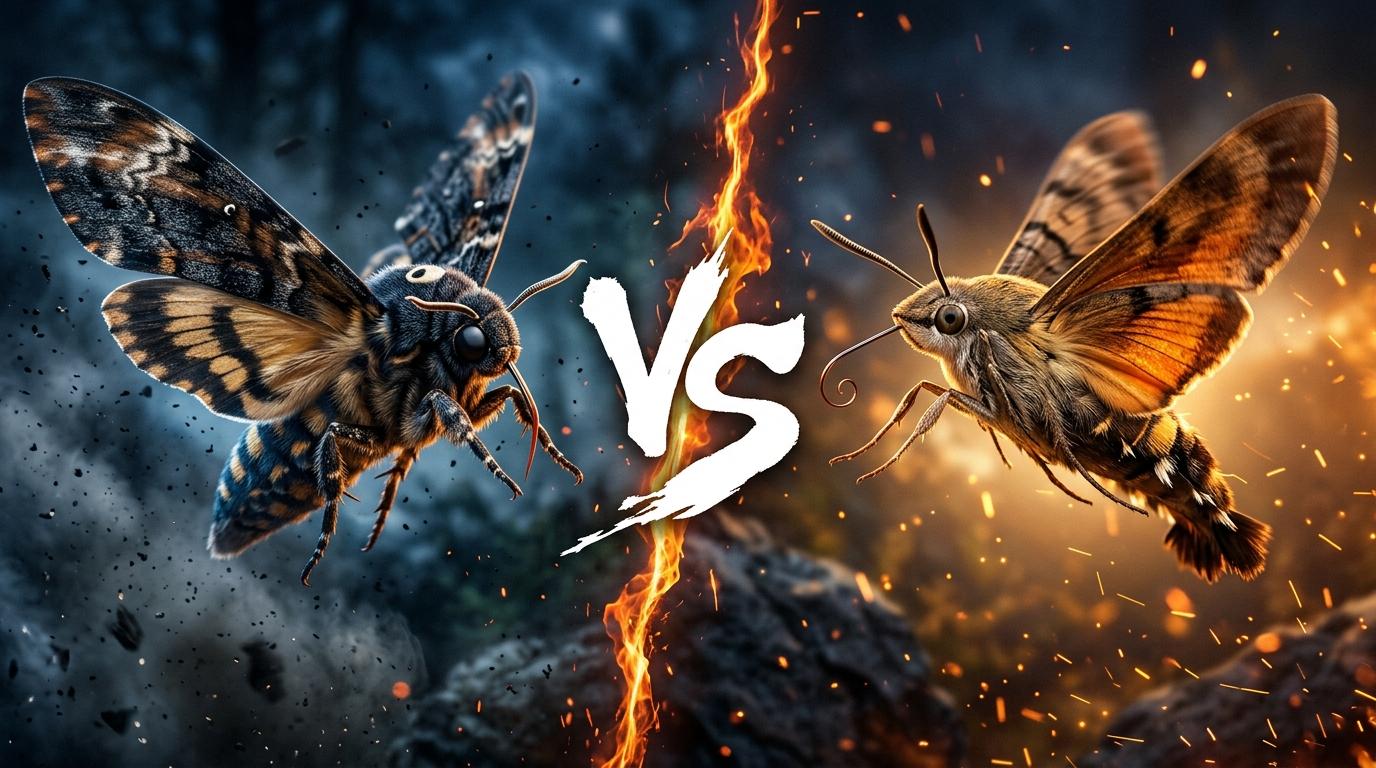
Death's-head Hawkmoth vs Hummingbird Hawk-Moth: Who Actually Wins?
The Death's-head Hawkmoth wins, and it is not especially close in a physical contest. It is Europe's heaviest moth, with a wingspan of roughly 9–13 cm and a thick, armored body. The Hummingbird Hawk-Moth is a 4–4.5 cm daytime hoverer built for precision rather than contact. When two insects of such different mass collide, push, or compete over a food source they can't simply hover away from, weight and toughness settle it. The Death's-head also has an unusual survival kit: a squeak it can produce, a short, stout proboscis able to pierce honeycomb cells, and chemical camouflage that lets it raid beehives. The Hummingbird Hawk-Moth's real edge is hover control and fast, darting flight. That lets it refuse a fight, but it gives it no way to win one.
Read comparison
Discussion
What do you think?
Share your reasoning with other readers. Be civil and stick to the animals.
Sign in to join the discussion.
Sign inNo comments yet. Start the conversation.