#0438 · Generation IV
What Animal Is Bonsly Based On?
Bonsly is mostly a fantasy design, but its closest real animal is the European Stick Insect.
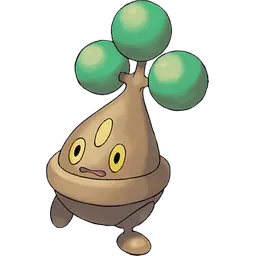
Closest animal
European Stick InsectConfidence
Broad or mixed-animal match
How Bonsly compares to the real European Stick Insect
Bonsly's official category is the Bonsai Pokémon. AnimalDex rates its resemblance to the European Stick Insect as a broad match, meaning the animal is one influence in a largely fantasy design. Bonsly is mostly a plant mimic, a bonsai tree that is actually a rock Pokemon. Its trick of pretending to be a tree is the link to the stick insect, which survives by posing as a twig.
The comparison covers looks and behavior cues, not biology: Bonsly is a fictional Pokémon, while the European Stick Insect (Bacillus rossius) is a real invertebrate. On AnimalDex the real European Stick Insect scores 5 for dominance, 5 for speed, 4 for size and 5 for intelligence, out of 100, so its strongest trait is dominance.
Official category: Bonsai Pokemon. This page is an AnimalDex comparison for real-animal resemblance, not an official design-origin claim.
Meet the real European Stick Insect
Bacillus rossius
A wingless stick insect of southern Europe around the Mediterranean. A nymph caught by a leg can shed it at a weak point near the base, and a smaller replacement grows back over later moults, so a short leg often marks an individual that escaped. Adults no longer moult and cannot replace a lost leg.
How to recognize it
- Slender, twig-like body with muted green or brown tones
- Freezes with forelegs outstretched when disturbed
- Slow, rocking gait that mimics a twig in the breeze
Real European Stick Insect facts
- Often reproduces parthenogenetically, with females producing viable eggs without mating, so entire local populations may consist only of females.
- Newly hatched nymphs already show twig-like shapes and behavior, climbing immediately onto low vegetation to begin feeding on young leaves.
- Diet
- Feeds mainly on leaves of bramble, rose, hawthorn, and other shrubs, biting neat semicircles from leaf edges while hanging or clinging lengthwise along stems, usually at night.
- Lifespan
- Typically one year from egg to adult in the wild, with adults living several months; in captivity, adults may survive a little longer under stable, warm conditions.
- Predators and threats
- Taken by insectivorous birds, small mammals, reptiles, and predatory arthropods. Avoids detection through twig mimicry, freezing when touched and sometimes dropping to the ground to remain motionless among leaf litter.
| Dominance | Speed | Size | Intelligence |
|---|---|---|---|
| 5/100 | 5/100 | 4/100 | 5/100 |
Bonsly animal FAQ
- What animal is Bonsly based on?
- Bonsly is mostly a fantasy design, but its closest real animal is the European Stick Insect. Bonsly is mostly a plant mimic, a bonsai tree that is actually a rock Pokemon. Its trick of pretending to be a tree is the link to the stick insect, which survives by posing as a twig.
- Is Bonsly a real animal?
- No. Bonsly is a fictional Pokémon. Its closest real counterpart is the European Stick Insect (Bacillus rossius), which AnimalDex covers with real field-guide facts.
- What is the real European Stick Insect like?
- A wingless stick insect of southern Europe around the Mediterranean. A nymph caught by a leg can shed it at a weak point near the base, and a smaller replacement grows back over later moults, so a short leg often marks an individual that escaped. Adults no longer moult and cannot replace a lost leg.