#0543 · Generation V
What Animal Is Venipede Based On?
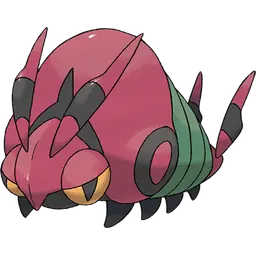
Venipede most closely resembles the Centipede.
Closest animal
CentipedeConfidence
Reasonable animal match
How Venipede compares to the real Centipede
Venipede's official category is the Centipede Pokémon. AnimalDex rates its resemblance to the Centipede as a reasonable match, meaning the animal is clear but the design mixes in other traits. Venipede is the Centipede Pokemon, a small segmented bug with venomous fangs and many legs. Its body and venom match a centipede. No art page exists for the giant Scolopendra centipede, so the general centipede page is used.
The comparison covers looks and behavior cues, not biology: Venipede is a fictional Pokémon, while the Centipede (Chilopoda) is a real invertebrate. On AnimalDex the real Centipede scores 18 for dominance, 18 for speed, 8 for size and 18 for intelligence, out of 100, so its strongest trait is dominance.
Official category: Centipede Pokemon. This page is an AnimalDex comparison for real-animal resemblance, not an official design-origin claim.
Meet the real Centipede
Chilopoda
Long, mostly flattened predators with one pair of legs on each body segment, centipedes kill with a weapon found in no other animals. The first pair of legs has become a set of hollow pincers, the forcipules, which inject venom. Adults have between 15 and 191 pairs of legs, depending on the species.
How to recognize it
- One pair of legs on each body segment
- Body flattened in most species, with many-jointed antennae
- Venom claws curving forward beneath the head
Real Centipede facts
- No centipede has exactly 100 legs, because the number of leg pairs in an adult is always odd.
- Stone centipedes and house centipedes hatch with only a few pairs of legs and add more at each moult until they are adult.
- Diet
- Almost all are predators of insects, spiders, worms and other small invertebrates, seized and injected with venom. The largest tropical species, in the genus Scolopendra, also take lizards, frogs, mice and occasionally bats.
- Lifespan
- Many species live several years, long for an arthropod, commonly about 2 to 6. House centipedes are reported to reach 3 to 7 years and large Scolopendra around 10 in captivity, though these upper figures are poorly documented.
- Predators and threats
- Birds, shrews, toads, snakes, ground beetles, spiders and other centipedes eat them. Defences include bolting for cover, a venomous bite, and in many species shedding a leg that has been seized; some soil centipedes give off sticky or glowing secretions.
| Dominance | Speed | Size | Intelligence |
|---|---|---|---|
| 18/100 | 18/100 | 8/100 | 18/100 |
Venipede animal FAQ
- What animal is Venipede based on?
- Venipede most closely resembles the Centipede. Venipede is the Centipede Pokemon, a small segmented bug with venomous fangs and many legs. Its body and venom match a centipede. No art page exists for the giant Scolopendra centipede, so the general centipede page is used.
- Is Venipede a real animal?
- No. Venipede is a fictional Pokémon. Its closest real counterpart is the Centipede (Chilopoda), which AnimalDex covers with real field-guide facts.
- What is the real Centipede like?
- Long, mostly flattened predators with one pair of legs on each body segment, centipedes kill with a weapon found in no other animals. The first pair of legs has become a set of hollow pincers, the forcipules, which inject venom. Adults have between 15 and 191 pairs of legs, depending on the species.
- Which other Pokémon are based on the Centipede?
- AnimalDex also pairs Whirlipede, Scolipede, Sizzlipede and Centiskorch with the Centipede.
 Scolipede