#0889 · Generation VIII
What Animal Is Zamazenta Based On?
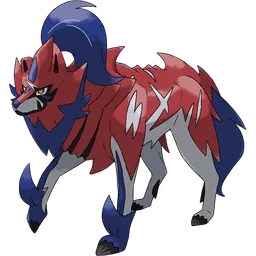
Zamazenta most closely resembles the Eurasian Wolf.
Closest animal
Eurasian WolfConfidence
Reasonable animal match
How Zamazenta compares to the real Eurasian Wolf
Zamazenta's official category is the Warrior Pokémon. AnimalDex rates its resemblance to the Eurasian Wolf as a reasonable match, meaning the animal is clear but the design mixes in other traits. Zamazenta is a legendary wolf wearing a shield-like mane. Its powerful build and guardian role recall the wolves of European folklore, best represented by the Eurasian wolf, the gray wolf populations of Europe and Asia.
The comparison covers looks and behavior cues, not biology: Zamazenta is a fictional Pokémon, while the Eurasian Wolf (Canis lupus lupus) is a real mammal. On AnimalDex the real Eurasian Wolf scores 71 for dominance, 63 for speed, 46 for size and 61 for intelligence, out of 100, so its strongest trait is dominance. AnimalDex also links Zamazenta to the Gray Wolf, covered below.
Official category: Warrior Pokemon. This page is an AnimalDex comparison for real-animal resemblance, not an official design-origin claim.
Meet the real Eurasian Wolf
Canis lupus lupus
The largest wild member of the dog family in Europe and northern Asia lives in family packs, each a breeding pair with their young of the last few years. Almost every young wolf leaves, usually before it is three, and travels alone until it finds a mate and ground no pack holds. Such journeys can cover hundreds of kilometres and have carried wolves back into much of western Europe.
How to recognize it
- Coat grey-brown mixed with buff and rust
- Long-legged, narrow-chested build, larger than most dogs
- Tail hangs straight down, never curled over the back
Real Eurasian Wolf facts
- A Slovenian wolf fitted with a GPS collar crossed the Alps in the winter of 2011 to 2012 and founded a new pack in the hills north of Verona.
- Pack territories commonly cover a few hundred square kilometres in central and southern Europe and around 1,000 in Scandinavia, where prey is thinly spread.
- Diet
- Red deer, roe deer and wild boar, and in the north moose and reindeer, make up most of the diet, taken by packs that test prey and run it down. It also eats hares, beavers, carrion and unguarded livestock.
- Lifespan
- Usually 6 to 8 years in the wild, with few passing 10 to 12; captive wolves can reach 15 or more.
- Predators and threats
- Adults have no regular predator apart from people, who kill them by shooting, poaching and road traffic. Rival packs kill trespassers, and pups can be killed by bears. Wolves avoid people by moving at night and denning in remote cover.
| Dominance | Speed | Size | Intelligence |
|---|---|---|---|
| 71/100 | 63/100 | 46/100 | 61/100 |
Meet the real Gray Wolf
Canis lupus
The largest wild member of the dog family, living in packs that are usually a single family: a breeding pair and their offspring from the past one to three years. Hunting together, a pack can bring down prey many times heavier than any one wolf.
How to recognize it
- Grizzled grey coat, ranging from white in the Arctic to black
- Tail held straight or low, never curled over the back
- Broad muzzle with relatively short, rounded ears
Real Gray Wolf facts
- The domestic dog descends from an ancient wolf population, probably one that is now extinct.
- Pack territories range from under 100 to over 1,000 square kilometres, largest where prey is scarce.
- Diet
- Deer, elk, moose calves, beavers, hares, and carrion.
- Lifespan
- Wild wolves often live 6 to 8 years, sometimes longer, making cooperation a hard-earned survival pattern.
- Predators and threats
- Humans, disease, starvation, rival packs, and injuries threaten wolves. Cooperation spreads risk across the group.
| Dominance | Speed | Size | Intelligence |
|---|---|---|---|
| 72/100 | 62/100 | 43/100 | 62/100 |
Zamazenta animal FAQ
- What animal is Zamazenta based on?
- Zamazenta most closely resembles the Eurasian Wolf. Zamazenta is a legendary wolf wearing a shield-like mane. Its powerful build and guardian role recall the wolves of European folklore, best represented by the Eurasian wolf, the gray wolf populations of Europe and Asia.
- Is Zamazenta a real animal?
- No. Zamazenta is a fictional Pokémon. Its closest real counterpart is the Eurasian Wolf (Canis lupus lupus), which AnimalDex covers with real field-guide facts.
- What is the real Eurasian Wolf like?
- The largest wild member of the dog family in Europe and northern Asia lives in family packs, each a breeding pair with their young of the last few years. Almost every young wolf leaves, usually before it is three, and travels alone until it finds a mate and ground no pack holds. Such journeys can cover hundreds of kilometres and have carried wolves back into much of western Europe.
- Which other Pokémon are based on the Eurasian Wolf?
- AnimalDex also pairs Type: Null and Silvally with the Eurasian Wolf.