
Back to Powers

Animal Powers

Pressure

Hold steady.

Animals grouped here express a similar power through their behavior in nature. Each species still has its own principle, lesson, meaning, and field-guide page.

14 species

Ball Python animal lesson image on AnimalDex

Ball Python

Species principle: Leverage

Hold steady.

Power does not need to rush when it knows where to apply pressure.

Ball Pythons are ambush predators. They strike at close range and use muscular coils to restrain prey with sustained pressure instead of chasing over long distances.
Barbel animal lesson image on AnimalDex

Barbel

Species principle: Current Grip

Hold the flow.

Strength is not always speed; sometimes it is staying placed under pressure.

Barbel use sensitive barbels to search gravelly riverbeds for food while holding position in strong flowing water.

Boa Constrictor (Boa constrictor) thumbnail image on AnimalDex

Boa Constrictor

Species principle: Compression

Become the trap.

Timing matters because the whole body becomes power at once.

Boa Constrictors are ambush predators that use camouflage, striking, and muscular constriction to restrain prey with their entire bodies.

Burmese Python (Python bivittatus) thumbnail image on AnimalDex

Burmese Python

Species principle: Giant Pressure

Own the coil.

One true strength, fully owned, can solve what speed cannot.

Burmese Pythons are large constrictors that use camouflage, ambush, muscular coils, and swallowing adaptations to subdue and consume large prey.

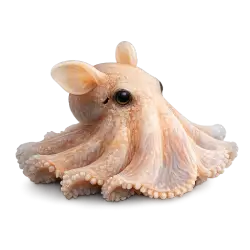
Dumbo Octopus animal lesson image on AnimalDex

Dumbo Octopus

Species principle: Ease

Float under pressure.

Calm movement can be the strongest response in extreme conditions.

Dumbo octopuses inhabit deep-sea environments and move with fin-powered hovering rather than constant aggressive swimming.

East African Oryx animal lesson image on AnimalDex

East African Oryx

Species principle: Heat Endurance

Carry the heat.

Protection helps grace survive pressure.

East African oryx survive hot dry landscapes with heat tolerance, efficient water use, long horns, and steady travel.

Gemsbok (Oryx gazella) thumbnail image on AnimalDex

Gemsbok

Species principle: Desert Poise

Stay graceful in heat.

Protection lets grace survive pressure.

Gemsbok have long straight horns, heat tolerance, and water-conserving adaptations that help them survive arid desert and savanna habitats.

Great Skua (Stercorarius skua) thumbnail image on AnimalDex

Great Skua

Species principle: Kleptoparasitism

Raid the sky.

Boldness can become a feeding strategy.

Great skuas are aggressive seabirds known for stealing food from other birds and defending nesting territories fiercely.

Manatee (Trichechus manatus) thumbnail image on AnimalDex

Manatee

Species principle: Peaceful Bulk

Float softly.

Softness can still fill a whole life.

Manatees are large aquatic herbivores that survive through slow movement, grazing, buoyancy, and low-conflict use of warm shallow water.

Mosquito animal lesson image on AnimalDex

Mosquito

Species principle: Needle Persistence

Find the opening.

Even tiny pressure can matter when it is focused and repeated.

Mosquitoes locate hosts through sensory cues and use specialized mouthparts to feed.

Red-bellied Piranha (Pygocentrus nattereri) thumbnail image on AnimalDex

Red-bellied Piranha

Species principle: Bite Force

Trust the bite.

A specialized edge becomes power when the whole body is built around it.

Red-bellied Piranhas have sharp interlocking teeth and strong jaws, often schooling in rivers where group presence and quick bites help with feeding and defense.

Slender Skimmer animal lesson image on AnimalDex

Slender Skimmer

Species principle: Aim

Meet the target.

Movement becomes mastery when attention meets the target in motion.

Slender Skimmers and other dragonflies are aerial predators. They use large compound eyes, agile wings, and rapid flight control to intercept small insects in midair.

Wolf Eel (Anarrhichthys ocellatus) thumbnail image on AnimalDex

Wolf Eel

Species principle: Crushing Pressure

Crush the shell.

Patience and pressure open what force alone cannot.

Wolf Eels have strong jaws adapted for crushing hard-shelled prey such as crabs, sea urchins, and mollusks in rocky reef habitats.

Wolverine (Gulo gulo) thumbnail image on AnimalDex

Wolverine

Species principle: Tenacity

Stay with the trail.

The path opens for the one that refuses to stop at harsh ground.

Wolverines use large feet, thick fur, strong jaws, and wide-ranging movement to travel across snow, scavenge carcasses, cache food, and defend resources in cold northern habitats.

Explore related indexes