

Eagle behaviorAnimal visionPredator ecology
How Eagles Use Height, Vision, and Timing to Survive
How eagles hunt: visual acuity 4–8 times ours, two foveae per eye, 2-metre wingspans, thermal soaring and stoops over 240 km/h, with a species comparison.
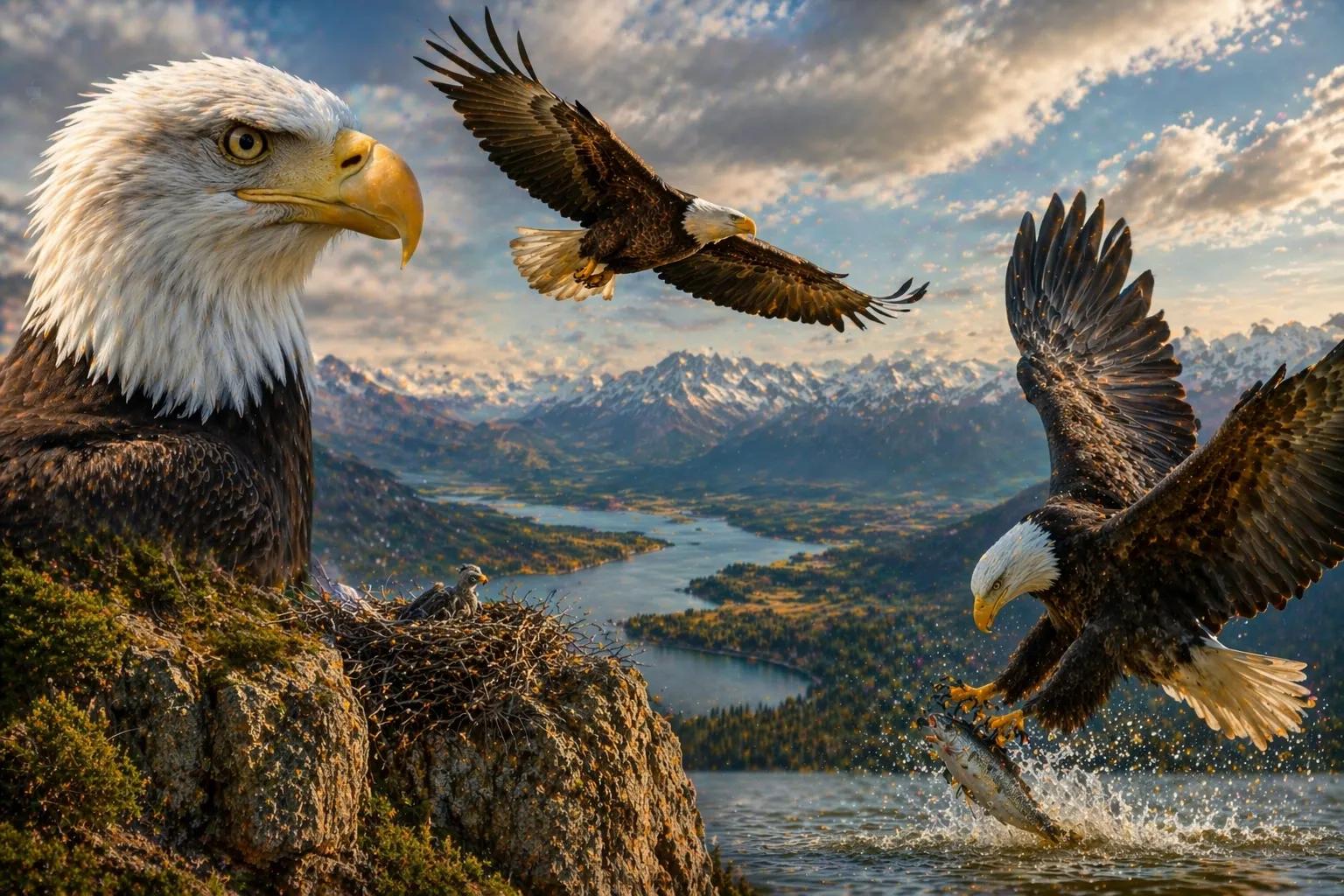
Why eagles still feel like the benchmark for aerial predators
Eagles convert vertical space into information. From 300 metres up, a golden eagle can survey several square kilometres of hillside and pick out a hare moving in the grass, then choose whether the chase is worth the energy. Height gives them a view, the view gives them options, and the options let them strike only when the odds are good.
Around 60 species carry the name eagle, from the 2-kilogram booted eagle to the harpy and Steller's sea eagle at up to 9 kilograms. What they share is a hooked bill, powerful feet with long talons and large eyes that take up much of the skull. That package makes eagles useful for understanding animal behaviour that depends less on raw speed and more on a premium view of the hunting ground.
What makes an eagle unique?
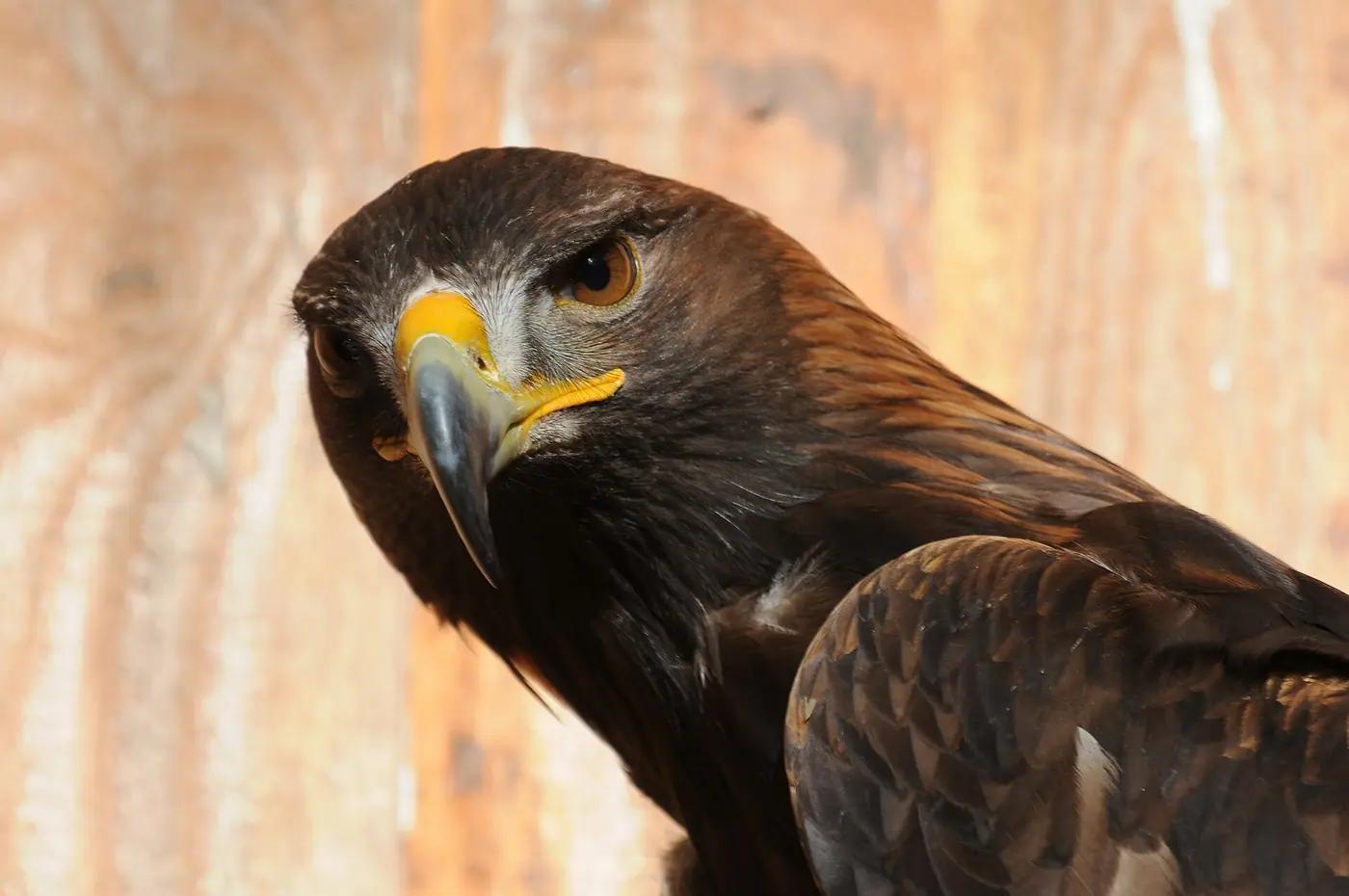
An eagle's eye is about the same size as a human eye in a head a fraction of the size, and it is packed with far more cone cells. Estimates put eagle visual acuity at four to eight times ours, which is why a bald eagle is said to pick out a rabbit from roughly 3 kilometres. Each eye has two foveae, the pits of sharpest vision: a deep central fovea that looks sideways for scanning the ground, and a shallower temporal fovea that looks forward and pairs with the other eye for binocular depth judgement in the final approach.
The eyes are fixed in their sockets, so the bird aims them by moving its head. A bony brow ridge shades the eye from glare, and a transparent third eyelid, the nictitating membrane, sweeps across to clear dust without blocking the view. Eagles also see into the ultraviolet range that humans miss.
The capture end is the feet. A bald eagle's talons are about 5 centimetres long and are closed by tendons that ratchet and lock, so the bird can hold a struggling fish without continuous muscular effort. Its grip is many times stronger than a human hand.
How eagles survive
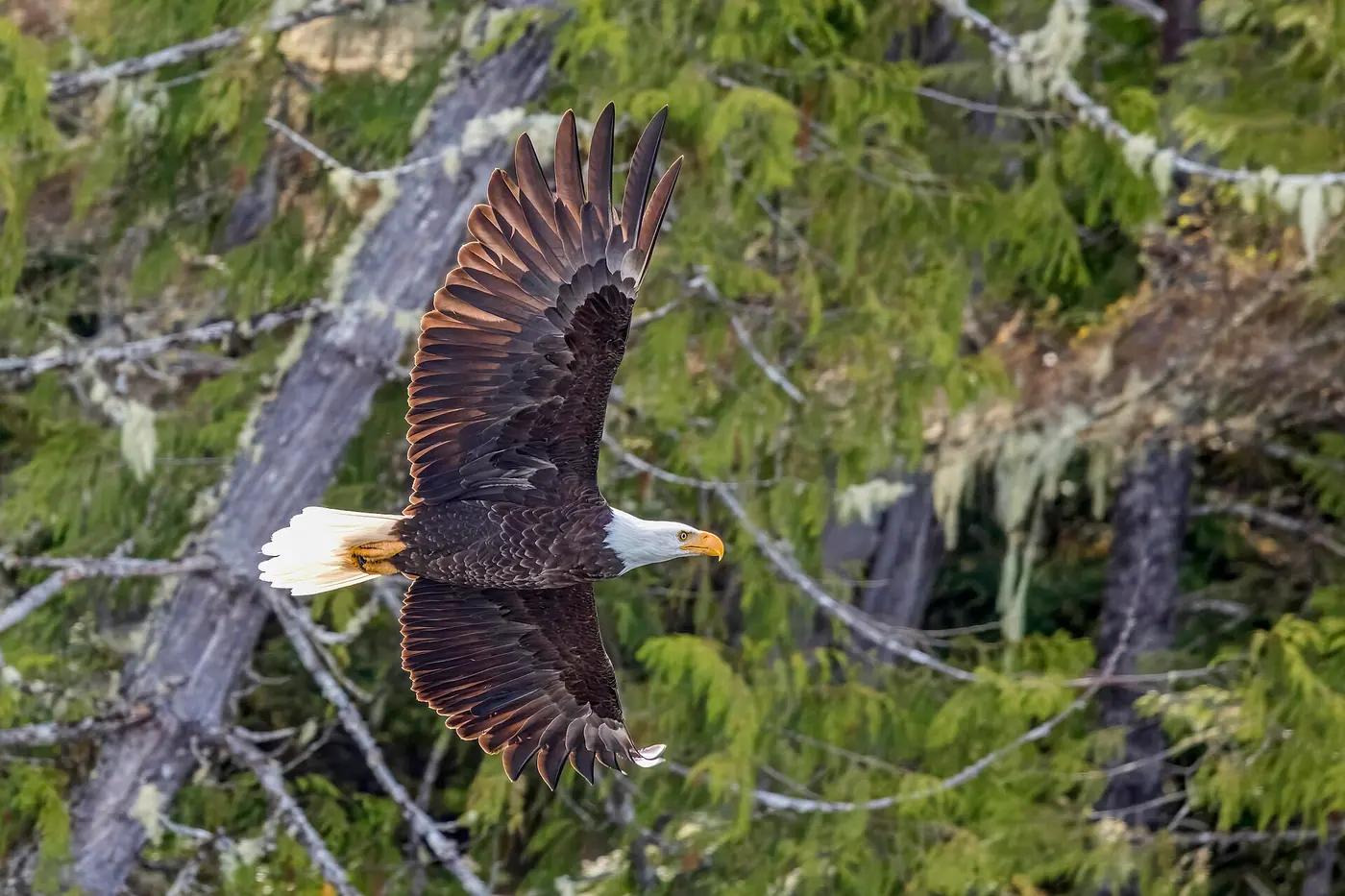
Flapping a 2-metre wing is expensive, so eagles let the air do the work. Broad wings with slotted primary feathers let them circle inside rising columns of warm air called thermals, gaining hundreds of metres without a wingbeat, then glide to the next thermal. Migrating golden eagles ride ridge lift along mountain chains such as the Appalachians, which is why hawk-watch sites on ridges count thousands of raptors in autumn.
Cruising flight runs at about 50 to 65 kilometres per hour. When a golden eagle folds its wings into a stoop it can exceed 240 kilometres per hour, and a bald eagle diving on a fish reaches around 160. The strike itself is brief: a bald eagle skims the surface and lifts a fish in its talons without stopping, while a golden eagle hits a hare or ground squirrel from a low, fast glide along a slope.
Timing extends to the calendar. Bald eagles in the Pacific Northwest gather in their thousands on rivers such as the Chilkat in late autumn to feed on spent salmon, and pairs return to the same nest for years, adding sticks each season. The largest recorded bald eagle nest, in Florida, measured 2.9 metres across and 6 metres deep and weighed about 2 tonnes.
Better vantage often beats faster reaction. Eagles let the environment subsidise the search.
Eagle species compared
The two North American eagles are often confused in the air. Adult bald eagles are unmistakable with white heads and tails, but immatures are mottled brown for four to five years and look like golden eagles. Golden eagles show a golden nape, feathered legs and hold their wings in a slight V when soaring.
| Species | Wingspan | Weight | Main prey | Range |
|---|---|---|---|---|
| Bald eagle (Haliaeetus leucocephalus) | 1.8–2.3 m | 3–6.3 kg | Fish, waterfowl, carrion | North America |
| Golden eagle (Aquila chrysaetos) | 1.8–2.3 m | 3–6 kg | Hares, ground squirrels, marmots | Northern Hemisphere |
| Harpy eagle (Harpia harpyja) | 1.8–2.2 m | 4–9 kg | Sloths, monkeys | Central and South America |
| Steller's sea eagle (Haliaeetus pelagicus) | 2.0–2.5 m | 5–9 kg | Salmon, seabirds | Coastal north-east Asia |
| Wedge-tailed eagle (Aquila audax) | 1.8–2.3 m | 3–5.5 kg | Rabbits, wallabies, carrion | Australia, New Guinea |
Bald EagleGolden EagleHarpy Eagle
The ecosystem role of eagles
Eagles sit at the top of their food webs, taking fish, birds and medium-sized mammals and cleaning up carrion. Because they eat high on the chain and nest near water, they concentrate whatever pollutants the system carries. The pesticide DDT thinned bald eagle eggshells so badly that only about 417 nesting pairs remained in the lower 48 US states in 1963. After the 1972 DDT ban and legal protection, the population reached an estimated 71,400 nesting pairs by 2019, and the species was removed from the US endangered list in 2007.
Bald eagles also steal fish from ospreys, a habit called kleptoparasitism, and their abandoned nests house owls and other raptors. Golden eagles regulate rabbit and ground-squirrel numbers across open country, and their persistence signals that a landscape still holds enough prey and undisturbed cliffs or trees for nesting.
How to spot and photograph eagles
Eagles are large enough to find without special gear if you read the landscape. The cues below work for both bald and golden eagles.
Follow the water
Bald eagles perch on tall dead trees beside lakes, rivers and estuaries. Scan the top third of shoreline snags; the white head shows from a long way off.
Ridges on windy days
Golden eagles work slopes and ridgelines where wind deflects upward. Hawk-watch sites count the most birds in October and November on days with a north-west wind.
Midday thermals
Soaring starts once the sun has warmed the ground, usually mid-morning. Look for a flat-winged silhouette circling without flapping, far higher than vultures.
Winter concentrations
Dams, fish runs and open water in frozen country pull dozens of bald eagles together. A live in-app capture from a car window at a known winter roost beats hours of walking.
What humans can learn from eagles
Eagles show the value of stepping back far enough to see the real pattern before committing scarce energy. A thermal costs nothing to ride, and the view from the top turns a search into a selection.
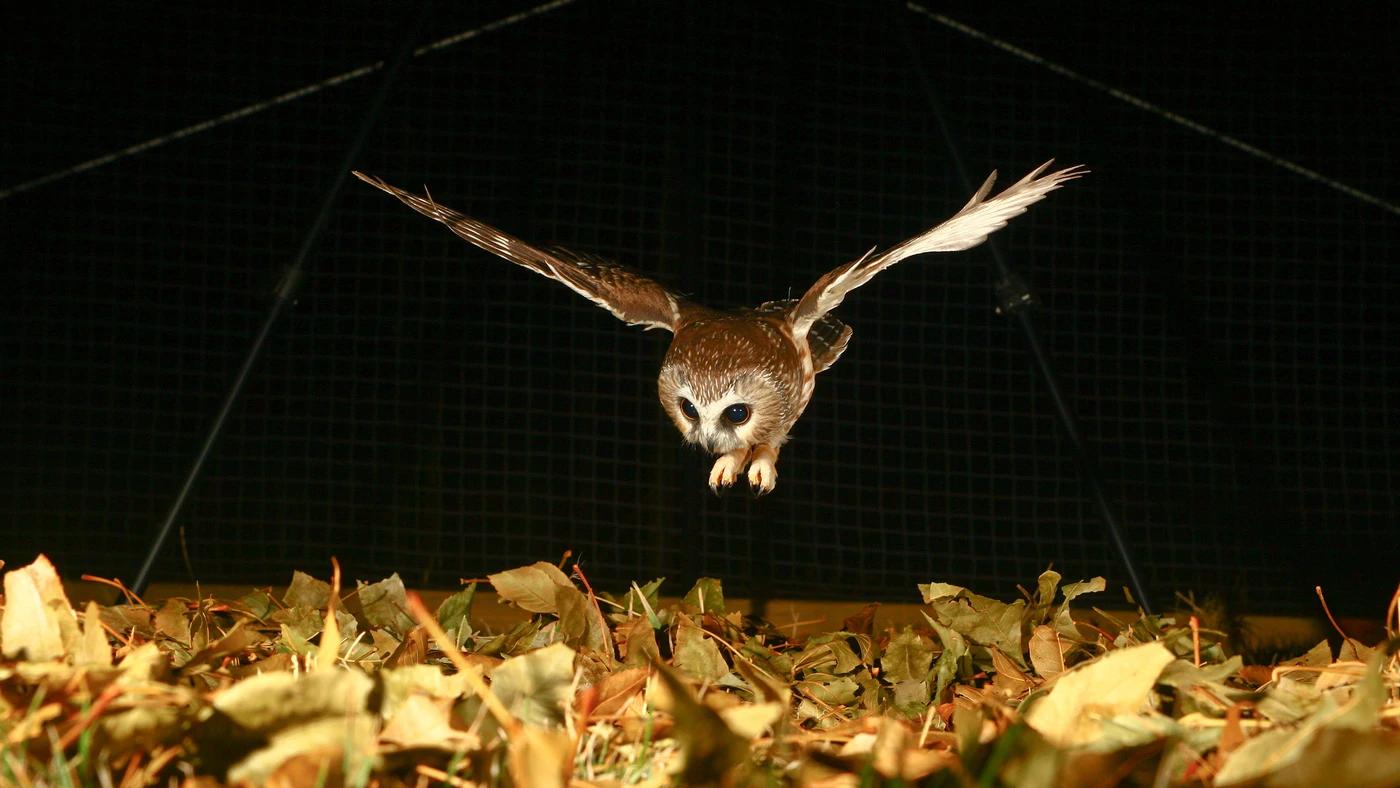
That is the systems lesson: a better vantage point beats a faster reaction, and patience spent gaining height is repaid in the strike. Barn owls solve the same problem with sound instead of sight, which makes a useful comparison.
Systems Intelligence & Hidden Purpose
See these animals as engineered biological systems: what they are built to do, how they fit the wider environment, and what their design can teach us.
Specialized Hardware
Extreme visual acuity, broad wings tuned for soaring, and grip strength concentrated in the talons make eagles efficient aerial reconnaissance and strike hardware.
Systems Script
Eagles connect height, heat, and prey detection across open landscapes. They pressure medium-sized prey, exploit thermals as free transport, and turn large territories into readable operating surfaces.
Strategic Insight
Use the energy already available in the environment. Systems that borrow momentum from context outperform systems that brute-force everything themselves.
Quick questions
Short answers to common questions readers ask on this topic.
- How good is an eagle's eyesight?
- Eagle vision is estimated at four to eight times sharper than human vision. Each eye has two foveae, one for scanning sideways and one for binocular judgement straight ahead, and the retina is densely packed with cone cells. A bald eagle is reported to spot a rabbit from about 3 kilometres, and eagles can also see ultraviolet light that humans cannot.
- How fast can an eagle dive?
- A golden eagle in a full stoop can exceed 240 kilometres per hour, which makes it one of the fastest animals on Earth behind the peregrine falcon. Bald eagles dive more shallowly on fish at around 160 kilometres per hour. In level cruising flight both species travel at a more modest 50 to 65 kilometres per hour.
- What is the difference between a bald eagle and a golden eagle?
- Adult bald eagles have a white head and tail, a yellow bill and bare lower legs, and they hunt mainly fish near water. Golden eagles are dark brown with a golden nape, feathered legs and a slight V to their soaring wings, and they hunt hares and ground squirrels over open country. Immature bald eagles are brown and are the usual source of confusion.
- How big is an eagle's wingspan?
- Most large eagles span 1.8 to 2.3 metres. Bald and golden eagles both fall in that range, with females larger than males. Steller's sea eagle reaches 2.5 metres, among the widest of any eagle. The harpy eagle has a shorter span of about 2 metres but is heavier, with females up to 9 kilograms.
- Where can I see a bald eagle in the wild?
- Look along rivers, lakes and coasts across North America, especially where fish gather. Winter concentrations form below dams and on open water in frozen regions, and Alaska's Chilkat River hosts thousands in November. Bald eagles have recovered to more than 70,000 nesting pairs in the lower 48 states, so most large waterways now have a resident pair.
Animals mentioned
Jump from this article into the species pages behind the examples, systems notes, and field-guide references.
Sources and further reading
Answer guides related to this topic
If you want direct comparisons and clear recommendations, continue with these answer-focused pages.
Best Animal Identification Apps
Compare the best animal identification apps by features like photo/video identification, species coverage, collection capabilities, offline use, and more.
What Is Animal Collecting
Learn what animal collecting means in modern apps and how AnimalDex turns real-world sightings into cards, sets, rarity, and species learning.
Pokemon-Like Animal App
Looking for a Pokemon-like animal app with real species? AnimalDex combines creature-collection energy with AI scanning and wildlife learning.
Related comparisons
Continue with structured animal-vs-animal comparison pages connected to the species in this guide.
Bald Eagle vs Crowned Eagle: Who Would Win in a Fight?
Bald eagle gets the broader size and open-space verdict, while crowned eagle becomes far more dangerous in forested ambush contexts where explosive attack on agile prey matters more.
Bald Eagle vs Peregrine Falcon: Who Would Win in a Fight?
Peregrine falcon wins the speed question clearly. Bald eagle usually gets the overall edge in a direct clash because size, talon grip, and durability matter more once contact happens.
Eagle vs Falcon: Who Would Win in a Fight?
Eagle usually has the power edge in a direct clash. Falcon owns the speed edge and often the cleaner aerial intercept, but size and grip strength still favor the eagle when contact happens.
Eagle vs Owl: Who Would Win in a Fight?
Eagle gets the stronger daylight open-air verdict through size, forward force, and daytime control. Owl improves sharply in low light and close surprise conditions where silence and night sensing matter more.
Related guides
Barn owl
How Barn Owls Hunt in the Dark: Hearing and Silent Flight
How barn owls hunt in the dark: asymmetric ears that place a mouse within two degrees, a facial disc that works as a dish, and wings that make no sound.
9 min read
How Tigers Survive as Solo Apex Hunters
How tigers hunt alone: home-range sizes, a 5–10 percent hunting success rate, prey and kill rate, subspecies compared, and how to read tiger sign.
9 min read
How Wolves Hunt, Survive, and Shape Ecosystems
How wolves hunt and shape ecosystems: pack size, prey selection, hunt success rates, the Yellowstone reintroduction, and what the cascade evidence shows.
9 min read